 May, 24 2026
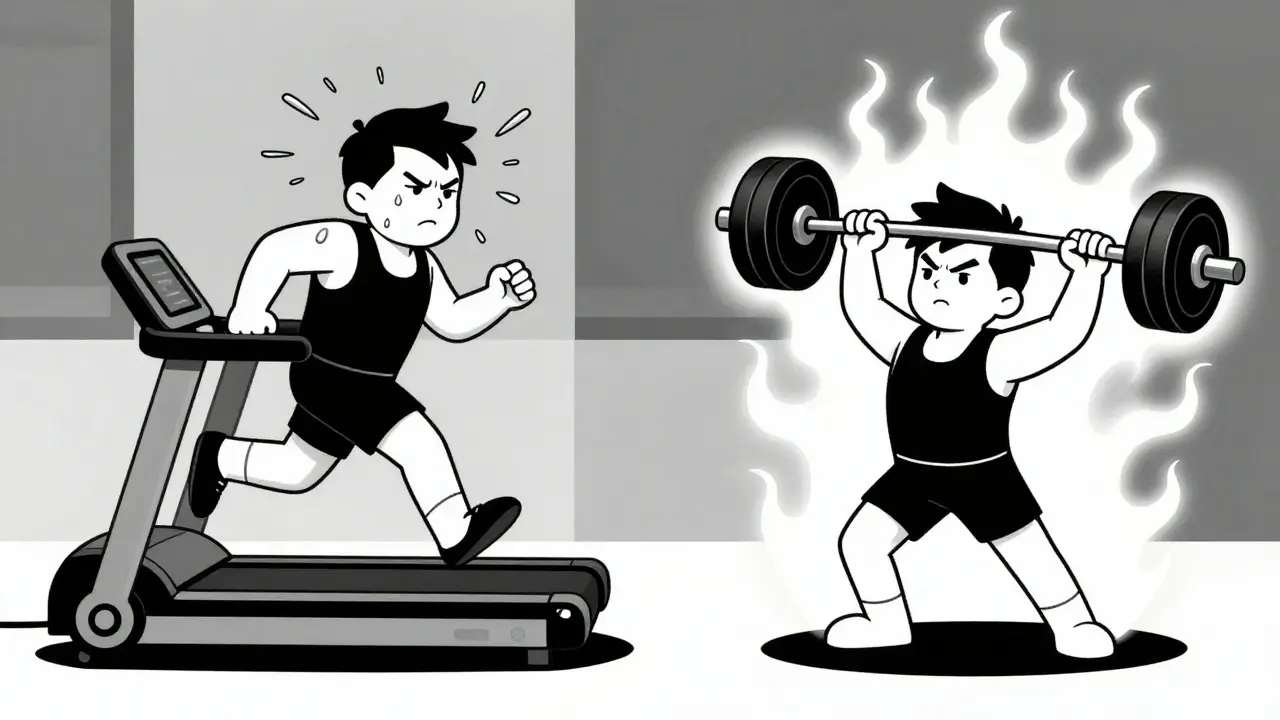
Forget everything you heard about running on a treadmill until your lungs burn. If you want to lose fat without looking 'skinny-fat' or slowing down your metabolism, strength training is the missing piece of the puzzle. For decades, we were told that cardio was king for weight loss. But science has shifted dramatically. Today, experts agree that building lean muscle is the most effective way to boost your resting metabolic rate and ensure the weight you lose stays off.
This isn't just about lifting heavy weights to get big. It's about strategic programming. By manipulating rep ranges, rest periods, and exercise selection, you can turn your strength sessions into powerful fat-burning engines. This guide breaks down exactly how to structure your training to maximize fat loss while preserving-and even building-muscle.
The Metabolic Advantage: Why Muscle Burns More Than Cardio
To understand why strength training works better for long-term fat loss, you have to look at what happens to your body after the workout ends. When you do steady-state cardio, like jogging for an hour, your calorie burn stops almost immediately once you stop moving. Strength training, however, creates something called Excess Post-Exercise Oxygen Consumption (EPOC), often referred to as the 'afterburn effect.'
A 2018 study published in the Journal of Sports Science & Medicine found that intense resistance training can elevate your metabolism for up to 72 hours post-workout. During this window, your body burns an additional 6-15% of the calories expended during the actual exercise. That means you are burning fat while sleeping, working, or watching TV, simply because you lifted weights earlier in the day.
But the real game-changer is muscle tissue itself. Each pound of muscle burns approximately 6-10 calories per day at rest, compared to just 2-3 calories for a pound of fat. As noted by the National Academy of Sports Medicine (NASM), preserving muscle mass during a caloric deficit is critical. If you only do cardio, you risk losing both fat and muscle. Strength training signals your body to keep the muscle, ensuring your metabolic engine stays revved up even as you eat less.
Programming Variables: Reps, Sets, and Rest
You cannot just wander into the gym and lift randomly if you want results. Effective fat-loss programming requires specific parameters to balance mechanical tension (for muscle growth) with metabolic stress (for calorie burn). Here is the blueprint based on current research from organizations like the American College of Sports Medicine (ACSM).
| Variable | Recommendation | Why It Works |
|---|---|---|
| Rep Range | 8-15 reps per set | Balances hypertrophy (muscle growth) with metabolic demand. Lower reps (4-6) build pure strength but burn fewer calories; higher reps (15+) may lack sufficient intensity. |
| Sets per Exercise | 3-5 sets | Ensures enough volume to stimulate muscle protein synthesis without causing excessive fatigue that hinders recovery. |
| Rest Intervals | 60-90 seconds for isolation; 2-3 minutes for compounds | Shorter rest keeps heart rate elevated (metabolic stress). Longer rest allows you to lift heavier on compound moves, maximizing total work output. |
| Tempo | 2-0-2 (2 sec up, 0 sec pause, 2 sec down) | Increases time under tension, which is crucial for muscle damage and subsequent repair/growth. |
For compound movements like squats, deadlifts, and bench presses, aim for 8-12 repetitions. These multi-joint exercises recruit the most muscle fibers, leading to the highest hormonal response and calorie expenditure. For isolation movements like bicep curls or lateral raises, push for 12-15 reps to create that metabolic burn. The key is progressive overload: if you hit the top of your rep range easily, increase the weight by 5-10% the next week. Without getting stronger, you won't see lasting body composition changes.
Structuring Your Weekly Schedule
Consistency beats intensity. You don't need to train seven days a week to lose fat. In fact, overtraining can spike cortisol levels, which may hinder fat loss. A balanced approach combines strength training with strategic cardiovascular work.
An optimal weekly structure looks like this:
- 3 Days of Strength Training: Focus on full-body workouts or an upper/lower split. Keep sessions between 45-60 minutes.
- 2 Days of Cardio: One day of steady-state Zone 2 cardio (65-75% max heart rate) for recovery and base endurance. One day of High-Intensity Interval Training (HIIT) for extra calorie burn.
- 1-2 Days of Active Recovery: Light walking, yoga, or complete rest. Sleep is when fat loss actually happens.
Beginners should start with full-body routines three times a week. This frequency ensures you hit each muscle group multiple times per week, which is superior for muscle retention than hitting it once. As you progress, you might split your routine, but never drop below two strength sessions per week if fat loss is your goal.
Nutrition: Fueling the Engine
You can have the best workout plan in the world, but if your nutrition is off, you will not see results. Dr. Jason Fung argues that nutrition accounts for 80-85% of fat loss, and while some debate the exact percentage, no one disputes its importance. However, cutting calories too aggressively while lifting weights can backfire by causing muscle loss.
To support strength training for fat loss, follow these nutritional guidelines:
- Prioritize Protein: Aim for 1.6-2.2 grams of protein per kilogram of body weight. This supports muscle repair and keeps you full. Sources include chicken, fish, tofu, lentils, and Greek yogurt.
- Maintain a Moderate Deficit: A 500-calorie daily deficit is sustainable and effective. Extreme deficits lead to muscle catabolism (breakdown).
- Timing Matters: Research from the University of Birmingham (2023) shows that consuming protein within 45 minutes post-workout increases muscle protein synthesis by 22%. Don't skip your post-lift meal.
- Macro Split: A good starting point is 40% protein, 30% carbohydrates, and 30% fats. Carbs fuel your high-intensity lifts; fats support hormone production.
Hydration is also non-negotiable. Dehydration reduces strength performance and can mimic hunger cues. Drink water consistently throughout the day, especially around your workouts.
Tracking Progress Beyond the Scale
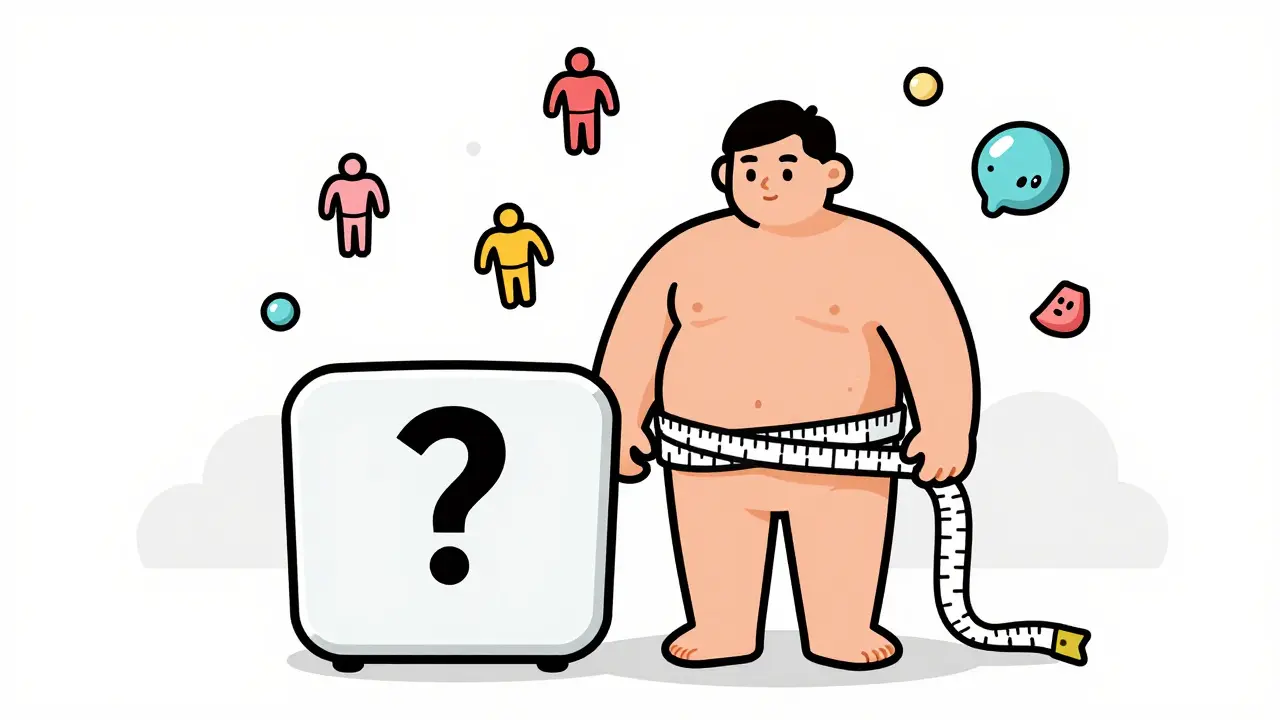
Here is where most people quit: the scale doesn't move. Or worse, it goes up. This is known as 'scale confusion,' reported by 78% of participants in a recent Speediance trial. Why does this happen? Because muscle is denser than fat. You might be losing inches but gaining pounds of lean tissue.
If you rely solely on the scale, you will miss the bigger picture. Instead, use these metrics:
- Body Measurements: Measure your waist, hips, chest, and thighs every two weeks. A shrinking waistline with stable weight indicates successful body recomposition.
- Progress Photos: Take front, side, and back photos in consistent lighting. Visual changes often precede numerical ones.
- Strength Gains: Are you lifting more weight or doing more reps than last month? If yes, you are building muscle, which boosts metabolism.
- Clothing Fit: How do your jeans feel? Clothes are the ultimate truth-teller.
Remember, fat loss is not linear. Some weeks you will stall. Trust the process. The user 'FitJourney2023' on Reddit lost 48 pounds in six months, but the scale only showed a 32-pound drop because he gained 16 pounds of muscle. His body fat dropped from 32% to 19%, transforming his physique completely.
Common Mistakes to Avoid
Even with the right plan, pitfalls abound. Avoid these common errors to stay on track:
Ignoring Form for Weight: Lifting with poor technique leads to injury, not gains. Spend the first 4-6 weeks mastering movement patterns like the squat hinge and push/pull mechanics. Quality over quantity always wins.
Inconsistent Progressive Overload: If you lift the same 10-pound dumbbell for a year, your body adapts and stops changing. You must challenge your muscles continuously. Track your lifts in a notebook or app.
Underestimating Recovery: DOMS (Delayed Onset Muscle Soreness) peaks at 48 hours. Foam rolling and light walking can reduce soreness duration by 35%. If you are constantly exhausted, you are likely overtraining or undereating.
Comparing Yourself to Others: Genetics play a role, but consistency is the great equalizer. Focus on beating your previous self, not someone else's highlight reel.
How much weight should I expect to lose per week with strength training?
Aim for 0.5 to 1.5 pounds of fat loss per week. Faster weight loss often comes at the cost of muscle tissue. Remember, if you are building muscle simultaneously, the scale may not reflect your true progress. Focus on body composition changes rather than just weight.
Can I do strength training and cardio on the same day?
Yes, but prioritize strength training first. Do your lifting session when you are fresh, then follow with 20-30 minutes of cardio. If you do cardio first, you may fatigue your muscles, reducing the intensity and effectiveness of your strength workout.
Is HIIT better than strength training for fat loss?
HIIT burns more calories in a shorter time, but strength training provides greater long-term metabolic benefits through muscle preservation and EPOC. The best approach is a combination: use HIIT as a supplement to your primary strength training program, not a replacement.
Do I need a gym membership to do effective strength training?
No. While gyms offer more equipment options, you can achieve significant fat loss with minimal gear. Dumbbells, resistance bands, and bodyweight exercises are highly effective. The key is progressive overload, which can be achieved by increasing reps, slowing tempo, or using bands.
How long does it take to see visible results?
Most people notice changes in strength within 2-3 weeks. Visible physical changes typically appear after 6-8 weeks of consistent training and proper nutrition. Be patient; body recomposition is a marathon, not a sprint.
Joseph Teichman
May 24, 2026 AT 17:27bro just lift heavy shit and eat less thats it
Russell Russell
May 25, 2026 AT 08:12The distinction between mechanical tension and metabolic stress is often overlooked by casual lifters who believe high reps are the only path to fat loss. It is crucial to understand that progressive overload in the 8-12 rep range provides the necessary stimulus for muscle retention while still elevating energy expenditure. Many individuals fall into the trap of performing endless cardio sessions, which can lead to a catabolic state where muscle tissue is broken down for fuel. By prioritizing compound movements like squats and deadlifts, you recruit larger muscle groups that demand more systemic recovery resources. This physiological demand translates to a higher resting metabolic rate over time. The concept of EPOC is real but should not be overstated as the primary driver of weight loss. Instead, focus on the long-term benefits of increased lean mass. Each pound of muscle acts as a metabolic sink, burning calories even when you are sedentary. Integrating strength training with moderate cardiovascular work creates a balanced approach that supports both performance and body composition goals. Consistency in this hybrid model yields superior results compared to extreme dietary restrictions or single-modality training protocols.
Angela Niculescu
May 27, 2026 AT 03:23I honestly think this whole 'strength for fat loss' narrative is just marketing fluff designed to sell gym memberships and protein powder. Cardio is king because it burns calories right now, not some hypothetical future benefit. People love to complicate things with talk of EPOC and metabolic rates when really it is just about creating a calorie deficit. If you run five miles you burn those calories immediately. Lifting weights might make you tired but does it really burn that much extra while you sleep? Probably not enough to matter. Most people here are overthinking simple biology. Eat less move more. That is all there is to it. All these complex programming variables are just ways to distract from the fact that most people are just eating too much junk food. Stop making excuses and start walking.
Lisa Russo
May 27, 2026 AT 09:43You are wrong. Science says muscle burns more calories. I read it online. So stop saying cardio is better. You need to lift weights to get big muscles. Big muscles mean you burn fat faster. It is basic science. Everyone knows this. Why do you keep arguing? Just listen to the experts. They know what they are talking about. I am smart so I know this is true. You should try lifting weights instead of running. Running makes your legs small. Lifting makes them strong. Strong is good. Fat is bad. So lift weights. End of story.
Cyburg Adeoye
May 28, 2026 AT 20:13It is truly fascinating how the integration of resistance training can fundamentally alter one's metabolic trajectory! The data regarding Excess Post-Exercise Oxygen Consumption (EPOC) is quite compelling, isn't it?? One must consider the holistic impact of hypertrophy on basal metabolic rate!!! Preserving lean tissue during a caloric deficit is paramount for sustainable health outcomes!!! We should all embrace this paradigm shift towards strength-based conditioning!!! It empowers us to take control of our physiological destiny!!! Let us support each other in this journey towards optimal wellness!!! The synergy between nutrition and exercise cannot be overstated!!! Keep pushing forward with determination and clarity!!!
Frank Arlyss
May 30, 2026 AT 14:03I feel like my life is falling apart and I dont know why. My back hurts all the time. Maybe if I lifted weights it would go away. But I am so tired. Everything is hard. I wish someone would tell me what to do. I feel empty inside. Is it because I dont eat enough? Or too much? I cant remember. My head spins. I just want it to stop. Please help me figure out if I should squat or die.
Sharon O’Mahonh
May 31, 2026 AT 03:22the way we view fitness is so limiting when we dont consider the philosophical aspects of movement. its not just about burning calories its about connecting with your body in a meaningful way. strength training allows you to explore your limits and push beyond them. its a form of self-expression. i find that focusing on the process rather than the outcome brings more joy. the community aspect is also huge. sharing struggles and victories helps everyone grow. lets create a space where everyone feels welcome regardless of their current fitness level. inclusivity is key. we are all on different paths but we share the same goal of well-being. keep going even when it gets tough. you are stronger than you think.
Jonhnnie john13
June 1, 2026 AT 01:48typical reddit bro science. ignore the nuance. just lift heavy. rest short. eat chicken. repeat. anything else is waste of time. stats show correlation not causation. you are probably just guessing. follow the plan or fail. no excuses.
Gareth Tyler
June 1, 2026 AT 13:46i guess this makes sense. i have been doing mostly cardio for years and never saw much change. maybe trying some weights would help. not sure if i can handle the gym though. seems intimidating. but the article says home workouts work too. so maybe i will try bands. sounds easier. let me know if it works for you guys. i am curious.
Anthony Padilla
June 2, 2026 AT 19:16In my culture we value communal effort so joining a group class might help you stay accountable. I noticed that when i started lifting my friends joined me and we pushed each other harder. It is important to find a tribe that supports your goals. Also check local community centers for affordable options. Dont let cost be a barrier. There are many free resources available online too. Share your progress with others to build momentum. Connection fuels consistency. Hope this helps you find your path.