 Feb, 19 2026
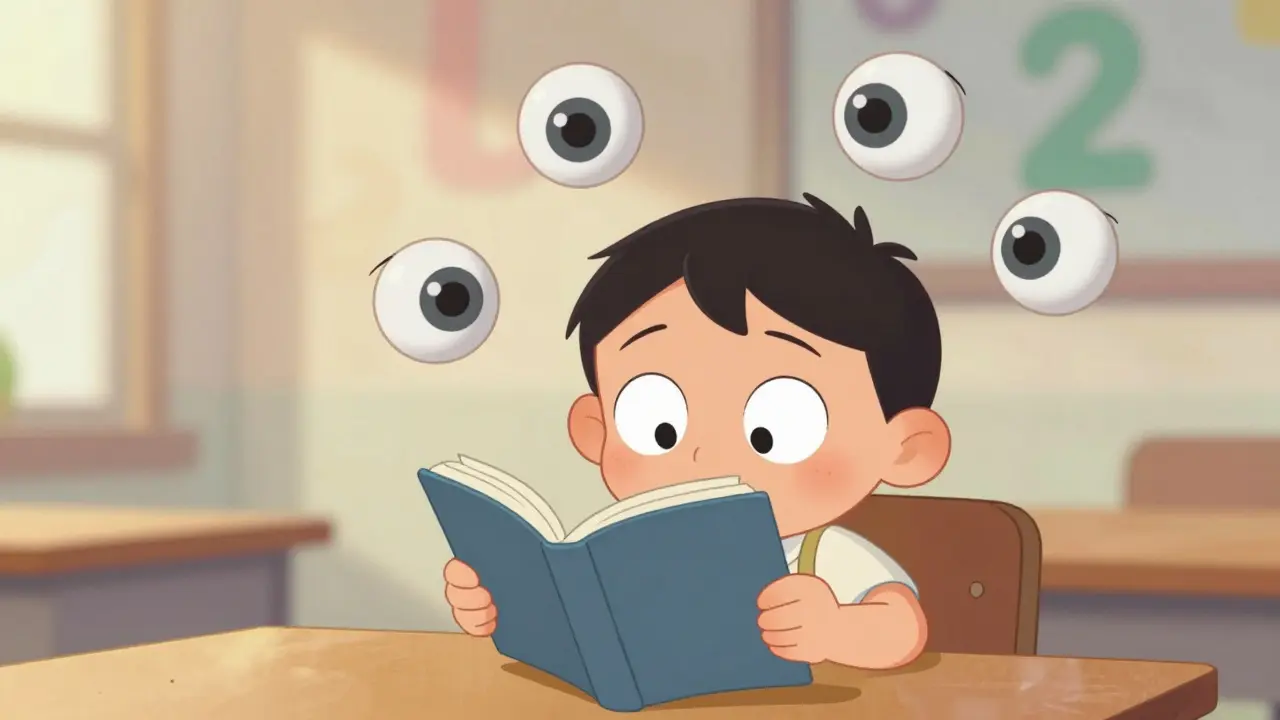
When your eyes don’t line up properly, it’s not just a cosmetic issue-it can affect how you see the world. Strabismus, often called a squint, is when one eye turns inward, outward, upward, or downward while the other looks straight ahead. This misalignment doesn’t just make eye contact awkward; it can mess with depth perception, cause double vision, and even lead to permanent vision loss if left untreated. About 5 out of every 100 children have it, and adults aren’t immune-strokes, head injuries, and nerve damage can trigger it later in life. The good news? It’s treatable. And when non-surgical methods like glasses or eye patches don’t cut it, surgery can change everything.
What Does Strabismus Actually Look Like?
Strabismus isn’t one condition-it’s four main types, each with its own pattern. The most common is esotropia, where one eye turns inward toward the nose. It accounts for half of all cases, especially in kids. Then there’s exotropia, where the eye drifts outward, seen in about 30% of cases. Less common are hypertropia (eye turns up) and hypotropia (eye turns down). These can be constant or come and go, especially when someone’s tired or focused hard.Symptoms go beyond just the visible turn. Double vision hits 8 out of 10 adults with strabismus. Kids might not say they see two of everything, but they’ll squint, tilt their head, or avoid reading. Around 57% of children with strabismus struggle with reading, and 38% have trouble concentrating in school. Eye strain is real too-78% of adults report aching or burning eyes. Some even get light-sensitive or feel dizzy. In paralytic strabismus, caused by damaged cranial nerves (usually IV or VI), symptoms hit fast: sudden double vision, nausea, and head tilt. It’s often linked to strokes or head trauma in adults.
Why Does It Happen?
Most of the time, strabismus isn’t about weak eye muscles-it’s about the brain. The brain’s control center for eye movement gets confused, so the eyes don’t work as a team. About 30% of pediatric cases run in families, pointing to genetics. But in adults, trauma and stroke are the usual suspects. Nerve damage from diabetes, tumors, or even long-term high blood pressure can throw off the signals. In kids, it often shows up before age 3, especially if they’re farsighted. That’s because focusing hard to see clearly can make the eyes cross. Left untreated, the brain starts ignoring the input from the misaligned eye, leading to amblyopia, or lazy eye. That’s why early detection matters so much.Non-Surgical Options First
Before anyone cuts into eye muscles, doctors try the least invasive routes. Glasses can fix strabismus caused by farsightedness-sometimes that’s all it takes. Patching the stronger eye forces the weaker one to work harder, which can improve vision and alignment. Vision therapy, a series of exercises guided by an optometrist, helps train the eyes to work together. It’s especially useful for intermittent cases. Prism lenses in glasses can also trick the brain into seeing one image instead of two. These methods work for many, especially kids. In fact, one study found that 60% of children with intermittent exotropia improved with therapy alone, cutting surgical needs by a third. But if the eyes are constantly misaligned, or the angle is too big, surgery becomes the next step.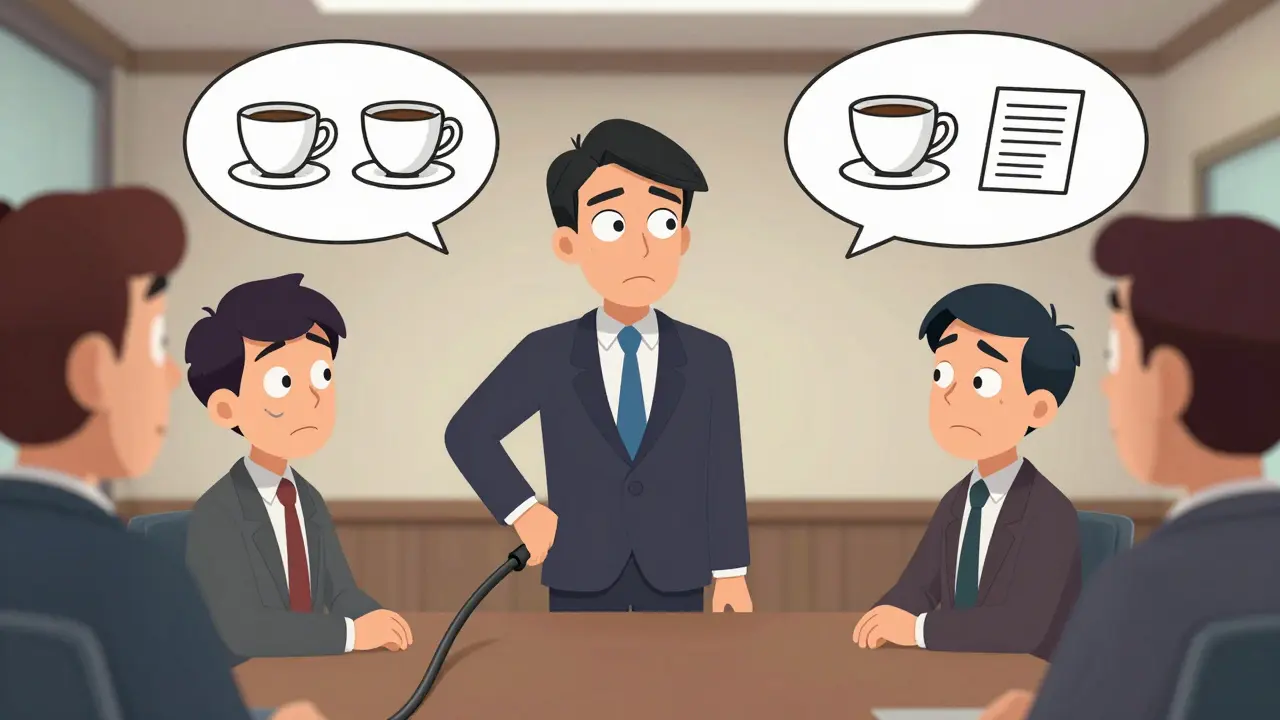
When Surgery Is Necessary
Surgery isn’t just for looks-it’s for function. The American Academy of Ophthalmology recommends it when the misalignment is more than 20 prism diopters (a measure of how far off the eye is) or when it causes double vision, head tilting, or social distress. For kids, if the eye turns inward constantly and doesn’t respond to glasses or patches by age 2, surgery is often advised. The goal isn’t just to make the eyes look straight-it’s to restore binocular vision, so both eyes send a single image to the brain. That’s how we get depth perception. Without it, tasks like catching a ball, driving, or even pouring coffee become harder.The surgery itself is precise. Surgeons don’t remove muscles-they adjust them. Two main techniques are used: recession (moving a muscle back to weaken it) and resection (shortening a muscle to strengthen it). For esotropia, the most common fix is cutting and reattaching both inner eye muscles. In adults, about 68% of surgeries use adjustable sutures. That means the surgeon leaves the stitches loose enough to tweak the alignment the next day while the patient is awake. It’s a game-changer. Instead of guessing the right tension, they can fine-tune it on the spot. The whole procedure takes about an hour and is done under general anesthesia for kids, or local with sedation for adults.
Success Rates and Realistic Outcomes
Success isn’t always perfect alignment. For primary surgeries, 60-80% of patients end up with alignment within 10 prism diopters-close enough to function well. Kids under 2 have the best outcomes, with 75-85% achieving good results. Adults? Around 55-65%. Why the difference? Younger brains are more adaptable. They can learn to use both eyes together again. Older brains struggle more, even if the eyes look straight.Complications are rare but real. About 20-30% of cases need a second surgery because the first one didn’t fully correct the turn. Overcorrection-where the eye turns the other way-happens in 10-15% of cases. Almost everyone gets double vision right after surgery, but it usually fades in days or weeks. More serious risks like retinal detachment or infection (endophthalmitis) are extremely rare-under 0.1%. Still, patients need to know: surgery doesn’t always fix depth perception. One study found that 28% of patients who got technically perfect alignment still felt dissatisfied because their brain never learned to use both eyes together. That’s why post-op vision therapy is so important.
What Happens After Surgery?
Recovery isn’t instant. You’ll have red, swollen eyes for a week or two. Daily antibiotic eye drops are a must-98% of patients stick to the regimen. Vision therapy usually starts 4 to 6 weeks after surgery. It’s not optional-it’s critical. Studies show patients who do therapy have 40% higher satisfaction rates. Follow-ups happen at 1 day, 1 week, 3 weeks, and 6 weeks. Surgeons check alignment, eye movement, and whether the brain is starting to fuse the images from both eyes. Some patients need more than one surgery. That’s normal. About 1 in 5 need a second procedure to get things just right.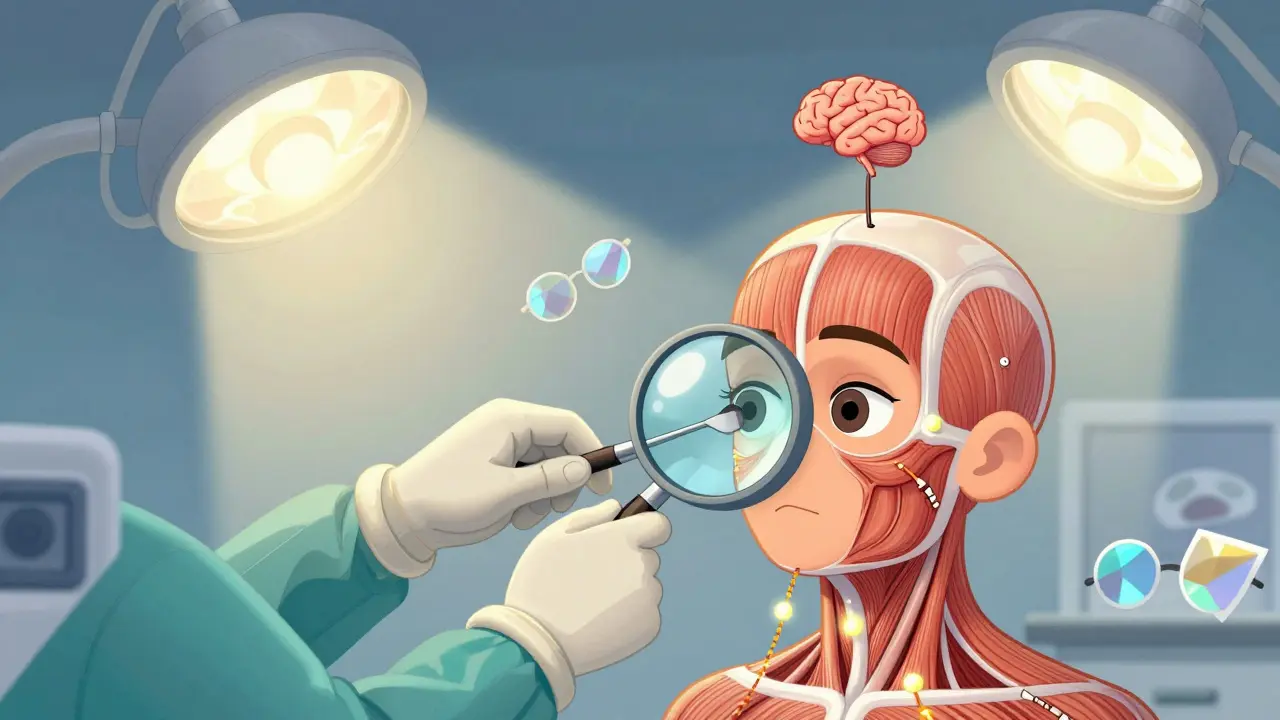
Real Stories, Real Impact
On patient forums, the feedback is loud and clear. One man wrote, “After 30 years of double vision, I read a book for the first time without squinting.” Another said, “I finally made eye contact with my coworkers. No more hiding.” Eighty-two percent of patients on RealSelf.com say the surgery was “worth it.” But the flip side? About 22% still have double vision months later. Fifteen percent of adults take longer than six weeks to feel normal. And 12% feel disappointed because their eyes look fine but their depth perception didn’t improve. The common thread? Patients who had honest conversations with their doctors before surgery were way more satisfied. Knowing what to expect-both the wins and the setbacks-makes all the difference.Who Performs the Surgery?
Not every eye doctor does this. Strabismus surgery requires specialized training. Only about 35% of general ophthalmologists perform it. Surgeons usually complete a fellowship in pediatric ophthalmology or neuro-ophthalmology. They need to do 50 to 75 supervised surgeries before they’re considered proficient. That’s why finding the right specialist matters. Academic medical centers and specialized eye hospitals have the most experience. Private practices vary. If you’re considering surgery, ask: How many of these procedures do you do a year? What’s your success rate? Do you use adjustable sutures?Global Access and Future Trends
There’s a big gap in care. In developed countries, 72% of kids with constant strabismus get evaluated by age 5. In developing nations? Just 28%. The global market for strabismus surgery is growing fast-projected to hit $1.8 billion by 2027. New tech is helping. In March 2023, the FDA approved a tool called the Steger hook that measures muscle tension down to half a gram. That means more precision. Virtual reality training before surgery is showing promise, boosting success rates by 18%. Robotic-assisted surgery is in early trials. And botulinum toxin injections are being used as a temporary fix before surgery, reducing how much muscle needs to be cut.But access remains a hurdle. Medicare cut reimbursement for strabismus surgery in 2023, and many private insurers now demand proof that glasses and therapy failed for six months before approving surgery. That delays care. Non-profits like NORA help cover costs for low-income families, but demand far outstrips supply. The bottom line? Strabismus is treatable, but only if you catch it early and get the right care.
Can strabismus go away on its own?
In rare cases, mild intermittent strabismus in very young children may improve as their visual system matures. But constant misalignment almost never resolves without treatment. Left untreated, it can lead to permanent vision loss (amblyopia) or loss of depth perception. Don’t wait to see if it gets better-get it checked.
Is strabismus surgery painful?
The surgery itself isn’t painful since anesthesia is used. Afterward, most patients feel mild discomfort-like having a scratchy or gritty eye. Pain medication is rarely needed. Redness and swelling are normal for a week or two. Severe pain is unusual and should be reported immediately, as it could signal infection or other complications.
Can adults benefit from strabismus surgery?
Absolutely. Adults with strabismus can experience dramatic improvements in vision, depth perception, and quality of life. While the brain is less adaptable than in children, many adults regain binocular vision after surgery, especially with post-op vision therapy. Double vision, head tilting, and social anxiety often improve significantly.
How long does recovery take after strabismus surgery?
Most people return to normal activities within 1-2 weeks. Redness fades over 2-4 weeks. Full healing takes about 6 weeks. Vision therapy may continue for months. Adults often take longer to recover than children, especially if they have other health conditions. Avoid swimming and heavy lifting for 2 weeks.
Does insurance cover strabismus surgery?
Yes, most insurance plans cover strabismus surgery because it’s considered medically necessary-not cosmetic. However, insurers often require proof that non-surgical treatments (glasses, patches, therapy) were tried for at least 6 months first. Always check with your provider and get pre-authorization.
What’s the difference between strabismus and lazy eye?
Strabismus is misaligned eyes. Lazy eye (amblyopia) is reduced vision in one eye because the brain ignores its input. Strabismus can cause amblyopia, but not all lazy eyes come from misalignment. Amblyopia can also happen from unequal focus (like one eye being far-sighted) or cataracts. Both need treatment, but they’re different problems.