 Jul, 23 2026
Statin Symptom Checker: Myopathy vs. Neuropathy
Select Your Symptoms
Click on the options that match your experience.Thighs, hips, shoulders, upper arms
Toes, feet, fingers, hands (Stocking-glove pattern)
Soreness, stiffness, or cramping without swelling
Numbness, pins-and-needles, or electric shocks
Harder to stand from chair, climb stairs, or lift arms
Strength feels normal despite discomfort
Ready to Analyze
Select your symptoms on the left to see if they align more with Statin Myopathy or Peripheral Neuropathy.
You take your pill every morning to protect your heart. You feel fine-until you don’t. A sudden, sharp pain shoots through your calf or thigh. It’s a cramp. If you are on statins, this is a common complaint. But here is the problem: not all muscle pain on statins is the same. Some of it comes from the muscles themselves (myopathy). Other times, it might be your nerves misfiring (neuropathy).
Getting this wrong can lead to months of unnecessary suffering or stopping a life-saving medication too soon. The difference between these two conditions isn't just academic; it changes how doctors treat you. One resolves when you stop the drug. The other might require completely different management strategies. Let's break down exactly what is happening in your body and how to tell the difference.
The Statin Paradox: Heart Protection vs. Muscle Pain
To understand why your legs hurt, we first need to look at what statins actually do. Statins are HMG-CoA reductase inhibitors that lower cholesterol by blocking an enzyme in the liver. They have been around since 1987, starting with lovastatin. They work by cutting down the production of low-density lipoprotein (LDL) cholesterol, which clogs arteries and causes heart attacks.
However, the body needs more than just cholesterol for energy. It also needs coenzyme Q10 (CoQ10), a molecule that helps mitochondria produce energy. Statins block the pathway that makes CoQ10 along with cholesterol. Studies show that statin therapy can decrease CoQ10 levels by up to 40% within 30 days. Skeletal muscle is incredibly sensitive to this change-about 40 times more sensitive than liver cells. When your muscle cells run low on energy, they get irritable. That irritation often shows up as pain, weakness, or cramping.
This phenomenon is known as Statin-Associated Muscle Symptoms (SAMS). According to the European Atherosclerosis Society, SAMS affects between 7% and 29% of patients in real-world settings. Most of these cases are mild. True, dangerous muscle breakdown (rhabdomyolysis) is rare, occurring in only 1 in 1,000 to 1 in 10,000 patients. But even mild symptoms can disrupt your daily life, making you question whether the benefits outweigh the costs.
Signs of Statin Myopathy: The Muscle Origin
When doctors talk about "statin myopathy," they are referring to damage or dysfunction directly within the muscle tissue. This is the most well-documented side effect of statins. If your cramps are caused by myopathy, they usually follow a specific pattern.
Key characteristics of statin myopathy include:
- Bilateral symptoms: The pain or weakness usually affects both sides of the body equally. If your left calf hurts, your right one likely does too.
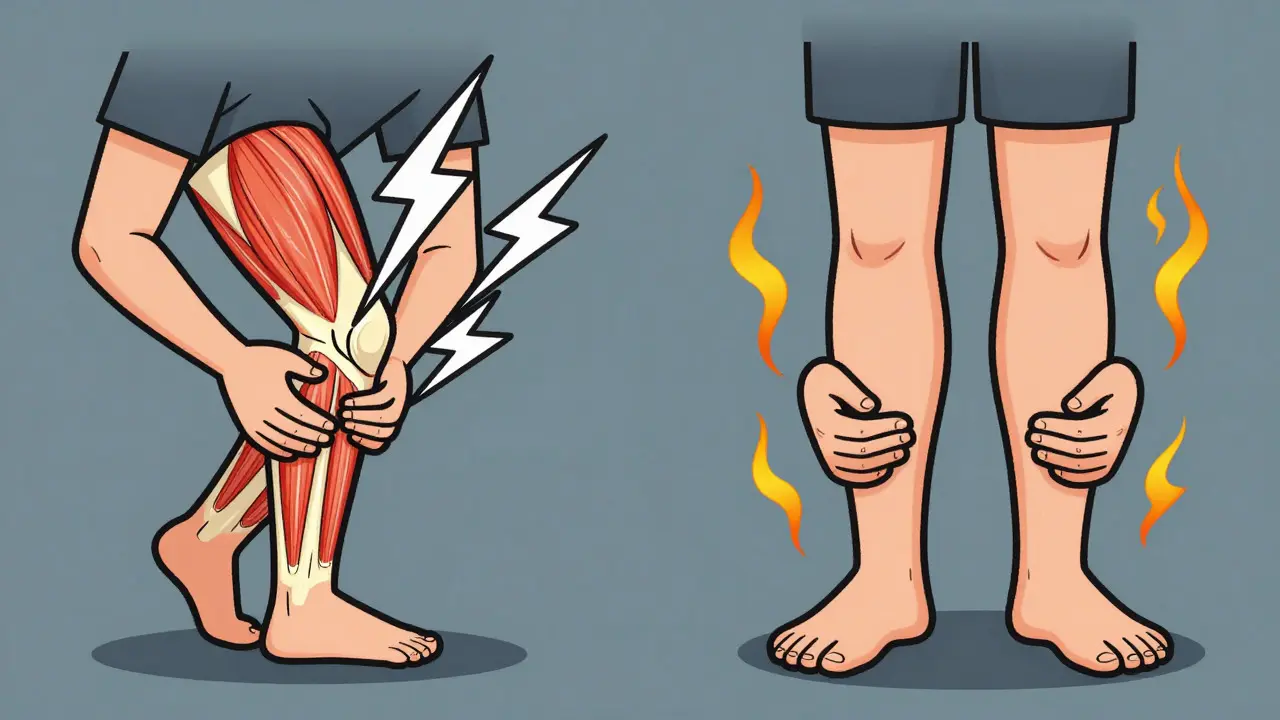
- Proximal location: The discomfort is typically in the large muscle groups near your torso-your thighs, hips, shoulders, and upper arms. It rarely starts in your hands or feet.
- Pain without inflammation: You will feel soreness or aching, but your muscles won't necessarily look swollen or red.
- Weakness: You might find it harder to stand up from a chair, climb stairs, or lift your arms above your head. This weakness is often subtle and progresses slowly, so patients sometimes blame it on aging.
A crucial diagnostic marker for myopathy is the creatine kinase (CK) level. CK is an enzyme released into the blood when muscle tissue is damaged. In true statin myopathy, CK levels are often elevated-sometimes more than four times the upper limit of normal. However, many patients with significant pain have normal CK levels. This is called "myalgia" rather than "myopathy" in strict medical terms, but for the patient, the experience is similar.
If you stop taking the statin, myopathic symptoms usually resolve within a few weeks. If you restart the drug, the pain often returns. This temporal relationship is a key clue for doctors.
Peripheral Neuropathy: When Nerves Are Involved
Now, let's look at the less obvious culprit: peripheral neuropathy. This condition involves damage to the nerves outside the brain and spinal cord. Unlike myopathy, which affects the engine (the muscle), neuropathy affects the wiring (the nerves).
The link between statins and neuropathy is controversial. While some studies suggest statins increase the risk of nerve damage, others, like a 2019 case-control study published in *Neurology*, found that statin use might actually reduce the odds of developing polyneuropathy. Despite the conflicting data, many patients report nerve-like symptoms while on statins.
Signs that point to neuropathy rather than myopathy:
- Distal symptoms: Problems start in the furthest points of your body-the toes, feet, fingers, and hands. This is often described as a "stocking-glove" distribution.
- Sensory changes: Instead of pure pain, you might feel tingling (paresthesia), burning, numbness, or a sensation like pins and needles.
- No muscle weakness initially: Early neuropathy doesn't cause weakness. It causes strange sensations. Weakness only appears if the nerve damage becomes severe enough to affect motor signals.
- Normal CK levels: Since the muscles aren't breaking down, your creatine kinase levels will remain normal.
If you are experiencing burning feet or numbness in your fingertips, it is unlikely to be classic statin myopathy. It could be neuropathy, but it could also be diabetes, vitamin B12 deficiency, or alcohol use. These common causes must be ruled out before blaming the statin.
| Feature | Statin Myopathy | Peripheral Neuropathy |
|---|---|---|
| Primary Symptom | Muscle pain, aching, weakness | Tingling, burning, numbness |
| Location | Proximal (thighs, hips, shoulders) | Distal (feet, hands, toes) |
| Creatine Kinase (CK) | Often elevated (>4x ULN in severe cases) | Normal |
| Onset Pattern | Bilateral, symmetric | Stocking-glove distribution |
| Response to Stopping Statin | Symptoms usually resolve in weeks | Variable; may persist if nerve damage occurred |
| Diagnostic Test | CK blood test, physical strength exam | Nerve conduction studies, EMG |
Risk Factors: Who Is Most Vulnerable?
Not everyone gets muscle cramps on statins. Your individual risk depends on a mix of genetics, age, and other medications. Understanding these factors can help you and your doctor decide on the best approach.
Age and Gender: Older adults, particularly those over 65, are at higher risk. Women are also more susceptible, with clinical reports showing a female-to-male ratio of 2:1 for statin-induced muscle issues. This might be related to differences in body composition, hormone levels, or how women metabolize drugs.
Genetics: Your DNA plays a surprising role. Variants in the SLCO1B1 gene affect how your liver processes certain statins, particularly simvastatin. People with this variant have a 4.5-fold increased risk of myopathy at high doses (80mg). Another genetic marker, the HLA-DRB1*11:01 haplotype, is linked to immune-mediated necrotizing myopathy, a rare but severe form of muscle damage.
Drug Interactions: Taking statins with other medications can drastically increase risk. Fibrates (another type of cholesterol drug) are a major offender. Combining statins with fibrates increases the risk of rhabdomyolysis from 0.45 to 6.0 per 10,000 patient-years. Other culprits include certain antibiotics (like clarithromycin), antifungals, and calcium channel blockers.
Underlying Conditions: Hypothyroidism, kidney disease, and liver disease can make you more prone to statin side effects. Even excessive alcohol consumption can mimic or worsen statin myopathy.
Diagnosis: How Doctors Confirm the Cause
If you complain of muscle cramps, your doctor shouldn't just guess. A systematic approach is needed to differentiate myopathy from neuropathy and rule out other causes.
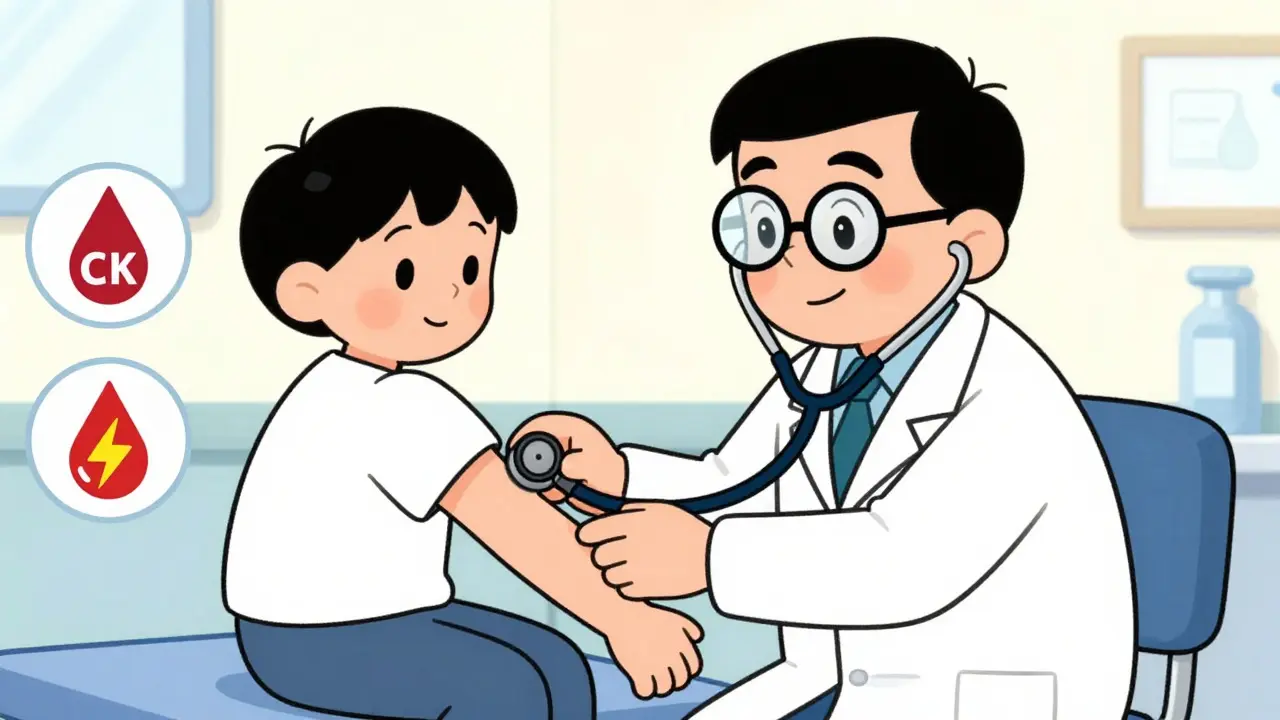
Step 1: Blood Tests The first step is always a Creatine Kinase (CK) test. If CK is significantly elevated, it points strongly toward myopathy. Doctors will also check thyroid function (TSH) and liver enzymes, as hypothyroidism is a common mimic of statin myopathy.
Step 2: Physical Examination A skilled clinician will test your muscle strength, not just ask about pain. Many patients underestimate their weakness. Simple tests, like rising from a squat or walking on your heels and toes, can reveal proximal weakness typical of myopathy. For neuropathy, doctors will test sensation using a monofilament or tuning fork, looking for loss of feeling in the feet and hands.
Step 3: Electrodiagnostic Testing If the diagnosis is unclear, nerve conduction studies and electromyography (EMG) are gold standards. These tests measure how well your nerves send signals and how your muscles respond. In axonal neuropathy, nerve conduction studies show reduced sensory nerve action potentials. In myopathy, EMG may show short-duration motor unit potentials, indicating muscle fiber damage.
Step 4: The Withdrawal-Rechallenge Strategy Sometimes, the only way to know for sure is to stop the statin. If symptoms resolve within 2-3 months, it suggests a statin link. Reintroducing the statin (or a different one) can confirm the diagnosis if symptoms return. However, this should be done carefully under medical supervision.
Management Strategies: Finding Relief
Once the cause is identified, treatment options open up. The goal is to maintain cardiovascular protection while minimizing discomfort.
For Confirmed Myopathy:
- Dose Reduction: Lowering the dose often reduces symptoms while maintaining some benefit.
- Switching Statins: Hydrophilic statins like pravastatin or rosuvastatin are less likely to enter muscle cells than lipophilic statins like atorvastatin or simvastatin. About 60% of patients who fail one statin tolerate another.
- Intermittent Dosing: Taking the statin every other day or twice a week can help some patients.
- Non-Statin Therapies: If statins are intolerable, drugs like ezetimibe or PCSK9 inhibitors can lower LDL cholesterol effectively without muscle side effects.
For Suspected Neuropathy:
- Ruling Out Other Causes: Check for diabetes, vitamin B12 deficiency, and alcohol use before blaming the statin.
- Cautious Discontinuation: Given the conflicting evidence on statins causing neuropathy, discontinuation should be considered only after other causes are excluded.
- Symptomatic Treatment: Medications like gabapentin or pregabalin may help manage nerve pain if it persists.
The Role of Coenzyme Q10 Supplementation: Many patients ask about taking CoQ10 supplements to counteract statin depletion. While theoretically sound, a 2015 JAMA study involving 44 statin-intolerant patients found no significant benefit over placebo. However, some smaller studies and anecdotal reports suggest it helps. It is generally safe, so trying it under doctor guidance may be worth it for some individuals.
When to Seek Immediate Help
Most statin-related muscle issues are manageable. However, watch for signs of rhabdomyolysis, a rare but serious condition where muscle tissue breaks down rapidly and releases proteins that can damage kidneys.
Seek emergency care if you experience:
- Severe, unexplained muscle pain or weakness
- Dark, tea-colored urine (a sign of muscle protein in the urine)
- Fever or malaise accompanying muscle pain
Early detection prevents kidney failure. Do not ignore these symptoms.
Conclusion: Partnering With Your Doctor
Muscle cramps on statins are real, but they are not a dead end. By understanding the difference between myopathy and neuropathy, you can advocate for better care. Keep a symptom diary. Note when the pain occurs, where it is located, and what makes it better or worse. Share this with your doctor. Together, you can adjust your regimen to keep your heart healthy without sacrificing your quality of life.
How long does it take for statin muscle pain to go away after stopping?
For most patients with statin-associated myopathy, symptoms begin to improve within a few days to a couple of weeks after discontinuing the medication. Complete resolution typically occurs within 2 to 3 months. If pain persists beyond this period, doctors should investigate other causes, such as underlying neuropathy or unrelated musculoskeletal conditions.
Can CoQ10 supplements prevent statin muscle cramps?
The evidence is mixed. While statins deplete CoQ10, a major 2015 study in JAMA found that CoQ10 supplementation did not significantly improve symptoms compared to placebo in statin-intolerant patients. However, because CoQ10 is generally safe, some doctors recommend trying it, especially for patients with mild symptoms. It is not a guaranteed cure.
Is it safe to switch from one statin to another if I have cramps?
Yes, switching is a common and effective strategy. Approximately 60% of patients who cannot tolerate one statin can successfully take a different one. Hydrophilic statins like pravastatin or rosuvastatin are often better tolerated than lipophilic ones like atorvastatin or simvastatin because they penetrate muscle tissue less readily.
What is the difference between myalgia and myopathy?
Myalgia refers to muscle pain or aching without measurable muscle damage. Myopathy implies actual muscle disease or damage, often confirmed by elevated creatine kinase (CK) levels or abnormal electromyography (EMG) results. Both can occur with statin use, but myopathy is more serious and requires closer monitoring.
Do statins cause permanent nerve damage?
There is no conclusive evidence that statins cause permanent peripheral neuropathy. Some studies even suggest a protective effect. However, if nerve symptoms develop, they should be evaluated promptly. In rare cases where neuropathy is linked to statins, symptoms may improve after discontinuation, but recovery can be slow and incomplete if significant nerve damage has occurred.
Andrew Donovan
July 24, 2026 AT 16:53Patrick Meyer
July 26, 2026 AT 10:41Prashant Shishodia
July 27, 2026 AT 10:35Autumn LW
July 27, 2026 AT 15:54Scott Colter
July 28, 2026 AT 17:44Paul Lyons
July 30, 2026 AT 15:58Deva Vidya
July 31, 2026 AT 17:05ANINDA GHOSH
August 1, 2026 AT 21:42MiMi Stanley
August 2, 2026 AT 20:09Najmunisa Govender
August 4, 2026 AT 02:06