 Feb, 17 2026
Sirolimus Timing Risk Assessment Tool
Patient Risk Profile
This tool assesses your individual risk for wound healing complications when starting sirolimus after kidney transplant. Based on your risk factors, we'll recommend the optimal timing for sirolimus initiation.
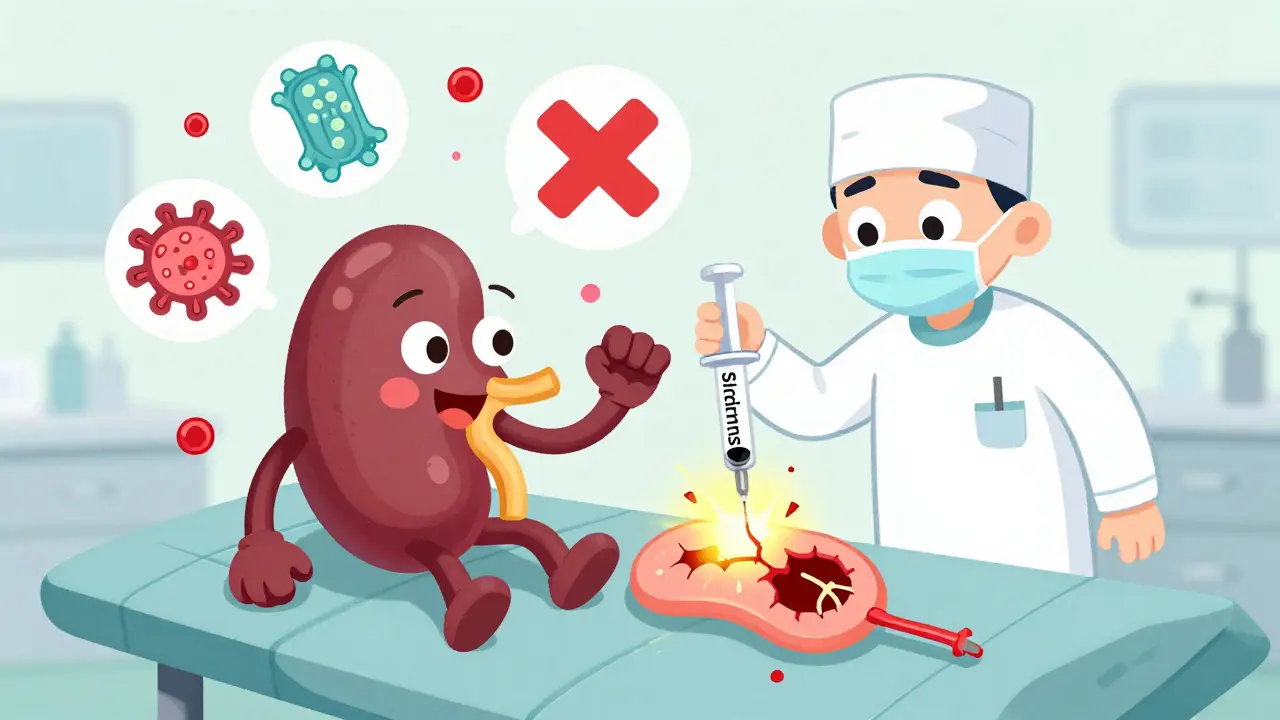
When a patient gets a kidney transplant, the goal isn’t just to survive the surgery-it’s to live well for years after. That’s where sirolimus comes in. It’s not the first drug doctors reach for, but for some patients, it’s the best choice. Unlike other immunosuppressants, sirolimus doesn’t damage the kidneys. It also lowers the risk of cancer, which is a big deal for transplant recipients. But there’s a catch: it can slow down wound healing. And that’s where timing matters more than almost anything else.
How Sirolimus Slows Healing
Sirolimus works by blocking a protein called mTOR. That’s useful for keeping the immune system from attacking the new organ. But mTOR isn’t just involved in immune responses-it’s also critical for healing. When you cut your skin, your body needs to rebuild tissue. That means making new blood vessels, pulling in fibroblasts to lay down collagen, and recruiting cells to fight infection. Sirolimus interrupts all of that. Studies in rats show that when sirolimus is given at therapeutic doses, wound breaking strength drops by up to 40%. Collagen, the structural glue of healing tissue, is reduced. Blood vessel growth-driven by VEGF (vascular endothelial growth factor)-gets cut in half. This isn’t a theory. It’s measurable. In one experiment, wound fluid had two to five times more sirolimus than blood. That means the drug isn’t just circulating-it’s pooling right where the cut is trying to close.When Do Complications Happen?
The biggest risks show up in the first week after surgery. That’s when inflammation peaks, and the body is laying the foundation for repair. If sirolimus is introduced during this window, it hits healing at its most vulnerable moment. Many transplant centers used to wait 14 days before starting sirolimus. Some still do. But the data is shifting. A 2008 study from the Mayo Clinic looked at 26 transplant patients who got sirolimus after dermatologic surgery-small skin procedures, not major transplants. Infection rates were higher (19.2% vs. 5.4%), and wound dehiscence (the cut reopening) happened in 7.7% of cases, compared to zero in the control group. The numbers weren’t statistically significant, mostly because the sample was small. But the trend was clear: sirolimus added risk. The real danger comes in abdominal surgeries-like kidney or liver transplants-where large incisions, deep tissue trauma, and longer recovery times create the perfect storm. Lymphocele (a fluid-filled pocket near the transplant site) is more common with sirolimus. So is skin breakdown. But here’s the twist: not all patients are at equal risk.Who’s Most at Risk?
It’s not just about the drug. It’s about the person. Obesity is a major red flag. A higher BMI increases the odds of wound problems by nearly threefold. Diabetes? Smoking? Poor nutrition? These aren’t just background factors-they’re active saboteurs. A smoker’s blood vessels don’t deliver oxygen well. A diabetic’s cells don’t respond to growth signals. A malnourished patient lacks the protein needed to rebuild tissue. Dr. Saeed M. G. Dawood’s team found that, except for age, nearly all wound healing risks are modifiable. That’s huge. It means you can reduce the danger before surgery even begins. Quit smoking four weeks ahead. Get your blood sugar under control. Start a high-protein diet. Lose weight if you’re overweight. These steps don’t just help with sirolimus-they help with healing no matter what drugs you’re on.
Timing Isn’t One-Size-Fits-All
The old rule-wait two weeks-might be outdated. New evidence suggests a smarter approach: start low, start late, and start smart. Many centers now delay sirolimus until day 7 to 10 after transplant. That gives the wound a head start. But some are pushing even earlier-day 5-if the patient is low-risk. A 2022 review in Wiley called earlier fears about sirolimus and healing "old myths." The reality? With proper patient selection and careful dosing, complications can be minimized. Trough levels matter. Keeping sirolimus blood levels below 4-6 ng/mL in the first 30 days appears to strike a balance: enough to prevent rejection, not enough to wreck healing. Higher levels? More risk. Lower levels? Better healing. Monitoring isn’t optional anymore-it’s standard.What About Other Drugs?
Sirolimus doesn’t work alone. It’s usually paired with steroids, mycophenolate, or antithymocyte globulin (ATG). And guess what? Those drugs also slow healing. Steroids reduce collagen production. Mycophenolate suppresses cell division. ATG wipes out immune cells that help repair tissue. So when you see a wound complication, don’t just blame sirolimus. Look at the whole cocktail. Sometimes, reducing the steroid dose or switching from ATG to a different agent makes more difference than delaying sirolimus.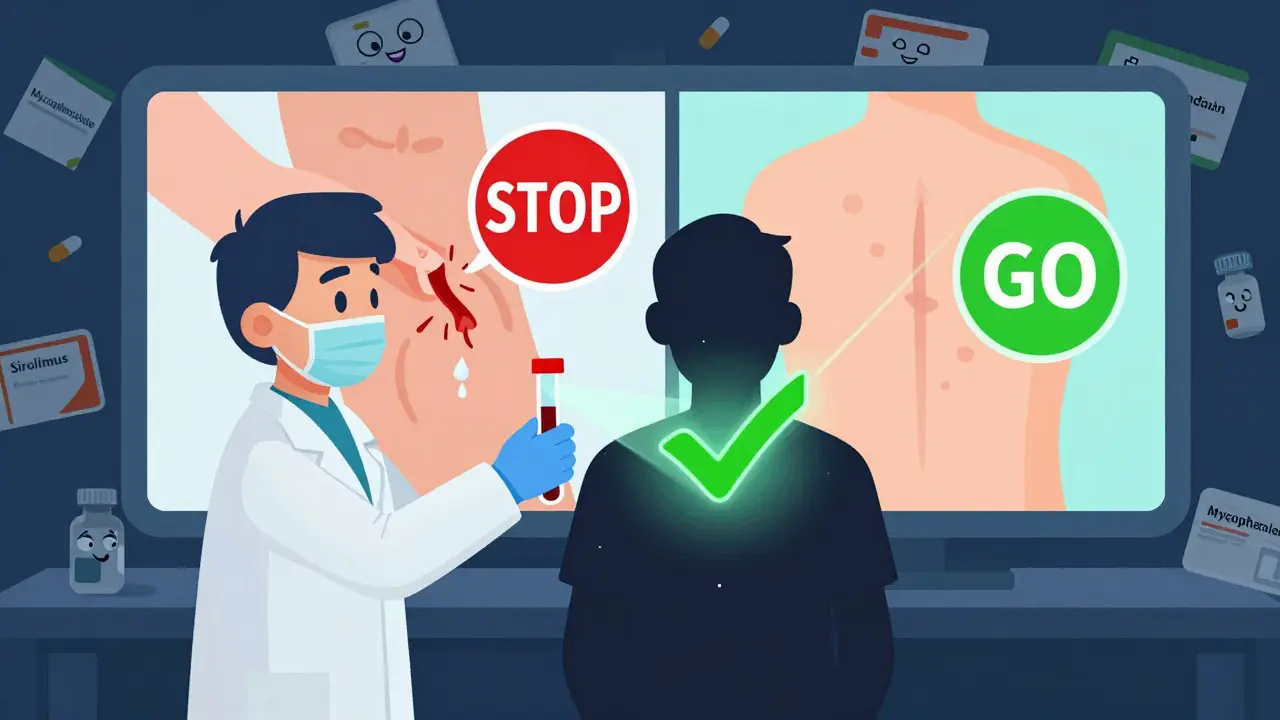
The New Way Forward
The American Society of Transplantation updated its guidelines in 2021. No more blanket delays. No more automatic 14-day waits. Instead, they recommend a personalized plan:- Assess BMI, diabetes, smoking, nutrition, and prior wound history.
- Delay sirolimus for 7-10 days in high-risk patients (BMI >30, uncontrolled diabetes, smoker).
- Consider starting as early as day 5 in low-risk patients with no history of poor healing.
- Monitor trough levels closely during the first month.
- Use alternative immunosuppressants if healing is visibly delayed.
What’s Next?
Research is moving fast. Scientists are testing whether topical sirolimus (applied to the skin) could actually help heal chronic wounds-something the oral form prevents. There’s also work on biomarkers that predict healing response before the drug is even given. Imagine a blood test that tells you: "This patient will heal fine on sirolimus." That’s not science fiction-it’s on the horizon. For now, the message is clear: sirolimus isn’t forbidden. It’s not even dangerous. But it’s powerful. And like any powerful tool, it needs respect. Timing, patient selection, and monitoring aren’t optional extras-they’re the core of safe use.If you’re a transplant patient, ask your team: "What’s my risk for poor healing? What’s my sirolimus target level? When will you start it?" If you’re a clinician, don’t rely on old protocols. Build your plan around the person-not the drug.
Can sirolimus be started immediately after surgery?
Starting sirolimus within the first 72 hours after major surgery is generally not recommended. The first week is when the body is most active in wound repair, and sirolimus blocks key processes like collagen production and blood vessel formation. Most transplant centers delay initiation until day 7-10, unless the patient is low-risk (normal BMI, no diabetes, non-smoker) and the surgery was minor. Even then, trough levels should be kept below 4-6 ng/mL.
Does sirolimus cause infections?
Sirolimus doesn’t directly cause infections, but by slowing healing, it creates openings for them. A wound that doesn’t close properly becomes a breeding ground for bacteria. Studies show higher infection rates in patients on sirolimus-especially if other risk factors like diabetes or smoking are present. The risk is manageable with good surgical technique, proper wound care, and delaying sirolimus until healing is underway.
Are there alternatives to sirolimus for transplant patients?
Yes. Calcineurin inhibitors like tacrolimus and cyclosporine are more commonly used because they don’t impair healing as much. But they carry a risk of kidney damage over time. Sirolimus is often chosen for patients who develop kidney toxicity from these drugs or who have a high risk of skin cancer. Some centers use a hybrid approach-starting with a calcineurin inhibitor and switching to sirolimus later, once healing is complete.
How long should I wait to restart sirolimus after a wound complication?
If a wound complication occurs-like dehiscence, infection, or lymphocele-sirolimus should be held until the wound shows clear signs of healing: no drainage, no redness, and new tissue growth. This usually takes 2-4 weeks. Restarting too soon can make things worse. Once healing is stable, reintroduce sirolimus at a low dose (e.g., 1 mg/day) and monitor trough levels closely.
Can lifestyle changes reduce the risk of healing problems?
Absolutely. Quitting smoking at least four weeks before surgery improves blood flow. Controlling blood sugar reduces inflammation. Eating enough protein (1.2-1.5 g per kg of body weight) gives your body the building blocks for repair. Losing even 10% of excess weight lowers surgical risk significantly. These aren’t minor tweaks-they’re essential steps to make sirolimus safer.
John Cena
February 19, 2026 AT 00:13Really solid breakdown. I’ve seen too many docs just slap sirolimus on post-op and wonder why the incision looks like it’s giving up. The 7-10 day window makes sense - let the body do its thing before throwing a wrench in the works. I’m glad guidelines are finally catching up to real-world outcomes.
Jonathan Rutter
February 19, 2026 AT 15:22Look, I get it - you wanna be all scientific and nuanced, but here’s the raw truth: if your patient is obese, diabetic, and smokes, they shouldn’t even be on the transplant list in the first place. Sirolimus isn’t the problem - it’s the people who let bad habits slide because ‘they’re gonna fix it later.’ You don’t get to have your steak and eat your liver too. This isn’t a buffet, it’s a life-or-death procedure. Stop coddling poor choices and start enforcing accountability. The system’s breaking because we’re too nice.
Jana Eiffel
February 21, 2026 AT 04:15It is of the utmost importance to recognize that the pharmacological modulation of mTOR represents not merely a therapeutic intervention, but a profound recalibration of cellular homeostasis. The implications for tissue regeneration extend beyond the immediate surgical context into the broader paradigm of regenerative medicine. One might posit that sirolimus, in its dual capacity as both protector and inhibitor, serves as a mirror to the delicate equilibrium inherent in human physiology - a balance between immune vigilance and structural integrity. To administer such a compound without meticulous consideration of individual bioindividuality is, in essence, to navigate a labyrinth blindfolded.
Benjamin Fox
February 22, 2026 AT 16:16USA still leading the way in transplant care 🇺🇸🔥 Sirolimus timing? We got this. Other countries still using 14-day wait? LOL. Time to update your manuals. Also - stop using steroids. They’re trash. 💪
Freddy King
February 23, 2026 AT 21:47Let’s deconstruct this. The mTOR pathway isn’t just a healing switch - it’s a metabolic integrator. When you inhibit it, you’re not just delaying fibroblast migration - you’re disrupting the entire anabolic cascade: protein synthesis, mitochondrial biogenesis, autophagy flux. The 40% drop in breaking strength? That’s not noise - that’s systemic suppression. And the fact that sirolimus concentrates in wound fluid? That’s pharmacokinetic malice. You’re not treating rejection - you’re sabotaging repair. The real innovation isn’t in timing - it’s in biomarker-guided titration. We need RNA signatures, not trough levels. But hey, at least we’re past the ‘wait two weeks’ myth. Progress.
Hariom Sharma
February 25, 2026 AT 10:15This is gold! I’ve seen so many patients in India get started on sirolimus too fast because of cost and availability. But once we started delaying it to day 7-10 and pushing protein intake - wound healing improved dramatically. Even small changes like adding eggs and lentils daily made a huge difference. Keep sharing this - we need more of these guidelines in low-resource settings too!
Nina Catherine
February 27, 2026 AT 01:51soooo this makes so much sense!! i had a friend who got a transplant and her wound opened up and they blamed sirolimus but i think it was more the steroids and her sugar being outta whack?? also i’m not a doc but i read this whole thing and now i feel like i could be a nurse 😅
Taylor Mead
February 28, 2026 AT 07:25Appreciate the nuance here. Too many people treat immunosuppressants like on/off switches. This isn’t magic - it’s biology. The fact that we can now personalize timing based on BMI, smoking, and glucose control? That’s medicine evolving. Let’s keep moving away from one-size-fits-all protocols. Every body’s different. So should the plan.
Maddi Barnes
February 28, 2026 AT 14:22Oh wow, so sirolimus is basically the villain we didn’t know we were cheering for? 🤡 I love how the article calls it ‘powerful’ - that’s code for ‘this drug will ruin your life if you’re not rich enough to afford perfect care.’ Meanwhile, the real issue is that we let people go into surgery with HbA1c of 9.5 and a pack-a-day habit because ‘they’re doing their best.’ Let’s not pretend this is about science. It’s about who gets to be a ‘low-risk’ patient. And spoiler: it’s never the one who works two jobs and can’t afford a nutritionist.
Tommy Chapman
March 1, 2026 AT 10:41Why are we even talking about this? If you can’t quit smoking before a transplant, you don’t deserve one. This isn’t a right - it’s a privilege. And if you’re overweight? Go lose 50 pounds first. Stop asking doctors to fix your laziness. We’re not here to babysit your poor life choices. Sirolimus? Fine. But only after you’ve proven you can take care of yourself. Otherwise, save the organ for someone who actually respects it.
Jayanta Boruah
March 3, 2026 AT 10:06The empirical evidence presented herein is insufficiently robust to substantiate the proposed temporal parameters. While anecdotal observations from Western cohorts are cited, the generalizability to non-Western populations remains unvalidated. Furthermore, the assertion that 'lifestyle changes reduce risk' presumes socioeconomic accessibility to dietary modification, cessation counseling, and weight management infrastructure - conditions not universally present. A more rigorous meta-analysis, stratified by global health indices, is warranted before policy revision.
aine power
March 4, 2026 AT 06:44Sirolimus. How quaint. I suppose we should also start discussing whether the patient’s socks match their surgical gown.
Laura B
March 4, 2026 AT 15:25This is such a clear, thoughtful post - thank you. I’m a transplant nurse and this is exactly what we’re trying to teach new residents. It’s not about being afraid of sirolimus - it’s about respecting its power. And yeah, the ‘start low, start late’ approach has changed our complication rates. Small tweaks, big results.
Robin bremer
March 5, 2026 AT 19:21bro i had a cousin get a kidney and they put him on sirolimus day 3 and his incision started leaking like a faucet 😭 like what even is life
Irish Council
March 6, 2026 AT 01:30Did you know the WHO is pushing sirolimus to reduce transplant costs? It’s not about healing - it’s about corporate savings. The real reason they moved to day 7 is because insurance won’t pay for 14-day hospital stays. The science? Conveniently aligned with budget cuts. Wake up. This isn’t medicine - it’s accounting.