 Mar, 26 2026
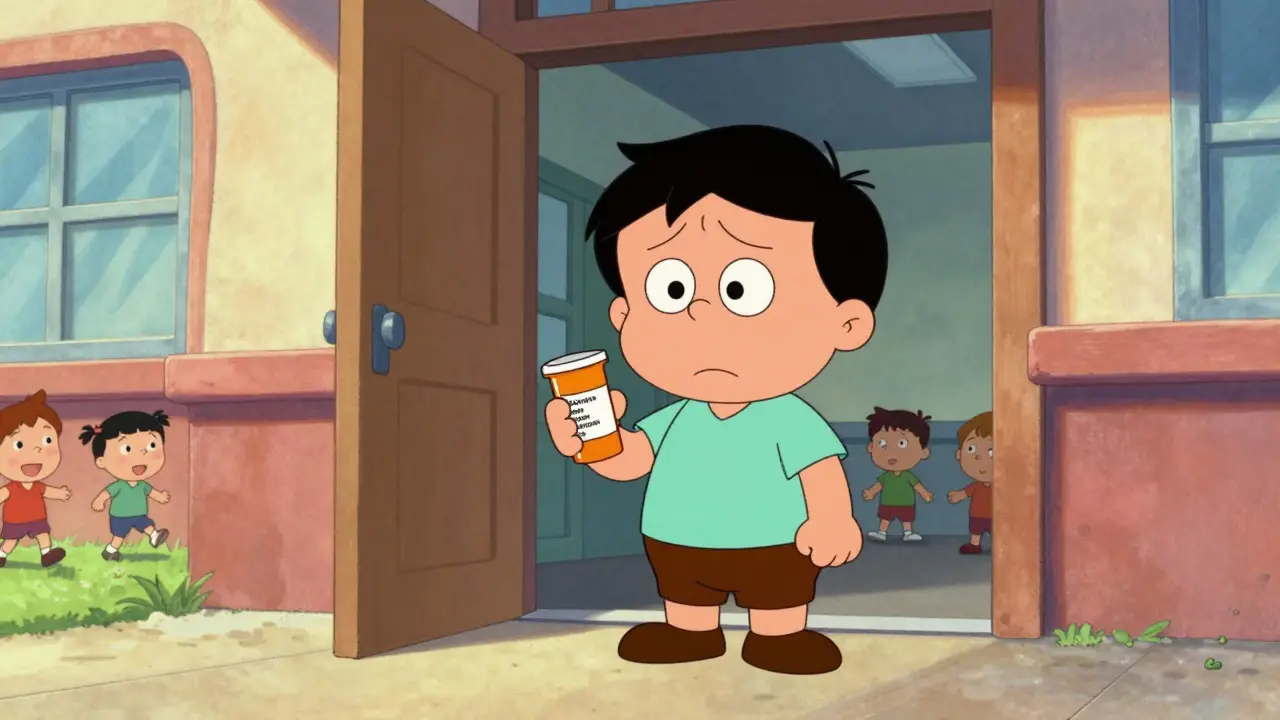
Sending your child to school while managing daily medication feels risky. You worry if the nurse will give the right dose on time, if the bottle will stay safe, or if paperwork got lost in a stack of forms. It’s not just about asthma inhalers anymore; nearly half of school-aged children now take prescription or over-the-counter medications regularly. That means schools handle thousands of doses every week, and errors happen when communication breaks down. You need to know exactly how the system works so your child gets treatment without missing school or suffering a health event.
This guide cuts through the red tape to show you what schools actually need and why. We’ll look at the specific forms, storage rules, and safety checks that protect your child. By understanding these guidelines, you stop being a spectator in your child’s healthcare and become an active partner.
What You Need to Know
- All medications require a signed order: A verbal note from a doctor isn’t enough; schools need written authorization detailing dosage, timing, and duration.
- Original containers are mandatory: Refilling medicine into pill organizers or unlabeled bags is prohibited by safety regulations in most districts.
- Parents deliver the drugs: Students cannot carry most controlled prescriptions to school; you must hand them directly to the health office staff.
- Annual renewals apply: Long-term medication permissions expire each August in many states and must be refreshed before the new school year begins.
- Communication saves lives: Immediate updates about side effects or schedule changes reduce medication errors significantly.
The Foundation of School Medical Safety
School Medication Administration is a structured protocol ensuring students receive necessary medications safely during school hours under professional supervision. This process wasn't built overnight. It emerged from serious concerns about mistakes happening in school settings. With childhood conditions like diabetes and ADHD becoming more common, formal guidelines had to evolve to protect kids.The statistics paint a clear picture. According to the American Academy of Pediatrics (AAP) 2024 policy, roughly 40% to 50% of students take some kind of medication daily. That is not a small number. Imagine a classroom of thirty students; likely six of them need a nurse's attention every day. Without strict rules, the risk of mixing up names or dosages spikes.
The core of safety relies on something called the "5 Rights." This isn’t just a suggestion; it is the standard followed by the National Association of School Nurses (NASN) and state departments. When a nurse or trained admin staff opens a drawer, they check five things before touching a pill:
- Right Student: The name matches the label exactly.
- Right Medication: The drug name matches the doctor’s order.
- Right Dose: The amount measured matches the prescription.
- Right Route: Is it swallowed, inhaled, or injected?
- Right Time: Given within the allowed window, usually plus or minus thirty minutes of the scheduled slot.
If one of these boxes fails, the medication doesn’t get given. Schools would rather delay a dose than risk a reaction. Research shows that sticking to these protocols reduces medication errors in schools by up to 75% compared to loose, informal methods. That’s why cutting corners feels tempting but isn’t safe.
Getting the Paperwork Right
You can't walk into a school office with a bag of pills and hope for the best. Documentation acts as your legal shield and the school's permission slip. Most districts follow state mandates, such as those seen in New York State, which require very specific details on the paper trail.
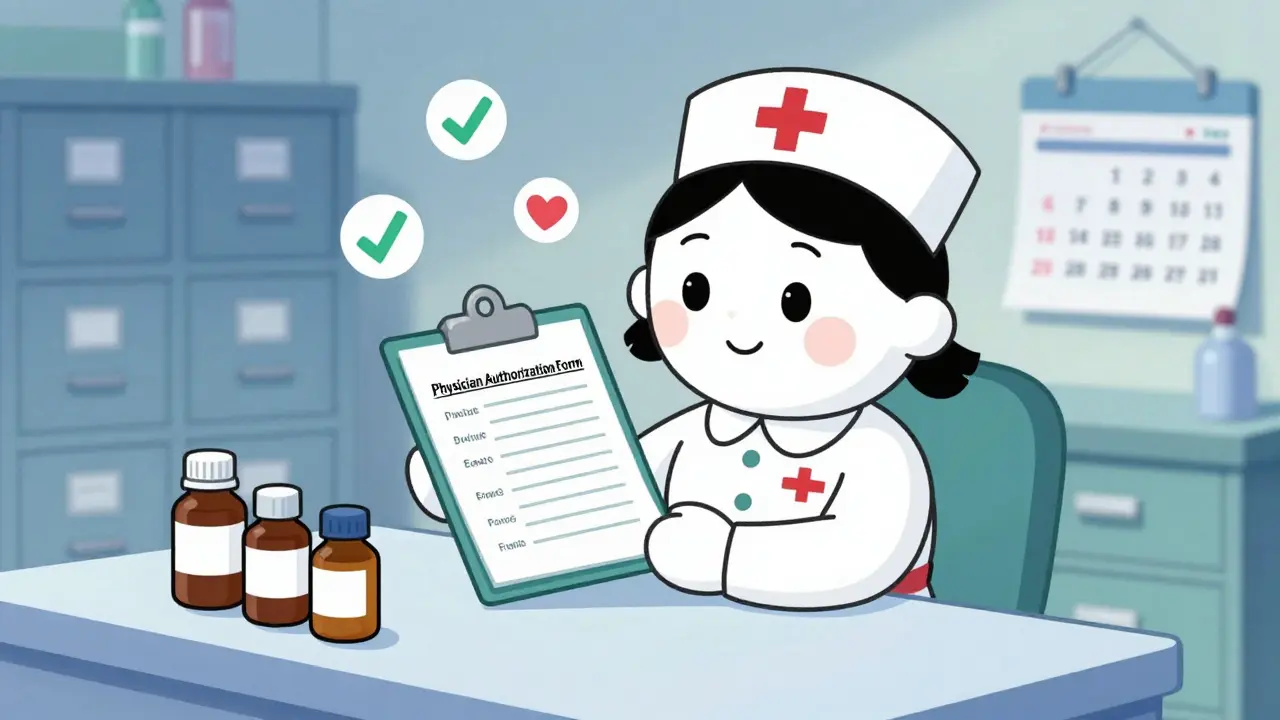
First, you need a Physician Authorization Form. This document isn’t just a prescription pad scribble. It must include the student's full name, the exact medication name, the precise dosage amount, how to take it, and the duration of treatment. Crucially, it needs the healthcare provider’s license number. In many jurisdictions, like New York, this order must be renewed every single year. If you forget to renew in August, the school has to hold onto the medication until it arrives.
Second, there is the Parent Consent section. Even if the doctor says the kid needs the meds, the parent or guardian must sign off on the permission to administer them during school hours. This is often combined with the physician order into one comprehensive packet. Some regions separate these; for instance, California requires a specific form for long-term prescriptions distinct from acute needs.
Timing matters here too. NYC Public Schools suggest submitting these forms by June 1st for the upcoming year. Think about the transition summer months. If you wait until the first day of school, you might face a backlog where the office can't review everything immediately. Your child could go a few days without their routine meds simply because the file isn’t finalized.
Delivering Medication Safely
How the medication reaches the school is just as important as the forms. There is a widespread belief that students can carry their own refills for convenience, but regulations usually forbid this. For safety, the law requires a parent or guardian to physically deliver the medication to the health room.
The container must be the original manufacturer-labeled bottle. It needs the patient's name, the pharmacy name, and the current date. Expired medicine must never be dropped off. Even if the pills look fine, chemical stability degrades after the printed expiration date, which poses a safety risk. Also, if the bottle is refilled, schools generally want a fresh supply every 30 days or so to ensure inventory control.
When you drop off the meds, do not leave the bottle in a basket and walk away. You need to meet the school nurse or designated staff member face-to-face. Both parties sign a log noting the receipt, the expiration date, and the remaining quantity. This creates a chain of custody. If a bottle goes missing, this log protects everyone by showing exactly who had possession of it last.
| Requirement | Why It Matters | Status |
|---|---|---|
| Original Label | Verifies identity and dosage | Required |
| Valid Expiration | Ensures drug potency | Required |
| Parent Delivery | Maintains security chain | Required |
| Written Order | Legal authority to treat | Required |
When Kids Can Take Their Own Meds
Older students often want autonomy. Depending on your state laws, teenagers may be allowed self-administration. However, this isn’t automatic. It requires a specific “Self-Medication Release Form.” Both the physician and the parent must sign this. Furthermore, the student often has to prove competency.
In places like California, students must demonstrate they know exactly how to operate the device, whether it is an inhaler or an epinephrine pen, through supervised practice. They aren’t just handed the keys to the cabinet. Schools are cautious here. A study showed that students participating in their own treatment plans have 32% fewer missed doses, but only when the school trusts the training process completely.
For younger kids, especially those with asthma, the focus is often on having emergency spares kept on site. Schools like NYC Public Schools sometimes provide free backup inhalers (Albuterol) but only if prescribed and documented. You still need the primary authorization form for the school to keep that backup stock legally.
Managing Chronic Conditions and Emergencies
Routine care differs vastly from emergency response. If your child has a condition requiring long-term management, like diabetes, the school implements a broader care plan. But what happens when things go wrong? Communication is the only buffer you have.
The AAP warns that parents must notify the school immediately of any changes to home schedules or observed reactions. If you notice a rash at home, tell the nurse today. Not calling contributes to 18% of medication errors in schools. Sometimes, the school team sees something you don’t. Conversely, you see side effects they miss. Keep the lines open.
Also, prepare for refusal. Children might get scared of needles or taste. Schools have protocols to contact parents immediately if a student refuses a dose. This prevents pressure situations where the child feels bullied into taking medicine, which could cause emotional trauma. A calm approach usually wins better results.
Closing Out the Semester
We rarely talk about taking meds away, but you have to. Schools store hundreds of unused bottles, creating liability nightmares. Policies across states mandate retrieval by late August or early September.
If you leave medication in the health office over the summer, the school is obligated to dispose of it. In some counties, they discard anything not picked up by the deadline, regardless of how much money was left in the bottle. Refrigerated meds pose a special problem since they spoil quickly in non-climate-controlled environments. Always set a calendar reminder for the last day of school to reclaim supplies.
Can I put my child’s meds in a backpack?
Generally, no. Federal and state laws prohibit students from transporting controlled substances on campus. Only authorized emergency meds like EpiPens are allowed in backpacks, and only with specific documentation on file.
How late can the nurse give the medication?
Most policies allow a 30-minute window. For example, if the order says 8:00 AM, the nurse can administer between 7:30 AM and 8:30 AM to accommodate schedule variations.
Does the school charge for administering medicine?
Public schools typically do not charge for administration costs. However, some private schools may pass these administrative labor costs onto families, so check your enrollment agreement.
What happens if I forget the medication in August?
If you retrieve it by the deadline, usually late August, it is returned. After that date, unused medication must be discarded for safety reasons and cannot be saved for the next term.
Is a note from a doctor enough?
A handwritten note usually isn’t sufficient. You need a completed official authorization form that includes the doctor’s license number and signature, along with a parent signature.
How long do schools keep medication records?
Electronic Medication Administration Records (eMARs) are kept on file for several years. These records track every dose given and help prevent errors by flagging unusual patterns.
Who pays for the backup inhaler?
Some districts provide free backup Albuterol, but others require you to purchase and authorize the school copy yourself. Ask the school nurse specifically about your district’s supply policy.
Can my teen take their own ADHD meds?
It depends on state laws. Usually, self-medication release forms are required, and the student must demonstrate they understand the regimen perfectly before being trusted with it.
Tony Yorke
March 28, 2026 AT 08:30just get the forms done early dont wait till the last minute
Monique Ball
March 29, 2026 AT 12:17You have to understand the stakes here! We are talking about literal life or death situations for these kids!! 💊 It is not just about convenience when you drop off a pill bottle 🏥 Schools need to see the official prescription forms or nothing works! I always tell parents to read the fine print before signing anything! There are so many hidden rules in those packets 😱 And do not forget the expiration dates matter too!!! Expired meds can turn toxic in the wrong conditions ☠️ Nurses are overworked and cannot guess your dosages 📋 You must bring the original pharmacy label every single time ✅ If you refill the container you break the chain of custody 👮♀️ Communication between home and school saves so many headaches later! Call if your kid reacts differently than usual 💬 Safety is not optional in the educational system anymore 🛡️ Please read through this guide carefully before heading to the office 🙏
gina macabuhay
March 30, 2026 AT 14:01It is genuinely laughable how people ignore these basic protocols for their own convenience. The regulations exist precisely because negligence leads to tragic outcomes in school environments. One might expect adults to take responsibility seriously rather than complaining about paperwork. Parents who refuse to comply with the chain of custody requirements endanger everyone involved.
Richard Kubíček
March 30, 2026 AT 17:37Collaborating with the nurse makes everyone win in the end. We all want our children safe while they learn. The system works best when we trust each other to follow the steps. Small efforts like sending the right forms help build a better school culture for all families.
Rachael Hammond
March 31, 2026 AT 01:17I realy think the forms are hard to fill out somtimes but it is worth it for safety. My daughter had to take meds daily and we had to learn all the rules. The nurse was super nice but she needed the paper work exact. I hope everyone takes care of their kid properly like that.
Austin Oguche
March 31, 2026 AT 16:58Compliance ensures safety for the community at large. When individual actions affect the wider group we must act responsibly. Documentation serves as a critical shield against liability and error. We should support these structural measures fully.
Jeannette Kwiatkowski Kwiatkowski
April 2, 2026 AT 08:06The bureaucracy is clearly beyond most folks cognitive abilities honestly. Only those who truly understand the nuance of medical administration grasp the gravity here. It seems basic common sense escapes the masses unfortunately. Perhaps simplified systems would fail to catch the edge cases anyway.
Tommy Nguyen
April 4, 2026 AT 00:11Parents really need to step up here.
Poppy Jackson
April 5, 2026 AT 02:24My heart breaks seeing kids miss doses because of paperwork. It feels devastating when preventable mistakes happen in the health room. We must hold each other accountable to keep things running smoothly. Please do not let admin issues hurt anyone vulnerable.
Kameron Hacker
April 6, 2026 AT 13:58We must demand stricter adherence to legal standards without fail. The current framework requires absolute precision to function effectively in high risk scenarios. Any deviation from protocol invites potential harm that cannot be undone. Society demands we protect the most fragile among us rigorously.