 Jan, 21 2026
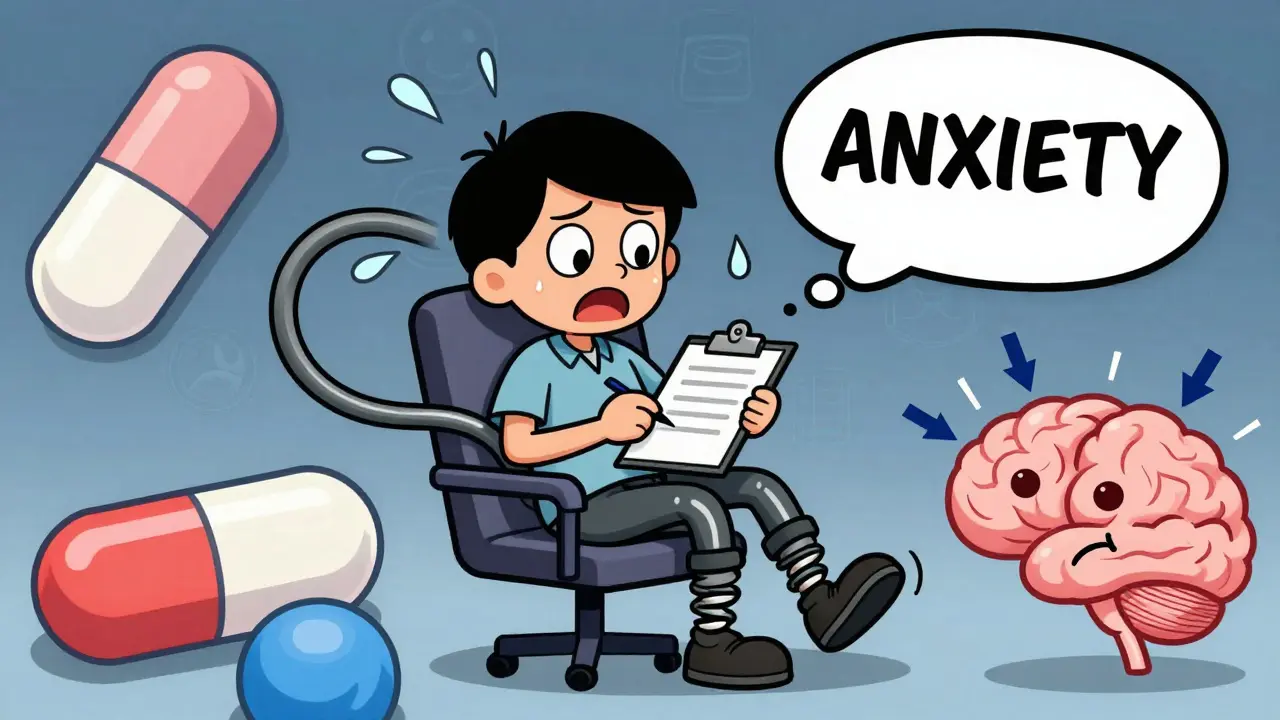
Imagine taking a medication to calm your mind, only to feel like your body is screaming to move. You can’t sit still. Your legs ache. You pace. You cross and uncross your legs over and over. Your doctor says it’s anxiety-so they increase your dose. Things get worse. This isn’t anxiety. It’s akathisia.
Many people on antipsychotics, antidepressants, or even stomach meds like metoclopramide experience this. But most doctors don’t recognize it. And when they miss it, they make things worse-sometimes dangerously so. Akathisia isn’t just discomfort. It’s a movement disorder tied to brain chemistry changes. Left untreated, it can lead to suicidal thoughts, aggression, or complete treatment refusal. The same goes for restless legs syndrome (RLS). Both cause leg restlessness. Both feel unbearable. But they’re not the same. And treating them the wrong way can be harmful.
What Is Akathisia, Really?
Akathisia isn’t fidgeting. It’s not being nervous. It’s a physical and mental torment caused by certain medications-mostly antipsychotics like haloperidol, risperidone, and olanzapine. First described in the 1950s, it’s one of the most common side effects of these drugs. About 20-40% of people on older antipsychotics get it. Even newer ones like quetiapine or aripiprazole can trigger it in 5-15% of users.
The core problem? These drugs block dopamine receptors in the brain. Dopamine helps control movement and mood. When it’s blocked too much, the brain sends confused signals. You don’t want to move-but your body insists you must. The result? An inner restlessness so intense, patients describe it as ‘aching with the need to walk,’ ‘feeling like you’ll jump out of your skin,’ or ‘being trapped in a body that won’t stop shaking.’
It’s not just legs. You might rock back and forth, shift weight constantly, lift your knees high while sitting, or pace in place. You can’t relax. Even when you’re exhausted, you can’t sit still. And unlike normal fidgeting, this isn’t voluntary. It feels like your body is working against you.
Restless Legs Syndrome: The Look-Alike
Restless legs syndrome (RLS) feels similar-but it’s a different beast. RLS happens mostly at night or during quiet rest. You get an uncomfortable urge to move your legs, often described as crawling, tingling, or pulling deep inside. Movement brings relief. Sitting still makes it worse. People with RLS often kick their legs in their sleep or can’t fall asleep because of the sensation.
RLS isn’t caused by antipsychotics. It’s linked to low iron, genetics, kidney disease, or pregnancy. Dopamine-boosting drugs like levodopa or ropinirole help RLS. But they make akathisia worse. That’s a key clue. If a medication meant to calm your mind suddenly makes you feel like you’re being ripped apart from the inside, it’s likely akathisia-not RLS.
And timing matters. Akathisia usually shows up within days to four weeks after starting or increasing a medication. RLS? It’s been there for years-or runs in the family. If your restlessness started after a new drug, suspect akathisia first.
Why Misdiagnosis Is Deadly
Here’s the scary part: up to half of all akathisia cases get misdiagnosed as anxiety, agitation, or worsening psychosis. Why? Because the symptoms look like emotional distress. You’re restless. You’re irritable. You can’t sit still. Doctors think: ‘This patient is getting worse.’ So they increase the antipsychotic dose.
That’s like pouring gasoline on a fire.
Case studies show this happens often. In one 2017 report, a patient on haloperidol developed severe akathisia. His doctor thought it was anxiety. He doubled the dose. Within days, the patient had suicidal thoughts. Only after stopping the drug and starting clonazepam did he recover fully in three days.
The American Psychiatric Association warns: akathisia is linked to increased risk of suicide, violence, and aggression. In one survey of 1,247 antipsychotic users, 68% with restlessness were told it was anxiety. Of those, 42% had their meds increased-and their symptoms got worse. That’s not just a mistake. It’s a public health blind spot.

How to Spot Akathisia-Even If Your Doctor Doesn’t
You don’t need a fancy test. You need to ask the right questions.
- Do you feel an inner urge to move, even when you’re not tired?
- Does sitting still feel unbearable-even if you’re exhausted?
- Do you pace, rock, or shift your legs constantly, especially when seated?
- Did this start after changing your medication?
- Does moving help, but only for a few seconds before the urge comes back?
If you answer yes to most of these, especially after starting an antipsychotic, metoclopramide, or certain antidepressants, you’re likely dealing with akathisia.
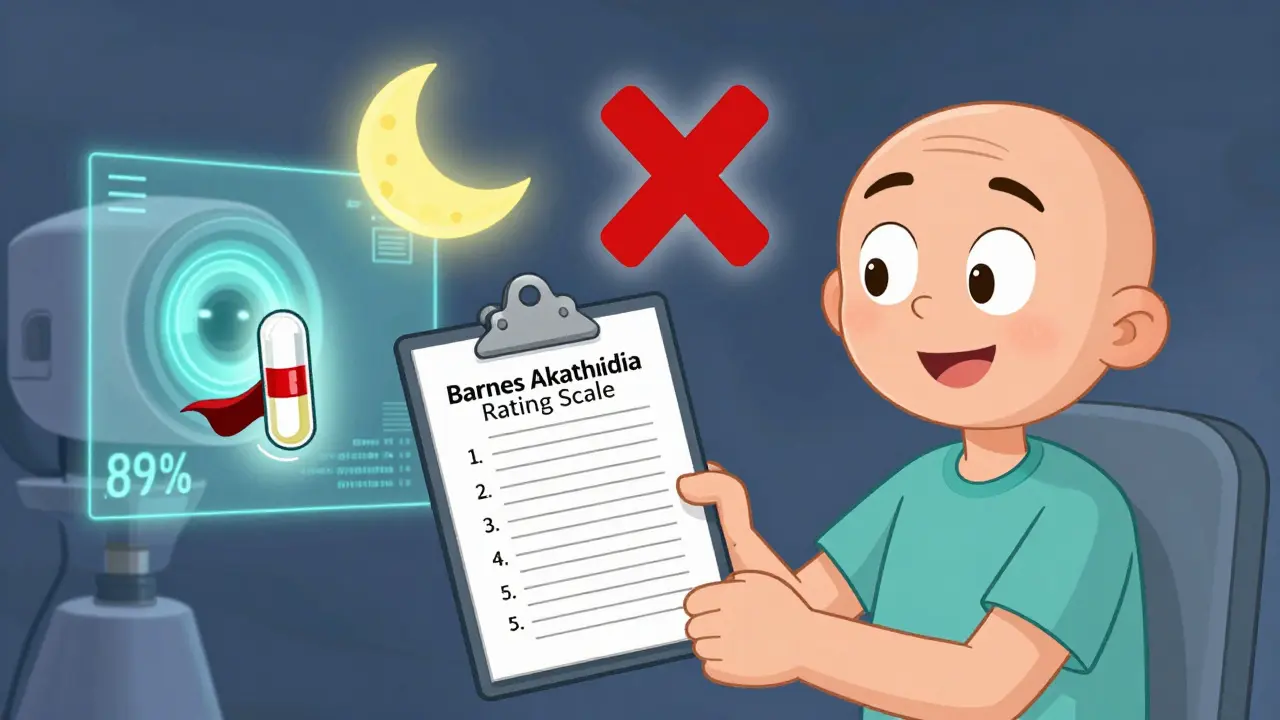
Doctors use the Barnes Akathisia Rating Scale (BARS) to check. It takes five minutes. It asks about inner restlessness and visible movement. If your doctor doesn’t know it, ask if they’ve heard of it. If they haven’t, it’s time to seek a second opinion.
What to Do If You Have Akathisia
Step one: don’t panic. But don’t wait either. The sooner you act, the faster you’ll feel better.
1. Talk to your prescriber about reducing or stopping the medication. For many, simply lowering the dose or switching to a lower-risk drug (like lumateperone) brings relief. Haloperidol should be tapered slowly-over three days or more-to avoid withdrawal symptoms.
2. Consider add-on treatments. If you can’t stop the antipsychotic (say, because you have severe psychosis), these help:
- Propranolol (a beta-blocker): Start at 10 mg twice daily. It’s safe, cheap, and works for many.
- Clonazepam (a benzodiazepine): 0.5 mg at night. Helps with both restlessness and sleep.
- Cyproheptadine: An antihistamine that blocks serotonin. Used off-label at 4 mg daily.
These don’t cure akathisia-they manage it. But they can turn unbearable suffering into something manageable.
3. Avoid dopamine blockers. Don’t take more antipsychotics. Don’t use metoclopramide for nausea if you’re already on an antipsychotic. Don’t take anti-nausea meds like domperidone without checking with your doctor.
What Doesn’t Work
Don’t try these:
- Increasing your antipsychotic dose
- Antidepressants like SSRIs-they can make akathisia worse
- Levodopa or other RLS treatments-they may trigger more agitation
- Just waiting it out
Waiting doesn’t help. Akathisia doesn’t go away on its own. If the drug stays, the symptoms often get worse. Chronic akathisia can last for months or years if not addressed.
What’s New in Treatment
Science is catching up. In 2023, a new drug called pimavanserin (Nuplazid), originally for Parkinson’s hallucinations, showed 62% reduction in akathisia in a clinical trial. It works by blocking serotonin receptors-not dopamine-so it doesn’t interfere with antipsychotic effects.
Researchers are also testing transcranial magnetic stimulation (TMS), a non-invasive brain stimulation technique, to calm the overactive circuits causing restlessness. Early results from Harvard’s pilot study look promising.
And apps are coming. The International Parkinson and Movement Disorder Society launched a free diagnostic tool in 2023 that helps clinicians spot akathisia using video analysis. Stanford’s AI model can now detect akathisia from video calls with 89% accuracy. This could change how we screen patients remotely.
When to Get Help Immediately
If you’re experiencing:
- Thoughts of self-harm or suicide
- Extreme aggression or violence
- Feeling like you’re losing control of your body
Call your doctor right away-or go to the ER. Tell them you think you have akathisia. Bring this information with you. Don’t let them dismiss it as ‘just anxiety.’
One patient wrote: ‘Akathisia was worse than the psychosis I was being treated for.’ That’s not an exaggeration. It’s the truth for thousands.
Bottom Line
Restlessness from medication isn’t normal. It’s not weakness. It’s not anxiety. It’s a biological reaction to a drug changing your brain chemistry. You’re not crazy. You’re not broken. You’re reacting to a side effect that’s been ignored for decades.
If you’re on an antipsychotic and feel like you can’t sit still, ask: Could this be akathisia? If yes, don’t wait. Talk to your doctor. Ask about lowering the dose. Ask about propranolol or clonazepam. If they don’t know what you’re talking about, find someone who does.
Your body is trying to tell you something. Listen.
Can akathisia be mistaken for anxiety?
Yes, very often. Because akathisia causes inner restlessness, irritability, and agitation, doctors frequently mistake it for worsening anxiety or psychosis. This leads to dangerous mistakes-like increasing the antipsychotic dose, which makes symptoms worse. Up to 50% of akathisia cases are misdiagnosed. Always ask: ‘Could this be a side effect of my medication?’
Is restless legs syndrome the same as akathisia?
No. Restless legs syndrome (RLS) is a neurological condition that causes uncomfortable sensations in the legs, mostly at night or during rest. Movement brings relief. Akathisia is caused by medication and creates an urgent, involuntary need to move, often while sitting. RLS responds to dopamine drugs; akathisia gets worse with them. Timing matters too-akathisia starts within weeks of a new drug; RLS is often lifelong or tied to iron deficiency.
Which medications cause akathisia?
The most common culprits are first-generation antipsychotics like haloperidol and fluphenazine. Second-generation ones like risperidone, olanzapine, and aripiprazole can also cause it. Non-psychiatric drugs like metoclopramide (for nausea), domperidone, and some antidepressants (especially SSRIs) are also linked. The risk is highest with drugs that strongly block dopamine receptors.
How long does akathisia last?
It depends. Acute akathisia starts within days to weeks and lasts less than six months. If the drug isn’t changed, it can become chronic-lasting over six months. Tardive akathisia can appear months or years later and may persist even after stopping the drug. Withdrawal akathisia can happen within weeks of reducing the dose. Early intervention gives the best chance of full recovery.
Can akathisia lead to suicide?
Yes. The distress from akathisia is so severe that it’s linked to suicidal thoughts and behaviors. Studies show patients with untreated akathisia are at higher risk of suicide than those with the original psychiatric condition. In one case, a patient developed acute suicidal ideation after haloperidol was increased. Once the drug was stopped and clonazepam added, the thoughts vanished within days. This is a medical emergency.
What’s the best treatment for akathisia?
The best treatment is identifying and reducing or stopping the causative medication. If that’s not possible, propranolol (10-60 mg daily) and clonazepam (0.5-2 mg daily) are the most effective add-on treatments. Cyproheptadine is another option. Avoid increasing antipsychotics or using dopamine agonists like levodopa-they make it worse. Always work with a doctor who understands movement disorders.
Kenji Gaerlan
January 22, 2026 AT 01:18bro i had this for 3 months after starting sertraline and my dr just kept saying 'you're anxious' lol. finally went to a neurologist and she was like 'oh wow that's akathisia' and switched me to bupropion. life changed. why do docs even bother with med school if they can't tell the difference between shaking from meds vs crying from stress?
Oren Prettyman
January 23, 2026 AT 11:17It is, without question, an egregious oversight within contemporary psychiatric practice that the clinical phenomenology of drug-induced akathisia continues to be conflated with primary anxiety disorders, particularly given the voluminous literature dating back to the 1950s which delineates the distinct neurochemical underpinnings of dopamine receptor blockade and its resultant motor dysregulation. The persistence of this diagnostic error constitutes not merely a failure of education, but a systemic dereliction of duty in patient safety protocols.
Ryan Riesterer
January 25, 2026 AT 03:49Propranolol’s efficacy in akathisia is well-documented in the literature - it modulates beta-adrenergic hyperactivity in the basal ganglia, which is secondary to dopaminergic antagonism. The Barnes scale remains the gold standard for assessment, though many clinicians skip it due to time constraints. The real issue? Most EMRs don’t even have a dropdown for akathisia under 'side effects.' We’re diagnosing symptoms, not syndromes.
Akriti Jain
January 25, 2026 AT 06:50lol so the pharma companies just forgot to tell doctors that their drugs turn people into zombies who wanna jump outta their skin? 🤡 maybe if they didn’t pay all the psychiatrists to shut up about it, we’d actually fix this. #pharmabrainwash #akathisiawarriors 🧠🔥
Mike P
January 26, 2026 AT 15:58Man, this is why America needs better doctors. Back in my day, if you were on meds and couldn't sit still, you either toughed it out or got a new doc. No one was crying about 'inner restlessness.' You want relief? Cut the crap, get off the pills, and go lift weights. No drug company's gonna fix your weak mind with a beta-blocker.
Sarvesh CK
January 28, 2026 AT 00:36One cannot help but reflect upon the ethical dimensions of this diagnostic neglect. The human being, reduced to a set of symptoms, is subjected to escalating pharmacological interventions under the guise of therapeutic intent. Akathisia, as a somatic manifestation of neurochemical imbalance induced by intervention, ought to serve as a profound reminder of the limits of reductionist medicine. The body speaks - if only we would listen without the filter of diagnostic categories.
Hilary Miller
January 29, 2026 AT 20:52My mom had this after her antipsychotic was switched. She started pacing at 3 a.m. every night. We didn’t know what it was until her neurologist asked, 'Does it feel like your legs are on fire but you need to move?' That’s when it clicked. Don’t wait. Ask.
Margaret Khaemba
January 30, 2026 AT 13:34Just wanted to say thank you for writing this. I’ve been on aripiprazole for 2 years and thought I was just 'high-strung.' Last month I started propranolol on my own (after reading this) and I can finally sit through a movie without wanting to scream. My therapist didn’t even know what akathisia was. I’m sharing this with everyone.