 Jan, 23 2026
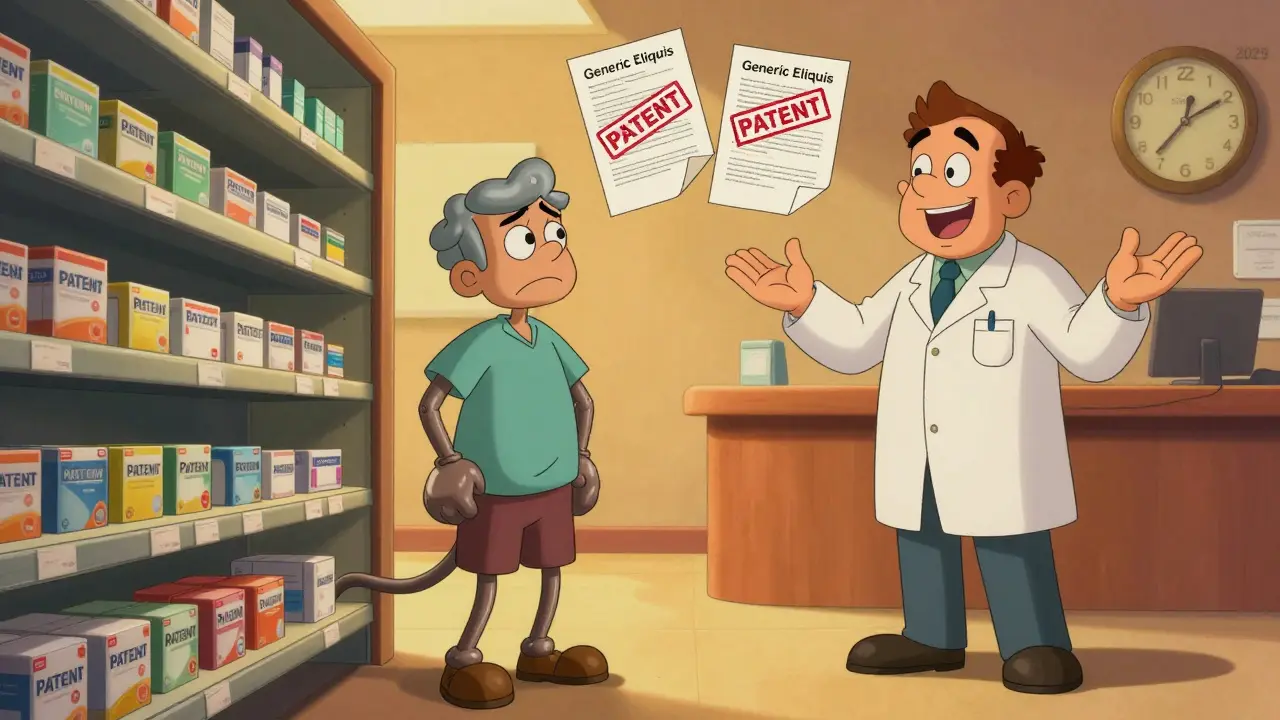
It’s 2026. You walk into your pharmacy looking for the generic version of your prescription. The pharmacist shakes their head. "It’s FDA-approved," they say. "But we can’t get it yet." That’s not a glitch. It’s the new normal. Between 2023 and 2025, dozens of generic drugs cleared the FDA’s final approval - only to sit on shelves for years, locked out by legal battles no one talks about. Patients pay hundreds more per month. Hospitals scramble for alternatives. And the companies that make these affordable medicines? They’re stuck in courtrooms, not factories. This isn’t about slow paperwork. It’s about patent litigation turning into a strategic delay tactic. Take Humira. Its main patent expired in 2016. But AbbVie filed over 240 patents on it - not to protect innovation, but to keep generics out. The result? A 10-year monopoly. Even when biosimilars finally got approved in 2023, they didn’t hit shelves until 2025. That’s not a legal loophole. That’s a legal weapon. The same thing happened with Eliquis, Trulicity, and Xarelto. All approved. All delayed. All costing patients thousands. Here’s how it works. When a generic company wants to sell a cheaper version of a brand-name drug, they file what’s called a Paragraph IV certification. That’s their legal notice: "We think your patent is invalid, and we’re ready to go." That triggers a 30-month automatic stay - a legal pause that blocks the FDA from giving final approval. The brand company doesn’t even need to win the lawsuit. They just need to file it. In 2024, 68% of all generic applications included this kind of patent challenge. By 2025, the average drug had 14.7 patents listed in the FDA’s Orange Book - up from 12.3 in 2020. That’s not innovation. That’s a patent thicket. And the system is designed to favor the big players. Small generic manufacturers - the ones with annual revenues under $500 million - make up 63% of the delayed products. Why? Because legal fees for patent battles now average $12.7 million per case. That’s more than most small companies make in a year. Big pharma can afford to drag this out. Smaller companies can’t. The FDA doesn’t control this part of the process. They approve the drug. But if a patent lawsuit is active, they’re legally required to wait. Even if the patent is weak. Even if it was filed years after the original drug came out. Dr. Aaron Kesselheim from Harvard put it bluntly: "The current patent thicketing strategies have extended monopolies beyond the intended 20-year term by an average of 3.7 years per drug." And the delays aren’t just legal. They’re financial. Between 2023 and 2025, Medicare Part D spent an extra $3.2 billion because patients couldn’t get generics. That’s money taken from seniors, taxpayers, and the healthcare system. The Congressional Budget Office confirmed it: patent delays are a hidden tax. Some drugs face even longer waits. Oncology generics - like those for leukemia or breast cancer - take an average of 4.1 years between FDA approval and market launch. Compare that to cardiovascular drugs at 2.8 years or CNS meds at 2.3. Why? Because cancer drugs are complex. And because they’re expensive. And because brand companies know patients will pay anything to stay alive. Complex delivery systems - injectables, inhalers - are even worse. Eighty-nine percent of delayed complex generics face patent blocks. Simple pills? Only 63%. The system is rigged against the hardest-to-make generics - the ones patients need most. Meanwhile, the European Union moves faster. Their average time from approval to market? Just 1.7 years. In the U.S.? 3.2 years. Why? Because Europe doesn’t have the same 30-month stay rule. They don’t let patent lawsuits freeze the entire system. The FDA knows this is broken. In May 2025, Dr. Patrizia Cavazzoni, the head of the FDA’s drug center, admitted in front of Congress: "Patent litigation remains outside our regulatory authority, but we’re working to increase transparency around patent listings to prevent evergreening." Evergreening. That’s the term for filing weak, late patents just to reset the clock. Like adding a new coating to an old pill and calling it a "new formulation." The FDA’s new AI review system cut approval times by 22% for drugs without patent fights. But for those with lawsuits? Zero improvement. The 30-month stay still rules. And the brand companies are adapting. The old trick - launching an "authorized generic" to undercut competitors - is fading. Only 12% of branded drugs faced this in 2025, down from 28% in 2020. Why? Because lawsuits are cheaper and more effective. The supply chain isn’t helping either. In 37% of delayed cases, the problem wasn’t patents - it was the active ingredient. Especially for injectables. One study found 14 out of 15 oncology drug shortages between 2023 and 2025 were tied to API supply issues. But even those delays get buried under patent noise. Patients are paying the price. A 2025 survey by the Association for Accessible Medicines found 82% of pharmacists get daily calls from patients asking why their approved generic isn’t available. The top three drugs? Eliquis, Trulicity, Steglatro. All approved. All blocked. Patients For Affordable Drugs Now documented 412 cases where people skipped doses or switched to cheaper, less effective meds because the generic wasn’t on the shelf. The brand-name versions cost $487 a month on average. The generic? $85. That’s a 500% difference. Hospitals are in crisis. The American Society of Health-System Pharmacists reported 78% of pharmacy directors see patent delays as a "major contributor" to drug shortages - especially for cancer drugs. What’s being done? The CREATES Act, passed in 2020, was supposed to help generics get samples to test their drugs. But it’s still stuck in committee. The FTC filed seven enforcement actions against big pharma for patent abuse between 2024 and 2025. One case against Jazz Pharmaceuticals forced them to let generics enter earlier for Xyrem. But that’s a single win in a sea of losses. The FDA’s new National Priority Voucher program promises to cut review times to 1-2 months - but only for drugs that don’t involve patent litigation. So it doesn’t touch the biggest problem. And Congress? No major reforms passed between 2023 and 2025. The Hatch-Waxman Act - the 1984 law meant to balance innovation and access - is now the main obstacle. Industry groups like PhRMA fight every change. They say limiting patents will hurt innovation. But the data says otherwise. The top 10 drugs losing exclusivity in 2025 had $78.3 billion in annual sales. That’s not a threat to innovation. That’s a goldmine. Generic manufacturers are trying to adapt. Teva and Sandoz now have 3.4 approved suppliers for active ingredients - up from 1.8 in 2022. They’re spreading risk. They’re building legal teams bigger than some startups. But it shouldn’t be this hard. The system was meant to get cheaper drugs to patients faster. Instead, it’s become a legal maze where patents are used as shields, not tools. The next time you hear a pharmacist say, "It’s approved, but we can’t get it," know this: it’s not a supply issue. It’s a patent issue. And it’s costing lives. The fix isn’t complicated. Limit the number of patents per drug. Shorten the 30-month stay. Let the FDA act when patents are clearly abusive. Stop letting lawsuits freeze the market. Patients aren’t asking for miracles. They just want access to the drugs they’ve been promised - the ones that were approved, the ones that are cheaper, the ones that should already be in their hands. They’re waiting. And the system is letting them down.
Dolores Rider
January 24, 2026 AT 16:23Vatsal Patel
January 25, 2026 AT 22:54John McGuirk
January 27, 2026 AT 17:42Michael Camilleri
January 29, 2026 AT 02:00siva lingam
January 30, 2026 AT 12:44Phil Maxwell
January 31, 2026 AT 09:44Shelby Marcel
February 2, 2026 AT 07:03blackbelt security
February 3, 2026 AT 08:49Patrick Gornik
February 5, 2026 AT 03:41Tommy Sandri
February 6, 2026 AT 10:41