 Feb, 3 2026
Why QT Prolongation Matters When Prescribing Antibiotics
When you give a patient an antibiotic like ciprofloxacin or azithromycin, you’re not just treating an infection-you’re also putting their heart under subtle stress. One of the quietest but most dangerous side effects of certain antibiotics is QT prolongation, a delay in the heart’s electrical recovery that can trigger a life-threatening rhythm called Torsades de Pointes. It doesn’t always show symptoms until it’s too late. That’s why monitoring isn’t optional-it’s essential.
Fluoroquinolones and macrolides are two of the most commonly prescribed antibiotic classes, and both are on the CredibleMeds® list of drugs known to prolong the QT interval. The problem isn’t just the drugs themselves-it’s how often they’re used in people who already have other risk factors: older age, low potassium, heart disease, or taking multiple QT-prolonging medications at once. In a 2025 study of older women in long-term care with simple urinary tract infections, researchers found that many were on three or more drugs that each added a little more risk. Put together, that’s a recipe for cardiac arrest.
How These Antibiotics Affect the Heart
Both fluoroquinolones and macrolides work by blocking the hERG potassium channel in heart cells. This channel is responsible for letting potassium flow out during the heart’s repolarization phase. When it’s blocked, the heart takes longer to reset after each beat. That delay shows up on an ECG as a longer QT interval.
Not all drugs in these classes are equal. Among fluoroquinolones, moxifloxacin carries the highest risk, followed by levofloxacin and then ciprofloxacin. Ciprofloxacin is considered low risk-but that doesn’t mean zero. In ICU patients receiving high doses intravenously, even ciprofloxacin caused measurable QT prolongation. Among macrolides, erythromycin is the worst offender, with effects similar to antiarrhythmic drugs like sotalol. Azithromycin is much safer, but it’s not risk-free, especially in people with existing heart conditions.
Back in the 1990s, sparfloxacin was pulled from the market because too many patients developed Torsades de Pointes. Grepafloxacin never made it to U.S. shelves for the same reason. These weren’t rare cases. They were warning signs we ignored for too long.
What Counts as a Dangerous QT Prolongation?
There’s no single number that says “danger,” but guidelines give us clear thresholds. According to the British Thoracic Society (2023), a corrected QT interval (QTc) over 450 ms for men and 470 ms for women is considered prolonged. If it hits 500 ms or more, or increases by more than 60 ms from baseline, you need to act immediately.
But here’s the catch: not every long QT is real. Conditions like bundle branch blocks, paced rhythms, or a wide QRS complex (>140 ms) can make the QT look longer than it is. If you’re not accounting for these, you might stop a safe drug unnecessarily-or miss a real danger. That’s why using the right formula to correct for heart rate matters. Bazett’s formula (QTc = QT / √RR) is still common, but it overcorrects at fast heart rates and undercorrects at slow ones. The Fridericia formula (QTc = QT / √RR³) is more accurate and now recommended by experts because it better predicts mortality risk.
Who Needs Monitoring-and When?
Monitoring isn’t one-size-fits-all. It depends on the patient, the drug, and their risk profile.
For macrolides: The British Thoracic Society says you must get a baseline ECG before starting any macrolide therapy. Then, repeat it one month after starting. If the QTc goes above the threshold, stop the drug. This applies even to low-dose, long-term use-for example, in patients with chronic lung disease.
For fluoroquinolones: The VUMC Antimicrobial Stewardship Program recommends an ECG 7 to 15 days after starting treatment, then monthly for the first three months, and then periodically. If the patient is on IV ciprofloxacin in the ICU, you might want to check every 24 hours. The timing matters: QT prolongation often peaks 2-4 hours after the dose, so ECGs done right after administration give the clearest picture.
But here’s the smart part: if the patient has no history of heart problems, no electrolyte issues, no other QT drugs, and is under 65, you probably don’t need an ECG at all. The key is risk stratification. Don’t test everyone. Test the people who need it most.
High-Risk Patients: The Real Danger Zone
The biggest mistake isn’t prescribing a high-risk drug-it’s prescribing it to someone who already has five other risk factors.
High-risk patients include:
- Women over 65
- People with heart failure or low ejection fraction
- Those with low potassium (<3.5 mmol/L) or low magnesium (<1.7 mg/dL)
- Patients on diuretics, antifungals, or antidepressants that also prolong QT
- Anyone with a family history of long QT syndrome
- People with hypothyroidism or bradycardia
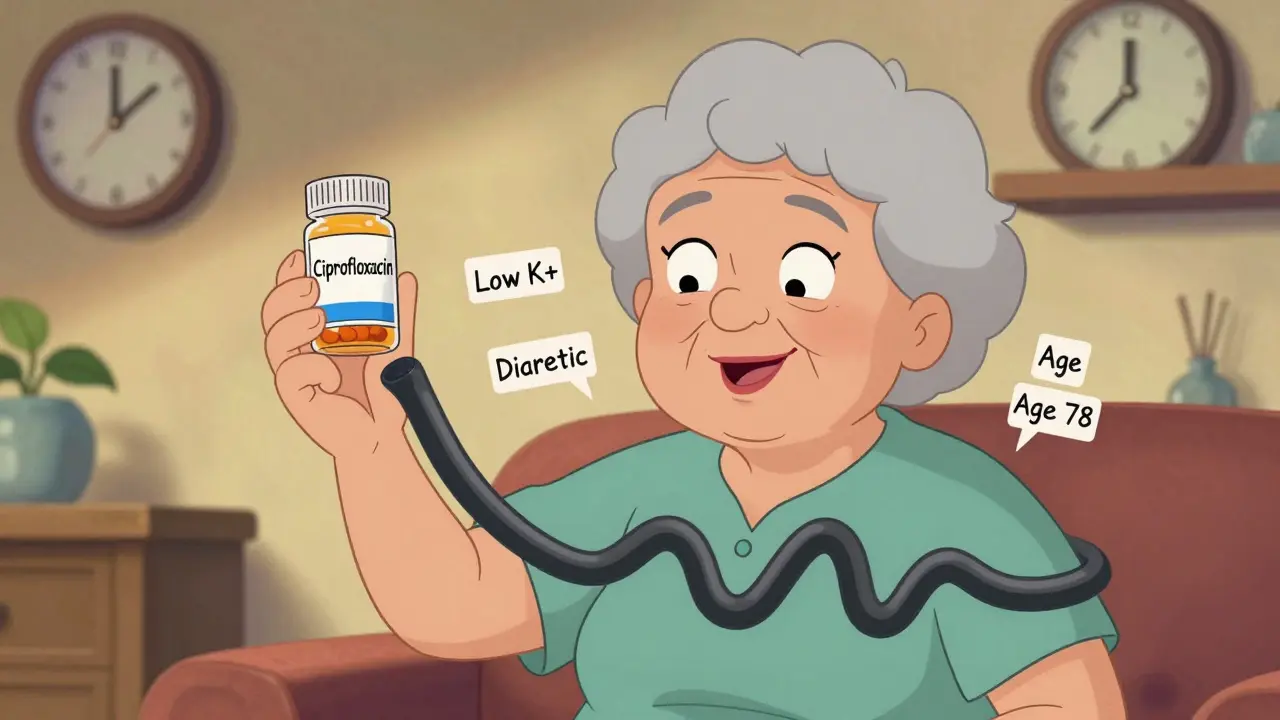
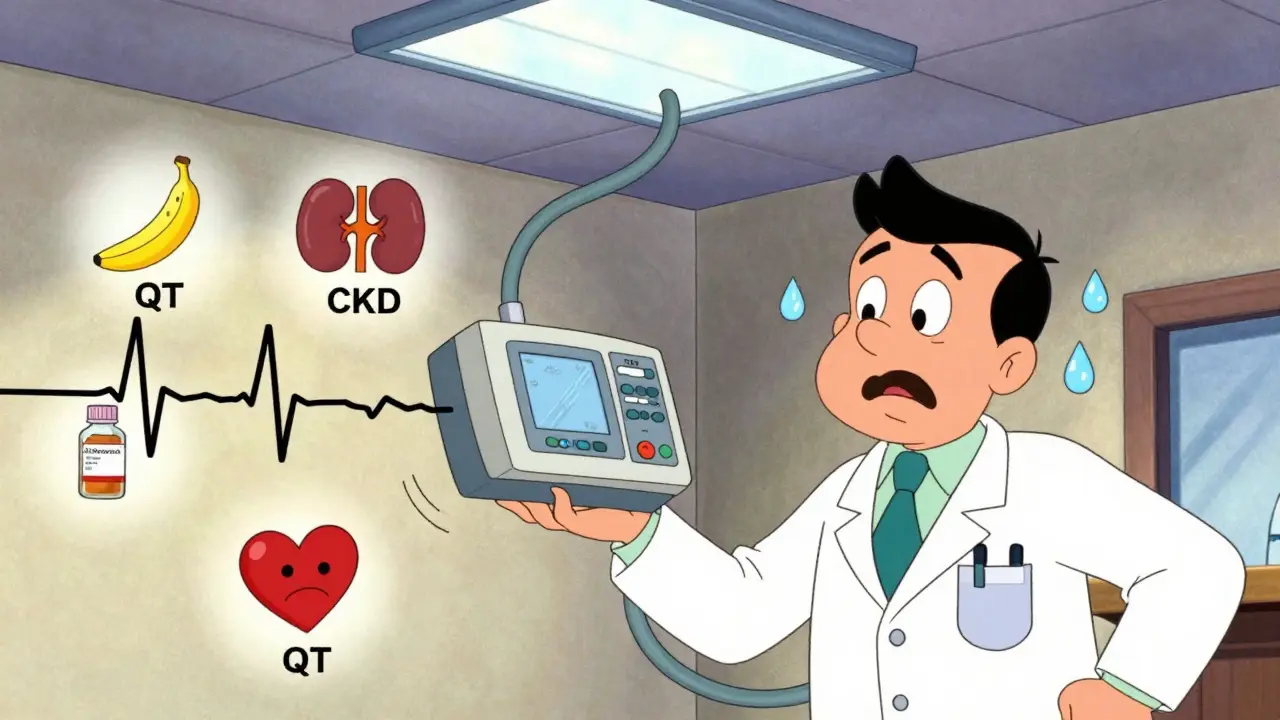
A 2021 study in ICU patients showed that nearly every patient who developed dangerous QT prolongation had at least three of these factors. One patient was on ciprofloxacin, had a potassium level of 3.1, was on a diuretic, had chronic kidney disease, and was 78 years old. That’s not a coincidence. That’s a perfect storm.
That’s why checking electrolytes isn’t just good practice-it’s part of the protocol. If potassium is low, fix it. If magnesium is low, give it. You can’t control the drug, but you can control the environment that makes the drug dangerous.
What to Do When QT Prolongation Shows Up
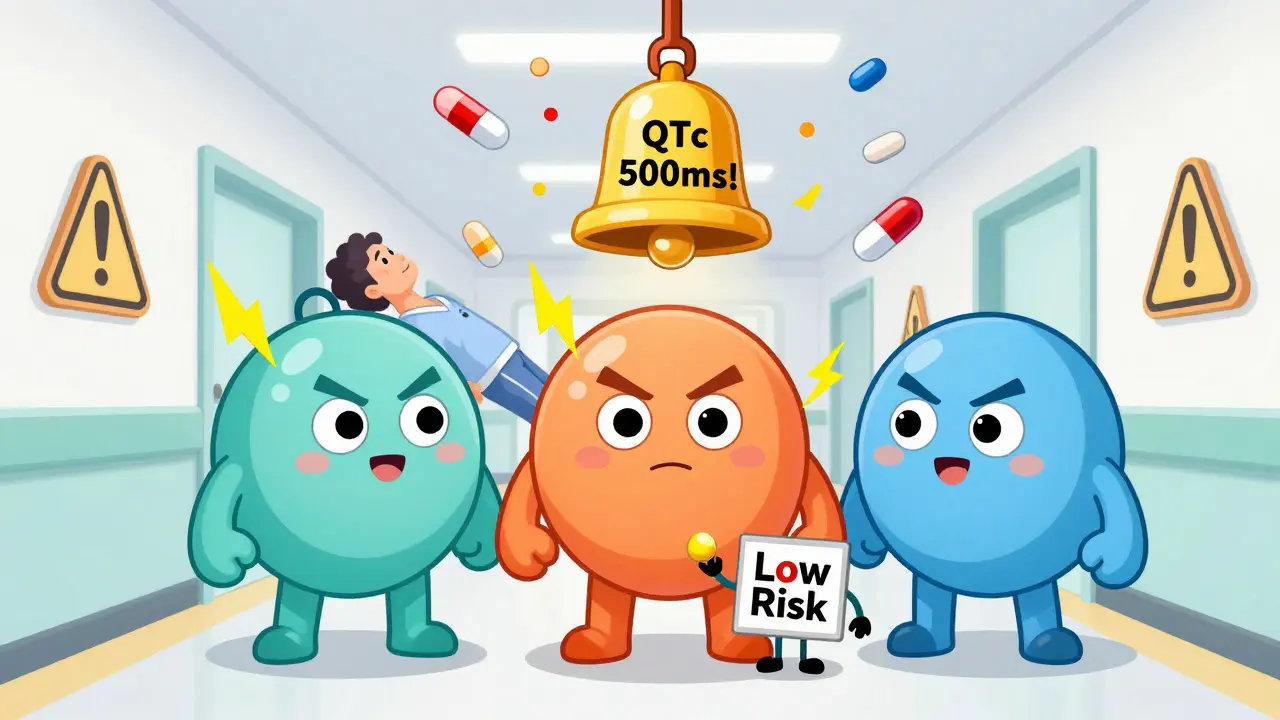
If you see a QTc over 500 ms, or a rise of more than 60 ms from baseline, stop the antibiotic immediately. Don’t wait. Don’t “see how it goes.” Torsades de Pointes can happen in minutes.
Then, do three things:
- Discontinue the offending drug
- Correct electrolytes: aim for potassium >4.0 mmol/L and magnesium >2.0 mg/dL
- Check for other QT-prolonging drugs and pause them too
If the patient is unstable-showing dizziness, fainting, or irregular pulse-call for help. IV magnesium sulfate is the first-line treatment for Torsades de Pointes. In some cases, temporary pacing or isoproterenol may be needed. But prevention beats emergency response every time.
Alternatives and Stewardship: Less Risk, Same Results
There’s a growing consensus: we’re overusing fluoroquinolones. For uncomplicated UTIs, especially in older women, amoxicillin-clavulanate or nitrofurantoin are just as effective and carry no QT risk. For respiratory infections, azithromycin is often a better choice than erythromycin. For skin infections, doxycycline or clindamycin can replace moxifloxacin.
Antimicrobial stewardship programs aren’t just about saving money-they’re about saving lives. Hospitals that track QT prolongation and adjust prescribing patterns have seen a 40% drop in arrhythmia-related events. It’s not about avoiding antibiotics. It’s about choosing the right one for the right patient.
When in doubt, ask: Is this drug necessary? Is there a safer alternative? And most importantly: does this patient have any hidden risks I haven’t checked?
Future Directions: Smarter Monitoring, Safer Prescribing
Technology is catching up. Some hospitals are now using automated ECG systems that flag QT prolongation in real time. Others are building risk calculators that weigh age, gender, kidney function, electrolytes, and concomitant meds to give a personalized risk score.
Research is also looking at genetic testing. Some people have subtle mutations in the hERG gene that make them far more sensitive to these drugs. We’re not ready to test everyone-but we might be soon.
For now, the best tool you have is awareness. Know your drugs. Know your patients. And never assume a “simple” infection is harmless just because it’s common.
Can azithromycin cause QT prolongation?
Yes, but the risk is much lower than with erythromycin or clarithromycin. Azithromycin can still prolong the QT interval, especially in people with existing heart conditions, low potassium, or those taking other QT-prolonging drugs. It’s considered low-risk overall, but not risk-free. Baseline ECG and electrolyte checks are still recommended for high-risk patients.
Is ciprofloxacin safe for the heart?
Ciprofloxacin is classified as low risk for QT prolongation compared to other fluoroquinolones like moxifloxacin. However, in high doses (especially IV), or in patients with multiple risk factors (elderly, kidney disease, low magnesium), it can still cause dangerous prolongation. Monitoring is recommended in high-risk groups, even with ciprofloxacin.
How often should ECGs be done when prescribing fluoroquinolones?
For patients on fluoroquinolones, an ECG should be done 7-15 days after starting treatment. Then, repeat monthly for the first three months. After that, periodic monitoring is advised, especially if the patient develops new risk factors like electrolyte imbalances or starts a new medication. In ICU settings, more frequent checks-sometimes daily-are recommended.
What’s the best formula to calculate QTc?
The Fridericia formula (QTc = QT / √RR³) is now preferred over Bazett’s formula because it corrects heart rate more accurately, especially at high or low heart rates. Bazett’s can overcorrect at fast rates and undercorrect at slow ones, leading to misclassification. Fridericia has been shown to better predict 30-day and 1-year mortality in studies.
Can QT prolongation be reversed?
Yes, in most cases. Stopping the offending drug and correcting electrolytes-especially potassium and magnesium-can normalize the QT interval within days. If the prolongation was caused by a temporary factor like dehydration or low magnesium, it often resolves completely. But if the patient has underlying heart disease or genetic predisposition, ongoing monitoring may be needed even after the drug is stopped.
Should I avoid fluoroquinolones for UTIs in older women?
Yes, according to current guidelines. Fluoroquinolones are no longer recommended as first-line for uncomplicated UTIs in older women, especially those with comorbidities. The risk of serious arrhythmias outweighs the benefit when safer alternatives like nitrofurantoin or fosfomycin are available. The 2025 Trenaman study found that many older women with UTIs were being unnecessarily exposed to high-risk antibiotics, leading to preventable cardiac events.
rahulkumar maurya
February 4, 2026 AT 04:20Demetria Morris
February 6, 2026 AT 04:17pradnya paramita
February 6, 2026 AT 12:39Jamillah Rodriguez
February 7, 2026 AT 10:16Susheel Sharma
February 8, 2026 AT 08:20Joseph Cooksey
February 9, 2026 AT 22:48Justin Fauth
February 10, 2026 AT 04:40Meenal Khurana
February 11, 2026 AT 14:05Shelby Price
February 12, 2026 AT 13:40