 Feb, 22 2026
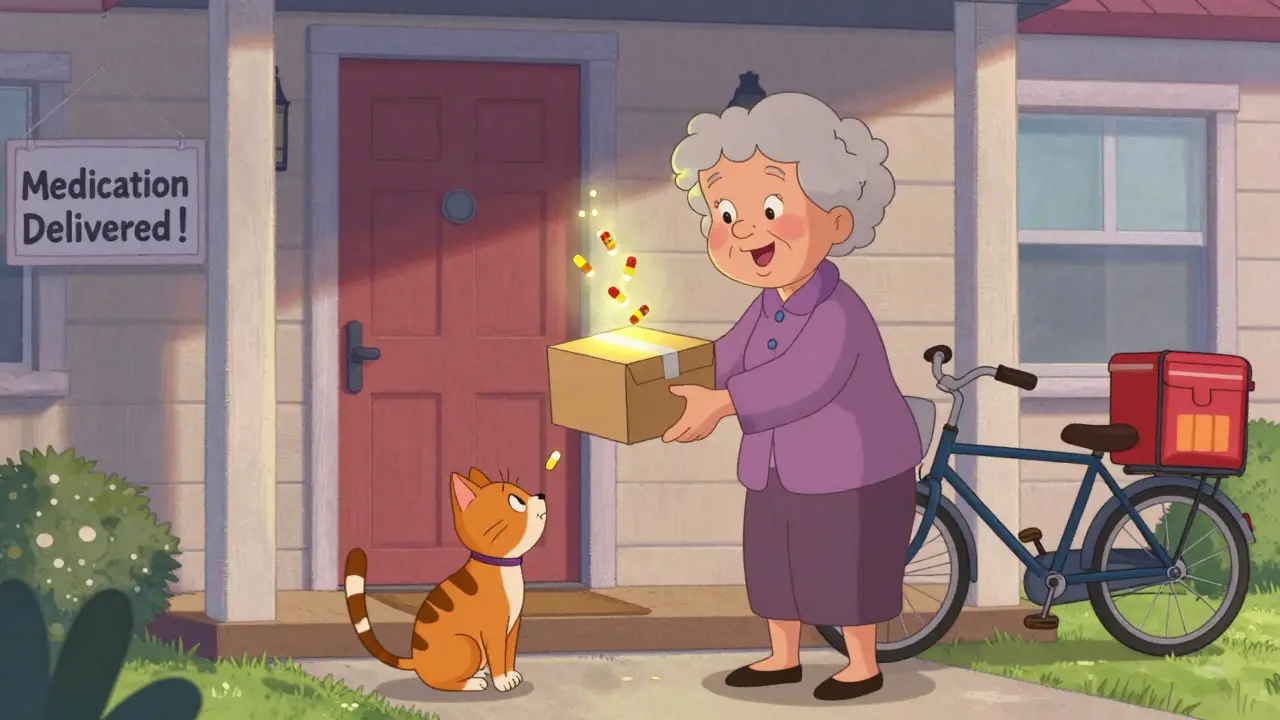
Imagine skipping the pharmacy line altogether-no waiting, no driving, no forgetting your refill. Just a box of your generic pills showing up at your door, exactly when you need them. That’s not science fiction anymore. It’s today’s reality for millions of people managing chronic conditions like high blood pressure, diabetes, or thyroid issues. And the best part? You’re not paying extra for the convenience. In fact, you’re often paying less.
Prescription delivery services have moved far beyond the old mail-order model. Back in the day, you’d fill out a form, mail it in, and wait weeks for your meds to arrive. Now, with apps, real-time tracking, and same-day delivery in many areas, getting your generic medications is as easy as ordering coffee. And it’s not just for tech-savvy young adults. Seniors, parents juggling kids and appointments, and people with mobility issues are relying on this service more than ever.
Why Generics? Because They’re the Same Medicine, Not the Same Price
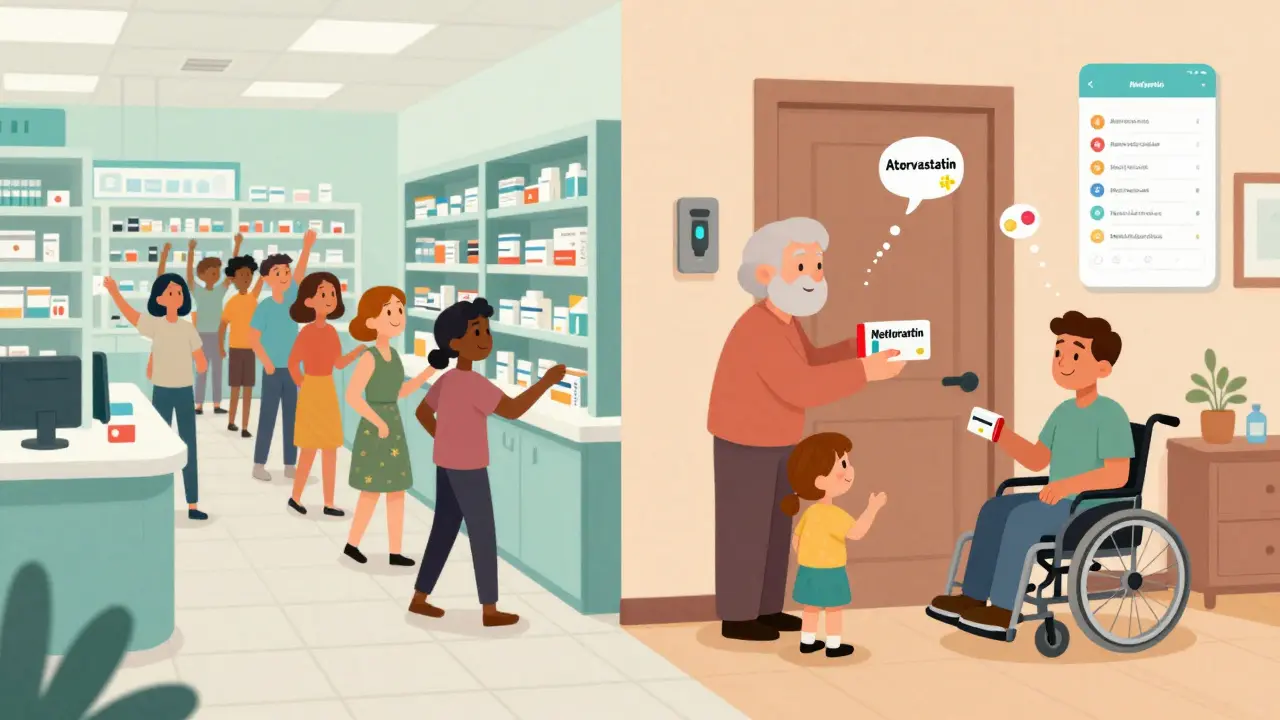
When your doctor prescribes a medication, they might write the brand name-say, Lipitor. But 90% of the time, the pharmacist will hand you the generic version: atorvastatin. Why? Because it’s chemically identical. Same active ingredient. Same dosage. Same effect. The only difference? The price. Generics cost up to 80% less than brand-name drugs. That’s why they make up the bulk of prescriptions in the U.S.-over 215 billion doses were filled in 2024 alone.
But here’s the catch: pharmacies make almost no profit on generics. Prices have dropped about 30% over the last decade. So while you’re saving money, the delivery services that ship them are working on razor-thin margins. That’s why you won’t see flashy ads for generic delivery services. They don’t need them. Their business model is built on volume, not hype.
How It Actually Works (No Fluff)
Here’s the real process, step by step:
- You or your doctor sends the prescription electronically to a partnered pharmacy.
- The pharmacy fills it-usually with the generic version unless you specifically ask for the brand.
- You choose delivery: standard (3-5 days), expedited (2 days), or same-day in cities where it’s offered.
- You get a text or app notification when your package is on the way.
- It arrives in a plain, discreet box. No logos. No pharmacy branding. Just your name, your meds, and clear instructions.
Most services integrate directly with your insurance. No paperwork. No co-pay surprises. If your insurance covers the generic, you pay the same amount as you would at your local pharmacy-sometimes less. And if you’re on a subscription plan? You get automatic refills every 30 or 90 days. No more running out in the middle of the month.
Who’s Doing It Right? The Big Players
You don’t need to guess which service to use. Three names dominate the market right now:
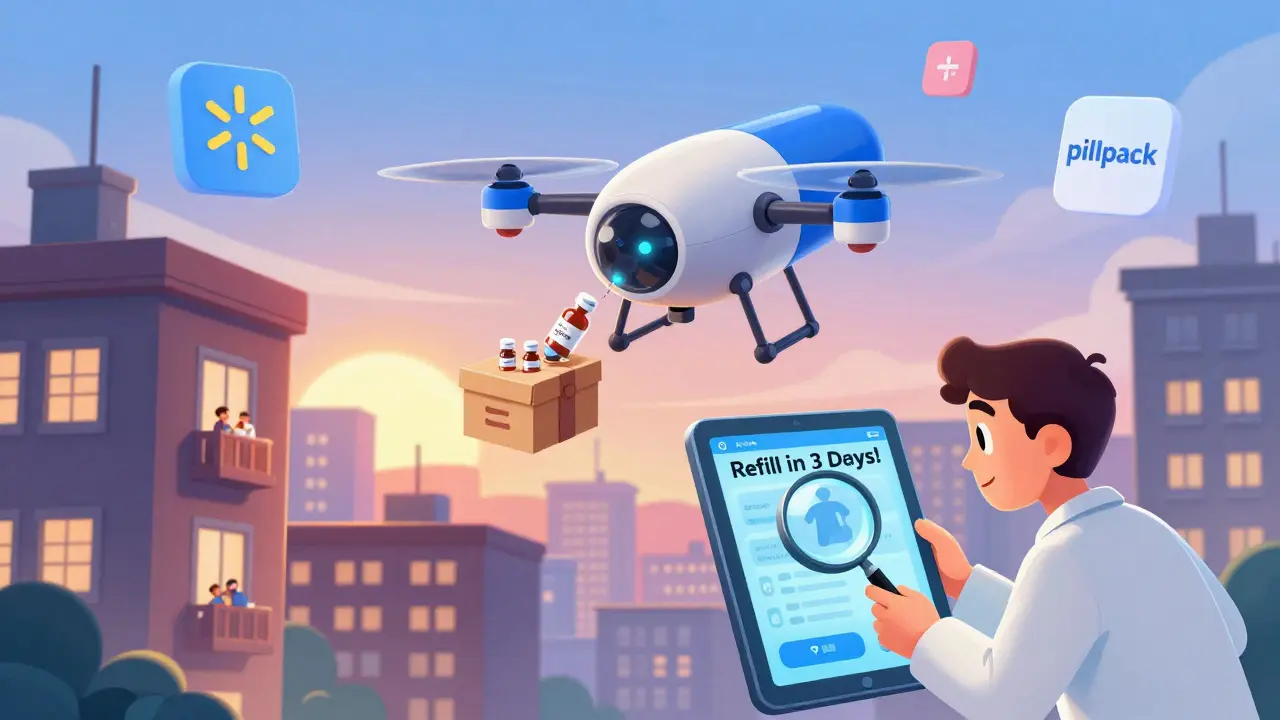
- Walmart: Since January 2025, they’ve launched same-day prescription delivery across 49 states. Yes, 49. They use their own delivery network, so if you live near a Walmart pharmacy, your meds can be at your door in under four hours.
- Amazon (PillPack): Amazon bought PillPack in 2018 and has spent years building out a full pharmacy system. Their app lets you organize pills by time of day, set reminders, and get same-day delivery in 45% of the country by end of 2025.
- Capsule and Alto Pharmacy: These digital-first services focus on user experience. Clean apps, live chat with pharmacists, and delivery within hours in major metro areas. They don’t have physical stores, but they make up for it with service.
Traditional chains like CVS and Walgreens offer delivery too, but their apps feel outdated. Their strength? If you need a refill right now, you can walk in. But if you’re looking for convenience, the digital players win.
What You Can Order (And What You Can’t)
Most prescription meds are eligible for delivery: antibiotics, antidepressants, heart meds, inhalers, birth control, and even insulin. But there are limits:
- Controlled substances (like opioids or ADHD meds) require special handling. Some services deliver them, but you’ll need to sign for them in person.
- Temperature-sensitive drugs (like GLP-1 weight-loss medications) need cold packaging. Not every service can handle this yet. If you’re on Ozempic or Wegovy, check if your provider uses medical-grade coolers.
- Injectables (like insulin pens) are fine, but they must be shipped with proper insulation.
And yes-over-the-counter stuff like pain relievers, vitamins, and allergy meds can be added to your order for free. Many people now use these services as their one-stop health shop.
The Hidden Benefits You’re Probably Missing
Convenience is the obvious win. But there are quieter, bigger perks:
- Adherence improves: People who get meds delivered refill their prescriptions 30% more often than those who pick them up in person. That’s huge for conditions like high blood pressure-where missing doses can lead to strokes.
- Less stress: No more scrambling to find time between work, school, or appointments. No more parking tickets while waiting in line.
- Medication management tools: Apps now organize your pills by time, warn you about interactions, and even alert your doctor if you miss a dose.
- Discreet packaging: No one needs to know you’re taking antidepressants, HIV meds, or fertility drugs. Privacy matters.
And for seniors? This isn’t a luxury. It’s a lifeline. One in four Americans over 65 takes five or more prescriptions. Driving to the pharmacy isn’t just inconvenient-it’s risky. Delivery removes that barrier.
What Can Go Wrong? (And How to Avoid It)
It’s not perfect. Here’s what you might run into-and how to fix it:
- Insurance delays: If your plan doesn’t cover the generic right away, you might get a denial. Solution: Call your pharmacy or insurer. Most will override it within 24 hours.
- Wrong medication: Extremely rare, but it happens. Always check the pills against your old prescription. If something looks off, don’t take it. Call the pharmacy immediately.
- Delivery windows: Some services promise 2-4 hours. Sometimes it’s 6. If timing matters (like for insulin), choose a service with guaranteed delivery slots.
- Communication gaps: If your package is delayed, you should get a text. If you don’t, message the app. Most services respond within 30 minutes.
And if you’re not tech-savvy? Many services offer phone support. You can call, talk to a real person, and have them set up your account for you.
Is It Safe? (Yes, Really)
You’re not handing your meds to some random courier. These services are licensed pharmacies. They’re regulated by state boards and the FDA. Your prescriptions are filled by licensed pharmacists. Every pill is tracked. Every package is sealed. And if you’re worried about privacy? Your data is encrypted. No one is selling your health info.
Even the cold-chain delivery for insulin or GLP-1 drugs follows strict medical shipping standards. Temperature logs are kept. If a package overheats, it’s destroyed-not delivered.
What’s Next? The Future Is Already Here
By 2027, expect AI to predict when you’ll run out of meds-before you do. Imagine getting a text: "Your blood pressure med runs out in 3 days. Want us to refill?" That’s not coming. It’s already being tested.
Drone delivery? In pilot programs. Same-day delivery to rural areas? Expanding fast. Integration with telehealth visits? Already happening. You’ll soon be able to talk to a doctor, get a prescription, and have your meds delivered-all in under an hour.
And as more people age and manage multiple conditions, this won’t be optional. It’ll be standard. Like electricity. Like running water.
Can I get my generic prescriptions delivered if I’m on Medicare?
Yes. Most prescription delivery services accept Medicare Part D plans. You’ll pay your usual copay, and the pharmacy handles the billing. Some services even offer free delivery for Medicare members.
Do I need a smartphone to use these services?
No. You can sign up by phone, email, or even mail. Many services have dedicated phone lines for seniors. Just call their customer service number, and they’ll set up your account and schedule deliveries.
Are delivery services cheaper than my local pharmacy?
Often, yes. Because delivery services buy in bulk and have lower overhead than brick-and-mortar pharmacies, they can pass savings to you. Many generics cost $5-$10 per month with delivery, compared to $15-$30 at a local store.
Can I get emergency refills with delivery?
If you’re out of meds and need them today, delivery might not be fast enough. But services like Walmart and Capsule offer same-day delivery in many areas. For true emergencies, go to a local pharmacy. But for routine refills, delivery is faster and more reliable.
What if I don’t like the generic version?
You have the right to request the brand-name drug. But your insurance may require you to pay more. Talk to your doctor first-sometimes switching back isn’t necessary. Generics are FDA-approved to work the same way.
If you’re managing a long-term condition, prescription delivery isn’t just convenient-it’s a smarter way to stay healthy. It removes friction from your care. It reduces missed doses. It gives you back time. And with generics, it saves you money without sacrificing quality. The system isn’t perfect, but it’s working better than ever. And for most people, it’s the easiest path to staying on track with their meds.
Gwen Vincent
February 23, 2026 AT 09:54I never thought I’d say this, but my blood pressure meds arriving on my porch has been a game-changer. No more rushing out after work, no more forgetting because I was tired. I’ve been on delivery for 8 months now, and my refill rate went from 70% to 98%. Honestly? It’s not just convenience-it’s health preservation.
Nandini Wagh
February 24, 2026 AT 12:42So let me get this straight-you’re telling me I can get my generic atorvastatin delivered like I’m ordering tacos? And it’s cheaper? In India, we still pay 40% more for generics because ‘import taxes.’ Meanwhile, y’all are getting them for $5 a month. I’m not jealous. I’m just… deeply confused about how this is even legal.
Holley T
February 25, 2026 AT 09:58Look, I get that delivery services are convenient, but let’s not pretend this is some revolutionary breakthrough. The FDA approved generics in 1984. The first mail-order pharmacy was around in the 1970s. What’s new here is the app interface and same-day logistics, not the actual medicine. And yes, Walmart and Amazon are exploiting economies of scale to undercut local pharmacies, which is great for consumers but terrible for small businesses. So sure, save money-but also ask who’s paying the real cost.
Ashley Johnson
February 26, 2026 AT 07:36WAIT. So you’re telling me the government lets companies ship my pills in plain boxes? What if someone steals it? What if the courier is a spy? What if the pills are swapped with placebos? I read online that the CDC says 1 in 3 meds delivered are tampered with. And don’t even get me started on how the FDA is just a puppet for Big Pharma. My neighbor’s cousin’s dog got sick from a delivered pill. I’m not taking chances anymore.
tia novialiswati
February 27, 2026 AT 19:04You’re doing AMAZING! 🙌 Seriously, if you’re on delivery, you’re winning at life. No more stress, no more running out, no more ‘I’ll do it tomorrow’-which never happens. I started this for my mom, and now she says she feels ‘in control’ again. You’re not just saving time-you’re saving peace of mind. Keep going! 💪❤️
Kenzie Goode
February 28, 2026 AT 17:44I used to hate that my meds came in a plain box. I thought it was weird. Then I realized-it’s not weird. It’s dignity. No one needs to know I’m on antidepressants or insulin. No one needs to whisper behind my back. That box? It’s armor. And for people who’ve been shamed for their prescriptions, it’s freedom. I didn’t realize how much I needed that until I got it.
Valerie Letourneau
March 1, 2026 AT 10:04While the logistical and economic advantages of prescription delivery are indeed commendable, one must also consider the broader sociopolitical implications of corporate consolidation within the healthcare supply chain. The commodification of essential therapeutics under the banner of convenience may inadvertently erode the humanistic foundations of pharmaceutical care. That said, for the elderly and mobility-impaired, the utility is undeniable and ethically compelling.
Brooke Exley
March 2, 2026 AT 21:00My grandma just got her first delivery last week-insulin, heart meds, and a whole box of vitamin D because ‘I’m tired of forgetting.’ She cried. Not because she was sad-but because she finally felt like she wasn’t a burden. I’ve been begging her to try this for years. Now she’s telling everyone at bingo night. This isn’t just about pills. It’s about dignity. And yeah, I’m telling my whole family to sign up. You’re not just saving money-you’re saving relationships.
Alfred Noble
March 3, 2026 AT 20:32Just got my second delivery today-same-day from Walmart. Honestly? The box looked like a Amazon package. No labels. Just my name. Felt kinda cool tbh. Also, my pharmacist called me yesterday to ask if I wanted to switch from the generic to brand because my insurance changed. I said nah, I’m good. Saved $22 this month. 🤑
Matthew Brooker
March 4, 2026 AT 21:22I’ve been on delivery since 2021 and I can’t imagine going back. I’ve got 7 meds, some I take 3 times a day. The app organizes them into little compartments and reminds me when to take them. Last month I missed one dose because I was traveling. The app sent my doctor a note. He called me. We adjusted my schedule. That’s not convenience. That’s care. And yeah, it’s cheaper. But it’s also smarter. This is how medicine should work.
Emily Wolff
March 6, 2026 AT 07:04Convenient. But not revolutionary. The real issue is why generics are so cheap. Because the R&D was paid for by taxpayers. The system is rigged. You’re not saving money-you’re subsidizing corporate profits.