 Dec, 7 2025
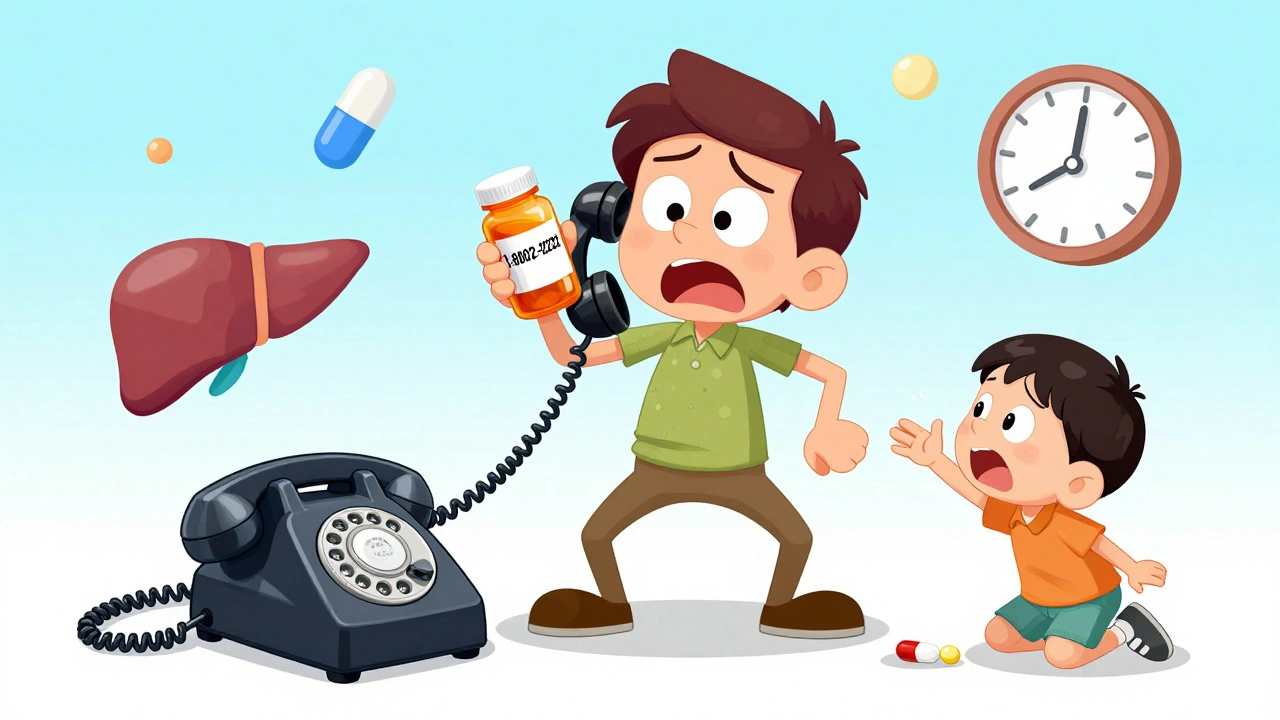
Every year, over 2.1 million people in the U.S. call the Poison Control Hotline because of a medication mistake. Most of these calls aren’t from people trying to harm themselves-they’re from parents who grabbed the wrong bottle, seniors confused by new prescriptions, or caregivers who didn’t realize a child had swallowed a pill. The good news? You don’t need to panic. You don’t need to rush to the ER. You just need to call 1-800-222-1222.
How the Poison Control Hotline Actually Works
The Poison Control Hotline isn’t a call center with scripted answers. It’s a network of 53 accredited centers staffed by real medical professionals-pharmacists, nurses, and doctors-who specialize in toxicology. These are the people who know exactly how much acetaminophen can damage a liver, which antibiotics interact dangerously with birth control, or why a child who ate half a bottle of chewable vitamins might be fine but needs watching. When you call 1-800-222-1222, your call is automatically routed to the center closest to you, based on your area code. You can also text “poison” to 797979 or use the webPOISONCONTROL tool at poisonhelp.org. All three options connect you to the same system, the same experts, and the same life-saving protocols. The system runs on a database called the National Poison Data System (NPDS), which tracks every single exposure reported across the country. That means if a new synthetic opioid shows up in a batch of counterfeit pain pills in Texas, the specialists in Maine will know about it within hours. The database has over 99.8% accuracy and helps update treatment guidelines in real time. Each call is handled using 1,540 evidence-based algorithms-step-by-step decision trees built from decades of research. These aren’t guesswork. They’re built on published studies, clinical trials, and real-world outcomes. For medication cases, which make up nearly half of all calls, the algorithm considers the drug’s therapeutic index (how close the safe dose is to the toxic one), the patient’s age and weight, how much was taken, and whether other drugs were involved.What to Report When It’s a Medication Issue
The most important thing you can do when calling about a medication is to be specific. Don’t say “I took too much Tylenol.” Say: “My 4-year-old swallowed three 500mg acetaminophen tablets at 2:15 PM.” Here’s exactly what the specialist needs to know:- Exact medication name: Brand and generic. “Advil” isn’t enough. Say “ibuprofen 200mg, Advil brand.”
- Strength and dosage form: Is it a 10mg tablet? A 50mg liquid? A patch? The form changes how fast it’s absorbed.
- Amount ingested: How many pills, milliliters, or patches? Don’t guess. Count them. If you’re not sure, bring the bottle to the phone.
- Time of exposure: “About an hour ago” isn’t enough. “3:42 PM” is. Timing determines if you need an antidote or just monitoring.
- Patient details: Age, weight in kilograms (not pounds), and any existing conditions like asthma, liver disease, or pregnancy.
- Symptoms: Nausea? Drowsiness? Rash? Vomiting? Even small changes matter.
- Other medications: Did they take anything else? Even vitamins, supplements, or herbal teas. Over 30% of serious medication reactions happen because of interactions.
What Happens After You Call
Most calls-about 60%-are resolved without a trip to the hospital. That’s because poison control specialists know when to watch, when to act, and when to wait. For example: If a child swallows one adult ibuprofen tablet, the specialist might say, “Give them water, watch for vomiting or drowsiness, and call back if they seem unusually sleepy.” No ambulance needed. No ER bill. Just peace of mind. For more serious cases-like an overdose of antidepressants or opioids-they’ll guide you through steps like giving activated charcoal (if it’s safe and timely), starting CPR, or preparing for transport. They’ll even call the ER ahead of time to alert them so the patient gets treated faster. Follow-up is built into the system. If you took acetaminophen, they’ll call you back at 4 hours, 8 hours, and 24 hours to check liver enzyme levels. If you took a long-acting medication like a fentanyl patch, they’ll schedule check-ins for days. About 92% of these follow-ups are completed successfully. You’ll also get an email summary with everything discussed: exact medication names, risk level, instructions, and when to call back. Over 78% of people keep this email for future reference.
When Not to Call Poison Control
There are a few situations where you should call 911 immediately instead:- The person is unconscious, not breathing, or having seizures.
- They’ve taken a known lethal dose (like 50+ pills of any medication).
- They’ve ingested a corrosive substance like drain cleaner or bleach.
- They’re having a severe allergic reaction (swelling, wheezing, hives).
Why This Service Is Free-and Why It Matters
There’s no charge. No insurance needed. No ID required. You don’t even need to give your name. The service is funded by government grants, hospital contributions, and state programs. It costs about $125 million a year to run-and saves the U.S. healthcare system $1.8 billion annually by preventing unnecessary ER visits. A 2019 study found that for every dollar spent on poison control, society saves $7.67 in medical costs and lost productivity. That’s not just a statistic. It’s a mom who didn’t have to take a day off work because her child didn’t need an IV. It’s a grandparent who didn’t get admitted for a drug interaction that could’ve been caught early. The system is so effective that 94.7% of people who call rate the advice as “excellent” or “good.” On Reddit, pharmacists have shared stories of saving children from liver failure because they followed poison control’s instructions to give N-acetylcysteine within the critical 8-hour window.
What You Should Do Now
Don’t wait for an emergency. - Save 1-800-222-1222 in your phone under “Poison Control.”What’s Changing in Poison Control
New drugs are coming faster than ever. Weight-loss medications, synthetic opioids, and unregulated supplements are showing up in poison control cases more than ever. Since 2020, calls involving new weight-loss drugs like semaglutide have jumped 200%. The system is adapting. The CDC just funded $4.7 million to update algorithms for these new substances. Twenty-seven new medication toxicity profiles were added to the database in 2022 alone. Some centers now offer video consultations for complex cases. Hospitals are integrating poison control data directly into electronic records so ER staff get real-time alerts if a patient was already treated by poison control. The system is strong. But it’s only as good as the people who use it. If you’ve ever thought, “I’m not sure if this is serious,” you’re right to call. That’s exactly what it’s there for.Is the Poison Control Hotline really free?
Yes. There is no cost to call 1-800-222-1222, text "poison" to 797979, or use the webPOISONCONTROL website. The service is funded by government grants, hospital partnerships, and state programs. You don’t need insurance, identification, or payment of any kind.
Can I call poison control for a pet?
No. The Poison Control Hotline only handles human exposures. For pets, contact the ASPCA Animal Poison Control Center at (888) 426-4435 or the Pet Poison Helpline at (855) 764-7661. These services may charge a fee, but they’re staffed by veterinary toxicologists.
What if I don’t know the name of the medication?
Bring the bottle to the phone. If you can’t, describe the pill: color, shape, markings (like numbers or letters on it), and whether it’s a tablet, capsule, or liquid. The specialists have databases with images and descriptions of thousands of medications. You can also use the webPOISONCONTROL app’s barcode scanner.
Will poison control report me to the police or child services?
No. Poison control centers are confidential and non-judgmental. They don’t report accidental ingestions to authorities. The only time they might involve child services is if there’s clear, repeated neglect-like a child being exposed to drugs multiple times with no safety measures. Accidental cases are treated as medical emergencies, not legal ones.
How fast can I get help?
Most calls are answered within 30 seconds. The average consultation lasts 8 to 12 minutes. The webPOISONCONTROL tool gives advice in under 3 minutes. If you’re in a true emergency-unconscious, seizing, or not breathing-call 911 first, then call poison control while you wait.
Do poison control specialists understand international medications?
Yes. Specialists are trained to recognize brand names and generic equivalents from around the world. If you’re taking a medication bought overseas, give them the name in English or describe the packaging. They’ve handled cases involving medications from Canada, Mexico, India, and the EU.
What if I’m not sure whether it’s an overdose?
Call anyway. That’s exactly what the hotline is for. Many people wait until symptoms appear, but by then, it might be too late. If you’re unsure, err on the side of caution. Poison control specialists are trained to assess risk-even if the amount seems small.
Evelyn Pastrana
December 8, 2025 AT 10:19So let me get this straight - I can call a number, not panic, and avoid an ER bill just by saying ‘my kid ate three Tylenol’? And they don’t even judge me? That’s the most American thing I’ve ever heard. Like, I didn’t know we had a national ‘oops, my bad’ hotline. I’m saving this number next to my Netflix password.
Arun Kumar Raut
December 8, 2025 AT 16:02This is beautiful. In India, we often don’t know where to turn when something like this happens. Many people panic and rush to hospitals, which are already overwhelmed. This system is simple, smart, and saves lives. I wish more countries had this. Thank you for sharing. I’m sharing this with my family right now.
Carina M
December 9, 2025 AT 16:25It is, of course, entirely unsurprising that a publicly funded, evidence-based, and statistically superior public health intervention should be met with casual indifference by the general populace. One must assume, then, that the proliferation of unregulated supplements, the normalization of polypharmacy among the elderly, and the continued failure to label medications in a universally intelligible format are merely symptoms of a broader cultural collapse - one in which the concept of ‘professional expertise’ is replaced by the myth of ‘self-diagnosis’ via TikTok.
William Umstattd
December 9, 2025 AT 23:28THIS IS THE MOST IMPORTANT THING YOU’LL READ THIS YEAR. I’M NOT EXAGGERATING. I’M A NURSE. I’VE SEEN KIDS IN THE ER BECAUSE THEIR MOMS WERE TOO SCARED TO CALL THIS NUMBER. I’VE SEEN GRANDMAS TAKE DOUBLE DOSES BECAUSE THEY THOUGHT ‘BETTER SAFE THAN SORRY.’ THIS SERVICE SAVES LIVES. AND YET, MOST PEOPLE STILL DON’T KNOW IT EXISTS. SHARE THIS. POST IT ON YOUR FRIDGE. TEACH YOUR KIDS. THIS ISN’T JUST ADVICE - IT’S A CIVIC DUTY.
Elliot Barrett
December 11, 2025 AT 07:05Yeah yeah, free hotline, whatever. But let’s be real - if your kid eats a pill, you’re already in the ER. No one’s calling a hotline to ask if a 500mg Tylenol is ‘bad.’ You panic, you drive, you get seen. This feels like a PR stunt for pharmacists. And why are we still using 1-800 numbers in 2025? Get a damn app.
Ajit Kumar Singh
December 13, 2025 AT 01:13Wow this is so good I am crying actually I am from India and we have no such thing here my aunt died because we gave her wrong medicine and no one knew what to do I wish this was in my country I will tell everyone I know about this number I will make a poster for my village I will do it I will do it I will do it
Maria Elisha
December 14, 2025 AT 09:06Okay but like… why is this even a thing? Shouldn’t pharmacies just label stuff better? Or have a QR code that tells you what it is? Why are we relying on a hotline instead of fixing the system? I’m tired of bandaids.
Andrea Beilstein
December 14, 2025 AT 11:22There’s something deeply human about this - the idea that someone, somewhere, is trained to listen without judgment when you’re at your most terrified. We’ve built hospitals, apps, AI, and algorithms - but we still need a voice on the other end of the line who knows that a child swallowing half a bottle of gummy vitamins isn’t a crime, it’s a mistake. And that mistake, if handled right, doesn’t have to end in tragedy. That’s not just medicine. That’s grace.