 May, 27 2026
Pharmacokinetics & Side Effects Explorer
The ADME Journey
1. Absorption
EntryGastrointestinal Tract
Food interactions, gastric pH, transporters2. Distribution
TravelBloodstream & Tissues
Protein binding levels, body fat composition3. Metabolism
BreakdownLiver (CYP Enzymes)
CYP enzyme activity, genetic polymorphisms4. Excretion
EliminationKidneys
GFR, hydration statusStage Details
Drug Interaction & Risk Assessment
Select medications or factors to understand potential pharmacokinetic interactions.
Minimizing Side Effects: Key Principles
Timing Matters
Ensure blood draws for Therapeutic Drug Monitoring happen at the correct time (e.g., trough levels 30 minutes before next dose).
Hydrate Wisely
Adequate water intake supports kidney excretion. Dehydration slows GFR, causing drugs to linger longer in the body.
Watch Food Interactions
Grapefruit juice inhibits CYP3A4. Taking it with statins or calcium channel blockers can raise blood levels dangerously.
Disclose All Meds
Include herbal supplements. St. John's Wort induces CYP enzymes, speeding up metabolism and reducing effectiveness of other drugs.
Ask for Genetic Testing
For narrow-therapeutic-index drugs like warfarin or clopidogrel, ask if pharmacogenomic testing is appropriate for you.
You take a pill. You feel better. Or maybe you feel sick. Why does one person get relief from a standard dose of ibuprofen while another gets stomach pain? The answer isn't just in the chemical formula of the drug. It’s in your body’s unique way of handling it. This process is called pharmacokinetics, often summarized by the acronym ADME: Absorption, Distribution, Metabolism, and Excretion.
Think of pharmacokinetics as "what your body does to the drug." It determines how much medicine actually reaches your target tissue and how long it stays there. When this process goes off-track, side effects happen. Understanding these four stages helps explain why dosing isn't one-size-fits-all and how you can minimize adverse reactions.
The Four Stages of Drug Processing (ADME)
Every medication follows a specific journey through your system. If any step is too fast or too slow, the drug’s effectiveness changes, and so does its risk profile.
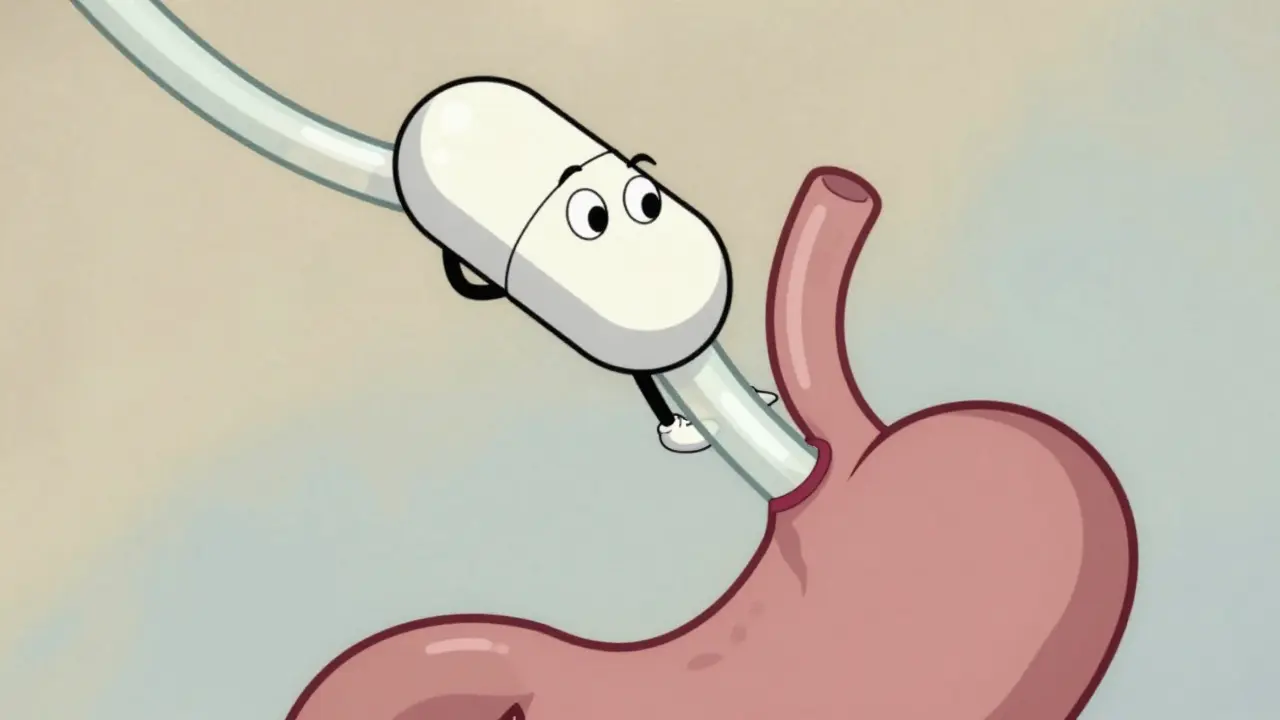
- Absorption: This is how the drug enters your bloodstream. If you swallow a tablet, it must dissolve in your stomach and pass through the intestinal wall. Not all of it makes it. Oral drugs typically have 40-60% bioavailability because some is lost during digestion or broken down by the liver before it even circulates (first-pass metabolism). Intravenous (IV) drugs bypass this, offering 100% bioavailability.
- Distribution: Once in the blood, the drug travels to tissues. Some drugs stick to proteins like albumin. For example, 98% of warfarin binds to albumin, leaving only 2% active. If another drug displaces warfarin, that active percentage spikes, increasing bleeding risk.
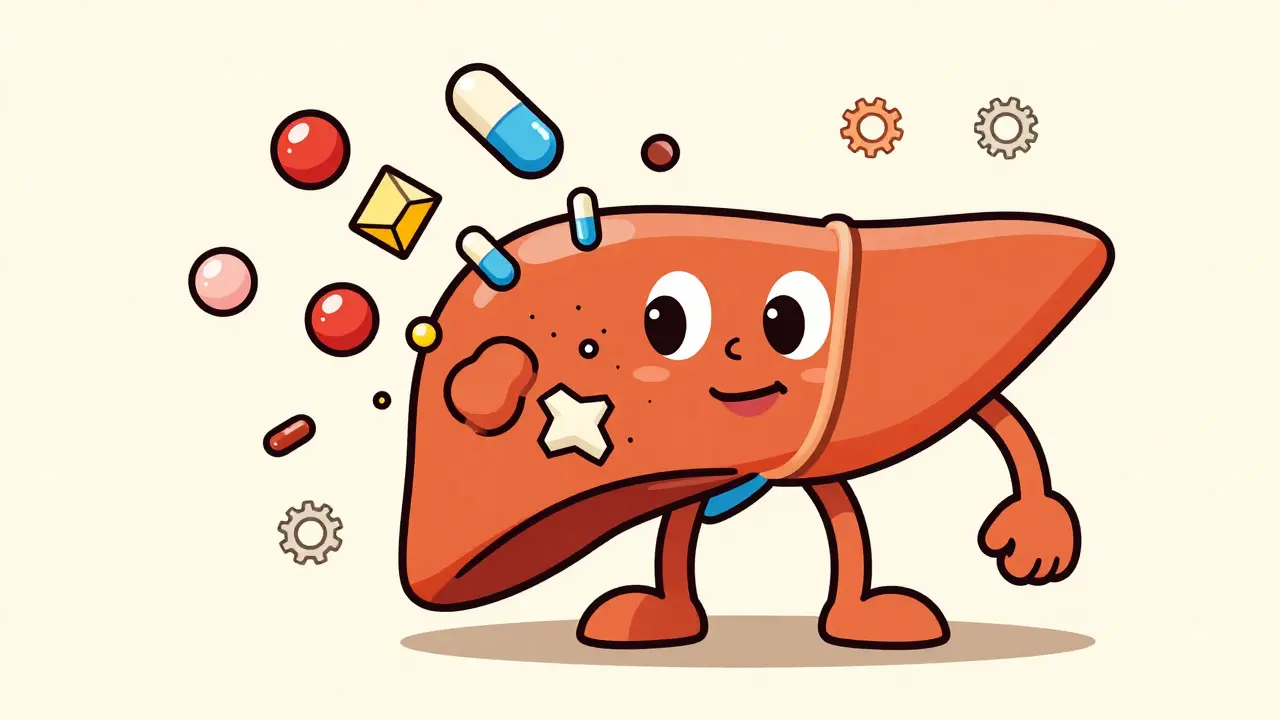
- Metabolism: Mostly happening in the liver, enzymes break down drugs into forms your body can eliminate. The Cytochrome P450 (CYP) enzyme family handles about 50% of all medications. CYP3A4 alone processes half of clinically used drugs. Genetic differences here mean two people can metabolize the same drug at vastly different speeds.
- Excretion: Finally, kidneys filter waste out via urine. About 80% of drugs leave this way. If kidney function drops-common in aging or disease-the drug builds up, leading to toxicity.
| Stage | Primary Organ | Key Factor Influencing Side Effects |
|---|---|---|
| Absorption | Gastrointestinal Tract | Food interactions, gastric pH, transporters (P-gp) |
| Distribution | Bloodstream & Tissues | Protein binding levels, body fat composition |
| Metabolism | Liver | CYP enzyme activity, genetic polymorphisms |
| Excretion | Kidneys | Glomerular Filtration Rate (GFR), hydration status |
Why Side Effects Happen: The Concentration Connection
Side effects are rarely random. They usually occur when drug concentrations exceed the "therapeutic window"-the range where the drug works without harming you. This concept is central to Therapeutic Drug Monitoring (TDM).
Take phenytoin, an anti-seizure medication. At therapeutic levels (10-20 mcg/mL), it controls seizures. But if levels creep above 20 mcg/mL due to slow metabolism, toxicity sets in. Studies show 30% of patients experience severe side effects like dizziness or confusion at these high levels, compared to just 2% within the safe range. The body didn't change; the concentration did.
Active metabolites also play a tricky role. Diazepam (Valium) breaks down into desmethyldiazepam, which has a half-life of up to 100 hours. In older adults with slower clearance, this metabolite accumulates, causing prolonged sedation and fall risks long after the initial dose should have worn off.
Genetics: Your Unique Metabolic Blueprint
Your DNA dictates how efficiently your liver enzymes work. This field, known as pharmacogenomics, explains why standard doses fail for some.
- CYP2D6 Poor Metabolizers: About 3-10% of Caucasians lack functional CYP2D6 enzymes. Codeine requires this enzyme to convert into morphine for pain relief. These individuals get zero pain relief from codeine because their bodies can't activate it.
- CYP2C9 Variants: Patients with certain CYP2C9 variants metabolize warfarin slowly. Standard dosing increases their bleeding risk by five-fold. Genetic testing allows doctors to start with lower, safer doses.
- HLA-B*5701 Screening: Before prescribing abacavir (an HIV drug), screening for this gene marker prevents hypersensitivity reactions in 90% of at-risk patients.
Ignoring these genetic factors leads to trial-and-error prescribing, exposing patients to unnecessary side effects while searching for the right dose.
Age and Physiology: The Silent Risk Factors
As we age, our pharmacokinetics shift dramatically. Geriatric patients face a threefold higher risk of adverse drug reactions. Why?
Hepatic metabolism drops by 30-50%, and renal clearance falls by 30-40%. A 78-year-old patient with a creatinine clearance of 25 mL/min (normal is 90-120 mL/min) will clear vancomycin much slower than a young adult. Without dose adjustment, the drug accumulates, potentially causing nephrotoxicity (kidney damage). Real-world cases, such as those discussed in clinical pharmacy forums, highlight instances where standard nomograms failed to account for severe renal impairment, leading to dangerous serum creatinine spikes.
Pregnancy also alters pharmacokinetics. Increased blood volume and faster kidney filtration can lower drug concentrations, requiring higher doses for conditions like epilepsy or depression to maintain efficacy.
Drug Interactions: When Medicines Clash
Combining drugs can disrupt pharmacokinetics, leading to dangerous spikes or drops in concentration. Drug-drug interactions cause 20-30% of clinically significant adverse events.
Consider simvastatin (a cholesterol drug) and clarithromycin (an antibiotic). Clarithromycin inhibits CYP3A4, the enzyme that breaks down simvastatin. Without breakdown, simvastatin levels can rise tenfold. This drastically increases the risk of rhabdomyolysis-a serious condition involving muscle breakdown-from 0.04% to 0.5%. Always review all medications, including over-the-counter supplements, with your pharmacist.
Practical Steps to Minimize Side Effects
You don’t need a degree in pharmacology to manage your medication safety. Here’s how to apply pharmacokinetic principles:
- Timing Matters: If you’re on Therapeutic Drug Monitoring, ensure blood draws happen at the correct time (e.g., trough levels drawn 30 minutes before the next dose). Mis-timed samples lead to inaccurate dosing decisions.
- Hydrate Wisely: Adequate water intake supports kidney excretion. Dehydration slows GFR, causing drugs to linger longer in the body.
- Watch Food Interactions: Grapefruit juice inhibits CYP3A4. Taking it with drugs like statins or calcium channel blockers can mimic a drug interaction, raising blood levels dangerously.
- Disclose All Meds: Include herbal supplements. St. John’s Wort induces CYP enzymes, speeding up metabolism and reducing the effectiveness of birth control pills and antidepressants.
- Ask for Genetic Testing: For narrow-therapeutic-index drugs like warfarin or clopidogrel, ask if pharmacogenomic testing is appropriate for you.
The Future of Personalized Dosing
Medicine is moving away from "average" dosing toward precision pharmacokinetics. AI-powered platforms like DoseMeRx now reduce vancomycin dosing errors by 62% by analyzing individual patient data in real-time. Regulatory bodies like the FDA now require physiologically-based pharmacokinetic (PBPK) modeling for many new oncology drugs, aiming to predict how diverse populations will react before human trials begin.
Initiatives like the NIH’s $185 million investment in studying pharmacokinetics in diverse populations aim to fix historical biases. Currently, 85% of pharmacokinetic data comes from Caucasian males aged 18-45, despite them representing only 15% of medication users. Better data means safer, more effective treatments for everyone.
What is the difference between pharmacokinetics and pharmacodynamics?
Pharmacokinetics is what your body does to the drug (absorption, distribution, metabolism, excretion). Pharmacodynamics is what the drug does to your body (receptor binding, physiological effect). Both determine efficacy and side effects.
Why do I get side effects from a drug that works fine for my friend?
Genetic differences in liver enzymes (like CYP450 variants), age-related changes in kidney/liver function, and body composition affect how quickly you process drugs. Faster metabolism may reduce efficacy; slower metabolism increases toxicity risk.
How does food affect drug absorption?
Food can delay or enhance absorption. High-fat meals may increase absorption of some drugs but decrease others. Grapefruit juice inhibits CYP3A4, raising drug levels. Always follow label instructions regarding food intake.
What is Therapeutic Drug Monitoring (TDM)?
TDM involves measuring drug concentrations in blood to ensure they stay within a therapeutic window. It’s critical for drugs with narrow margins between effective and toxic doses, such as phenytoin, lithium, and vancomycin.
Can kidney disease change how I take medication?
Yes. Reduced Glomerular Filtration Rate (GFR) slows drug excretion. Doctors must adjust doses or extend intervals between doses to prevent accumulation and toxicity. Regular kidney function tests are essential for patients on renally cleared drugs.