 Jan, 24 2026
What Is Peripheral Neuropathy?
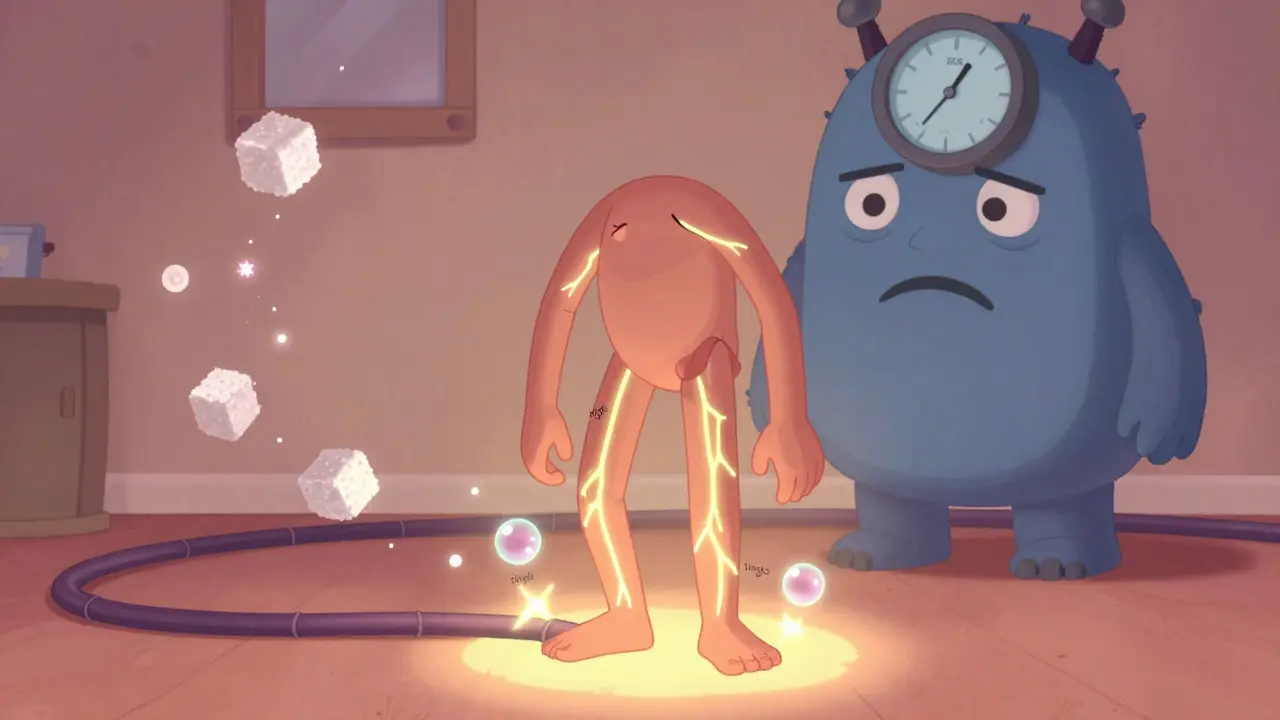
Peripheral neuropathy isn’t one disease-it’s a group of conditions caused by damage to the nerves outside your brain and spinal cord. These nerves control sensation, movement, and even automatic functions like digestion and heart rate. When they get damaged, you might feel tingling, burning, or numbness, usually starting in your feet or hands. It’s not just a minor annoyance; for many, it’s a constant, disruptive pain that makes walking, sleeping, or even wearing shoes unbearable.
More than 20 million people in the U.S. live with it. The most common cause? Diabetes. About half of all people with diabetes develop some form of nerve damage over time. But it’s not just diabetes. Vitamin B12 deficiency, chemotherapy, alcohol misuse, autoimmune diseases, and even some infections can trigger it. In about 20% of cases, doctors can’t find a clear cause at all-these are called idiopathic neuropathies.
How Do You Know If It’s Neuropathy?
The symptoms don’t show up all at once. They creep in slowly. First, you might notice a pins-and-needles feeling in your toes. Then, your feet feel like they’re wrapped in thick socks-even when they’re bare. Over time, the numbness can spread up your legs. Some people describe the pain as electric shocks, burning, or a deep ache that doesn’t go away. Others lose feeling entirely, which is just as dangerous: you might step on something sharp and not feel it, leading to unnoticed wounds and infections.
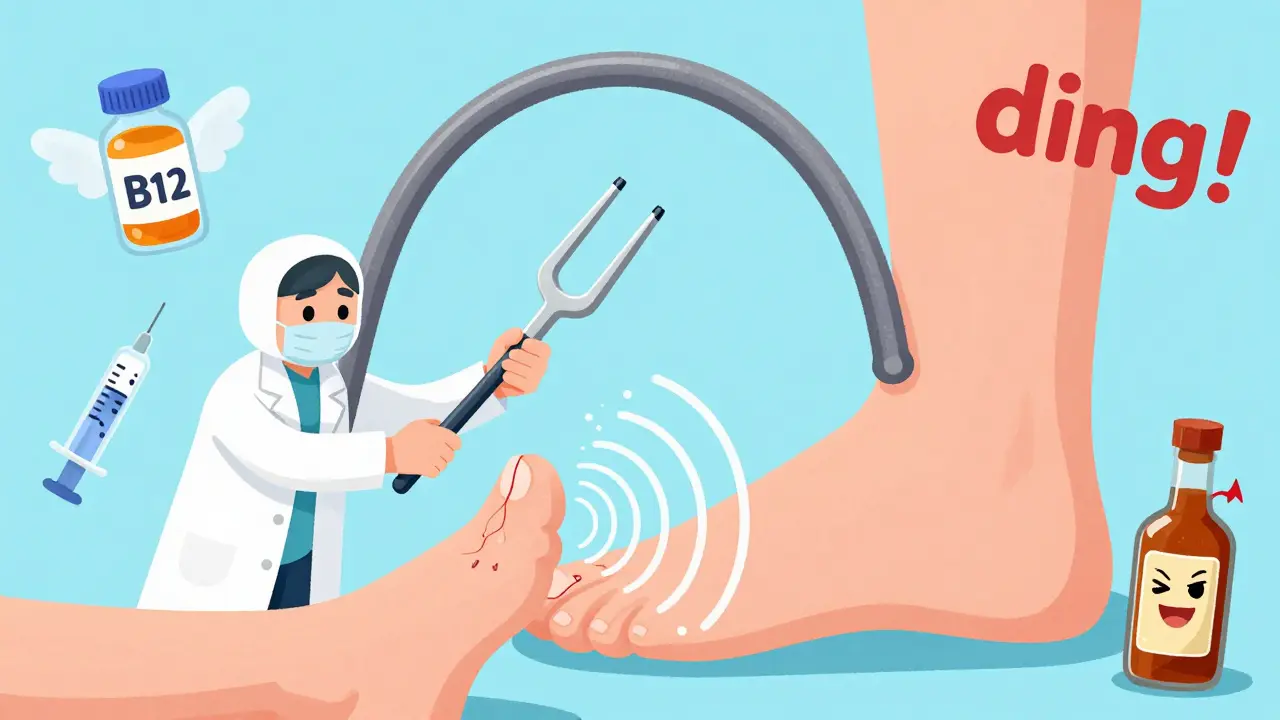
Doctors use simple tests to check for nerve damage. A 10-gram monofilament pressed against your foot tells them if you can feel light touch. A tuning fork tapped on your big toe checks vibration sense. If those are weak, they’ll likely order a nerve conduction study, which measures how fast electrical signals move through your nerves. Normal speed is above 50 meters per second; in neuropathy, it often drops below 40.
Why Diabetes Is the Top Culprit
High blood sugar over years slowly poisons nerves and damages the small blood vessels that feed them. It’s not just about having diabetes-it’s about how well you control it. The Diabetes Control and Complications Trial showed that keeping your HbA1c below 7% cuts the risk of nerve damage by 60%. That’s not a small win. It means tight glucose control isn’t just about avoiding kidney or eye problems-it’s one of the best ways to protect your nerves.
But here’s the catch: many people don’t realize their blood sugar is high until they already have symptoms. That’s why regular foot checks and HbA1c tests are non-negotiable if you have diabetes. Waiting until you’re in pain means the damage is already done. Early action-like switching to SGLT2 inhibitors, which recent studies show may reduce neuropathy risk by 30%-can make a real difference.
Other Common Causes You Can’t Ignore
Not everyone with neuropathy has diabetes. Vitamin B12 deficiency is a sneaky one. It’s common in older adults, vegans, and people who’ve had stomach surgery. Low B12 doesn’t just cause fatigue-it leads to nerve degeneration. The fix? A simple monthly injection of 1,000 mcg can reverse symptoms in 4 to 8 weeks if caught early.
Chemotherapy is another major cause. Drugs like vincristine and paclitaxel, used to treat breast, lung, and ovarian cancers, damage nerves in about 30-40% of patients. This isn’t always preventable, but doctors can adjust doses or switch drugs if neuropathy gets severe. Alcohol-related neuropathy is also widespread. Long-term heavy drinking kills nerves directly and often comes with poor nutrition, making B12 deficiency worse.
Even things you wouldn’t think of-like Lyme disease, HIV, or Guillain-Barré syndrome-can trigger nerve damage. If your neuropathy shows up suddenly or affects only one side of your body, it’s worth checking for these rarer causes.
How Pain Management Works-And What Actually Helps
Over-the-counter painkillers like ibuprofen or acetaminophen? They barely touch neuropathic pain. You need medications that target nerve signals, not inflammation.
Pregabalin (Lyrica) and duloxetine (Cymbalta) are the two most recommended first-line treatments. Pregabalin reduces pain by about 50% in 37% of users. Duloxetine works for 35%. Both take 2-4 weeks to kick in. Side effects? Dizziness, drowsiness, weight gain. Some people can’t tolerate them.
Amitriptyline, an older antidepressant, is cheaper and works for 41% of users. But it comes with a heavy side effect profile: dry mouth in 75%, drowsiness in 60%. It’s still used, especially for nighttime pain, but it’s not ideal for older adults or those with heart issues.
Then there’s scrambler therapy-a non-drug option. It uses electrical signals to “trick” your brain into not registering pain. After 10 sessions, 85% of patients report 50% pain reduction. It’s expensive ($1,200-$1,500 per course) and not always covered by insurance, but for people who’ve tried everything else, it’s a game-changer.
Spinal cord stimulation, where a small device sends pulses to your spine, helps 65% of people with severe, unresponsive pain. It’s surgery, but it can mean ditching opioids entirely.
Non-Medication Approaches That Work
Medications aren’t the only answer. Physical therapy can rebuild strength and balance. After 12 weeks of targeted exercises, patients improve their “timed up and go” test scores by 25%. That means fewer falls, more independence.
Custom orthotics and therapeutic shoes? 82% of users report high satisfaction. Regular shoes can rub and cause sores on numb feet. Special footwear spreads pressure evenly and prevents ulcers.
Scrambler therapy and transcutaneous electrical nerve stimulation (TENS) units are also gaining traction. TENS is cheaper and can be used at home. It won’t cure anything, but many users say it gives them a few hours of relief each day.
And don’t underestimate foot care. Diabetics are told to check their feet twice a day-looking for cuts, blisters, redness. It sounds simple, but it saves lives. The American Diabetes Association says this routine cuts amputation risk by up to 85%.
Why So Many People Struggle With Treatment
Even with all the options, most people don’t find relief easily. About 50% stop their meds within six months because of side effects. Doctors often don’t warn patients about dizziness or nausea upfront. One Reddit user said Cymbalta made her so nauseous she had to quit after two weeks. Her doctor never mentioned it.
Diagnosis delays are another huge problem. On average, it takes 18 months from first symptoms to a confirmed diagnosis. By then, nerves are already damaged. New AI tools being tested could cut that time to six months by analyzing foot scans and nerve data automatically-expected to roll out by 2025.
Cost is a barrier too. Generic pregabalin costs $15-$30 a month with insurance. Without it? $600-$800. Scrambler therapy isn’t covered by many plans. And while vitamin B12 shots are cheap, not all doctors test for deficiency unless you ask.
What’s Coming Next
The future of neuropathy treatment is looking brighter. In 2020, the FDA approved Qutenza-a patch with high-dose capsaicin that you get applied in a doctor’s office. One 30-minute treatment can give you 3 months of pain relief. It’s not for everyone, but for those with localized pain, it’s powerful.
The Neuropathy Genomics Project, launched in January 2023, aims to map genetic causes of over 50 types of neuropathy by 2026. That could lead to personalized treatments based on your DNA.
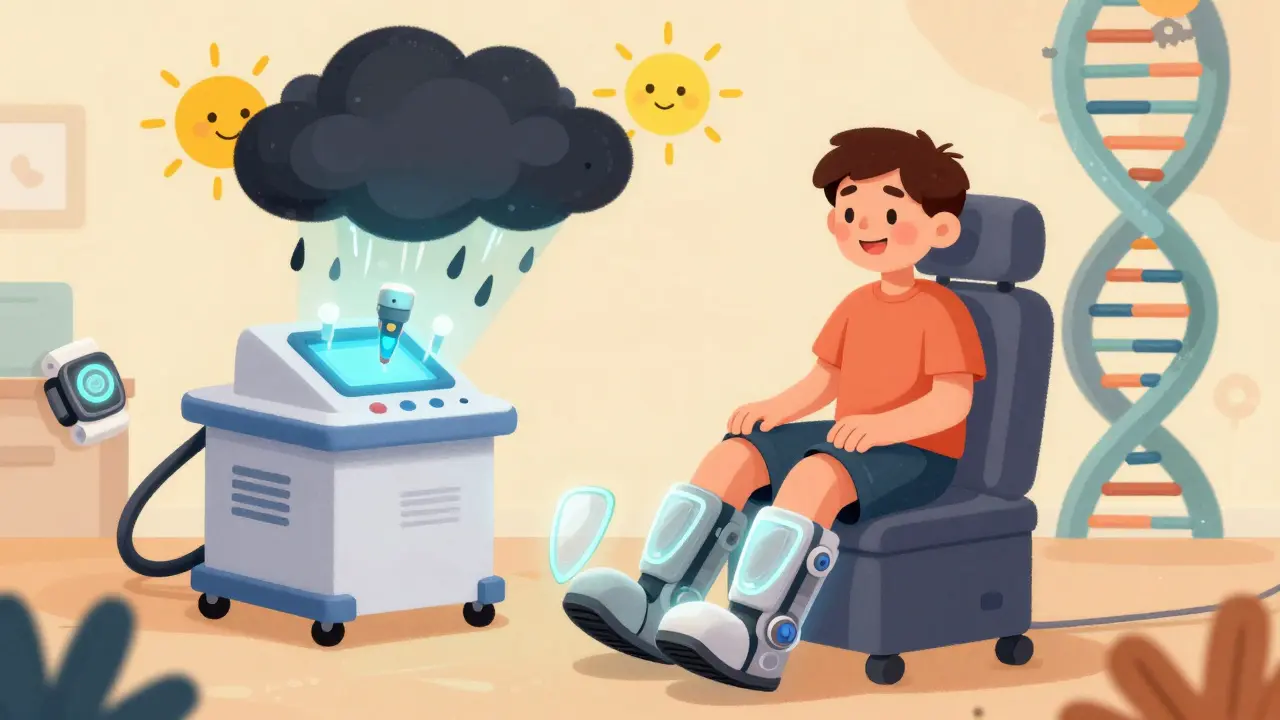
Wearable nerve stimulators are in development and expected to hit the market in 2024. These devices, worn like a brace, deliver continuous low-level stimulation to reduce pain without drugs.
Long-term, researchers believe combination therapies-targeting both pain and nerve regeneration-will become standard by 2030. That could mean not just managing symptoms, but actually repairing damage.
What You Can Do Today
If you have numbness, tingling, or burning in your feet or hands:
- See a doctor-don’t wait. Early intervention improves outcomes by 40%.
- Ask for an HbA1c test if you’re over 40 or have risk factors for diabetes.
- Request a B12 blood test. It’s cheap and easy.
- Start checking your feet daily. Look for cuts, swelling, or color changes.
- Wear supportive, well-fitting shoes. Avoid flip-flops or tight socks.
- Keep a symptom journal. Note when pain is worse, what helps, and what makes it worse.
Peripheral neuropathy won’t vanish overnight. But with the right steps, you can stop it from getting worse-and find real relief.
Ashley Porter
January 25, 2026 AT 15:18Peripheral neuropathy is essentially a neurovascular dysregulation cascade, often initiated by metabolic derangements-especially in diabetic contexts. The axonal transport impairment due to mitochondrial dysfunction and advanced glycation end-products (AGEs) is the core pathological mechanism. Pregabalin modulates voltage-gated calcium channels, reducing neurotransmitter release, but its efficacy ceiling is limited by GABAergic receptor downregulation over time. Scrambler therapy, meanwhile, exploits cortical reorganization via somatosensory gate modulation-fascinating stuff, really.
Peter Sharplin
January 26, 2026 AT 10:46I’ve seen this in clinic for 18 years. The biggest mistake? Waiting until the pain is unbearable. If someone comes in with numb toes and says ‘it’s just aging,’ I hand them a monofilament and a B12 test slip. Half the time, it’s just deficiency. Cheap fix. Early intervention changes everything. Don’t wait for the fire to spread before you call the fire department.
bella nash
January 27, 2026 AT 16:44The human body as a vessel of suffering and silent decay is a profound metaphor for modern medicine’s failure to address root causality. We treat symptoms as if they are the disease. We prescribe chemicals to silence the scream without listening to the whisper that preceded it. The neuropathy is not the problem. The system is.
SWAPNIL SIDAM
January 29, 2026 AT 05:06My uncle had this after chemo. He could not walk. Then he started B12 shots. After three months, he danced at his granddaughter’s wedding. No drugs. Just a shot. God bless simple medicine.
Dan Nichols
January 30, 2026 AT 15:26Everyone acts like pregabalin is magic. It’s just a fancy gabapentin with a bigger price tag. And scrambler therapy? Sounds like a scam designed to fleece people with insurance. Also, who says diabetes is the #1 cause? What about glyphosate? Ever heard of it? Probably not because you trust Big Pharma too much.
Renia Pyles
January 31, 2026 AT 22:09Oh great another medical article that makes me feel guilty for not checking my feet twice a day. Like I don’t already know I’m failing. Like my doctor hasn’t told me the same thing for five years while charging me $200 for a 10-minute visit. Thanks for the guilt trip, wellness influencer.
Rakesh Kakkad
February 1, 2026 AT 16:09As a medical researcher in India, I can confirm that B12 deficiency is massively underdiagnosed here. Many patients present with neuropathy and are misdiagnosed as having spinal stenosis. The cost of testing is low, but awareness is near zero. We need public health campaigns. Not just blog posts.
Shweta Deshpande
February 2, 2026 AT 11:21I just want to say to anyone reading this-you’re not alone. I had this for years and thought I was just getting old. Then I found a physical therapist who taught me how to do balance exercises with a foam roller and now I can walk to the store without crying. It’s not perfect but it’s better. And you deserve to feel better too. One step at a time. You got this 💪
Aishah Bango
February 2, 2026 AT 22:24If you’re drinking alcohol and not getting your B12 checked, you’re not just risking neuropathy-you’re risking becoming a burden on the healthcare system. Personal responsibility isn’t a buzzword. It’s survival.
Simran Kaur
February 4, 2026 AT 07:38In my village in Punjab, we use turmeric paste and warm mustard oil massage for numbness. My grandmother swore by it. I don’t know if it fixes nerves, but it soothes the soul. Maybe healing isn’t just about science-it’s also about touch, care, and tradition. Let’s not forget that.
Neil Thorogood
February 6, 2026 AT 07:05So let me get this straight. You’re telling me I need to buy $1,500 of electrical therapy to avoid amputation… while my insurance won’t cover a $15 generic? 🤡 The system is rigged. But hey, at least I can feel my toes… kind of. 😅
Jessica Knuteson
February 6, 2026 AT 23:23Neuropathy is a symptom of systemic neglect. The real diagnosis is capitalism. We don’t treat nerves-we treat profit margins. Your HbA1c is a metric. Your pain is a cost center. The FDA approves patches, not people.
Robin Van Emous
February 8, 2026 AT 09:26I appreciate the depth here. I’ve had this for 12 years. I’ve tried everything. The only thing that gave me real relief was a combination of low-dose naltrexone, daily walking, and talking to someone who actually listened. Medicine needs more listening. Less prescribing. Just a thought.