 Jan, 5 2026
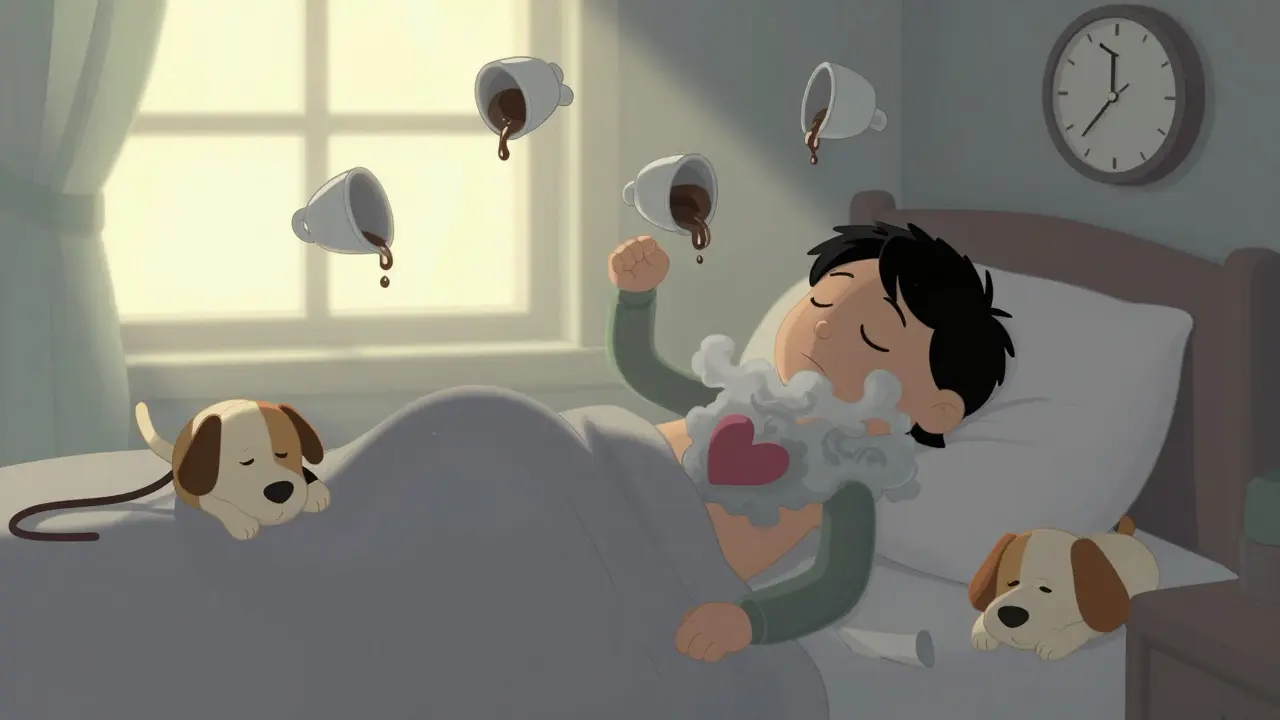
Mood Tracker for Opioid Users
Key Observations
According to the National Institute on Drug Abuse, people with depression are 2.5 times more likely to develop opioid use disorder.
When to contact your doctor:
- Mood score drops below 4 for more than 3 days
- Experiencing thoughts of self-harm
- Noticing withdrawal from family and friends
- Missing doses or taking more than prescribed
- Feeling numbness or lack of joy for extended periods
When someone takes opioids for chronic pain, they’re often told to watch for constipation, drowsiness, or nausea. But one of the most dangerous and overlooked side effects is depression. It doesn’t always show up as crying or sadness. Sometimes it’s just numbness - no joy in coffee with friends, no interest in walking the dog, no energy to get out of bed. And it’s more common than most doctors admit.
Between 30% and 54% of people with long-term pain also have major depression. But here’s the twist: opioid use doesn’t just happen alongside depression - it can cause it. A major 2020 study in JAMA Psychiatry used genetic data to show that people with a biological tendency to use prescription opioids were more likely to develop depression later. This wasn’t just correlation. It was causation.
How Opioids Can Make You Depressed
Opioids work by binding to receptors in your brain that control pain, pleasure, and mood. At first, this feels good. That’s why people feel relief - not just from pain, but from emotional weight too. In lab studies, mice given morphine or buprenorphine showed less despair in forced swim tests. Their immobility dropped by up to 60%. It looked like an antidepressant effect.
But that’s short-term. Over weeks and months, your brain adapts. The natural opioid system - the one your body makes on its own - starts to shut down. You need more of the drug to feel the same. And when you don’t have it, your brain struggles to regulate mood. The result? A chemical imbalance that mimics clinical depression.
Studies show a clear dose-response pattern. People taking more than 50 mg of morphine-equivalent daily had over three times the risk of depression compared to those not using opioids. In one hospital burn unit study, the more opioids a patient received over time, the higher their depression scores climbed - even after accounting for injury severity.
The Vicious Cycle: Depression Fuels Opioid Use
It’s not just opioids causing depression. Depression can also push people toward opioids. People with untreated depression often report higher pain sensitivity. They’re more likely to seek relief from physical discomfort - and more likely to be prescribed opioids for it.
Once they start, they’re twice as likely to switch from short-term to long-term use. A study of over 10 million patients found depression doubled the risk of becoming dependent on opioids. The National Institute on Drug Abuse reports that people with major depressive disorder are 2.5 times more likely to develop opioid use disorder.
This creates a loop: pain leads to opioids, opioids worsen mood, worse mood leads to higher doses, higher doses deepen depression. And it’s not rare. In one study of patients on buprenorphine for opioid addiction, nearly half had severe depression at the start. After three months of treatment, their depression scores dropped - but only because the opioid was being used to treat addiction, not pain.

Monitoring Mood Changes: What Doctors Should Do
Guidelines from the CDC and the American Pain Society say doctors should screen for depression before starting opioids and every three months after. Tools like the PHQ-9 (Patient Health Questionnaire-9) are simple, free, and proven. It asks nine questions: Have you felt down? Lost interest? Had trouble sleeping? Felt tired? Thought about self-harm?
But here’s the problem: only about 40% of primary care doctors do this regularly. A 2020 survey found most don’t ask about mood changes at all. They’re focused on pain levels, not emotional state. And patients rarely bring it up. They think their low mood is just part of living with chronic pain.
Real monitoring means looking for signs beyond the checklist:
- Withdrawal from family or hobbies
- Increased irritability or anger
- Sleeping too much or too little
- Missing appointments or skipping doses
- Using more opioids than prescribed
These aren’t just behavioral issues. They’re red flags for worsening depression. Dr. Roger Weiss, who led a major trial on opioid treatment, recommends monthly mood checks during the first six months of opioid therapy. After that, quarterly. If mood drops even slightly, it’s time to reassess.
Buprenorphine: A Double-Edged Sword
One of the most surprising findings in recent research is that buprenorphine - a drug used to treat opioid addiction - can also help with depression. In one study of 24 patients with opioid use disorder, their Beck Depression Inventory scores dropped from 24.7 (severe depression) to 13.4 (mild) after three months on buprenorphine.
Even more striking: low-dose buprenorphine (1-2 mg daily) improved depression in people with treatment-resistant depression within a week. Response rates hit 47% at four weeks. Yet the FDA hasn’t approved it for depression. That means doctors can’t legally prescribe it for this use - even if it works.
So buprenorphine is both a tool to treat opioid addiction and a potential antidepressant. But it’s not a magic fix. It’s not for everyone. And using it for depression outside clinical trials is still off-label and risky.

What You Can Do: Beyond the Prescription
If you’re on opioids and feel emotionally flat, you’re not weak. You’re not broken. Your brain has changed. And you can change it back.
First, talk to your doctor. Don’t wait for them to ask. Say: “I’ve been feeling numb lately. I don’t enjoy things like I used to. Could this be related to my medication?”
Second, ask about non-opioid pain options. Physical therapy, cognitive behavioral therapy (CBT), acupuncture, and even certain antidepressants like duloxetine can help with chronic pain - without the mood risks.
Third, consider depression treatment. The COMBINE trial showed that when depression was treated with CBT alongside pain management, patients cut their opioid use by 32%. Treating the mind helped the body.
Finally, track your mood. Use a free app or a notebook. Write down how you feel each day. Rate your energy, your interest in things, your sleep. Over time, patterns emerge. You’ll see if your mood dips after a dose increase - or improves after a weekend without opioids.
The Big Picture: It’s Not Just About Pain
Opioids are powerful. They relieve suffering. But they don’t cure anything. They mask it. And when you mask emotional pain with physical painkillers, you’re not healing - you’re delaying.
The science is clear: long-term opioid use increases depression risk. Depression makes opioid dependence more likely. The two feed each other. And the longer you wait to address the mood side, the harder it becomes to break free.
There’s no shame in needing help. There’s no strength in pushing through numbness. The goal isn’t to stop opioids overnight. It’s to understand how they’re affecting you - and to take control before they take over.
Can opioids cause depression even if I take them as prescribed?
Yes. Even when taken exactly as directed, long-term opioid use can lead to depression. Studies show that people using opioids for chronic pain have a 12.9% to 32% chance of developing depression - and the risk goes up with higher doses and longer use. It’s not about misuse. It’s about how the brain changes over time.
Is depression from opioids permanent?
No. Depression linked to opioids often improves when opioid use is reduced or stopped - especially with proper mental health support. In one study, patients on buprenorphine for addiction saw their depression scores drop significantly within three months. Recovery takes time, but the brain can reset.
Should I stop my opioids if I feel depressed?
Don’t stop abruptly. Sudden withdrawal can make depression worse and trigger dangerous physical symptoms. Talk to your doctor. Together, you can create a plan to reduce doses safely while adding support like therapy or alternative pain treatments.
What’s the best way to monitor my mood while on opioids?
Use the PHQ-9 questionnaire every three months - or more often if you notice changes. Keep a daily mood log: rate your energy, sleep, interest in activities, and emotional state on a scale of 1 to 10. Share this with your doctor. Small changes matter. Numbness, isolation, and fatigue are early warning signs.
Are there alternatives to opioids for chronic pain that don’t cause depression?
Yes. Cognitive behavioral therapy (CBT), physical therapy, tai chi, acupuncture, and certain antidepressants like duloxetine or venlafaxine have been shown to help chronic pain without increasing depression risk. Some patients reduce or eliminate opioids entirely by combining these approaches. It takes effort, but it’s safer and more sustainable.
If you’re on opioids and feeling off - not just physically, but emotionally - you’re not alone. And you’re not imagining it. The science backs you up. The next step isn’t to suffer in silence. It’s to ask for help - and to make sure your treatment plan includes your mind, not just your body.
Lily Lilyy
January 7, 2026 AT 03:17You're not alone in feeling this way. I've been on pain meds for years, and I didn't realize how numb I'd become until I started walking my dog again after cutting back. It wasn't magic - just small steps. You deserve to feel joy again, even if it feels far away right now.
Start small. One deep breath. One cup of tea. One walk around the block. Your brain can heal - I promise.
And if you're reading this and scared to talk to your doctor? I was too. But I said, 'I feel empty,' and they listened. You're not weak for needing help. You're brave for asking.
Keep going. You've already won just by reading this.
Gabrielle Panchev
January 7, 2026 AT 23:32Let me be perfectly clear - and I mean PERFECLY clear - because this is a topic that gets mangled by overworked primary care docs who think ‘pain scale’ is the only metric that matters - the opioid-depression link isn’t just ‘correlation,’ it’s a biological hijacking of your endogenous opioid system, which evolved over millions of years to regulate pain, reward, and emotional resilience - and when you flood it with synthetic agonists like oxycodone or fentanyl, you don’t just ‘get high,’ you literally turn off your brain’s natural ability to produce endorphins and enkephalins - and then, when you try to stop, your brain is like a car with no engine - it just sits there, sputtering, in neutral - and that’s not ‘depression’ as in ‘I had a bad day’ - that’s neurochemical collapse - and yes, it’s dose-dependent - and yes, it’s worse if you’re female - and yes, it’s underreported because doctors are scared of liability - and yes, the CDC guidelines are too vague - and yes, PHQ-9 is useless if you’re too numb to answer it - and yes, buprenorphine is the only thing that even comes close to fixing it - and no, the FDA shouldn’t be holding it hostage - and yes, I’ve seen it firsthand - and no, I’m not exaggerating - and yes, I’m still recovering - and no, I don’t care if you think I’m dramatic - this is life-or-death - and if you’re not screaming about this, you’re part of the problem.
Katelyn Slack
January 9, 2026 AT 14:58i was on oxycotin for 3 years after my back surgery and i never thought my low mood was from the meds… i just thought i was ‘broken’… then i switched to gabapentin and started therapy and slowly… i started liking coffee again… i still forget to take my meds sometimes now… and i’m okay with that.
thank you for writing this. i needed to read it.
Melanie Clark
January 10, 2026 AT 21:39Of course opioids cause depression - it’s all part of the pharmaceutical industry’s grand design to keep you hooked - they don’t want you cured - they want you dependent - and the FDA? They’re in bed with Big Pharma - and your doctor? They get kickbacks for prescribing - and the CDC guidelines? Written by consultants who own stock in opioid manufacturers - and buprenorphine? It’s been proven to work for depression since 2017 - but they won’t approve it because it’s cheap - and generic - and it doesn’t make them rich - and you think this is about pain? No - it’s about profit - and you’re being used - and your sadness? It’s not yours - it’s engineered - and if you don’t believe me - just look at the suicide rates in opioid-prescribing states - they’re skyrocketing - and nobody talks about it - because the system is rigged - and you’re not broken - you’re betrayed.
Harshit Kansal
January 12, 2026 AT 10:00Man I felt this so hard. I was on tramadol for sciatica and I just stopped caring about everything - my friends stopped texting me, I didn’t care if I ate, I’d stare at the ceiling for hours. I thought it was just ‘being tired.’ Turns out it was the pills.
Went to my doc, we cut me down slow, started walking every morning. Took 4 months. I’m not ‘fixed’ - but I’m back. You’re not weak for feeling this. You’re human.
Brian Anaz
January 13, 2026 AT 04:31This is why America is falling apart. We hand out painkillers like candy and then wonder why people are depressed. We don’t teach resilience anymore - we just give pills. You want to fix depression? Stop medicating it. Get off your couch. Work out. Eat real food. Talk to your family. Stop expecting a chemical to fix a lifestyle problem. This isn’t medicine - it’s surrender.
Venkataramanan Viswanathan
January 14, 2026 AT 16:50In India, we have a saying: ‘Dard ka ilaj, dil ka ilaj nahi hota.’ Pain is treated, but the heart is ignored. This article is a mirror. Many of us take opioids for chronic back pain after years of manual labor - and no one asks if we still laugh. No one asks if we sleep. We are treated as machines - broken parts to be fixed. But the soul? It doesn’t show up on an X-ray.
Thank you for naming this. We need more voices like yours - not just in America, but everywhere.
Vinayak Naik
January 16, 2026 AT 03:30Y’all are underestimating how wild it is that buprenorphine - this weird little opioid partial agonist - is basically acting like an antidepressant without the SSRIs’ emotional blunting. It’s like your brain’s stuck in a loop and buprenorphine flips the switch just enough to let your own chemicals breathe again.
And the kicker? It works FAST. Like, 3–5 days fast. I’ve seen patients go from ‘I can’t get out of bed’ to ‘I wanna call my sister’ in under a week - and they’re not even high. Just… present.
But yeah, docs won’t prescribe it for depression ‘cause it’s not FDA-approved for that - even though the science’s screaming it. Classic. We’re still in the stone age with mental health meds.
Saylor Frye
January 17, 2026 AT 18:52It’s fascinating how the article frames depression as a ‘side effect’ - as if it’s an accidental byproduct rather than a systemic consequence of neuroadaptive dysregulation. The language here is deliberately therapeutic, almost pastoral - but the underlying mechanism is a pharmacological assault on the mu-opioid receptor system, which, when chronically stimulated, downregulates dopamine transmission in the mesolimbic pathway - thereby inducing anhedonia. This isn’t ‘feeling sad.’ It’s a biologically enforced emotional atrophy. The real tragedy? We’ve known this since the 1990s - and yet, we still treat it like a behavioral issue.
Kiran Plaha
January 19, 2026 AT 11:02I’ve been on low-dose morphine for 5 years after my accident. I never thought my lack of motivation was from the meds - I thought I was just lazy. But last year, I started journaling my mood every night. I noticed a pattern: every time my dose went up, I felt more hollow. I didn’t cry. I just… didn’t care.
I brought it to my doctor. We lowered my dose slowly. I started yoga. I didn’t get ‘cured’ - but I got my self back. It took patience. And honesty. And asking for help.
Thank you for writing this. I wish I’d read it sooner.
Matt Beck
January 19, 2026 AT 20:39Here’s the uncomfortable truth we all avoid: opioids don’t heal pain - they exile you from it. You stop feeling the ache… but you also stop feeling joy, love, wonder, grief - all of it. It’s not depression. It’s emotional amputation.
The brain doesn’t ‘get used to’ opioids - it forgets how to be human without them.
And yet - we keep prescribing them like they’re vitamins.
Maybe the real question isn’t ‘how do we treat depression?’
It’s ‘how do we learn to suffer again?’