 Jun, 11 2026
Imagine falling asleep, only to wake up gasping for air because your throat has collapsed. This isn't a nightmare; it is the reality for millions of people with Obstructive Sleep Apnea (OSA), a chronic condition where the upper airway repeatedly blocks during sleep. You might feel tired all day, struggle to focus at work, or notice your partner complaining about loud snoring. If this sounds familiar, you are not alone. Approximately one billion people worldwide live with sleep apnea, yet many go undiagnosed or untreated.
The good news? There are effective ways to stop these breathing interruptions. For decades, Continuous Positive Airway Pressure (CPAP) therapy has been the gold standard. But CPAP isn't the only option anymore. From custom-made mouthpieces to implanted nerve stimulators, the landscape of sleep apnea treatment is evolving. This guide breaks down how CPAP works, why some people hate it, and what alternatives actually deliver results so you can make an informed decision about your health.
How CPAP Therapy Works and Why It Is the Standard
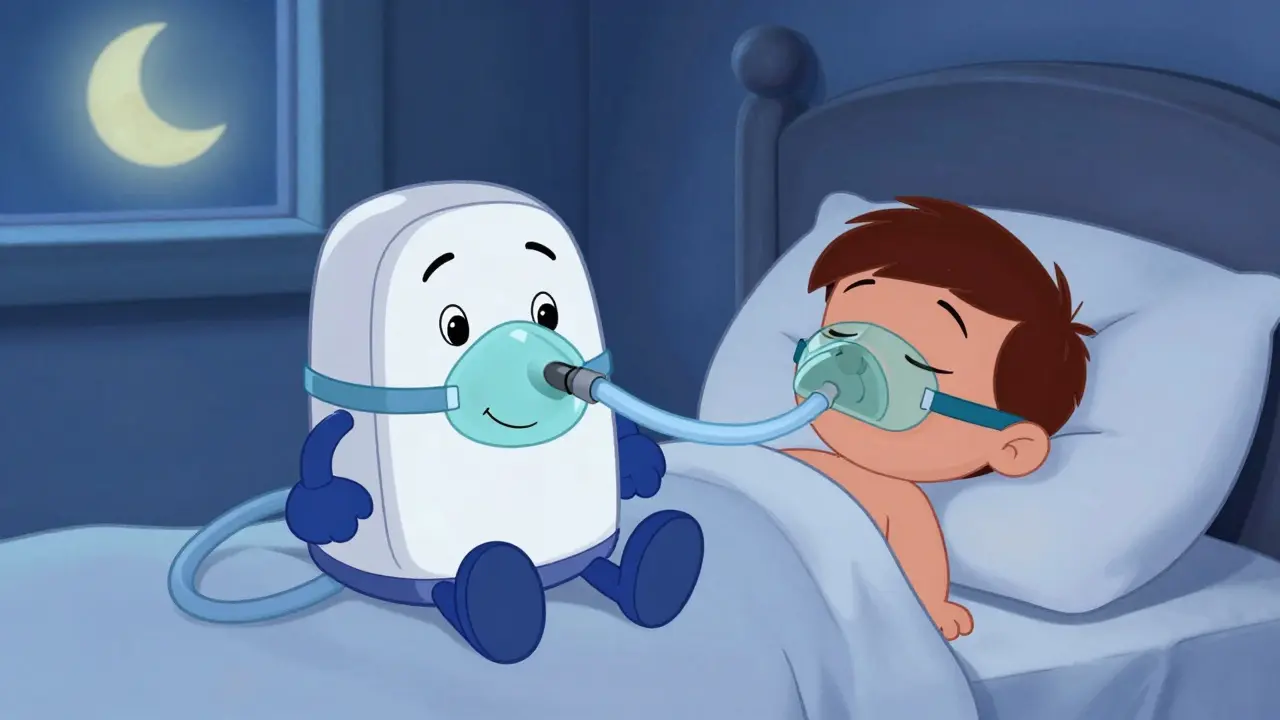
Developed in 1981 by Dr. Colin Sullivan and his team at the University of Sydney, CPAP was the first non-invasive treatment that truly worked. The concept is simple: a machine delivers a constant stream of pressurized air through a mask, acting like a pneumatic splint to keep your airway open. Think of it as blowing up a balloon just enough to keep it from collapsing, but without overinflating it.
Modern CPAP devices are far more sophisticated than the bulky boxes of the past. Today’s machines typically weigh between 1.5 and 3.5 pounds and operate quietly-around 26 to 30 decibels, which is about as loud as a whisper. They come in three main flavors:
- Standard CPAP: Delivers a fixed pressure setting determined by a sleep study.
- Auto-CPAP (APAP): Automatically adjusts pressure minute-by-minute based on your breathing patterns, usually ranging from 4 to 20 cm H2O.
- BiPAP: Provides two different pressures-one for inhaling and a lower one for exhaling-which helps if you find it hard to breathe out against high pressure.
When used consistently for seven or more hours a night, CPAP is incredibly effective. A 2020 study published in the National Center for Biotechnology Information (NCBI) showed that patients saw their Apnea-Hypopnea Index (AHI)-the number of breathing pauses per hour-drop from a severe average of 39 events per hour to a near-normal 7 events per hour after six months. That is a massive improvement in oxygen levels and sleep quality.
The Adherence Problem: Why People Quit CPAP
If CPAP is so effective, why does everyone talk about how annoying it is? The answer lies in adherence. While CPAP eliminates apneic events when worn, wearing it is a different story. About 35% of new users report mask discomfort, and 12% experience claustrophobia. One NCBI study found that 61.8% of people starting with nasal masks switched to full-face masks within six months due to air leaking through their mouths.
Data from ResMed’s 2022 annual report reveals that while 97% of patients complete their first-month follow-up, median usage stabilizes at just 5.2 hours per night by month six. Medicare and most private insurers require you to use the device for at least four hours a night on 70% of nights to maintain coverage. Only about 70% of patients hit that target. Dr. Indira Gurubhagavatula, a leading sleep expert, calls adherence the "Achilles' heel" of OSA management. If you aren’t using it, you aren’t getting treated.
User reviews reflect this struggle. On Reddit’s r/CPAP community, mask leaks and discomfort are cited in 68% of negative posts. However, success stories exist too. Many users find relief by switching to nasal pillow masks, which sit lightly on the nostrils rather than covering the whole face. One user reported dropping their Epworth Sleepiness Scale score from 16 (extremely sleepy) to 7 (normal alertness) after finding the right mask fit.
Oral Appliances: Comfort Over Control?
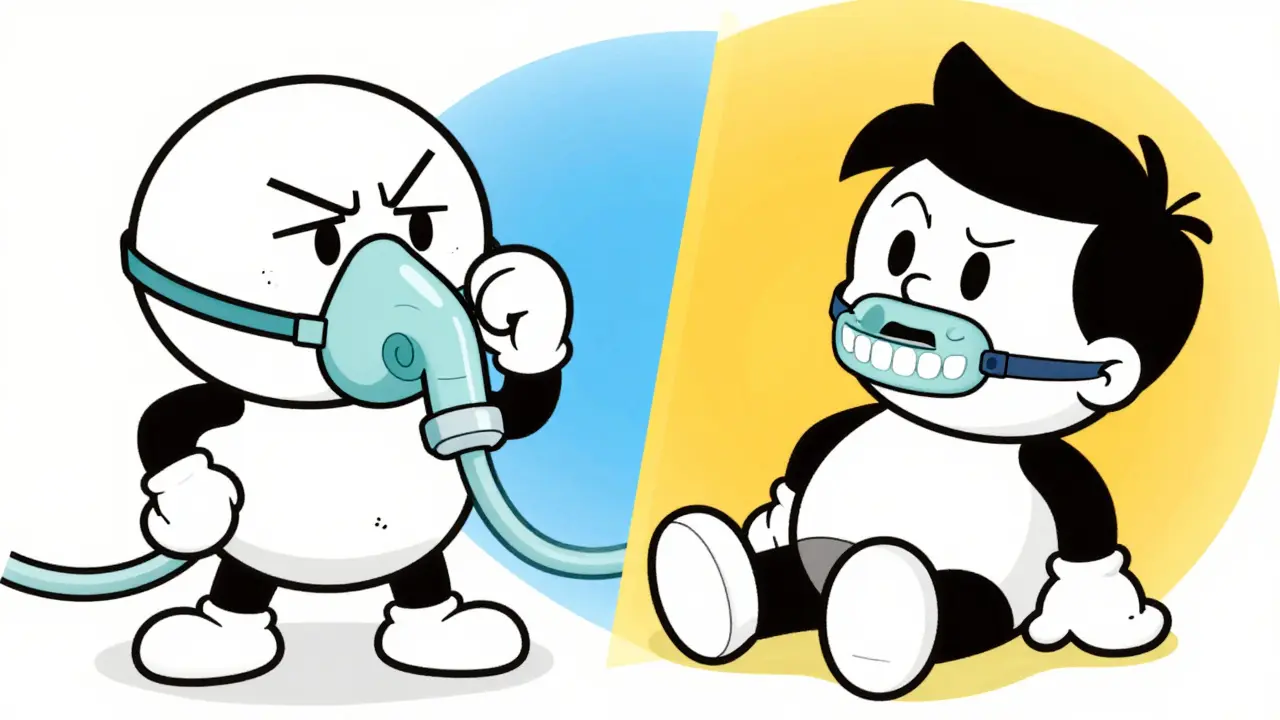
If the idea of wearing a mask feels suffocating, you might consider an oral appliance. These are custom-fitted dental devices, similar to sports mouthguards, that gently pull your jaw forward to keep the airway open. They are particularly popular among people with mild to moderate OSA or those who cannot tolerate CPAP.
The biggest advantage of oral appliances is comfort and portability. A 2017 review by the American Academy of Dental Sleep Medicine (AADSM) found that oral appliances were used on 77% of nights after one year, compared to CPAP’s median of 4-5 hours per night. Four out of six crossover trials in that review showed patients preferred oral appliances because they are easier to travel with and less intrusive.
However, there is a trade-off. Oral appliances generally do not reduce AHI as dramatically as CPAP. In patients with severe OSA, CPAP remains superior at eliminating breathing events. The SARAH Index calculations from the AADSM study highlight this: while CPAP reduces median AHI to 4.7/hour when used for eight hours, reduced usage drops its effectiveness significantly. Oral appliances may leave you with residual mild apnea, but for many, consistent use of a less effective treatment is better than inconsistent use of a highly effective one.
Surgical Options and Nerve Stimulation
For those who want a permanent solution without daily equipment, surgery is an option-but it comes with higher risks and costs. Traditional surgeries like uvulopalatopharyngoplasty (UPPP), which removes tissue from the throat, have mixed results. The Mayo Clinic reports success rates of only 40-60%, meaning nearly half of patients still need other treatments afterward.
A newer, more advanced option is hypoglossal nerve stimulation, such as Inspire therapy. This involves implanting a small device under the skin of the chest that stimulates the nerve controlling the tongue, preventing it from blocking the airway during sleep. Studies show it can reduce AHI by 79%. However, it requires invasive surgery and costs approximately $35,000 out-of-pocket if not fully covered by insurance. It is also only approved for specific patient profiles, typically those with moderate to severe OSA who have failed CPAP therapy.
Who Benefits Most from CPAP?
Not everyone responds to CPAP the same way. Recent research highlights the role of "arousal threshold." Dr. Andrey Zinchuk and colleagues found that patients with high arousal thresholds-who tend to wake up easily during sleep disruptions-see significant cognitive improvements from CPAP, describing the effect as "like drinking a cup of coffee." Conversely, those with low arousal thresholds derive minimal cognitive benefit, suggesting alternative therapies might be better suited for them.
CPAP is also crucial for safety. Dr. David White of the American Academy of Sleep Medicine notes that treating OSA with CPAP reduces traffic accidents by 70% in commercial drivers. For truckers, bus drivers, and operators of heavy machinery, CPAP isn’t just about feeling rested; it’s a public safety requirement. The Federal Motor Carrier Safety Administration mandates treatment for diagnosed drivers, affecting roughly 2.5 million U.S. professionals.
| Treatment Type | Effectiveness (AHI Reduction) | Adherence Rate | Invasiveness | Best For |
|---|---|---|---|---|
| CPAP/APAP | High (Near elimination) | Moderate (4-5 hrs/night avg) | Non-invasive | Moderate to Severe OSA |
| Oral Appliances | Moderate | High (77% of nights) | Non-invasive | Mild to Moderate OSA, CPAP intolerant |
| Hypoglossal Nerve Stimulation | High (79% reduction) | High (Automatic) | Invasive (Surgery) | Severe OSA, Failed CPAP |
| UPPP Surgery | Variable (40-60% success) | N/A | Invasive (Surgery) | Specific anatomical obstructions |
Getting Started with CPAP: A Practical Guide
If you decide to try CPAP, preparation is key. The process begins with a diagnostic sleep study, either in a lab or via home testing, to confirm your severity. A titration study then determines your optimal pressure, usually between 6 and 12 cm H2O.
Don’t expect to love it immediately. The American Academy of Sleep Medicine recommends a gradual approach: wear the mask for 1-2 hours while awake during the day to get used to the sensation. Common hurdles include nasal congestion (affecting 30% of users) and dry mouth (25%). Solutions include heated humidifiers, which help 78% of congestion cases, and chin straps for mouth breathers.
Cleaning is non-negotiable. Wash your mask daily and disinfect the tubing weekly to prevent infections. Most Durable Medical Equipment (DME) providers offer 24/7 support, and major brands like ResMed and Philips provide extensive video tutorials. If you’re struggling, don’t give up-ask for a mask refit or try a different style. Finding the right setup often takes a few weeks of tweaking.
The Future of Sleep Apnea Treatment
Technology is moving fast. New auto-CPAP algorithms, like those in the ResMed AirSense 11, detect breathing issues 15% faster than older models. Digital therapeutics, such as the FDA-cleared Nightware app, use biofeedback to improve adherence, boosting usage by 22% in early trials. Future directions include personalized pressure settings based on 3D airway imaging and closed-loop systems that adjust pressure in real-time based on brainwave arousal detection.
As we move toward 2026, the focus is shifting from one-size-fits-all to personalized medicine. Understanding your unique physiology, including your arousal threshold and anatomy, will help determine whether CPAP, an oral appliance, or even emerging pharmacological treatments targeting muscle tone is the best path for you.
Is CPAP necessary for mild sleep apnea?
Not always. For mild OSA (AHI 5-14 events/hour), lifestyle changes like weight loss and positional therapy may be sufficient. However, if you have cardiovascular risk factors or significant daytime sleepiness, CPAP is often recommended to prevent long-term health complications.
Can I buy a CPAP machine without a prescription?
In the United States, CPAP machines are classified as Class II medical devices and require a physician’s prescription. This ensures you receive the correct pressure settings and proper mask fitting, which are critical for effective treatment.
How much does CPAP therapy cost?
Costs vary widely. Insurance plans, including Medicare, typically cover the majority of the machine and mask costs if you meet adherence requirements. Out-of-pocket expenses can range from $500 to $2,500 depending on your plan and the specific equipment chosen.
What is the difference between CPAP and BiPAP?
CPAP delivers a single, constant pressure throughout the night. BiPAP provides two pressures: a higher one for inhalation and a lower one for exhalation. BiPAP is often prescribed for patients who have trouble breathing out against high CPAP pressures or those with certain respiratory conditions.
Do oral appliances work for severe sleep apnea?
Generally, no. Oral appliances are most effective for mild to moderate OSA. For severe cases, CPAP is the gold standard because it more reliably prevents airway collapse. Using an oral appliance for severe OSA may leave you with dangerous levels of untreated apnea.
How long does it take to get used to CPAP?
Most patients acclimate within 2 to 4 weeks. Starting with short daytime sessions and gradually increasing usage helps. If you continue to struggle after a month, consult your provider to adjust the mask fit, pressure ramp settings, or humidity levels.
Can sleep apnea be cured permanently?
While there is no universal cure, significant weight loss can sometimes resolve mild to moderate OSA. Surgical options like Inspire therapy offer a long-term solution for eligible candidates, but most patients require ongoing management with devices like CPAP or oral appliances.
Brett Webster
June 12, 2026 AT 07:21The data on adherence is the real story here. It's not that CPAP doesn't work, it's that human behavior is hard to hack. The shift towards APAP and better mask tech like nasal pillows is crucial because it lowers the friction for daily use. We need to stop treating sleep apnea as just a medical issue and start viewing it as a lifestyle integration challenge.
Lee Coates
June 12, 2026 AT 20:12Typical American healthcare complex :) Why do we need a prescription for a machine that just blows air? In other countries they might just let you buy it at the pharmacy but here we have red tape everywhere. Good article though.
Miranda River
June 14, 2026 AT 18:13i mean the whole concept of sleeping with a hose in your face is kinda dystopian if u think about it lol. but yeah i tried cpap for a month and gave up. my jaw hurts from the oral appliance too so now im just tired all the time which is great for my productivity right? not.
shreya sinha
June 15, 2026 AT 14:09It is truly disheartening to observe how society continues to prioritize convenience over health, leading to such abysmal adherence rates among patients who are prescribed life-saving interventions. The fact that nearly half of the users abandon the therapy within the first few months speaks volumes about our collective lack of discipline and respect for medical advice, which ultimately places an undue burden on the healthcare system and exacerbates public health crises that could otherwise be mitigated through simple compliance.
Sherry Wheeler
June 15, 2026 AT 21:24Oh my gosh, this hits home! I used to feel like I was drowning every night until I finally found the right mask. It’s like finding a soulmate but for your nose. Don’t give up if the first one feels wrong because there is hope out there and your future self will thank you for sticking with it even when it feels awkward at first.
Aditya Singh
June 17, 2026 AT 02:53Absolutely stellar breakdown of the clinical efficacy versus patient compliance metrics! As someone deeply invested in the bio-medical engineering space, I find the transition from fixed-pressure CPAP to algorithmic APAP fascinating. The utilization of predictive modeling for pressure titration represents a significant leap forward in personalized therapeutic interventions, leveraging real-time physiological feedback loops to optimize airway patency without compromising patient comfort or sleep architecture integrity.
Callie Skipper
June 17, 2026 AT 20:50my husband has been using inspire for two years now and it changed his life completely no more waking up gasping and he actually sleeps through the night so if money is not an issue for you its worth looking into even though the surgery sounds scary
Ganesh Honikol
June 18, 2026 AT 23:52I must commend the thoroughness of this exposition regarding the multifaceted nature of obstructive sleep apnea management strategies, as it elucidates the critical importance of individualized treatment plans tailored to specific anatomical and physiological parameters. The inclusion of comparative data on adherence rates between oral appliances and CPAP devices provides invaluable insight for clinicians and patients alike, thereby facilitating more informed decision-making processes that ultimately lead to improved long-term health outcomes and enhanced quality of life for those suffering from this prevalent yet often underdiagnosed condition.