 Dec, 29 2025
Antidepressant Preference Calculator
Find the antidepressant that best matches your needs. Based on your priorities and concerns, we'll calculate which option might be most suitable for you.
Your Priorities
How It Works
This calculator assigns points based on your priorities and compares them to the key characteristics of each antidepressant:
- Fast onset (2-3 days): Zuranolone
- Fastest onset (24-48 hours): SPRAVATO
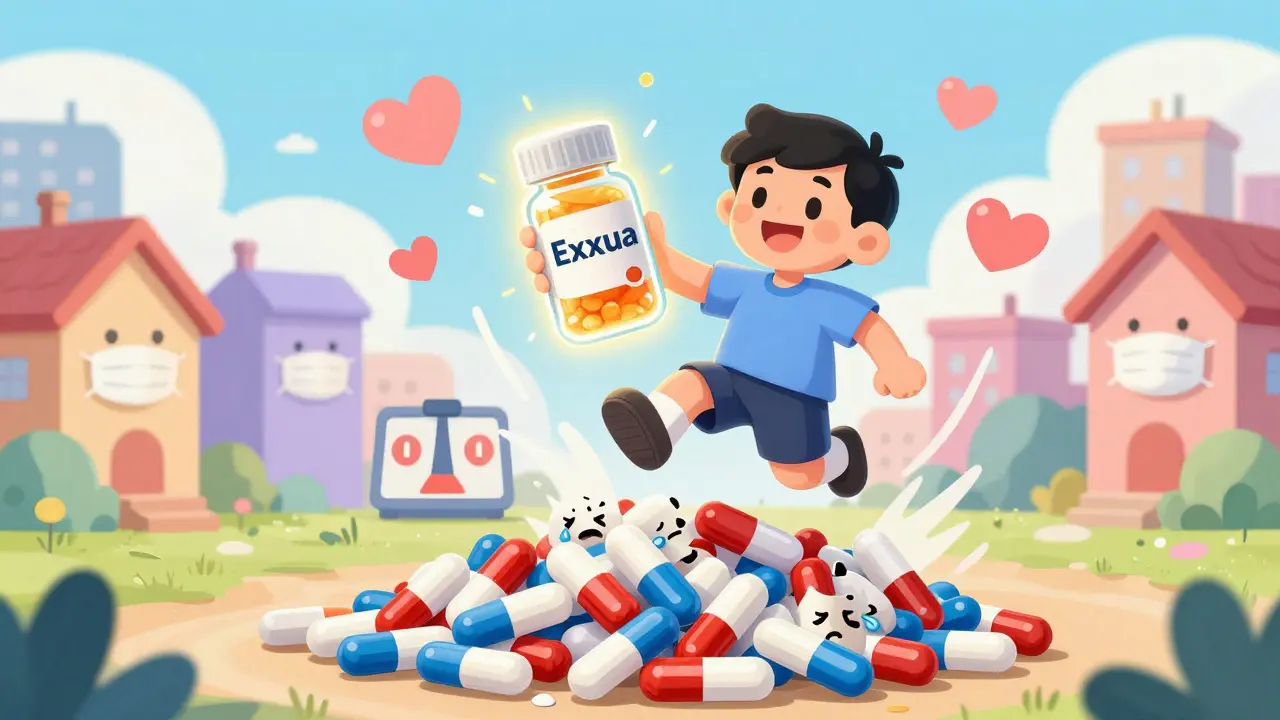
- Very low sexual side effects (2-3%): Exxua
- Minimal weight gain: Exxua, SPRAVATO
- Short-term treatment (14 days): Zuranolone
- No clinic visits: Exxua, Auvelity
Important: This is for educational purposes only. Always consult your doctor before making any medication decisions.
Your Best Match
may be the most suitable option for you based on your priorities.
For decades, antidepressants have been a lifeline for millions, but they’ve come with a heavy price: sexual dysfunction, weight gain, drowsiness, and nausea. Many people quit taking them-not because they don’t work, but because the side effects make life harder, not better. Now, in 2025, a new wave of antidepressants is changing that. These aren’t just tweaks of old drugs. They’re built on entirely different science, with faster results and fewer of the problems that made people stop taking their meds.
Why the Old Antidepressants Fall Short
Traditional SSRIs like sertraline, fluoxetine, and escitalopram still make up most prescriptions. But here’s the truth: 30% to 70% of people on these drugs struggle with sexual side effects. Up to 15% gain noticeable weight in just six months. About half report stomach issues. These aren’t rare annoyances-they’re dealbreakers. A Reddit user, u/AnxietyWarrior2023, shared that after 15 years on SSRIs, switching to Exxua eliminated his sexual dysfunction and improved his mood in under 10 days. That kind of relief is why the new options are getting so much attention.The New Players: Faster, Fewer Side Effects
Three newer antidepressants are leading the shift: Auvelity, Zuranolone, and SPRAVATO. Each works differently-and each has a unique profile.Auvelity (dextromethorphan/bupropion) was approved in 2022. It combines two drugs: one that blocks NMDA receptors (like ketamine) and another that slows the breakdown of the first. It works in days, not weeks. Weight gain is 15-20% lower than with duloxetine. Sexual side effects are rare-seen in under 10% of users. It’s taken as a daily pill, no clinic visits needed.
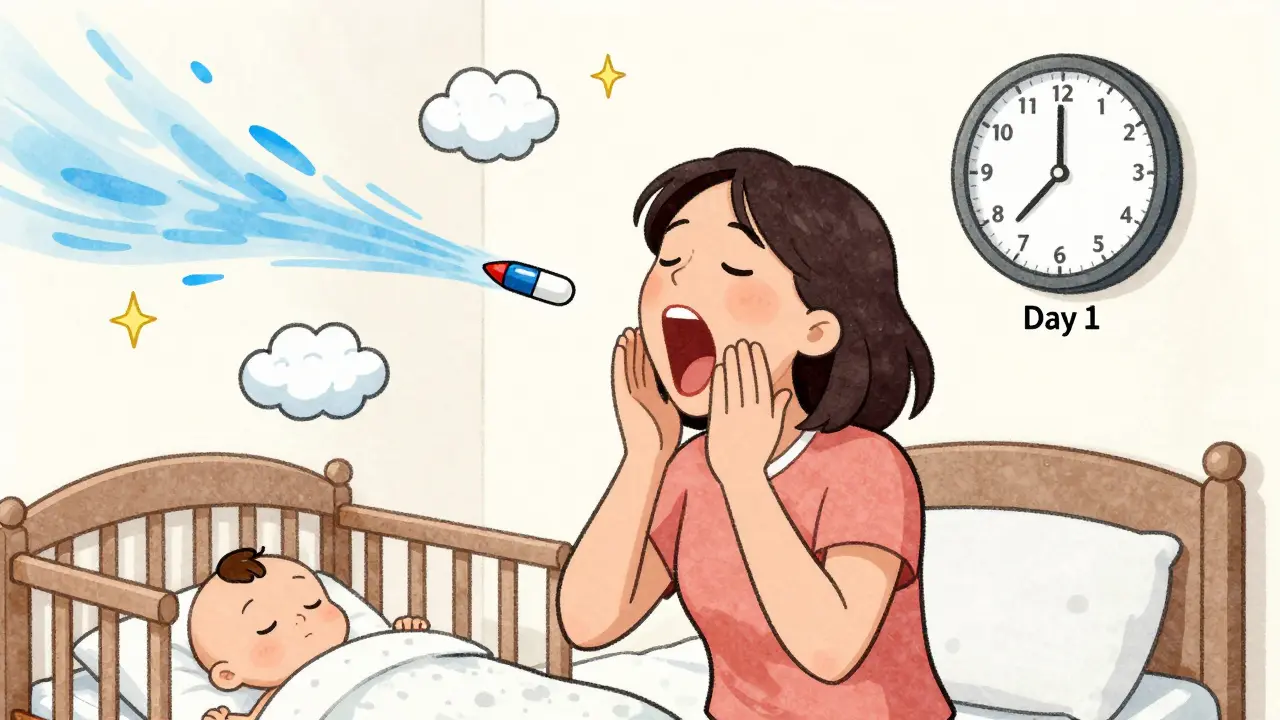
Zuranolone (Zurzuvae), approved in 2023 for postpartum depression and expanded to major depression in October 2025, is a neurosteroid. It targets GABA receptors, calming brain overactivity. It’s a 14-day course. Most people feel better within three days. Side effects? Dizziness (25%) and sleepiness (20%). But no sexual dysfunction. No weight gain. And unlike daily pills, you take it for two weeks and stop. No long-term dependency. It’s the first antidepressant designed as a short-term reset.
SPRAVATO (esketamine) is a nasal spray approved since 2019. It’s for treatment-resistant depression. It works in 24-48 hours. But it’s not simple. You must take it in a certified clinic. You’re monitored for two hours after each dose because 45-55% of users experience dissociation-feeling detached from reality. It’s effective, but not for everyone. One Reddit user said, “I felt like I was floating out of my body. I had to stop after three treatments.” Still, for people who’ve tried everything else, it’s a breakthrough.
Exxua: The Quiet Game-Changer
Released in September 2023, Exxua (gepirone) is the first new chemical antidepressant in over a decade. It targets serotonin receptors differently than SSRIs-more precisely. It doesn’t flood the brain with serotonin. It fine-tunes it. The result? Only 2-3% of users report sexual side effects, compared to 30-50% on SSRIs. Weight gain? Nearly zero. It’s taken daily, like an SSRI, but without the same trade-offs. In clinical trials, it worked as well as fluoxetine-but with far fewer complaints.How Do They Compare? Side Effects at a Glance
| Medication | Sexual Dysfunction | Weight Gain | Onset of Action | Key Side Effects |
|---|---|---|---|---|
| SSRIs (e.g., sertraline, citalopram) | 30-70% | 10-15% average gain | 4-8 weeks | Nausea, insomnia, fatigue |
| Auvelity | <10% | 15-20% lower than duloxetine | 1-4 days | Headache, dizziness |
| Zuranolone | 0% | No significant change | 2-3 days | Dizziness (25%), sleepiness (20%) |
| SPRAVATO | 15-20% | Minimal | 24-48 hours | Dissociation (45-55%), nausea |
| Exxua | 2-3% | Negligible | 1-2 weeks | Mild headache, dry mouth |
Cost and Access: The Hidden Hurdle
These new drugs aren’t cheap. A single SPRAVATO dose costs about $880. A full 14-day course of Zuranolone runs $9,450. Insurance often requires prior authorization-and even then, many plans won’t cover them unless you’ve tried at least two older drugs first. Auvelity and Exxua are more accessible, priced closer to brand-name SSRIs. Generic fluoxetine? $4 for 30 tablets. That price gap makes access unequal. Rural areas suffer most: only 1,243 certified clinics nationwide can give SPRAVATO. If you don’t live near one, it’s not an option.Who Benefits Most?
Not everyone needs a new antidepressant. But for certain people, these options are game-changing:- If you’ve tried 2-3 SSRIs and still feel depressed → SPRAVATO or Auvelity.
- If you’re a new mom with postpartum depression → Zuranolone is the first FDA-approved option with rapid results.
- If sexual side effects ruined your last treatment → Exxua or Auvelity.
- If you hate taking daily pills → Zuranolone’s two-week course is a reset, not a lifetime commitment.
Dr. Dervla Kelly, a psychiatrist at King’s College Hospital, puts it simply: “The goal isn’t to find the best antidepressant. It’s to find the right one for you.” That means matching the drug to your body, your life, and your priorities.
What’s Coming Next?
The pipeline is full. Aticaprant, a kappa opioid blocker, is in Phase 3 trials and could be approved by mid-2026. Early results show a 60% response rate in treatment-resistant cases-with almost no weight gain. Researchers are also testing genetic tests to predict who will have bad side effects. One NIH-funded project aims to predict antidepressant tolerance with 85% accuracy using DNA markers. That’s the future: personalized depression treatment.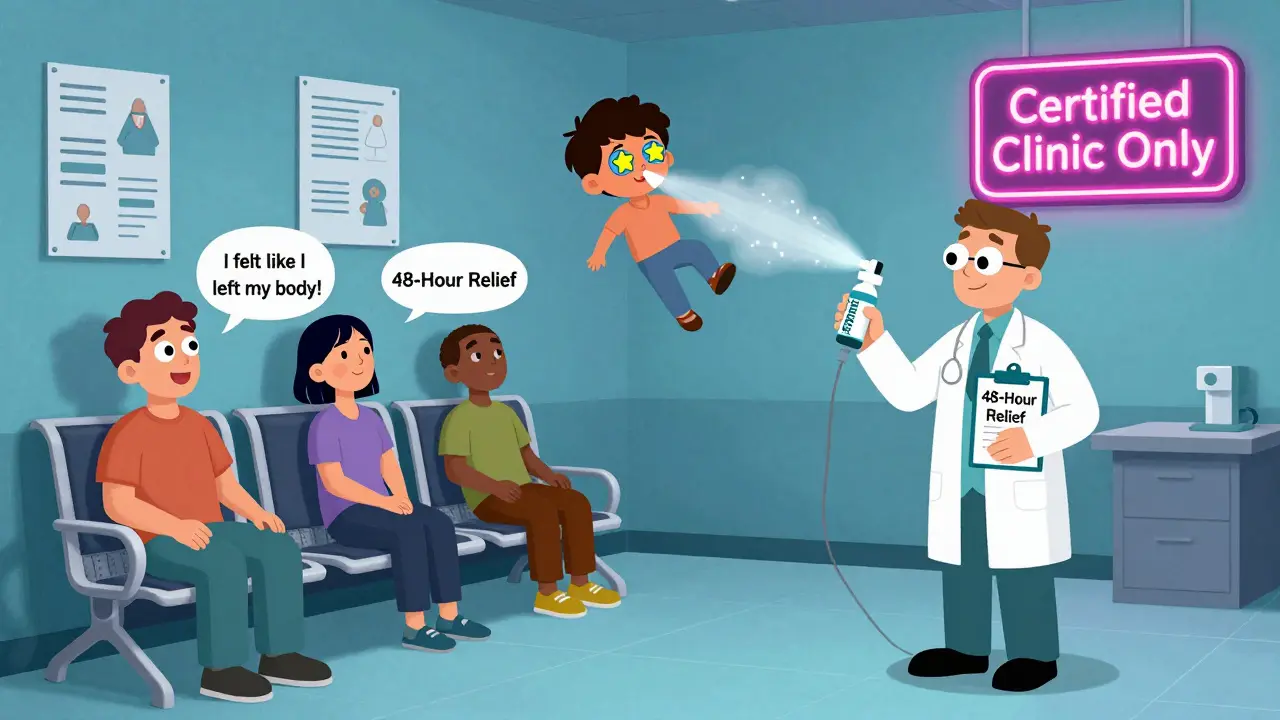
Real Talk: The Downsides
These drugs aren’t magic. Most studies last 8 weeks. We don’t know what happens after a year. Dr. Prasad Nishtala warns: “We’re prescribing these based on short-term data. Long-term safety? Still unknown.” Also, clinical trials often exclude older adults, people with heart disease, or those on multiple medications. Real-world use may be riskier.And while Zuranolone has no sexual side effects, 42% of users on Healthgrades report dizziness. SPRAVATO’s dissociation can be terrifying. Exxua’s mild side effects are good-but it’s still new. Only time will tell how it holds up.
What Should You Do?
If you’re on an SSRI and struggling with side effects, talk to your doctor. Don’t quit cold turkey. Ask about:- Exxua if sexual dysfunction is your main issue
- Auvelity if you want fast relief without clinic visits
- Zuranolone if you’re looking for a short-term reset
- SPRAVATO only if you’ve tried everything else and your depression is severe
Use the NIMH’s ‘Choosing an Antidepressant’ tool or the American Psychiatric Association’s side effect comparison guide. These aren’t marketing materials-they’re free, evidence-based tools designed to help you and your doctor decide.
Final Thought
The old model of “take this pill every day for life” is fading. The new model is: “Find the right tool for your body, use it for the time you need, and move on.” That’s not just progress-it’s dignity. Depression doesn’t have to mean trading your sex life, your weight, or your peace of mind for relief. The options now exist. It’s time to ask for them.Are the new antidepressants safer than SSRIs?
Yes, in specific ways. Newer drugs like Exxua and Zuranolone have dramatically lower rates of sexual dysfunction and weight gain-two of the most common reasons people stop taking SSRIs. However, they come with different risks: SPRAVATO can cause dissociation, and Zuranolone may cause dizziness. Safety depends on the drug and your personal health. No antidepressant is risk-free, but the newer options offer better trade-offs for many.
How fast do the new antidepressants work?
Traditional SSRIs take 4-8 weeks to work. The new ones are much faster. Auvelity and Exxua show improvement in 1-2 weeks. Zuranolone can lift mood in as little as 2-3 days. SPRAVATO works in 24-48 hours. This speed matters for people in crisis or those who’ve waited too long for relief.
Can I switch from an SSRI to a new antidepressant?
Yes, but you must do it under medical supervision. Stopping SSRIs abruptly can cause withdrawal. Your doctor will likely taper you off slowly before starting the new medication. Some, like Zuranolone, are designed as short-term courses and can be started after SSRI discontinuation. Others, like Auvelity, can be added while tapering. Never switch on your own.
Why are the new antidepressants so expensive?
They’re new, patented drugs with high research and development costs. SPRAVATO and Zuranolone require special administration or monitoring, adding to the price. Insurance often limits coverage to patients who’ve failed at least two older drugs. Generic SSRIs cost pennies because they’ve been around for decades. The cost reflects innovation-not just profit.
Do these new drugs work for everyone?
No. Depression is complex. About 50-65% of people with treatment-resistant depression respond to SPRAVATO or Auvelity. Zuranolone works well for postpartum depression but isn’t proven for all types. Exxua helps those who can’t tolerate SSRIs. No single drug works for everyone. The goal now is matching the right drug to the right person-based on side effect risks, lifestyle, and treatment history.
srishti Jain
December 31, 2025 AT 04:32Exxua? More like Ex-whoa. They’re just repackaging serotonin tweaks and calling it a revolution. Meanwhile, my cousin’s on Zuranolone and spent three days crying in the bathroom because she felt ‘unreal.’ This isn’t progress-it’s pharmaceutical theater.
henry mateo
January 1, 2026 AT 15:32im not a doctor but i read all the studies and honestly… zurnolone sounds like it could be a game changer for new moms. i had postpartum and it felt like my brain was on fire. if this thing works in 3 days? yeah. i’d take the dizziness. just give me back my mind.
Kunal Karakoti
January 3, 2026 AT 10:46There is a metaphysical dimension to this that few acknowledge: we treat depression as a chemical imbalance, yet our lives are imbalanced in far more profound ways-loneliness, meaninglessness, systemic alienation. These drugs may quiet the noise, but they do not restore the harmony. We are medicating the symptom while ignoring the soul’s dissonance.
Nadia Spira
January 5, 2026 AT 00:08Let’s be real-Exxua’s 2-3% sexual side effects? That’s not science, that’s placebo spin. The trials were 8 weeks and excluded anyone over 65 or with comorbidities. You think this is a breakthrough? It’s a marketing brochure with a p-value. And don’t get me started on the $9k Zuranolone course-only the wealthy get dignity. The rest of us still swallow SSRIs and hope we don’t gain 20 lbs while crying into our oat milk lattes.
Joseph Corry
January 6, 2026 AT 11:24It’s fascinating how we’ve reduced the existential crisis of human suffering to a pharmacokinetic algorithm. The entire psychiatric enterprise has become a commodified calculus of side effect matrices and insurance tiered approvals. We’ve outsourced our inner turmoil to patent-protected molecules, and now we’re surprised when the system collapses under its own weight. The real question isn’t ‘which drug works?’-it’s ‘why are we still asking this question in 2025?’
Cheyenne Sims
January 8, 2026 AT 10:23These drugs are not magic. They’re expensive, poorly accessible, and overhyped by biotech PR. The U.S. healthcare system is broken. We spend billions on novel antidepressants while cutting community mental health centers. If you’re poor, rural, or uninsured, you’re still stuck with fluoxetine and a prayer. This isn’t innovation-it’s exploitation dressed in white coats.
Shae Chapman
January 9, 2026 AT 13:09OMG I just started Exxua last week and I can’t believe it 😭 I had sex for the first time in 3 years and didn’t feel like a zombie after! Also no weight gain!! I’m crying happy tears 🥹🥹🥹 thank you science!!
Kelly Gerrard
January 9, 2026 AT 18:16Don’t be fooled by the headlines. This isn’t a revolution. It’s a refinement. SSRIs still work for most people. These new drugs are for the few who can’t tolerate the old ones-and even then, long-term data is nonexistent. Stop chasing the next miracle pill. Therapy, sleep, sunlight, movement-these are still the real foundations. Drugs are tools, not replacements.
Glendon Cone
January 10, 2026 AT 11:05Just want to say I tried Auvelity after 10 years on sertraline. My libido came back in 5 days. No weight gain. Headaches? Yeah, but I’ll take a headache over feeling emotionally numb. Also, I’m not rich-I got it covered by Medicaid after 2 denials. It’s not perfect, but it’s the first time in a decade I’ve felt like me. 🙌
Henry Ward
January 11, 2026 AT 19:25You people are so naive. These drugs are designed to keep you dependent. Zuranolone’s ‘14-day reset’? That’s a trap. You’ll need another course in 6 months. And Exxua? It’s just another SSRI with a fancy name. The pharma giants don’t want you cured-they want you paying forever. Wake up. The real cure is getting off the grid, eating real food, and stopping the dopamine scroll. No pill can fix a broken society.