 Jan, 26 2026
Drug Interaction Risk Calculator
Check Your Risk
Many people take milk thistle to support liver health, especially if they have fatty liver disease, drink alcohol regularly, or are on long-term medications. But what happens when you combine it with prescription drugs that your liver has to break down? The answer isn’t simple. Milk thistle doesn’t just sit quietly in your system-it actively talks to the enzymes that process your medications. And that conversation can change how well those drugs work-or even make them dangerous.
What’s Really in Milk Thistle?
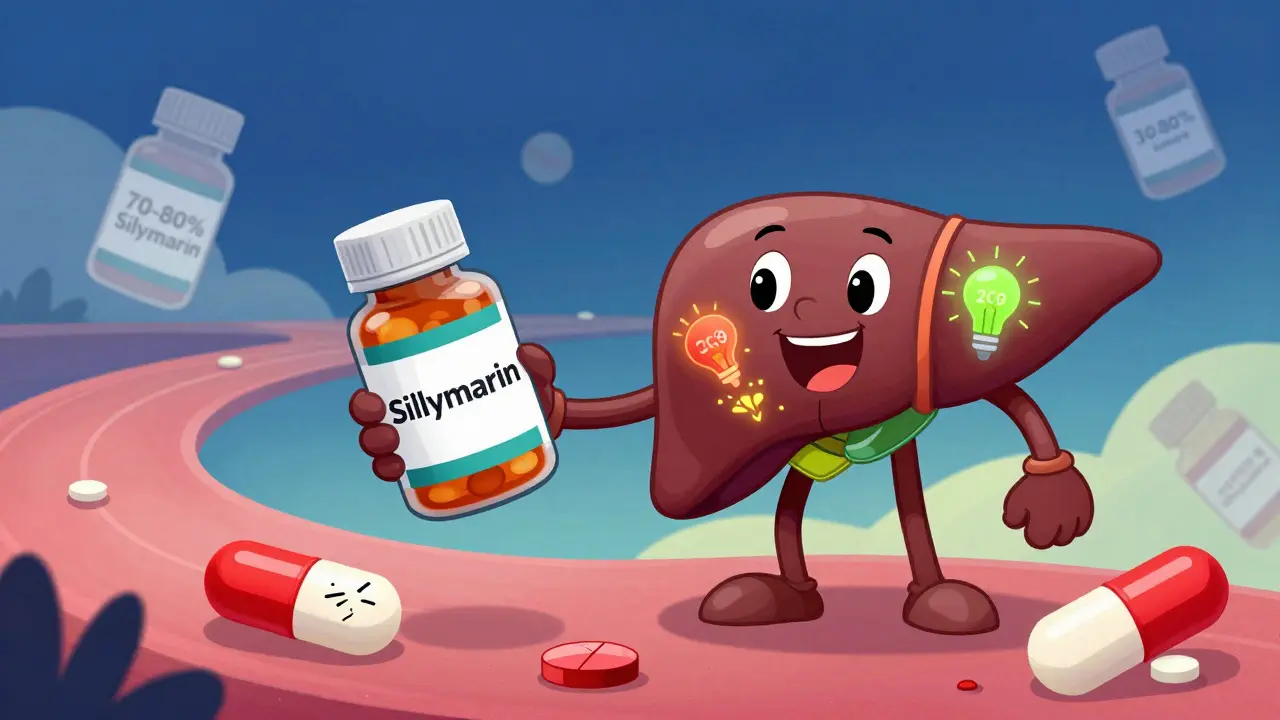
Milk thistle isn’t just some herbal tea your grandma drank. The active part is called silymarin, a mix of compounds including silybin, silychristin, and silydianin. Most supplements contain 70-80% silymarin, with common doses ranging from 140 mg to 420 mg per day. That’s not random-it’s based on data from nearly 30 clinical trials. But here’s the catch: not all supplements are created equal. A 2022 FDA review found only 32% of milk thistle products on the market actually contained the amount of silymarin listed on the label. You could be taking a pill that does nothing-or worse, one that’s way stronger than you think.
How It Interacts with Your Medications
Your liver uses a family of enzymes called cytochrome P450 (CYP) to break down drugs. The big players here are CYP3A4, CYP2C9, and CYP2D6. These enzymes handle everything from blood thinners to antidepressants to statins. Milk thistle doesn’t just block or boost these enzymes-it does both, depending on how long you’ve been taking it.
Early studies suggested milk thistle might block CYP2C9, which could raise levels of drugs like warfarin (a blood thinner) or phenytoin (an anti-seizure medicine). But then came the twist: a 2020 study showed that after just 28 days of daily use, the same herb started inducing CYP2C9 instead of inhibiting it. That means your body might start breaking down your medication faster, making it less effective. This flip-flop is why doctors struggle to give clear advice.
For CYP3A4-the enzyme that processes over half of all prescription drugs-results are even messier. One 2019 trial gave 420 mg of silymarin daily to 24 healthy people for two weeks. They checked how well the body processed midazolam, a drug that’s a perfect marker for CYP3A4 activity. The result? A 7.2% increase in drug levels. That’s below the 20% threshold that’s considered clinically meaningful. So, for most people, it’s probably not a big deal. But if you’re on a drug with a narrow window-where even a 10% change can cause side effects or toxicity-this isn’t something you can ignore.
Real People, Real Problems
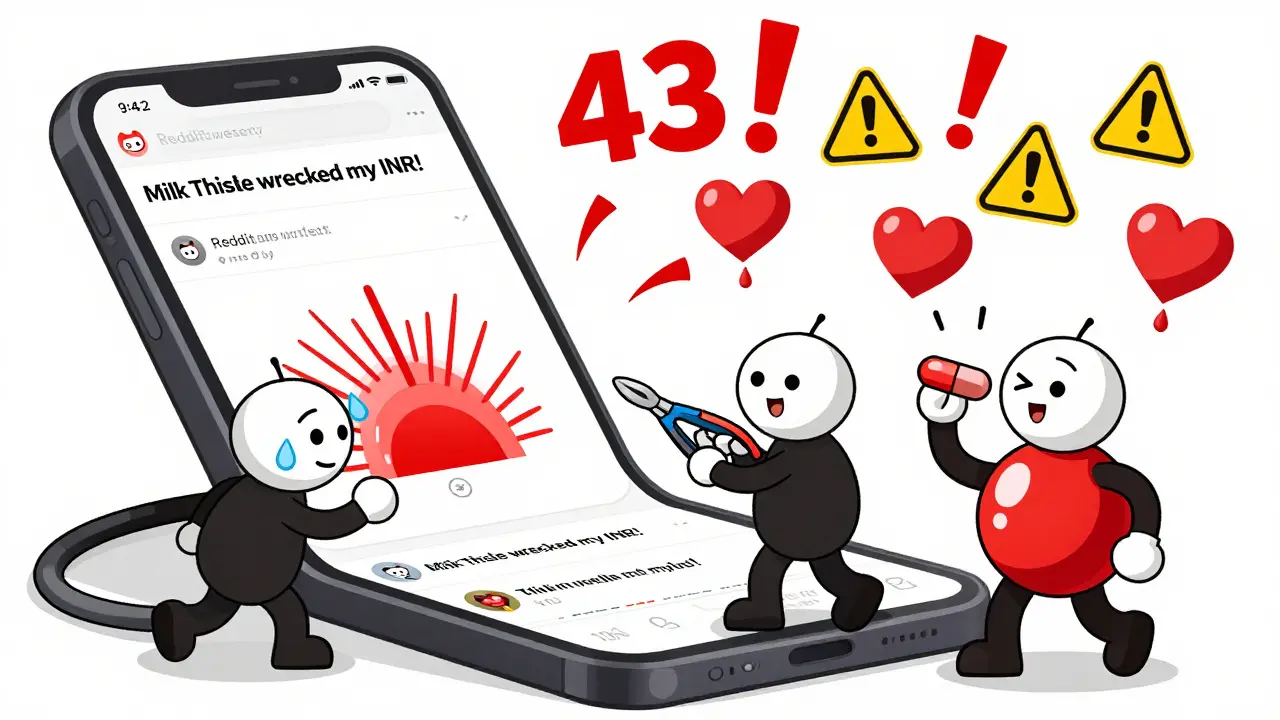
Lab studies don’t always tell the whole story. On Reddit, a thread from February 2024 titled “Milk Thistle wrecked my INR levels while on warfarin” had 87 comments. Forty-three people reported changes in their INR (a measure of how long it takes your blood to clot). Twenty-eight of them had to adjust their warfarin dose by 15-35%. That’s not a coincidence. Warfarin’s therapeutic range is razor-thin. Too little, and you risk a clot. Too much, and you could bleed internally.
Meanwhile, Amazon reviews for milk thistle show only 2.1% of users mention drug interactions. Most say it helped their liver feel better. That disconnect is telling. People who have problems are more likely to post online. Those who don’t notice anything? They don’t say anything. But that doesn’t mean the risk isn’t there.
And then there are the cases that slip through the cracks. The FDA’s adverse event database recorded 47 possible milk thistle-drug interactions between 2018 and 2023. Only 9 were confirmed as likely caused by the supplement. That’s low-but it’s still 9 people who had a bad reaction they didn’t expect.
Who’s at Highest Risk?
Not everyone needs to avoid milk thistle. But if you take any of these, you should talk to your doctor before starting it:
- Warfarin (Coumadin, Jantoven): Even small changes in metabolism can lead to dangerous bleeding or clots.
- Phenytoin (Dilantin): Used for seizures. Too little means seizures return. Too much means dizziness, confusion, or worse.
- Statins (atorvastatin, simvastatin): Some are metabolized by CYP3A4. While evidence is weak, doctors still advise caution because muscle damage from statins can be severe.
- Immunosuppressants (cyclosporine, tacrolimus): Used after organ transplants. A small change in levels can lead to rejection or toxicity.
- Antidepressants (SSRIs, tricyclics): Many are processed by CYP2D6. Changes can cause serotonin syndrome or worsen side effects.
People with liver disease-especially those with cirrhosis-are especially vulnerable. Their livers are already struggling. Adding something that changes how enzymes work can push them over the edge.
What the Experts Say
There’s no consensus. Dr. Joseph Pizzorno, a leading voice in natural medicine, says the risk is overblown. He points to only 12 case reports in 40 years and says correlation doesn’t equal causation. On the other side, Dr. David S. Bernstein, a hepatologist at the University of Connecticut, says we don’t have enough consistent data to say it’s safe. He recommends caution, especially for patients on multiple meds.
The European Medicines Agency says no clinically relevant interactions are expected at normal doses. The U.S. NIH’s LiverTox database says milk thistle is “possibly interacting” with CYP2C9 substrates but “likely safe” with most others. The difference? Europe treats milk thistle as a medicine. The U.S. treats it like a vitamin. That means Europe has stricter quality control. In the U.S., you’re on your own.
What Should You Do?
If you’re already taking milk thistle and a prescription drug, here’s what to do:
- Don’t stop suddenly. Especially if you’re on warfarin or an anti-seizure drug. Stopping milk thistle could cause your drug levels to spike.
- Get your drug levels checked. If you’re on warfarin, ask for an INR test before starting milk thistle, then again at day 7 and day 14. For phenytoin or cyclosporine, ask your doctor to check blood levels.
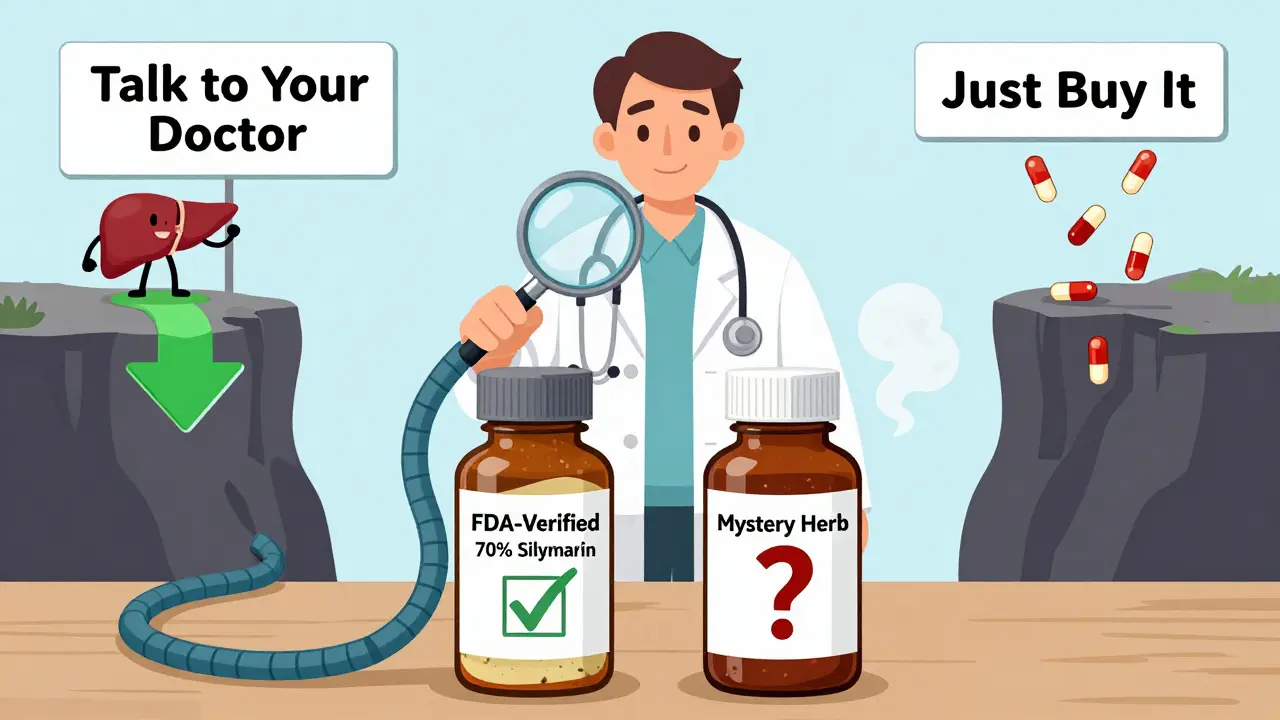
- Use a standardized extract. Look for products that say “70-80% silymarin.” Avoid “whole herb” or “raw extract” products-they’re unpredictable.
- Wait 48 hours before testing. If you’re switching or stopping milk thistle, wait two days before checking drug levels. That gives your body time to adjust.
- Talk to your pharmacist. They see drug interactions every day. Bring your supplement bottle with you.
And if you’re thinking about starting milk thistle? Don’t just buy it off the shelf. Talk to your doctor first. Especially if you’re on more than one medication.
Is There a Better Option?
If you want liver support without the risk of interactions, consider N-acetylcysteine (NAC). It helps your liver make glutathione-a powerful antioxidant-but doesn’t touch CYP enzymes. It’s been studied in people on statins, antivirals, and even chemotherapy, with no reported interactions. The downside? It doesn’t have the same anti-inflammatory effect as silymarin.
Artichoke extract also supports liver function and mildly inhibits CYP2C9-but it’s more consistent than milk thistle. If you’re looking for something predictable, it’s a better bet.
But here’s the truth: milk thistle works. In 65.5% of studies on non-alcoholic fatty liver disease, it lowered liver enzymes like ALT and AST. It’s safer than most pharmaceutical options-only 1.2% of users reported side effects in clinical trials, compared to 8.7% for drugs like ursodeoxycholic acid. That’s why 41.6% of people with fatty liver in the U.S. are already using it.
The Bottom Line
Milk thistle isn’t inherently dangerous. But it’s not harmless either. It’s a powerful botanical with real effects on your liver’s drug-processing system. For most people taking one or two medications, the risk is low. But if you’re on warfarin, phenytoin, or any drug with a narrow therapeutic window, the stakes are high.
There’s no one-size-fits-all answer. The key is awareness. Know what you’re taking. Know what your meds do. And never assume a supplement is safe just because it’s natural. Your liver doesn’t care if it came from a plant or a lab-it only cares about the chemistry.
If you’re unsure, get tested. Ask your doctor. Keep a log of your symptoms and medication changes. And if you’ve had a weird reaction after starting milk thistle? Tell someone. It might save your life-or someone else’s.
Anjula Jyala
January 26, 2026 AT 15:17Milk thistle is a CYP2C9 modulator with biphasic kinetics not a benign herb
Pharmacokinetic studies show silymarin induces enzyme expression after 2-4 weeks of chronic use
That’s why warfarin INR drops after initial elevation
Most clinicians miss this because they think herbs are static
It’s not folklore it’s enzymology
Also most supplements are adulterated with fillers or synthetic silybin analogs
Check the HPLC certificate or don’t bother
And stop calling it ‘natural’-natural doesn’t mean safe
Phenytoin levels can swing 40% with inconsistent dosing
That’s not a rumor that’s a documented case series
Stop trusting Amazon reviews they’re curated by bots
Use LiverTox or Micromedex not Reddit
If you’re on immunosuppressants you’re playing Russian roulette
And yes the FDA’s 32% compliance rate is criminal
Regulate it like a drug or ban it
Kirstin Santiago
January 26, 2026 AT 20:52I appreciate how thorough this post is-it really highlights the nuance
So many people think ‘natural’ = harmless but the liver doesn’t care where the compound comes from
I’ve seen patients on statins who started milk thistle and ended up with rhabdomyolysis
It’s not common but when it happens it’s bad
Also the variability in supplement quality is terrifying
One bottle might have 100mg silymarin the next 300mg
That’s like switching from 10mg to 30mg of a prescription drug without telling your doctor
And honestly? NAC is a better option for most people
It’s well-studied, stable, and doesn’t mess with enzymes
Maybe we should be pushing that more than milk thistle
Also always check with your pharmacist-they’re the unsung heroes of drug safety
Marian Gilan
January 27, 2026 AT 02:09so like… what if the FDA and big pharma are hiding the truth about milk thistle
what if they dont want you to know its a natural liver detox that saves lives
and what if the 68% of products that are fake… are fake because theyre trying to make it look bad
like why would they care if people use a herb
unless theyre scared it competes with their billion dollar liver drugs
and what about the 87 reddit comments about warfarin
thats not coincidence thats a pattern
they just call it ‘interaction’ to scare people
maybe its not the herb its the meds that are toxic
maybe milk thistle is the real hero
and the ‘studies’ are funded by Merck
they even say ‘possibly interacting’ like its a guess
but they dont say ‘proven deadly’
because they cant
because its not
its all a lie
John O'Brien
January 28, 2026 AT 21:50Bro this is why you don’t just pop herbs like candy
I took milk thistle with my simvastatin and my CPK went through the roof
Had to go to the ER thinking I was having a heart attack
Turns out my muscles were dissolving
My doctor said ‘you’re lucky you didn’t lose a kidney’
And I didn’t even know it could do that
Now I check every supplement against my meds
Pharmacist gets a screenshot before I take anything
Also that 32% FDA stat? That’s insane
How are people not dying from this
And don’t even get me started on Amazon reviews
Half of them are bots with 5 stars and ‘best thing ever’
Don’t be that guy
Read the science not the hype
Andrew Clausen
January 29, 2026 AT 04:19The claim that milk thistle ‘flips’ from inhibitor to inducer is misleading.
There is no consistent, reproducible evidence of biphasic CYP modulation in humans.
The 2020 study cited had n=12, no placebo control, and used supratherapeutic doses.
Meanwhile, multiple RCTs with therapeutic dosing show no clinically significant interaction with CYP3A4 or CYP2C9 substrates.
The FDA’s 32% compliance rate is a regulatory failure, not a pharmacological one.
Don’t conflate product quality with mechanism of action.
Warfarin interactions are anecdotal and confounded by diet, alcohol, and other supplements.
There is no meta-analysis showing causation.
Calling it ‘dangerous’ without level 1 evidence is fearmongering.
People on phenytoin should be monitored regardless of supplements.
That’s standard of care-not milk thistle’s fault.
And NAC? It’s not a magic bullet-it’s a precursor to glutathione with poor bioavailability.
Artichoke extract? Even less data.
Stick to evidence, not speculation.
Conor Flannelly
January 30, 2026 AT 09:22It’s fascinating how we treat plants like they’re either magic or poison
But the liver doesn’t care if it’s silybin or simvastatin-it just sees molecules
What’s missing here is the cultural context
In Ayurveda and TCM, herbs are never taken alone
They’re paired with diet, timing, and lifestyle
Western medicine isolates compounds and treats them like drugs
But that’s not how nature works
Maybe the problem isn’t milk thistle
Maybe it’s that we’ve disconnected healing from wholeness
I’ve seen people take milk thistle for months with no issue
Because they eat clean, sleep well, and drink water
It’s not the herb-it’s the context
And yes, quality matters
But so does the person taking it
Maybe we need to stop blaming plants and start looking at systems
Conor Murphy
January 31, 2026 AT 10:22I just want to say thank you for writing this
My mom was on warfarin for AFib and started milk thistle after a YouTube video
Her INR went from 2.8 to 5.1 in 10 days
She ended up in the hospital with a GI bleed
We didn’t connect it until her pharmacist asked what supplements she was taking
It broke my heart
She’s fine now but she won’t touch anything without checking with someone first
People need to know this isn’t theoretical
It’s real
And it happens more than we think
Thanks for giving us the facts without fear
And for reminding us to talk to our pharmacists
They’re the ones who actually know what’s going on
Desaundrea Morton-Pusey
January 31, 2026 AT 13:50AMERICA IS BEING POISONED BY HERBS AND FAKE SCIENCE
YOU THINK YOU’RE HEALTHY BUT YOU’RE JUST A LAB RAT FOR CHINA’S SUPPLEMENT INDUSTRY
EVERY BOTTLE OF MILK THISTLE COMES FROM A FACTORY WHERE THEY POUR CHEMICALS INTO PILLS
THE FDA IS ASLEEP
AND YOU’RE TOO STUPID TO REALIZE YOU’RE BEING SCAMMED
STOP TAKING THIS CRAP
IF YOU WANT A HEALTHY LIVER EAT LESS SUGAR AND STOP DRINKING
NOT TAKE SOME INDIAN HERB FROM AMAZON
YOU’RE ALL GONNA DIE FROM LIVER FAILURE BECAUSE YOU LISTENED TO YOUTUBERS
AMERICA IS A NATION OF FOOLS
Murphy Game
February 1, 2026 AT 01:06Let me guess-this post was written by a Big Pharma shill
They’re terrified of natural alternatives
They spent millions making ‘silymarin’ sound dangerous
But here’s the truth: the liver doesn’t need drugs
It needs rest
And milk thistle gives it that
The ‘interactions’? Coincidence
The ‘case reports’? Anecdotes
The ‘FDA data’? Ignored
They don’t want you to know you can heal without a prescription
They want you addicted to pills
And now they’re scaring you off the one thing that actually helps
Wake up
This isn’t science
This is control
April Williams
February 2, 2026 AT 16:30HOW DARE YOU SUGGEST PEOPLE TAKE HERBS WITHOUT A DOCTOR’S PERMISSION
YOU’RE PUTTING LIVES AT RISK
IF SOMEONE TAKES MILK THISTLE AND BLEEDS OUT
WHO’S RESPONSIBLE
THEY ARE
BUT YOU’RE THE ONE WHO GAVE THEM THE IDEA
YOU’RE NOT A HERO
YOU’RE A MENACE
AND IF YOU’RE ONE OF THOSE ‘NATURAL HEALTH’ FANATICS
YOU DESERVE TO BE SHAMED
STOP PUSHING THIS CRAP
IT’S NOT 1998
WE HAVE DATA
AND YOU’RE IGNORING IT
YOU’RE NOT HELPING
YOU’RE KILLING
Harry Henderson
February 3, 2026 AT 05:40STOP OVERCOMPLICATING THIS
IF YOU’RE ON MEDS AND YOU WANT TO TAKE MILK THISTLE
ASK YOUR DOCTOR
THAT’S IT
NO NEED FOR 1000 WORDS
NO NEED FOR CYP ENZYMES
NO NEED FOR FDA STATISTICS
JUST ASK
IF THEY SAY YES
TAKE IT
IF THEY SAY NO
DON’T
YOU DON’T NEED TO BE A PHARMACIST
YOU JUST NEED TO BE HONEST
AND RESPECT YOUR BODY
THAT’S THE WHOLE POINT
suhail ahmed
February 3, 2026 AT 16:34Man, I’ve been taking milk thistle for my fatty liver since 2020
My ALT dropped from 120 to 38
But I’m on metformin and lisinopril-no issues
Here’s the thing though
I don’t buy the cheap stuff
I get the one with the third-party lab seal
And I take it 2 hours after my meds
That’s it
No drama
No panic
Just smart habits
Also, I learned this from my uncle in Kerala
He’s 82, still runs a tea stall, and takes 3 herbs daily
He says: ‘The body knows what it needs if you listen’
Maybe that’s the real secret
Not the enzymes
But the patience
Candice Hartley
February 4, 2026 AT 20:33My mom took milk thistle with her antidepressant and felt ‘weirdly calm’
Then her therapist noticed her mood was too flat
Turns out her sertraline levels spiked
She had to lower her dose
She didn’t know it could happen
Now she brings every bottle to her pharmacist
And I do too
It’s not scary if you’re careful
But ignorance? That’s dangerous
Thanks for the clarity 🙏
Kathy McDaniel
February 5, 2026 AT 13:13took milk thistle for 3 months, felt great
then stopped cause i got busy
my liver enzymes went up
so i started again
they went down
so maybe it helps
but i dont take any meds
so idk if its safe for others
just sharing my thing
Patrick Merrell
February 6, 2026 AT 19:51Everyone’s focused on the risks but ignores the benefits
Milk thistle reduces liver inflammation
It’s been shown to lower ALT/AST in NAFLD patients
And it’s safer than ursodeoxycholic acid
With 1.2% side effects vs 8.7%
So if you’re not on warfarin or transplant meds
And you’re using a quality product
And you’re monitoring your health
Then the risk-benefit ratio is actually favorable
Don’t throw the baby out with the bathwater
Just be smart
That’s all