 May, 5 2026

When you pick up a prescription at the pharmacy, there is a good chance the bottle contains a generic version of the medication your doctor prescribed. In fact, generic drugs are medications that have the same active ingredients and clinical effects as brand-name drugs but cost significantly less. They make up about 90% of all prescriptions filled in the United States. But behind this routine transaction lies a complex web of rules, safety concerns, and official stances from major medical organizations. You might wonder: if generics are cheaper and approved by regulators, why do some doctors hesitate to substitute them?
The answer isn't simple. While federal agencies like the Food and Drug Administration (FDA) set broad standards for quality and safety, specialized medical societies often take more cautious approaches. Their guidelines reflect real-world clinical experiences where small differences in drug behavior can lead to serious health issues for vulnerable patients. Understanding these official positions helps clarify when substitution is safe and when it requires careful consideration.
Why Medical Societies Issue Separate Guidelines
You might ask why professional groups need their own rules when the FDA already approves generic medications. The short answer is context. Federal regulations focus on whether a generic drug meets minimum standards for bioequivalence-meaning it delivers the same amount of active ingredient into your bloodstream over time as the brand-name version. However, these standards don't always account for how individual patients react to slight variations in inactive ingredients or manufacturing processes.
Medical society guidelines are formal policy statements issued by professional organizations to guide clinical practice based on specialty-specific evidence and patient safety concerns. These documents serve several critical functions:
- They address gaps between regulatory approval and real-world clinical outcomes.
- They provide clear direction for specialists treating complex conditions.
- They help standardize care across different healthcare settings.
- They influence insurance coverage and formulary decisions.
For example, while the FDA considers two drugs therapeutically equivalent if they fall within an 80-125% confidence interval for bioavailability, neurologists know that even a 10% shift in blood levels of certain seizure medications can trigger breakthrough seizures. This disconnect between regulatory benchmarks and clinical reality drives many societies to issue stricter recommendations than federal law requires.
The American Academy of Neurology’s Strict Stance
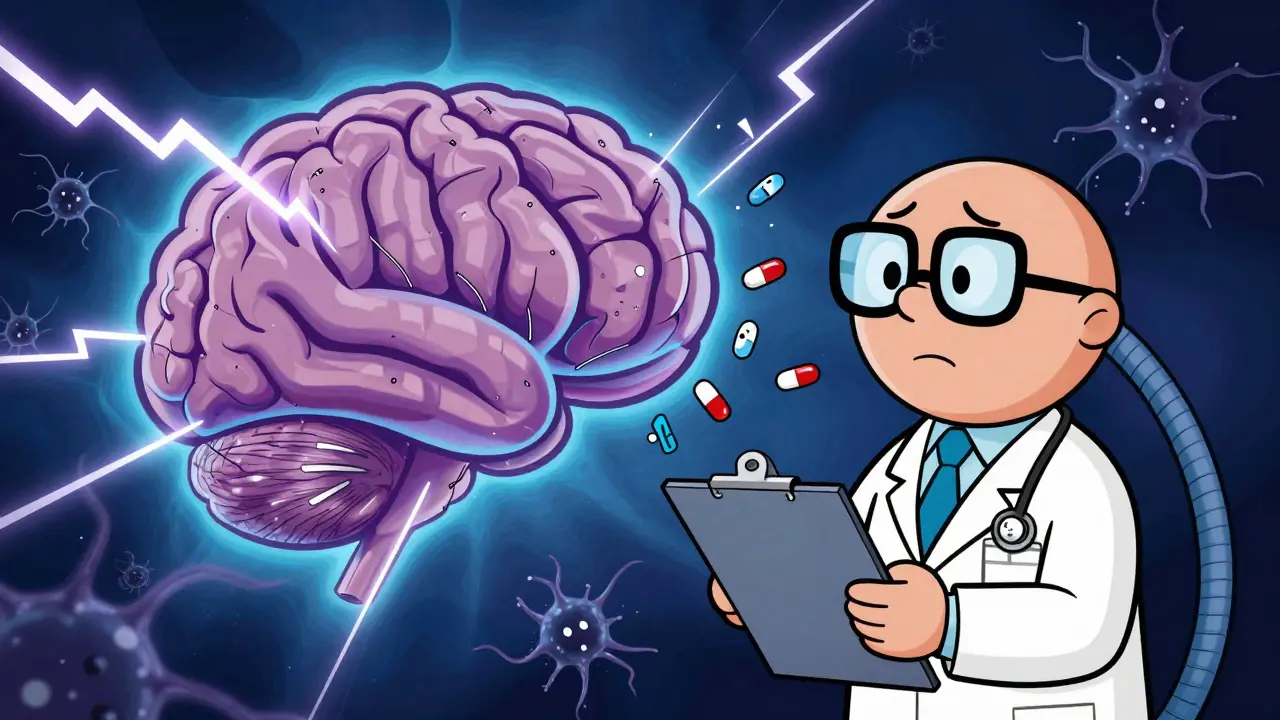
No organization has taken a firmer position against generic substitution than the American Academy of Neurology (AAN), which explicitly opposes switching patients between brand-name and generic versions of anticonvulsant drugs. This stance applies specifically to medications used to treat epilepsy and other seizure disorders, affecting approximately 3.4 million Americans with active epilepsy according to CDC data from 2022.
The AAN’s position stems from decades of clinical observation showing that patients with seizure disorders are particularly sensitive to changes in medication formulation. Even minor differences in excipients-the inactive ingredients that bind pills together or control how quickly they dissolve-can alter how the body absorbs the drug. For someone whose brain chemistry must remain tightly controlled, these subtle shifts matter enormously.
Consider the case of levetiracetam, a widely prescribed antiepileptic drug. Studies cited in reports from the Advisory Committee on Pharmaceutical Affairs (ASPE) indicate that nearly 70% of neurologists report experiencing treatment complications after patients were switched to generic versions without prior consultation. These complications range from increased seizure frequency to severe side effects requiring emergency intervention.
This isn’t just theoretical concern backed by anecdotal evidence; it reflects measurable physiological responses. Seizure threshold management demands precision far beyond what typical bioequivalence studies capture. When one study showed significant variability in peak plasma concentrations among different manufacturers’ generic formulations, the implications became clear: consistency matters more here than anywhere else in medicine.
Broad Support From Other Specialty Organizations
In contrast to the AAN’s restrictive approach, most other major medical societies support generic substitution under appropriate circumstances. The American College of Physicians, for instance, generally endorses using therapeutically equivalent generic products whenever available. Their reasoning aligns closely with public health goals: reducing costs improves access to essential treatments without compromising quality.
Similarly, oncology professionals rely heavily on generic options through frameworks established by the National Comprehensive Cancer Network (NCCN). According to recent analyses, roughly 42% of cancer drug uses listed in NCCN guidelines involve off-label applications where multiple interchangeable generic products exist. Because tumor biology varies so much between individuals, having flexible access to affordable alternatives enables personalized treatment strategies.
Here’s how various specialties view generic substitution:
| Society/Organization | Primary Focus Area | Position on Generics | Key Concerns |
|---|---|---|---|
| American Academy of Neurology | Epilepsy/Seizure Disorders | Opposes substitution | Bioequivalence variation risks |
| American College of Physicians | Internal Medicine | Supports substitution | Cost containment & accessibility |
| National Comprehensive Cancer Network | Oncology | Accepts interchangeability | Treatment flexibility needs |
| American Medical Association | General Practice | Neutral/supportive | Naming clarity & error prevention |
Note how each position correlates directly with disease complexity and tolerance for variation. Where margins for error shrink-as in neurological conditions-guidelines tighten accordingly. Conversely, fields allowing greater adaptability embrace generification enthusiastically.
FDA Standards vs Clinical Reality
To understand why disagreement exists despite uniform federal oversight, we need to look closer at how the Food and Drug Administration (FDA) evaluates generic drugs. Under current regulations, manufacturers submitting Abbreviated New Drug Applications (ANDAs) must demonstrate bioequivalence through rigorous testing protocols. Specifically, statistical analysis shows that average exposure metrics lie within acceptable ranges compared to reference branded products.
But averages hide important details. Bioequivalence studies typically enroll healthy volunteers rather than chronically ill patients who may metabolize drugs differently due to organ dysfunction or concurrent therapies. Additionally, short-term trials rarely detect long-term cumulative effects caused by slight deviations in release kinetics.
Dr. Karet from the USAN Council highlights another crucial factor: naming conventions impact substitution safety significantly. Confusingly similar names increase risk of medication errors during ordering, dispensing, or administration phases. That’s why standardized nomenclature plays such a vital role-not only ensuring accurate identification but also preventing accidental switches between distinct compounds mistaken for equivalents.
Despite these limitations, the FDA maintains confidence in its evaluation system. Data indicates that generic substitution occurs successfully almost 90% of the time when viable alternatives exist. Most practitioners agree this high success rate validates general acceptance policies except in narrowly defined exception categories.

Navigating State Laws and Institutional Policies
If national guidelines seem contradictory, state-level regulations add further layers of complexity. Some jurisdictions mandate prescriber consent before substituting any Narrow Therapeutic Index (NTI) drug-a category including warfarin, lithium, and certain anticonvulsants. Others permit automatic replacement unless explicitly prohibited by physician instruction.
Pharmacists operating under conflicting mandates face daily dilemmas. Should they follow institutional formularies favoring cost savings? Or adhere strictly to specialist recommendations prioritizing continuity of care? Without harmonized guidance, inconsistency prevails.
Hospitals often develop internal protocols balancing competing interests. Many require double-check verification procedures before changing chronic maintenance regimens. Others establish preferred product lists updated quarterly based on emerging safety signals reported via adverse event databases.
Patients themselves play increasingly active roles too. Shared decision-making models encourage open discussions about perceived benefits versus potential drawbacks associated with switching brands. Education materials explaining rationale behind specific choices empower consumers participating actively in their own healthcare journeys.
Economic Pressures Shaping Future Directions
Behind every debate surrounding generic usage lurks economic pressure mounting steadily since passage of the Hatch-Waxman Act in 1984. Designed originally to accelerate availability of lower-cost alternatives following patent expirations, legislation inadvertently created market dynamics influencing prescribing behaviors profoundly.
Today, generic pharmaceuticals represent merely 23% of total drug spending despite comprising nine-tenths of all prescriptions dispensed annually. Savings generated translate directly into reduced out-of-pocket expenses for insured populations alongside decreased burden placed upon publicly funded programs managing rising chronic disease burdens.
Yet advocates warn against oversimplifying narratives equating price reduction automatically with improved outcomes. Quality assurance remains paramount regardless of financial incentives driving adoption rates upward. As new technologies enable continuous monitoring capabilities previously unavailable, expectations regarding performance consistency will likely intensify scrutiny applied toward existing frameworks governing equivalence determinations.
Looking ahead, expect gradual convergence occurring between disparate viewpoints held by various stakeholders involved. Enhanced communication channels facilitating exchange of real-world experience data should foster mutual understanding leading eventually toward consensus-building efforts addressing remaining uncertainties effectively.
What Does This Mean for Your Healthcare Decisions?
Ultimately, navigating generic drug use involves weighing trade-offs unique to your situation. If you manage a condition requiring precise dosage control-such as epilepsy, thyroid disorders, or anticoagulation therapy-discuss substitution plans thoroughly with your provider beforehand. Don’t assume automatic replacements happen safely without review.
Conversely, if you take common medications addressing hypertension, diabetes, or cholesterol elevation, embracing generic options usually poses minimal risk while delivering substantial financial relief. Always verify manufacturer sources though, checking reputable listings confirming compliance with current manufacturing standards.
Stay informed. Ask questions. Participate fully in conversations shaping your treatment path forward. Knowledge empowers better choices today-and tomorrow.
Are generic drugs really as effective as brand-name medications?
Yes, for most conditions, generic drugs perform identically to their brand-name counterparts because they contain the same active ingredients in identical strengths and dosages. Regulatory bodies like the FDA require proof of bioequivalence before approving generics, meaning they deliver comparable amounts of medication into your bloodstream over time. Exceptions apply primarily to drugs with narrow therapeutic indices where tiny fluctuations cause major impacts.
Why does the American Academy of Neurology oppose generic substitution for seizure meds?
The AAN opposes swapping anticonvulsants because even slight variations in absorption rates or peak concentration levels can destabilize delicate neural balances maintained carefully through consistent dosing. Patients suffering from epilepsy often experience worsened seizure control or unexpected side effects when transitioning between different manufacturers’ versions of supposedly equivalent products.
How do I know if my medication falls under restricted substitution policies?
Check with your pharmacist or refer to official resources published by relevant medical societies covering your specific condition. Drugs classified as having narrow therapeutic indices-including warfarin, lithium, phenytoin, and carbamazepine-are frequently subject to additional safeguards limiting automatic exchanges. Your electronic health record may also flag restrictions tied to particular prescriptions.
Can insurers force me to switch to a generic version against my wishes?
Insurance plans typically prioritize cost-efficient options first, prompting initial attempts at generic substitution automatically. However, you retain right to request exceptions citing documented medical necessity supported by physician justification. Approval depends largely on plan specifics plus strength of argument presented demonstrating genuine harm resulting from proposed change.
Do international guidelines differ significantly from U.S. standards?
International frameworks generally mirror core principles upheld domestically regarding fundamental requirements for efficacy and safety validation. Differences emerge mainly concerning enforcement mechanisms utilized locally alongside cultural attitudes influencing acceptance thresholds tolerated widely. European Union operates centralized agency coordinating approvals across member states promoting greater uniformity historically observed elsewhere globally.