 May, 10 2026
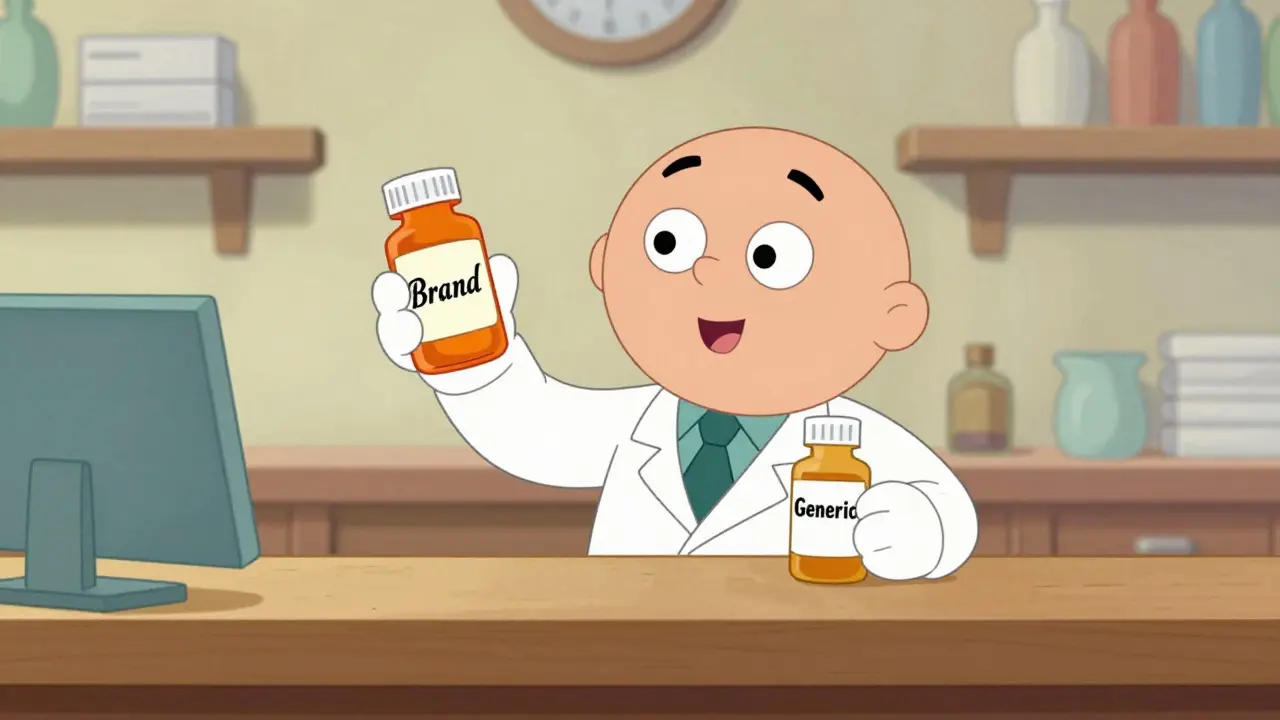
When you pick up a prescription at the pharmacy, you likely see two options: the original brand-name medication or a generic version. The price difference is often stark, sometimes dropping costs by 80% or more. But does that savings come with hidden risks? For decades, regulatory bodies have insisted that generics are safe because they contain the same active ingredients as their brand counterparts. Yet, recent long-term safety studies suggest the story is far more complex than simple chemical identity.
The debate isn't just about cost; it's about whether small differences in how your body absorbs these drugs matter over years of use. While most patients do fine on generics, emerging data from Austria, the United States, and elsewhere reveals that for certain conditions and specific medications, the choice between brand and generic could impact survival rates, hospitalization risks, and daily quality of life. Understanding these nuances requires looking beyond the label to the manufacturing processes, bioequivalence standards, and real-world outcomes that define modern pharmacology.
The Foundation of Bioequivalence Standards
To understand why generics exist, we must look at the Hatch-Waxman Act, which is a U.S. law passed in 1984 that established the modern pathway for generic drug approval. This legislation allowed manufacturers to create cheaper versions of patented drugs once patents expired, provided they proved bioequivalence. In simple terms, bioequivalence means the generic drug reaches your bloodstream at a similar rate and extent as the brand-name drug.
The U.S. Food and Drug Administration (FDA) sets strict rules for this. Specifically, the 90% confidence interval for the ratio of geometric means-measuring both the area under the curve (AUC) and maximum concentration (Cmax)-must fall within an 80-125% range. A comprehensive analysis of over 2,000 bioequivalence studies cited by Drug Patent Watch in 2018 showed that the average difference in absorption between generic and brand products was only about 3.5%. This narrow margin supports the regulatory assumption that generics are therapeutically equivalent for most medications.
However, critics argue that allowing up to 20% variation in absorption might be too lenient for certain critical drugs. For instance, medications with a narrow therapeutic index-where a small change in dose can lead to toxicity or treatment failure-may require tighter controls. Drugs like warfarin, levothyroxine, and certain anti-epileptics fall into this category. A 2017 study found that generic levothyroxine resulted in 12.3% higher rates of thyroid-stimulating hormone (TSH) level fluctuations compared to the brand Synthroid, highlighting potential gaps in current standards.
Long-Term Outcomes: What the Data Shows
Short-term bioequivalence tests don't always predict what happens when patients take these drugs for years. Long-term observational studies provide a clearer picture of real-world safety. One landmark study published in Scientific Reports (Nature) in 2020 analyzed nearly all insured persons in Austria from 2007 to 2012. The researchers tracked 17 branded versus generic versions of medications used for chronic metabolic illnesses.
The findings were striking. For antihypertensive medications, branded drugs were associated with 53.8 deaths per 1,000 patient-years, while generics had only 30.2 deaths per 1,000 patient-years. The five-year cumulative survival rates were 77.8% for brand users versus 85.9% for generic users. Major adverse cardiac and cerebrovascular events (MACCE) also occurred less frequently with generics (51.3 per 1,000 patient-years) compared to brands (83.6 per 1,000 patient-years). The authors concluded that generics were not just similar but, in some cases, superior to branded counterparts regarding mortality and major health events.
This Austrian data challenges the notion that brands are inherently safer due to stricter manufacturing history. Instead, it suggests that generics, when produced under robust regulatory oversight, can offer equal or better long-term outcomes. However, these results must be interpreted carefully, as they reflect a specific healthcare system and population.
| Metric | Brand Medications | Generic Medications |
|---|---|---|
| Deaths per 1,000 patient-years (Antihypertensives) | 53.8 | 30.2 |
| Five-Year Cumulative Survival Rate | 77.8% | 85.9% |
| MACCE per 1,000 patient-years | 83.6 | 51.3 |

Individual Variability and Clinical Deterioration
While large-scale studies show generics performing well on average, individual experiences can vary significantly. Case studies documented in PMC (2013) highlight instances where switching from brand to generic led to clinical deterioration. For example, a patient taking generic ciprofloxacin experienced persistent symptoms that resolved only after returning to the brand formulation Ciproxin. Similarly, another patient using generic levofloxacin saw worsening fever until switching back to the brand Tavanic.
These anecdotal reports are crucial because they underscore that "average" bioequivalence doesn't guarantee identical effects for every person. The authors of the case study estimated that 30% of patients experience clinical improvement after switching to generics, 30% see no change, 10% report side effects, and 30% discontinue due to inefficacy or adverse reactions. This variability suggests that factors beyond active ingredients-such as excipients (inactive ingredients like fillers and binders)-might influence how some individuals respond to medication.
Real-world user experiences mirror this complexity. On Reddit’s r/pharmacy, a highly-upvoted post described a patient whose seizure frequency increased from 1-2 per month to 8-10 per month after switching from brand Lamictal to generic lamotrigine. Symptoms returned to baseline only after reverting to the brand. Conversely, data from PatientsLikeMe analyzing 3,842 patient reports on hypertension medications found that 78.4% of users reported identical effectiveness between brand and generic versions. Only 12.6% reported decreased effectiveness with generics, while 9.0% actually reported improved effectiveness.
Manufacturing Origin and Adverse Event Rates
Where a drug is manufactured plays a significant role in its safety profile. A 2018 Ohio State University study revealed that generic drugs manufactured in India were linked to 54% higher rates of severe adverse events-including hospitalization, disability, and death-compared to equivalent drugs produced in the United States. This finding was driven primarily by "mature generic drugs," those that had been on the market for a long time.
For instance, Indian-manufactured generic ciprofloxacin showed a 62% higher rate of severe adverse events leading to hospitalization compared to U.S.-manufactured versions. These disparities persist even after controlling for drug volume sold, suggesting that manufacturing quality standards, rather than the generic status itself, may drive safety outcomes. This highlights the importance of regulatory oversight in different countries and the need for patients to be aware of their drug's origin when possible.
Further complicating the picture, a sophisticated analysis published in PMC (2018) compared adverse event reporting patterns between brand drugs, authorized generics (AGs), and traditional generics. Authorized generics are brand-name drugs sold under a generic label by the same manufacturer. For amlodipine, 29.54% of adverse event reports were for the brand, 14.26% for AGs, and 56.20% for traditional generics. The Reporting Odds Ratios (RORs) showed significant differences between brand and generic, but fewer significant findings between AGs and generics. This suggests that many perceived differences might reflect variations between manufacturers rather than the brand/generic distinction alone.

Navigating Complex Generics and Regulatory Gaps
Not all generics are created equal. The FDA acknowledges challenges with "complex generics," including drug-device combinations like inhalers, long-acting injectables, and topical products. Traditional bioequivalence testing may be inadequate for these formulations because delivery mechanisms differ significantly from oral tablets. In January 2022, the FDA issued new guidance for complex generic drug development to address these gaps, emphasizing the need for more rigorous clinical trials for such products.
Despite these efforts, post-marketing surveillance remains a concern. Critics argue that current monitoring systems may be insufficient for detecting subtle long-term safety issues. Harvard Health (2021) reported on a study examining emergency room visits among 136,177 individuals aged 66 and older using three blood pressure medications. The study found no statistically significant increase in adverse events after generic versions entered the market. However, researchers noted limitations in capturing mild adverse events that don't lead to hospitalization, leaving a blind spot in safety monitoring.
The FDA's Adverse Event Reporting System (FAERS) database shows 1,247 adverse event reports mentioning "generic drug ineffective" between 2018 and 2022, compared to 289 for brand-name drugs. While this seems alarming, it must be interpreted cautiously given that generics account for 92% of all prescriptions filled in the United States, representing only 23% of total drug spending according to IQVIA data. Higher report volumes likely reflect higher usage rather than inherent inferiority.
Practical Advice for Patients and Prescribers
So, what should you do with this information? First, recognize that for most medications, generics are safe and effective. The vast majority of patients experience no difference in outcomes. However, if you fall into high-risk categories-such as taking narrow therapeutic index drugs like warfarin, levothyroxine, or anti-epileptics-you should discuss consistency with your doctor. Switching between different generic manufacturers or between brand and generic can sometimes cause fluctuations in drug levels.
If you experience unexplained side effects or reduced efficacy after a switch, don't assume it's all in your head. Document the changes and consult your healthcare provider. They may recommend sticking with a specific manufacturer or switching back to the brand if clinically justified. Insurance coverage varies, so check with your pharmacist about formulary restrictions and prior authorization options.
Finally, stay informed about manufacturing origins if you have concerns about quality. While you cannot always control which generic you receive, being aware of potential issues allows you to advocate for yourself. As regulatory frameworks evolve and long-term data accumulates, the goal is to ensure that cost savings never compromise patient safety.
Are generics always as safe as brand-name drugs?
For most medications, yes. Regulatory agencies like the FDA require generics to demonstrate bioequivalence, meaning they deliver the same amount of active ingredient into your bloodstream as the brand. However, for drugs with a narrow therapeutic index or complex delivery systems, small differences can sometimes lead to varied outcomes. Long-term studies show generics are generally comparable or superior in safety profiles, but individual responses may vary.
What is bioequivalence and why does it matter?
Bioequivalence ensures that a generic drug works in the body similarly to the brand-name drug. It measures how quickly and how much of the drug enters your circulation. The FDA requires the 90% confidence interval for absorption metrics to fall within 80-125% of the brand. This standard guarantees therapeutic equivalence for most drugs, though critics argue it may be too wide for sensitive medications.
Why do some people feel worse on generics?
Some individuals may react differently to inactive ingredients (excipients) like fillers or dyes used in generics. Additionally, slight variations in absorption rates, while within legal limits, can affect patients on narrow therapeutic index drugs. Psychological factors, such as the nocebo effect, can also play a role. If you experience issues, consult your doctor before stopping medication.
Does where a generic is made affect its safety?
Yes, manufacturing origin can impact safety. Studies have shown that generics manufactured in countries with less stringent regulatory oversight may have higher rates of adverse events compared to those produced in the U.S. or Europe. Quality control processes vary globally, influencing the consistency and purity of the final product.
Should I avoid switching between generic manufacturers?
For most drugs, switching manufacturers is safe. However, for critical medications like anti-epileptics or thyroid hormones, consistency is key. Frequent switches can cause fluctuations in drug levels. If you notice changes in efficacy or side effects, ask your pharmacist or doctor to keep you on a single manufacturer's product.