 Dec, 28 2025
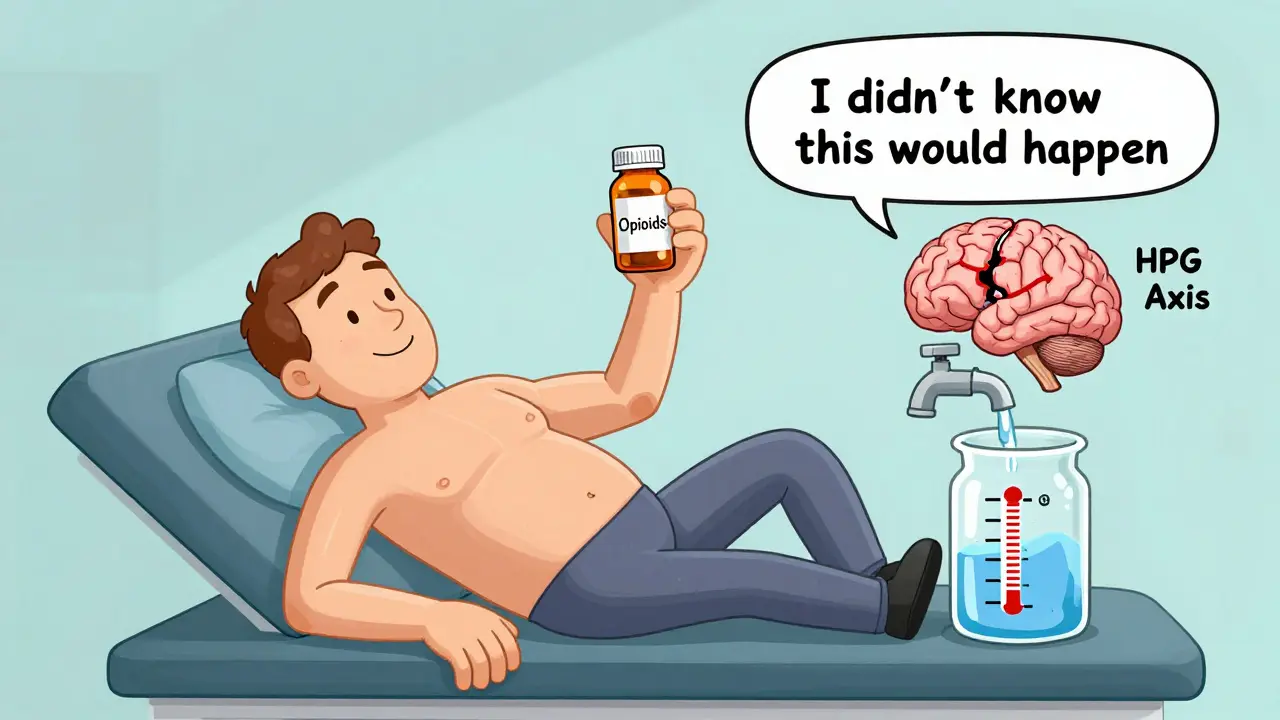
When you’re on opioids long-term for chronic pain, the goal is to feel better. But for many people, the side effects don’t just fade into the background-they reshape your body in ways you weren’t warned about. One of the most overlooked consequences? How opioids mess with your hormones and, in turn, your sexual health. It’s not rare. It’s not unusual. It’s opioid-induced hypogonadism, and it affects more than half of men on long-term therapy.
How Opioids Break Your Hormone System
Opioids don’t just block pain signals-they also shut down your body’s natural hormone production. The culprit is the hypothalamic-pituitary-gonadal (HPG) axis, the system that controls testosterone in men and regulates menstrual cycles and libido in women. When you take opioids regularly-especially doses above 60-120 morphine milligram equivalents (MME) per day-your brain stops sending the right signals. Gonadotropin-releasing hormone (GnRH) drops. Luteinizing hormone (LH) follows. And testosterone? It plummets.
Studies show that within 30 days of starting chronic opioid therapy, men can lose 30-50% of their testosterone. After six months, about 63% meet the clinical definition of hypogonadism: total testosterone below 300 ng/dL. For women, the story is more complex. Estradiol levels often stay normal, but free and total testosterone still drop. The result? Nearly 9 out of 10 premenopausal women on long-term opioids develop irregular periods or stop having them altogether.
Sexual Side Effects Are Common-And Often Ignored
If you’re a man on opioids, you’ve probably noticed: low sex drive, trouble getting or keeping an erection, reduced morning erections. These aren’t just "getting older" or "stress"-they’re direct chemical effects. A 2022 Reddit thread with nearly 250 comments from chronic pain patients found that 89% of male respondents linked their sexual dysfunction directly to opioid use. One user wrote: "My testosterone dropped to 180 ng/dL. My doctor didn’t test it until I asked. Took six months to get help."
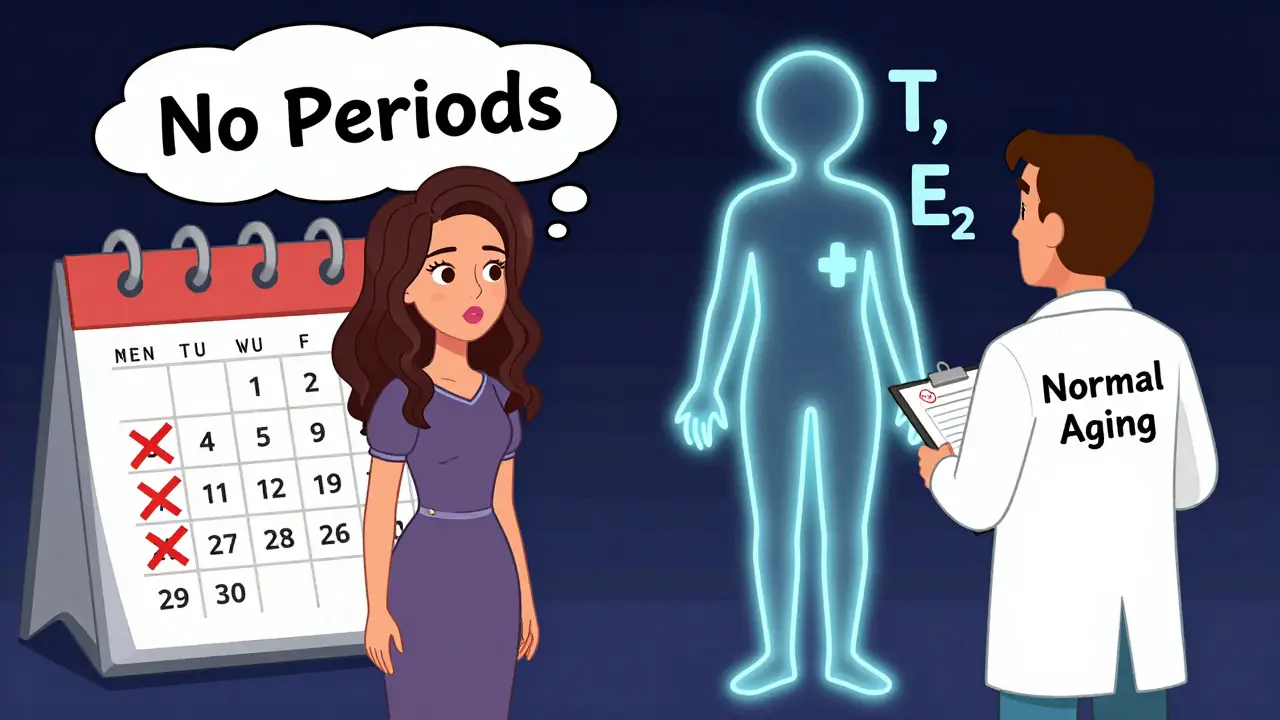
Women report similar struggles: plummeting libido, vaginal dryness, difficulty reaching orgasm. A 2021 survey of 342 women found that 78% lost interest in sex, 63% had irregular or absent periods, and 41% felt their depression worsen. Yet, 67% said their doctors dismissed these symptoms as "just part of chronic pain" or "normal aging." That’s not just neglect-it’s missed diagnosis.
Not All Pain Medications Are Equal
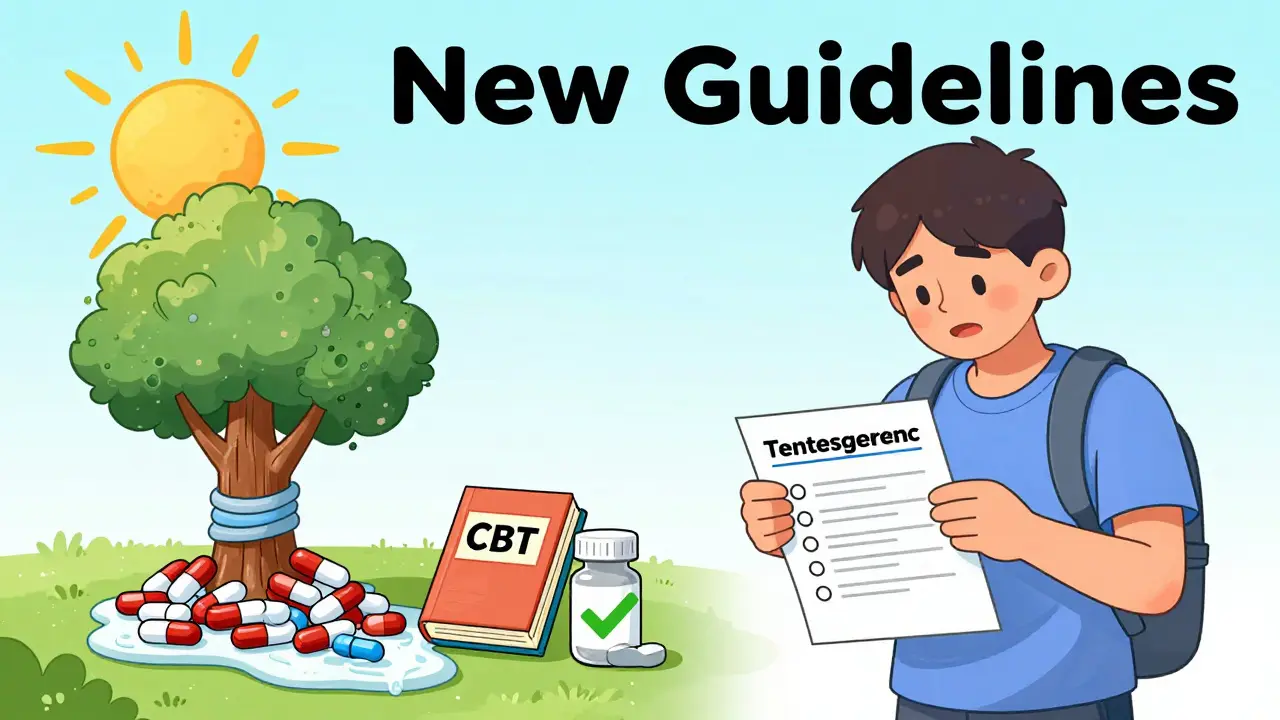
Not every painkiller hits your hormones the same way. Opioids are the worst offenders. Compare that to gabapentinoids like pregabalin, which affect testosterone in only 12% of users. NSAIDs like ibuprofen or acetaminophen? Minimal hormonal impact. That’s why guidelines from the American Pain Society and the CDC no longer recommend opioids as first-line treatment for chronic non-cancer pain. Physical therapy, cognitive behavioral therapy, and certain antidepressants like duloxetine have better long-term outcomes-with far fewer side effects.
But here’s the catch: for some people-those with advanced cancer, severe trauma, or post-surgical pain-opioids are still necessary. The problem isn’t the drug itself. It’s that we use them too often, for too long, without checking what they’re doing to your body.
What Doctors Should Be Doing (But Often Aren’t)
The Endocrine Society’s 2019 guidelines are clear: test testosterone levels in all men before starting long-term opioids, and recheck every six months. Monitor menstrual cycles in women. Yet a 2023 JAMA study found only 38% of primary care doctors routinely screen for these issues. That’s a massive gap between what we know and what we do.
Why? Because it’s uncomfortable. Patients don’t bring it up. Doctors don’t ask. Sexual health feels taboo, even in medical settings. But as Dr. Bolash from Cleveland Clinic says, "Physicians must take the lead in asking about potentially taboo topics to get patients the help they really need."
It’s not just about sex. Low testosterone links to fatigue, muscle loss, bone thinning, and depression. Treating it isn’t vanity-it’s survival.
What Can You Do If You’re on Opioids?
If you’ve been on opioids for more than 90 days and you’re noticing changes in your libido, energy, or mood, here’s what to do:
- Ask your doctor for a blood test: total testosterone, LH, FSH, and cortisol. Don’t wait for them to bring it up.
- If your testosterone is low, ask about testosterone replacement therapy (TRT). Studies show 70-85% of men see improvement in sexual function once levels are restored.
- For erectile dysfunction, medications like sildenafil (Viagra) or tadalafil (Cialis) can help-but talk to your doctor first. They can interact with other meds.
- For women, options are less defined, but some clinicians use low-dose testosterone patches (1-2 mg daily) off-label with good results.
- Ask if you can reduce your opioid dose or switch to a lower-risk option like buprenorphine. New studies show it causes 40% less hormone disruption.
- Consider a multidisciplinary pain team: pain specialist, endocrinologist, physical therapist. The best outcomes come from treating the whole person.
Don’t assume your symptoms are normal. Don’t accept "it’s just pain" as the answer. Your body is signaling something deeper.
The Future Is Changing-Slowly
Change is happening, but it’s not fast enough. In January 2024, the Endocrine Society updated its guidelines to make hormone screening standard for anyone on chronic opioids. The FDA now requires opioid labels to include warnings about hypogonadism. New treatments like low-dose naltrexone combined with reduced opioid dosing are showing promise-improving testosterone levels by 25-35% in two-thirds of patients.
Meanwhile, the market for non-opioid pain treatments is exploding, projected to grow from $38.7 billion in 2022 to nearly $60 billion by 2027. The testosterone replacement market is growing too, at over 12% a year-partly because of opioid side effects.
But the biggest barrier isn’t science or money. It’s awareness. Patients don’t know to ask. Doctors don’t know to look. And too many people suffer in silence, thinking their sex life is just another casualty of chronic pain.
It doesn’t have to be that way. Your pain can be managed without sacrificing your health, your energy, or your intimacy. The tools exist. The guidelines are clear. What’s missing is the conversation. Start it. Ask for the test. Demand better care. Your body will thank you.
Can long-term opioid use cause permanent hormone damage?
In most cases, no. Hormone levels often bounce back after stopping or reducing opioids, especially if treatment is started early. Testosterone replacement can help restore levels while tapering. But if hypogonadism goes untreated for years, some damage-like bone loss or muscle wasting-may become harder to reverse. Early detection is key.
Do all opioids affect hormones the same way?
No. Morphine, oxycodone, and fentanyl have the strongest effects on hormone suppression. Buprenorphine appears to be less disruptive, with studies showing up to 40% lower rates of testosterone reduction. That’s why some experts now recommend it as a first-line option for chronic pain when opioids are necessary.
Is testosterone replacement therapy safe if I’m still on opioids?
Yes, but it must be monitored. TRT is safe to use alongside opioids under medical supervision. However, it doesn’t fix the root cause-it treats the symptom. The goal should be to reduce opioid dependence over time while using TRT to restore health. Never start TRT without blood tests and a doctor’s guidance. Risks include polycythemia (thickened blood), which affects 15-20% of users.
Why aren’t women tested for hormone issues on opioids as often as men?
Because research has focused mostly on men. Most studies on opioid-induced hypogonadism used male participants. Female sexual function is more complex, involving multiple hormones beyond testosterone. As a result, clinical guidelines for women are less standardized. But recent data shows menstrual disruption is extremely common-so doctors should monitor cycles and symptoms closely, even without a blood test.
Can I just stop opioids cold turkey if I’m having side effects?
No. Stopping opioids suddenly can cause severe withdrawal-nausea, sweating, anxiety, insomnia, even seizures. Withdrawal symptoms may push you back to higher doses out of desperation. Always work with a doctor to taper slowly. Studies show 73% of people who try to quit without help relapse within 90 days. A supervised plan with support-like counseling or non-opioid meds-is far safer and more effective.
What are the best alternatives to opioids for chronic pain?
For most people, the best alternatives include physical therapy, cognitive behavioral therapy (CBT), acupuncture, and certain medications like gabapentin, duloxetine, or tramadol (a weaker opioid with lower endocrine impact). Non-opioid anti-inflammatories can help for joint or muscle pain. For nerve pain, lidocaine patches or capsaicin creams offer localized relief. The key is combining approaches-not relying on one drug.
Manan Pandya
December 29, 2025 AT 04:02Had no idea opioids could do this to your hormones. I’ve been on them for 4 years for back pain and just assumed my low libido was stress or aging. Got my levels checked last month-testosterone was 192 ng/dL. Doctor was shocked I hadn’t been tested sooner. Started TRT and my energy’s back. Still on opioids, but now I’m not just surviving-I’m living.
Aliza Efraimov
December 29, 2025 AT 12:15THIS. I’m a 34-year-old woman on long-term oxycodone for fibromyalgia. My periods stopped for 11 months. My doctor said, ‘It’s probably perimenopause.’ I’m not even close! I pushed back, demanded bloodwork, and found my free testosterone was half what it should be. They put me on a low-dose patch. My sex drive came back like a volcano. If you’re on opioids and your body feels broken-IT’S NOT YOU. It’s the meds. Ask for help.
Tamar Dunlop
December 30, 2025 AT 21:20It is profoundly disconcerting to observe the systemic neglect of endocrine health in chronic opioid management. The medical community’s reluctance to address sexual dysfunction as a legitimate clinical concern reflects a broader cultural aversion to discussing bodily autonomy in therapeutic contexts. One cannot adequately treat pain without acknowledging its profound physiological reverberations across the entire endocrine axis. The omission of routine hormonal screening constitutes a breach of the standard of care, particularly when non-opioid alternatives exist with superior safety profiles.
David Chase
December 31, 2025 AT 06:28Henriette Barrows
January 1, 2026 AT 15:19I’m so glad someone finally said this out loud. I was too embarrassed to bring it up with my doctor-even though my husband was starting to notice. I just thought I was ‘losing it.’ Turns out my testosterone was in the toilet. They put me on a patch and my whole life changed. You’re not broken. You’re medicated. And you deserve better.
Alex Ronald
January 3, 2026 AT 14:49For those considering TRT while still on opioids: monitor hematocrit closely. I developed polycythemia after 6 months-felt like I was running through molasses. My doctor reduced my dose and added phlebotomy every 8 weeks. It’s manageable, but it’s not harmless. Also, buprenorphine is a game-changer. I switched from oxycodone and my LH rebounded in 8 weeks. No TRT needed.
Teresa Rodriguez leon
January 3, 2026 AT 18:26Everyone’s talking about testosterone like it’s the only thing that matters. What about women? What about fatigue? What about the fact that I can’t even get out of bed without a nap? Hormones aren’t just about sex. They’re about survival. And we’re being ignored.
Nisha Marwaha
January 5, 2026 AT 08:55From a clinical endocrinology standpoint, opioid-induced hypogonadism (OIH) is a well-documented iatrogenic condition with a dose- and duration-dependent mechanism mediated through suppression of the HPG axis. The literature consistently demonstrates significant reductions in serum testosterone and LH, particularly with full mu-opioid agonists. The diagnostic threshold of 300 ng/dL for total testosterone is conservative; some experts advocate for a functional threshold of 350 ng/dL in symptomatic patients. Screening should be protocolized, not reactive. Furthermore, the underrepresentation of female cohorts in OIH research remains a critical gap in translational medicine.
Paige Shipe
January 6, 2026 AT 13:46you guys are all overreacting. its just a side effect. i mean, come on. if you cant handle a little low sex drive then maybe you shouldnt be on pain meds. my doctor said its normal. i dont need no test. i just need to tough it out. also, i think you all just want to be on testosterone for fun.
Jim Rice
January 7, 2026 AT 04:15Wait, so you’re telling me the entire opioid crisis is just because people want to get laid again? That’s your whole argument? This is why America’s falling apart. You’re reducing decades of medical science to a sex drive. Get real.
Emma Duquemin
January 8, 2026 AT 18:04I was crying in the bathroom after my husband asked me if I even liked him anymore. We hadn’t been intimate in 18 months. I thought I was broken. Turns out my body was just poisoned by pain meds. I found a doctor who actually listened. I got a low-dose testosterone patch, started CBT for pain, and switched to buprenorphine. I had my first orgasm in two years last week. I’m not just alive-I’m ALIVE. If you’re reading this and you’re suffering? Don’t wait. Ask for the test. You deserve to feel whole again.
Kevin Lopez
January 9, 2026 AT 16:30TRT is not a cure. It’s a band-aid. The real solution is opioid tapering. You’re treating the symptom, not the disease. Also, buprenorphine has partial agonist activity-less HPG suppression. Use it. Stop being lazy.
Duncan Careless
January 11, 2026 AT 07:10Been on oxycodone for 6 years for spinal stenosis. My doctor never mentioned hormones. I just thought I was getting old. Last year I got a blood test on a whim-testosterone was 210. Started TRT. My back pain didn’t change, but my life did. I started walking again. Took up gardening. My wife said I was ‘back.’ I didn’t realize how much I’d lost until I got it back. Don’t wait like I did.
Samar Khan
January 12, 2026 AT 10:22So you’re telling me my husband’s mood swings, weight gain, and lack of interest in me are because of opioids? 😭 I thought he was cheating. I thought I wasn’t enough. Turns out his body was being destroyed by the very thing meant to help him. I cried for an hour. Now we’re seeing an endocrinologist. Thank you for saying this. I’m not crazy. He’s not broken. The system is.