 Jun, 16 2026
Hydroxyzine Cardiac Risk Estimator
Select Your Risk Factors
Risk Assessment
Select applicable factors above to see your estimated risk profile regarding hydroxyzine use.
Imagine taking a pill for anxiety or itching, only to have your heart rhythm suddenly go haywire. It sounds like a scene from a medical drama, but it is a real risk associated with hydroxyzine, a common first-generation antihistamine medication used to treat anxiety, itching, and nausea. For decades, doctors prescribed this drug widely because it worked well and was considered safe. But recent research has uncovered a hidden danger: hydroxyzine can disrupt the electrical signals in your heart, leading to a condition called QT prolongation. In severe cases, this can trigger a life-threatening arrhythmia known as Torsade de Pointes.
If you take hydroxyzine-or are considering it-understanding this risk is not just academic; it could be vital for your safety. This article breaks down exactly what happens inside your heart when you take this medication, who is most at risk, and how you can protect yourself.
What Is Hydroxyzine and Why Do People Take It?
Hydroxyzine, often sold under brand names like Atarax or Vistaril, is an older medication that has been around since the 1950s. Unlike newer antihistamines that mainly target allergies, hydroxyzine crosses the blood-brain barrier easily. This means it has a strong sedative effect. Doctors prescribe it for several reasons:
- Anxiety: Its calming properties help reduce tension and nervousness.
- Pruritus (Itching): It blocks histamine, which causes allergic skin reactions.
- Sedation: It helps patients sleep before procedures or during acute stress.
- Nausea: It acts as an antiemetic in certain situations.
Because it is effective and inexpensive, it remains a popular choice. However, its age also means that some of its side effects were not fully understood when it was first approved. Today, we know more about how it interacts with the heart’s electrical system.
The Mechanism: How Hydroxyzine Affects Your Heart
To understand the risk, you need to know a bit about how your heart beats. Every heartbeat relies on an electrical impulse that travels through the heart muscle. Part of this process involves potassium ions leaving heart cells to reset them for the next beat. This resetting phase is controlled by specific channels called hERG potassium channels, which are protein structures in heart cells that regulate the flow of potassium ions, essential for normal heart rhythm repolarization.
Here is where hydroxyzine becomes problematic. Research shows that hydroxyzine binds tightly to these hERG channels and blocks them. When these channels are blocked, potassium cannot leave the cells quickly enough. This delays the heart’s electrical reset, stretching out the time between beats. On an electrocardiogram (ECG), this appears as a prolonged QT interval.
A slightly prolonged QT interval might not cause symptoms. But if it gets too long, it can create an electrical short-circuit in the heart. This leads to Torsade de Pointes, a type of ventricular tachycardia characterized by a twisting pattern on ECG, which can cause fainting or sudden cardiac death. Torsade de Pointes is a medical emergency. Without immediate treatment, it can degenerate into ventricular fibrillation, stopping the heart entirely.

Who Is Most at Risk?
Not everyone who takes hydroxyzine will experience QT prolongation. In fact, for healthy young adults with no other health issues, the risk is relatively low. The danger spikes significantly when hydroxyzine combines with other risk factors. Think of it like loading a gun: hydroxyzine pulls the trigger, but other conditions load the bullet.
| Risk Factor Category | Specific Examples | Why It Matters |
|---|---|---|
| Age | Elderly patients (over 65) | Slower metabolism leads to drug accumulation; higher baseline cardiac vulnerability. |
| Electrolyte Imbalances | Low potassium (hypokalemia), low magnesium (hypomagnesemia) | These minerals are crucial for stabilizing heart rhythm. Deficiency makes the heart more sensitive to hERG blockade. |
| Other Medications | Antipsychotics, certain antibiotics (macrolides, fluoroquinolones), antifungals | Many drugs also block hERG channels. Combining them creates a synergistic, dangerous effect. |
| Heart Conditions | History of heart failure, bradycardia (slow heart rate), congenital Long QT Syndrome | Pre-existing electrical instability makes the heart prone to arrhythmias. |
| Genetics | CYP2D6 poor metabolizers | Some people break down hydroxyzine slowly, leading to higher blood levels of the drug. |
The European Medicines Agency (EMA) reviewed thousands of cases and concluded that while the absolute risk is small, it is clinically significant. They noted that many adverse events occurred in patients who had two or more of these risk factors. For example, an elderly patient taking hydroxyzine for itching while also on a diuretic (which lowers potassium) is at high risk.
Dosing Guidelines and Safety Restrictions
Because of these risks, regulatory bodies have tightened the rules for prescribing hydroxyzine. If you are a patient, you should be aware of these limits. If you are a healthcare provider, adherence is critical.
- Maximum Adult Dose: The daily limit for most adults is now 100 mg. Previously, higher doses were sometimes used, but they increase cardiac risk without adding much benefit.
- Elderly Patients: For anyone over 65, the maximum dose is reduced to 50 mg per day. Older adults metabolize drugs slower, so standard doses can build up to toxic levels.
- Pediatric Use: Dosing is based on weight (2 mg/kg/day), but caution is still advised due to developing cardiac systems.
- Contraindications: Hydroxyzine should generally be avoided in patients with a known history of Long QT Syndrome or those already taking other QT-prolonging drugs.
In 2015, the EMA mandated these changes after finding that many hospital errors involved giving full adult doses to vulnerable patients. Since then, electronic health records often include "hard stops"-alerts that prevent doctors from prescribing hydroxyzine if the patient’s chart shows a high QT risk.
Comparing Hydroxyzine to Other Antihistamines
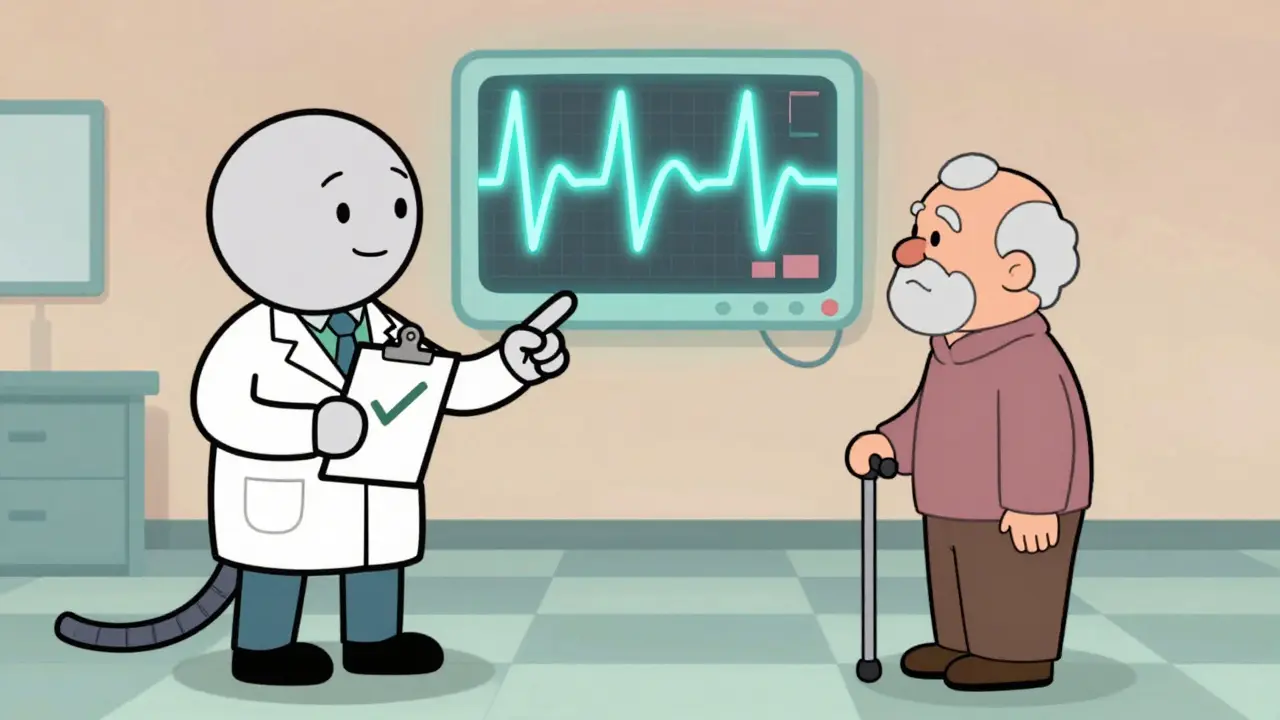
You might wonder if all antihistamines carry this risk. The answer is no. The risk varies significantly depending on the generation and chemical structure of the drug.
Second-Generation Antihistamines: Drugs like cetirizine (Zyrtec), loratadine (Claritin), and fexofenadine (Allegra) are designed to stay out of the brain. Crucially, they have minimal effect on hERG channels. They are considered safe for cardiac health, even in higher doses.
First-Generation Antihistamines: Diphenhydramine (Benadryl) is another first-gen drug. While it does have some cardiac effects, studies suggest hydroxyzine has a stronger affinity for blocking hERG channels than diphenhydramine does. This makes hydroxyzine potentially more risky in terms of QT prolongation, although both require caution.
If you need relief for anxiety or itching but have heart concerns, ask your doctor about switching to a second-generation antihistamine or a non-sedating alternative like gabapentin for itching or SSRIs for anxiety.
What Should You Do? Practical Steps for Safety
Knowledge is power. Here is how you can manage this risk effectively:
- Get an ECG Before Starting: If you have any heart history, ask for a baseline ECG. A QTc interval (corrected QT) over 450 ms in men or 470 ms in women is a warning sign.
- Check Your Meds: Bring a complete list of all medications and supplements to your doctor. Many over-the-counter drugs, including some cold medicines, can interact with hydroxyzine.
- Monitor Electrolytes: If you take diuretics (water pills) or have kidney issues, ensure your potassium and magnesium levels are normal.
- Watch for Symptoms: Be alert for dizziness, lightheadedness, palpitations (feeling your heart race or skip beats), or fainting. Report these immediately.
- Don’t Self-Medicate: Never take leftover hydroxyzine or share prescriptions. The dose must be tailored to your specific risk profile.
Remember, hydroxyzine is still a useful tool in medicine. It is not banned. But it requires respect. By understanding the mechanism and your personal risk factors, you can use it safely or choose a better alternative.
Can hydroxyzine cause permanent heart damage?
Hydroxyzine itself does not typically cause structural heart damage like a heart attack. However, the arrhythmia it can trigger, Torsade de Pointes, can lead to sudden cardiac arrest if not treated immediately. Surviving such an event may require further cardiac evaluation, but the drug does not usually scar the heart muscle directly.
Is it safe to take hydroxyzine with antidepressants?
This depends on the specific antidepressant. Some SSRIs, particularly citalopram and escitalopram, also prolong the QT interval. Combining them with hydroxyzine increases the risk significantly. Always consult your doctor or pharmacist to check for interactions using a database like CredibleMeds.
How quickly does hydroxyzine affect the heart?
The onset of action for hydroxyzine is 15 to 60 minutes. Cardiac effects, such as QT prolongation, can occur within this same window after ingestion. Cases of Torsade de Pointes have been reported starting as soon as 10 minutes after taking the drug, especially in high-risk individuals.
What is the difference between QT prolongation and Torsade de Pointes?
QT prolongation is an electrical abnormality seen on an ECG where the heart takes longer to recharge between beats. It is often asymptomatic. Torsade de Pointes is a specific, dangerous type of fast heart rhythm that can result from severe QT prolongation. It causes symptoms like fainting or collapse and requires emergency care.
Are there safer alternatives to hydroxyzine for anxiety?
Yes. For anxiety, selective serotonin reuptake inhibitors (SSRIs) like sertraline or cognitive behavioral therapy (CBT) are first-line treatments. For short-term sedation, benzodiazepines (used with caution) or non-sedating options like buspirone may be considered. For itching, second-generation antihistamines like cetirizine are safer for the heart.