 Sep, 3 2026
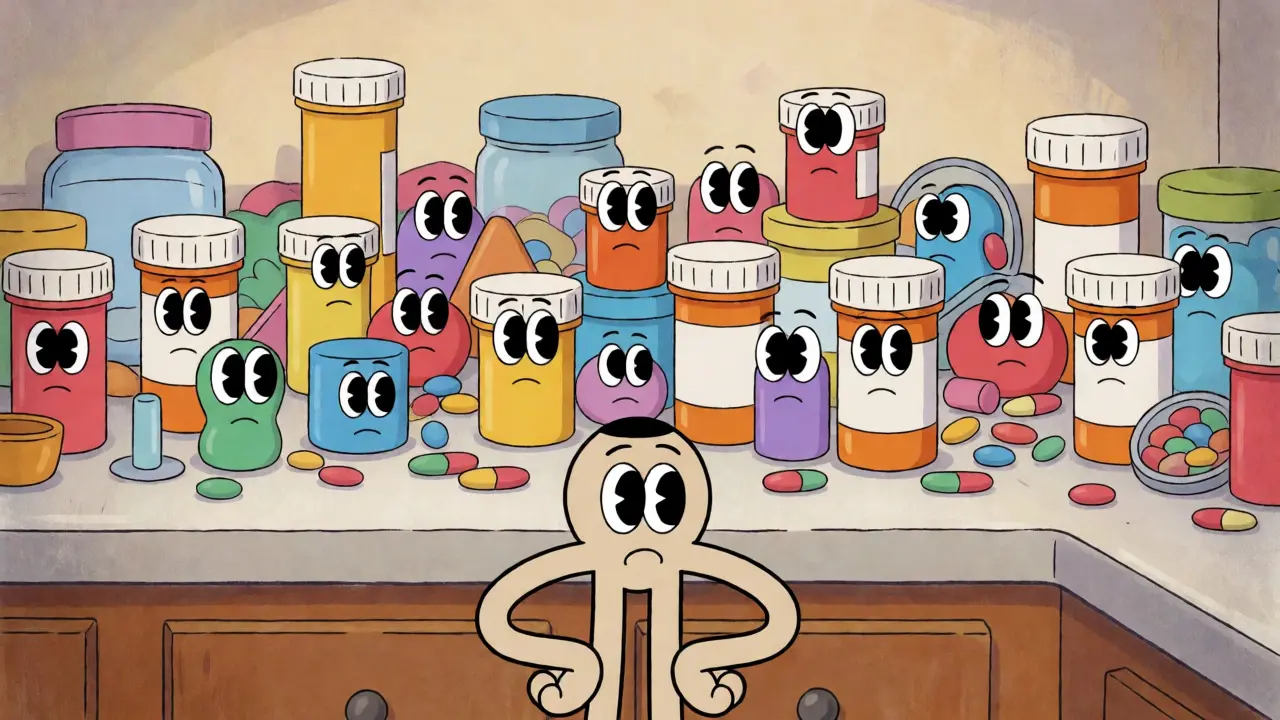
You’re paying for pills you might not need. It sounds harsh, but it’s a reality for millions of people taking five or more medications daily. This is called polypharmacy, and it’s not just about cluttering your medicine cabinet; it’s draining your wallet and potentially harming your health. The solution isn’t just stopping meds randomly-it’s deprescribing. This is the systematic process of identifying and discontinuing medications when their risks outweigh their benefits. Done right, it can slash your monthly pharmacy bill while reducing side effects like dizziness or brain fog.
Why Your Medication List Might Be Costing You More Than It Should
Let’s look at the numbers. Prescription drug costs have risen sharply over the last decade. If you are on a fixed income, medication expenses can eat up nearly 18% of your budget. But the financial hit isn’t the only problem. Taking unnecessary drugs increases the risk of adverse events. A study published in JAMA Internal Medicine found that inappropriate polypharmacy costs the US healthcare system around $30 billion annually through preventable hospitalizations. For you, this means if a drug interaction sends you to the ER, you’re facing a deductible or copay that dwarfs the cost of the pill itself.
Many patients assume that because a doctor prescribed a medication years ago, they must take it forever. That’s rarely true. Bodies change. Conditions resolve. Guidelines evolve. Yet, without a deliberate conversation, prescriptions often get renewed automatically. This "prescription cascade" happens when one drug causes a side effect, which is treated by another drug, which then needs its own treatment. Breaking this cycle requires active participation from you.
The Brown Bag Review: Your First Step to Savings
Before you can save money, you need to know exactly what you’re spending it on. The most effective tool for starting a deprescribing conversation is the "brown bag review." Don’t worry, you don’t need an actual brown bag. Just gather every single thing you take into one pile: prescription bottles, over-the-counter painkillers, vitamins, herbal supplements, and even topical creams. Bring them all to your next appointment.
Why bring everything? Because doctors often forget what you buy off the shelf. You might be taking a $50/month supplement that duplicates the ingredients in your multivitamin, or an antacid that interferes with your heart medication. A 2021 study by the American Academy of Family Physicians showed that these reviews identify an average of 2.3 unnecessary medications per patient. That’s immediate potential savings. When you lay out the physical evidence, it forces a comprehensive look at your regimen rather than a quick glance at a digital chart.
Asking the Right Questions During Your Visit
Doctors are busy. The average primary care visit lasts less than 20 minutes. To make the most of that time, come prepared with specific questions. Don’t just ask, "Can I stop this?" Instead, use the framework recommended by the Deprescribing Network. These questions shift the dynamic from passive acceptance to collaborative decision-making:
- Why am I taking this? Does the original reason still apply? For example, are you still taking a sleeping aid after insomnia has resolved?
- What are the benefits versus the harms? Is the marginal benefit worth the risk of falls or memory issues?
- Is there a safer or cheaper alternative? Could lifestyle changes replace this drug? Are there generic options available?
- How do we taper off safely? Never stop abruptly. Ask for a step-down plan.
- What should I watch for? Know the signs of withdrawal or symptom return so you can report them quickly.
Being direct doesn’t mean being rude. It signals that you value your health enough to scrutinize every intervention. Most physicians appreciate engaged patients who help catch errors before they become emergencies.

Understanding the Financial Impact of Deprescribing
Saving money is a tangible outcome, but it varies based on what you drop. Eliminating one unnecessary $50/month medication saves you $600 a year. That’s significant. But the real financial win comes from avoiding complications. A single hospitalization due to a bad drug interaction averages over $15,000. By removing high-risk medications, you’re essentially buying insurance against catastrophic health costs.
Consider proton pump inhibitors (PPIs), commonly used for acid reflux. Many people stay on them long-term without re-evaluation. Discontinuing unnecessary PPIs can save patients hundreds of dollars annually while lowering the risk of pneumonia and bone fractures. Similarly, cutting redundant supplements-like extra Vitamin D when your blood levels are already normal-can keep thousands of dollars in your pocket over a few years.
| Medication Type | Average Monthly Cost | Potential Annual Savings | Common Reason for Discontinuation |
|---|---|---|---|
| Proton Pump Inhibitors (e.g., Omeprazole) | $15 - $40 | $180 - $480 | Condition resolved; long-term risks exceed benefits |
| Sleep Aids (Prescription) | $30 - $100+ | $360 - $1,200+ | Insomnia improved via sleep hygiene |
| Vitamins/Supplements | $20 - $80 | $240 - $960 | Blood tests show no deficiency; redundant with diet |
| Statins (for limited life expectancy) | $10 - $50 | $120 - $600 | Benefit timeline exceeds life expectancy |
The Role of Pharmacists in Saving You Money
Your doctor isn’t the only ally in this fight. Community pharmacists are often underutilized resources for medication management. Under Medicare Part D and many other plans, pharmacists offer free Medication Therapy Management (MTM) services. They can spot interactions your doctor missed and suggest generic equivalents that cost a fraction of the brand-name price.
Pharmacists see the full picture of what you’re buying, including items from different prescribers. If you see three different specialists, your pharmacist is likely the only person seeing the complete list. Ask them: "Are any of these medications duplicating each other?" or "Is there a cheaper version of this drug?" Studies suggest that pharmacist-led interventions can uncover an average of $1,200 in annual savings per patient. Don’t hesitate to build a relationship with your local pharmacist-they work for you, not just the insurance company.
Overcoming Barriers: Time and Fragmented Care
One major hurdle is fragmented care. If you see multiple specialists, each may prescribe independently without knowing what the others have added. This coordination gap increases the risk of inappropriate prescribing. To combat this, designate one provider as your "medication quarterback." This is usually your primary care physician. Share your full list with them and ask them to coordinate with your specialists.
Another barrier is time. Doctors feel pressured to address acute complaints during short visits. Help them by sending a message beforehand: "I’d like to discuss reviewing my medications for safety and cost at our next visit." This gives them time to prepare and ensures the topic isn’t rushed. Remember, deprescribing is gradual. It typically involves reducing one medication at a time over weeks or months. Patience is key. Trying to stop five drugs at once creates chaos and makes it impossible to tell which change caused which effect.
When Not to Deprescribe
Deprescribing isn’t a magic bullet for everyone. Some medications serve dual purposes. For instance, a beta-blocker might control your blood pressure and also prevent migraines. Stopping it could spike both issues. Other drugs, like insulin or anti-seizure medications, carry high stakes if stopped incorrectly. Always follow your doctor’s guidance. Self-directed deprescribing can backfire; a survey by the National Council on Aging found that 18% of patients who stopped meds on their own faced adverse effects requiring medical attention, costing them unexpected fees.
Also, consider your personal goals. If a medication significantly improves your quality of life-even if it’s expensive-the cost-benefit analysis might favor keeping it. Deprescribing aims to remove burden, not necessary support. Discuss your priorities openly. If a drug helps you walk pain-free, that’s worth paying for. If it just makes you feel slightly groggy, it’s a candidate for removal.
Frequently Asked Questions
What is the difference between deprescribing and quitting cold turkey?
Quitting cold turkey means stopping a medication abruptly without a plan. Deprescribing is a structured, collaborative process where you and your doctor decide to reduce or stop a medication gradually. This tapering schedule allows your body to adjust and minimizes withdrawal symptoms or rebound effects, such as a sudden spike in blood pressure.
Will my doctor be offended if I ask to stop a medication?
No, most doctors welcome these discussions. They want to provide safe, effective care. Asking questions shows you are engaged in your health. However, ensure you approach it collaboratively. Instead of saying "I want to stop," try "I’m concerned about the side effects and cost; can we explore if this medication is still necessary?"
How much money can I realistically save by deprescribing?
Savings vary widely. Removing one unnecessary $50/month drug saves $600 annually. Avoiding a single emergency room visit due to a drug interaction can save thousands. On average, patients who successfully deprescribe report saving several hundred to over a thousand dollars a year, plus reduced copays for associated treatments.
Should I stop taking vitamins and supplements too?
Not necessarily, but they should be reviewed. Many supplements are redundant if you eat a balanced diet. Blood tests can confirm if you actually need Vitamin D or B12. Since supplements aren't regulated as strictly as drugs, they can sometimes interact with prescriptions. Include them in your brown bag review to check for necessity and cost.
What if my condition gets worse after stopping a medication?
This is why monitoring is crucial. Your doctor will set a timeline for reassessment. If symptoms return, you can restart the medication or try a lower dose. The goal is to find the minimum effective dose. Keeping a symptom diary during the tapering phase helps you and your doctor determine if the return of symptoms is due to the underlying condition or withdrawal effects.
Adam Viruet
September 5, 2026 AT 01:30Yeah, because doctors are just sitting around waiting for you to tell them what to do with your own body??? They have medical degrees, not money counting certificates... The idea that a patient should "audit" the doctor's decisions is laughable at best, and insulting at worst... You want to save money? Stop eating out, stop buying lattes, don't mess with meds that keep you alive... This whole "deprescribing" thing sounds like another way for insurance companies to cut costs by making patients do the work... It’s lazy logic wrapped in fancy words... If I wanted to be my own pharmacist, I’d have gone to school for it... Just take the pills and shut up... Seriously, this article is overrated...
Jenn Bell
September 5, 2026 AT 13:49This is such a great reminder! I used to be so scared to ask my doctor about stopping my meds, but when I finally brought everything in, we found two supplements I didn't need. It felt amazing to clear out the cabinet and save a little cash each month. Don't be afraid to advocate for yourself!
Kim Pender
September 7, 2026 AT 04:20Most people are too dumb to know what they are taking anyway.
Eric Schultze
September 7, 2026 AT 15:27The premise of this discussion is fundamentally flawed due to the inherent conflict of interest within the modern healthcare industrial complex. We must consider who benefits from polypharmacy; it is not the patient, but rather the pharmaceutical conglomerates that require constant revenue streams to satisfy their shareholders. When a physician prescribes a cascade of medications, they are often adhering to protocols designed by these same corporations, not necessarily based on individual physiological necessity. Therefore, the act of deprescribing is not merely a medical adjustment, but a moral imperative to resist systemic exploitation. One must question the integrity of a system where profit motives frequently override therapeutic efficacy. The data presented suggests savings, yet it fails to address the long-term societal cost of under-treatment driven by financial constraints. We cannot simply assume that fewer pills equals better health without rigorous, independent verification free from corporate influence. This is a battle for autonomy against a machine that profits from our dependency.
Amanda SF
September 8, 2026 AT 21:10I absolutely despise how dismissive some people are toward pharmacists. My pharmacist saved me three thousand dollars last year because she noticed a duplicate therapy that my specialist completely ignored. It is infuriating that we have to fight for basic medication management in this country. The article is okay, I suppose, but it doesn't emphasize enough how dangerous it is when specialists refuse to talk to each other. I had to literally email every single doctor myself to get them to agree on tapering off my sleep aid. It was a nightmare. And honestly, if you aren't bringing your physical bottles to the appointment, you are doing it wrong. Digital charts are useless if they don't include the herbal stuff you bought at Whole Foods. People need to wake up and realize that their primary care provider is likely overwhelmed and missing things. It is tragic, really.
Jeremy Westcott
September 9, 2026 AT 19:02Bro, you gotta look at the big picture here. Big Pharma loves it when you stay sick. They love the subscription model. You think they’re gonna push you to quit the statins or the PPIs? Nah, man. That’s where the juice flows. You start asking questions, you start looking at the ingredients, and suddenly you see the matrix. It’s all about keeping those numbers up on the quarterly earnings report. Your liver isn’t crying, your wallet is just bleeding out slowly while they count their stacks. Deprescribing is basically sticking it to the man, one pill at a time. But be careful, once you drop the meds, they might try to sell you something else. Keep your eyes open, dude.
Neil Sahli
September 10, 2026 AT 13:12Oh wow, look at us saving $50 a month on omeprazole while rent goes up another $200. What a victory for the working class! We can finally afford to buy generic brand-name drugs instead of name-brand generic drugs. Truly inspiring stuff. At least we won't die from acid reflux before we die from bankruptcy.
Pramay Dattani
September 11, 2026 AT 15:14In India we dont even have access to half these meds and you guys complain about saving $20?? My uncle takes 10 pills a day and he is fine. You westerners are so soft. Just take the medicine. Also your doctors probably misspell everything so why trust them with removing stuff? Chaos.
Aurelio Haney
September 12, 2026 AT 20:16It’s frustrating when people ignore the nuance here. Not everyone can just "stop" meds. For many of us, especially those with chronic conditions or mental health issues, these prescriptions are lifelines, not luxuries. While the financial aspect is real, the emotional toll of constantly questioning whether you're taking too much or too little can be overwhelming. I’ve tried the brown bag method, and sometimes it feels like an interrogation rather than a conversation. We need more support systems, not just advice to "ask better questions." 😔