 Dec, 1 2025
Brand-name drugs can cost hundreds-even thousands-of dollars a month. If you’re insured but still struggling to afford your medication, you’re not alone. Many people don’t realize that the companies making these drugs often offer free or low-cost savings programs to help. These aren’t scams. They’re real, legal, and widely used. In fact, nearly one in five prescriptions for brand-name drugs in the U.S. use manufacturer assistance programs. But knowing how to use them-and what the traps are-can save you thousands.
What Are Manufacturer Savings Programs?
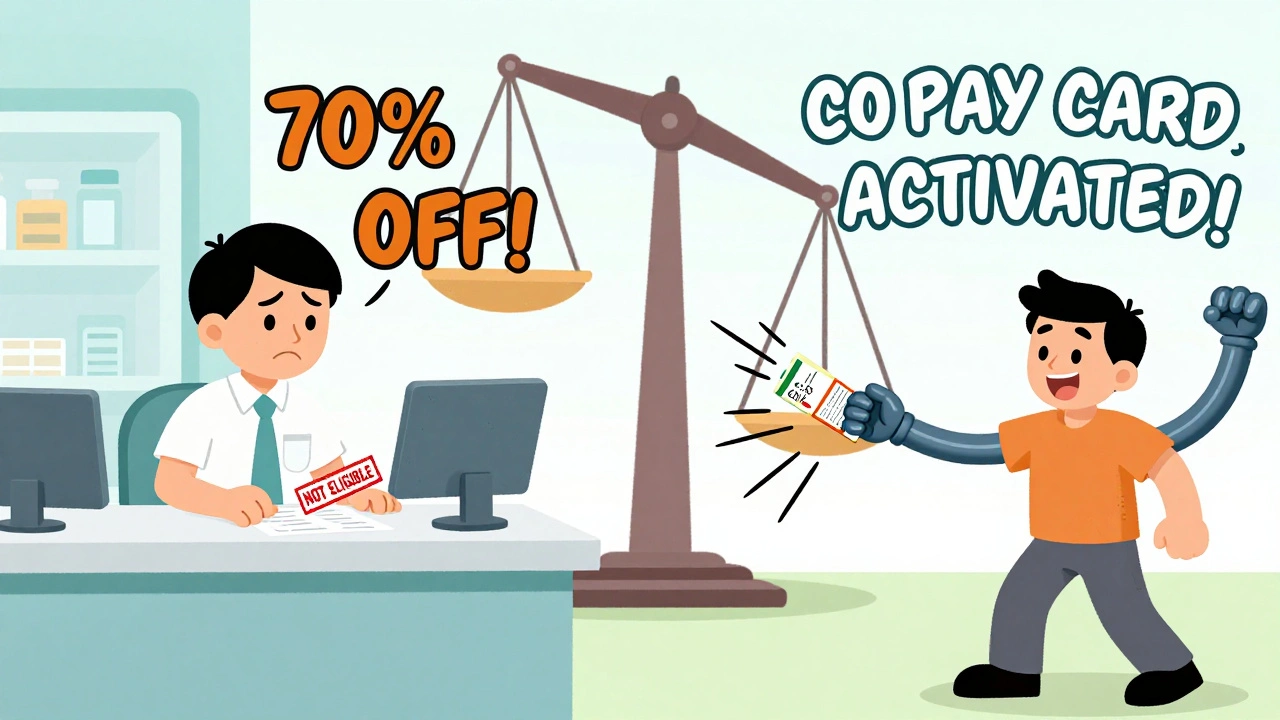
These are financial help programs run directly by drug companies like AbbVie, Eli Lilly, or Novo Nordisk. They come in two main forms: copay cards and patient assistance programs (PAPs). Copay cards are for people with private insurance. They cut your out-of-pocket cost at the pharmacy-sometimes from $500 to $10 a month. PAPs are for people with little or no income, or no insurance at all. They can give you the drug for free.These programs started growing fast in the early 2000s as insurance plans began making patients pay more. By 2023, 98% of major brand-name drugs had some kind of savings offer. For example, a diabetes patient on Jardiance went from paying $562.50 a month down to $100 using the manufacturer’s coupon. That’s an 85% drop in cost.
Who Can Use These Programs?
You can only use manufacturer savings programs if you have private health insurance. If you’re on Medicare, Medicaid, or any other federal program, you’re not eligible. This is by law. The federal anti-kickback statute bans drugmakers from giving discounts to people on government plans because it could push them toward more expensive drugs instead of cheaper generics.That means if you’re on Medicare Part D, you can’t use a copay card for your Humira or Ozempic-even if the manufacturer offers one. But if you have insurance through your employer, a spouse’s plan, or a private marketplace plan like those from Covered California or HealthCare.gov, you’re likely eligible.
How to Find and Enroll in a Program
Start with the drug’s manufacturer website. Search for the exact brand name of your medication, then look for “Savings,” “Assistance,” or “Patient Support.” Most companies have a dedicated page. For example, Novo Nordisk has a portal for Ozempic, and Eli Lilly has one for Trulicity.You can also use free tools like GoodRx or NeedyMeds. These sites list manufacturer programs alongside pharmacy discount cards. But be careful: GoodRx cards work for both brand and generic drugs, while manufacturer programs only work for brand-name versions-and they usually save you more.
To enroll, you’ll need:
- Your full name and date of birth
- Your insurance card details
- Your doctor’s name and prescription number
- A valid email address
Once you submit the form, you’ll get a digital card or a unique code via email or text. Some programs send a physical card in the mail. You don’t need to wait for it-most pharmacies can process the discount right away if you give them your ID number.
How the Discount Works at the Pharmacy
When you show up to pick up your prescription, give your insurance card and your manufacturer savings code to the pharmacist. The pharmacy’s system sends both to a third-party administrator-like ConnectiveRx or Prime Therapeutics. That company checks if you’re eligible, applies the discount, and then bills the drugmaker for the rest.The discount hits your pocket immediately. You pay less. The manufacturer pays the difference. It’s seamless. But here’s the catch: not all pharmacies participate. Chain pharmacies like CVS, Walgreens, and Rite Aid usually do. Independent pharmacies sometimes don’t. Always call ahead or check the manufacturer’s website for a list of participating locations.
What You Need to Watch Out For
These programs sound too good to be true-and sometimes they are. Here are the biggest traps:1. Accumulator Adjustment Programs
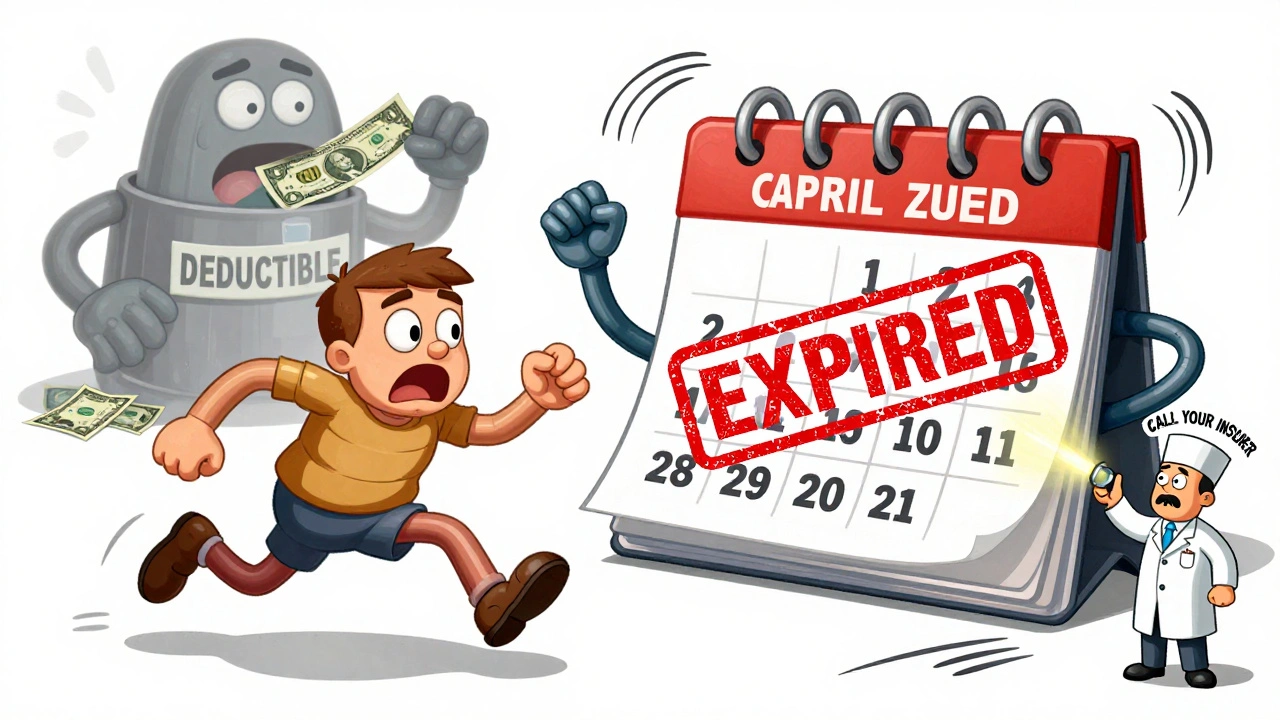
Many insurance plans now use something called an “accumulator adjustment program.” That means the manufacturer’s discount doesn’t count toward your deductible or out-of-pocket maximum. So even though you’re paying $50 a month, your insurance still treats you as if you paid the full $500. That means you’ll hit your deductible later-or never. By 2022, 87% of large employers had these programs in place.Check your plan documents or call your insurer. Ask: “Does my plan allow manufacturer coupons to count toward my deductible?” If the answer is no, you’re getting a monthly discount but not moving closer to financial relief.
2. Program Expiration
Most copay cards last 12 to 24 months. After that, you have to reapply. Some companies auto-renew. Others don’t. If you forget, your bill could jump back up overnight. One Reddit user shared how their Humira coupon ended without warning-suddenly, their monthly cost went from $100 to $1,200.Set a calendar reminder three months before your card expires. Call the manufacturer’s help line. Ask what you need to renew. Keep records.
3. Annual Caps
Manufacturers don’t pay unlimited amounts. Most programs cap their help at $5,000 to $15,000 per year. If your drug costs $600 a month and you use the full discount, you’ll hit that cap in 8 to 12 months. After that, you pay full price again. That’s why some people get hit with surprise bills mid-year.Manufacturer Programs vs. Pharmacy Discount Cards
It’s easy to confuse manufacturer programs with discount cards like GoodRx or SingleCare. Here’s how they differ:| Feature | Manufacturer Savings Programs | Pharmacy Discount Cards (e.g., GoodRx) |
|---|---|---|
| Works for | Brand-name drugs only | Brand and generic drugs |
| Typical savings | 70-85% off | 30-60% off |
| Eligibility | Private insurance only | No insurance needed |
| Counts toward deductible? | Usually not, if accumulator program exists | No, never |
| Expiration | 12-24 months, often renewable | Never expires |
| Annual limit | Yes, $5K-$15K | No |
Manufacturer programs save more-but only if you have insurance. Discount cards work for anyone, including those on Medicare, and can be used even if your insurance doesn’t cover the drug at all. If your drug has a generic version, always check GoodRx first. You might pay less without needing a coupon.
Real Stories: What Patients Say
People using these programs report big wins. One user on Drugs.com said their monthly cost for a biologic for rheumatoid arthritis dropped from $4,200 to $80. Another said their asthma inhaler went from $300 to $15.But there are horror stories too. A 2022 survey found 42% of users had trouble because:
- Their insurance plan didn’t accept the card
- The program ended without notice
- Their pharmacy didn’t know how to process it
And 65% of patients needed help from their pharmacist just to sign up. That’s not your fault. These systems are complicated.
What’s Changing in 2025?
The rules are shifting. In 2022, the Inflation Reduction Act capped insulin costs at $35 for Medicare patients. That’s reducing the need for manufacturer coupons for insulin. More states are passing laws to ban accumulator programs. As of 2023, 32 states now require manufacturers’ discounts to count toward deductibles.There’s also new federal pressure. The 2023 Fair Deal for Patients Act proposes forcing all manufacturer programs to count toward out-of-pocket limits. If it passes, it could change how these programs work-or even end them.
Drugmakers aren’t happy. They say these programs help patients. Critics say they keep brand-name drug prices high by reducing competition from cheaper generics. A 2016 study found coupons boosted brand sales by over 60%.
What You Should Do Now
If you’re paying a lot for a brand-name drug, here’s your action plan:- Check your insurance: Do you have private coverage? If yes, you might qualify.
- Search the manufacturer’s website for your drug’s savings program.
- Call your pharmacy and ask if they accept it.
- Ask your insurer: “Do manufacturer coupons count toward my deductible?”
- Enroll and save your login details.
- Set a reminder: 90 days before your card expires, reapply.
- Compare with GoodRx: Is the discount card cheaper?
Used right, these programs can cut your annual drug costs by $5,000 to $15,000. But don’t assume they’ll last. Stay informed. Stay proactive. And don’t be afraid to ask your pharmacist for help-they’ve seen it all before.
Chelsea Moore
December 1, 2025 AT 23:11Oh. My. GOD. I just found out my insurance doesn't count my copay card toward my deductible?!?!? I've been paying $10/month for my insulin for a year and thought I was halfway to out-of-pocket max... NOPE. I'm still at $0. This is a SCAM. A. SCAM. I'm calling my senator tomorrow.
Genesis Rubi
December 2, 2025 AT 04:33lol u guys are so naive. Big Pharma is just using these programs to keep you hooked on overpriced brand drugs so u dont switch to generics. its all a marketing ploy. why do u think they spend billions on ads? they dont care about u. they care about profit. america is broken.
John Morrow
December 3, 2025 AT 09:07While the surface-level utility of manufacturer savings programs is undeniable, one must interrogate the structural incentives embedded within this paradigm. The proliferation of copay assistance is not altruistic-it is a mechanism of market distortion. By insulating patients from the true cost of pharmaceuticals, these programs suppress price sensitivity, thereby enabling manufacturers to maintain artificially inflated list prices. This is not patient advocacy; it is regulatory arbitrage dressed in the clothing of compassion. The accumulation of these distortions has contributed to the systemic inflation of drug pricing across the entire ecosystem. One must ask: if the discount is so generous, why is the base price so grotesquely inflated in the first place?
Allan maniero
December 4, 2025 AT 05:32I’ve been using these programs for my rheumatoid arthritis meds for over 5 years. Honestly, they’ve been a lifesaver-but I’ve learned the hard way to set reminders 90 days before expiry. I once got hit with a $1,400 bill because I forgot to renew. Now I have a calendar alert labeled ‘Med Coupon Renewal’ with a little heart emoji. It’s not glamorous, but it keeps me from going broke. If you’re on this stuff, don’t wait till the last minute. Call the help line. They’re nice. Really.
Sheryl Lynn
December 4, 2025 AT 21:39Let’s be real-this whole system is a glitter-coated dumpster fire. Manufacturers get to keep their obscene prices while pretending to be benevolent. Meanwhile, patients are left playing financial Tetris with coupons, deductibles, and pharmacy black holes. And don’t even get me started on the ‘accumulator programs’-that’s just corporate gaslighting with a side of legalese. If you’re not screaming into the void at your insurer, you’re not doing it right.
Eddy Kimani
December 5, 2025 AT 01:19From a pharmacoeconomic standpoint, these programs function as a form of third-party subsidization that effectively decouples consumer price sensitivity from drug utilization. While they reduce short-term out-of-pocket burden, they simultaneously reinforce monopolistic pricing structures by reducing competitive pressure from generics. The net effect is a net welfare loss in the long run, despite the perceived immediate benefit. The real solution lies in regulatory intervention to cap list prices-not band-aid coupons.
John Biesecker
December 6, 2025 AT 19:06so i just got my ozempic coupon and it saved me $400 this month 😭 thank you god and novo nordisk 🙏 i set a reminder for 3 months before it expires but honestly i think i’m gonna cry if it ever runs out… anyone else feel like their meds are their emotional support pills? 💔💊
Victoria Graci
December 6, 2025 AT 19:52It’s wild how these programs expose the grotesque absurdity of our healthcare system. You’re not supposed to need a corporate coupon just to afford medicine you were prescribed. But here we are. I used to think I was lucky to have insurance-now I realize insurance is just the first layer of a multi-layered scam. The real question isn’t how to use the coupon-it’s why we need one at all.
Saravanan Sathyanandha
December 7, 2025 AT 12:47In my home country of India, we have no such programs. People pay full price or go without. I am grateful for these assistance options in the U.S., but I also feel sorrow knowing how many are still priced out. Perhaps the real innovation isn't the coupon-it's the collective will to demand that no one should have to choose between food and medicine. Let us not celebrate the patch, but demand the repair.
ruiqing Jane
December 8, 2025 AT 03:03Stop blaming the drug companies. The real villains are the insurance companies that run accumulator programs. They’re the ones stealing your progress toward your deductible. Call them. Demand they change. Write to your state rep. This isn’t about coupons-it’s about transparency. And if your insurer won’t give you a straight answer, find a new one. Your health is worth fighting for.
Fern Marder
December 9, 2025 AT 23:43you think you're smart using these coupons? 😏 guess what? you're just making the drug companies richer. they know you'll keep buying their overpriced brand name junk because you're too lazy to switch to generics. you're not saving money-you're enabling greed. 🤡
william tao
December 11, 2025 AT 07:19It is my professional assessment, based upon a comprehensive review of pharmaceutical industry practices and regulatory frameworks, that the utilization of manufacturer savings programs constitutes a form of unethical consumer manipulation. The structure of these programs is inherently deceptive, as they obscure the true cost of pharmaceuticals while creating the illusion of affordability. Such practices are incompatible with the ethical obligations of healthcare providers and insurers alike. One must question the moral integrity of a system that requires such workarounds.
Sandi Allen
December 12, 2025 AT 22:01EVERY SINGLE ONE OF THESE PROGRAMS IS A TRAP. THE GOVERNMENT IS IN ON IT. THEY LET THE PHARMA COMPANIES OFFER COUPONS SO YOU’LL STAY ON BRAND DRUGS AND NOT ASK WHY THEY COST $5000. THEY’RE USING YOU TO KEEP PRICES HIGH. THEY’RE LYING TO YOU. THE FDA IS CORRUPT. DON’T TRUST ANYTHING. CHECK YOUR MEDICATION LABELS FOR MICROCHIPS.
Paul Santos
December 13, 2025 AT 18:47One cannot help but observe the performative benevolence of these programs-how they function as aesthetic gestures of care while the underlying architecture remains fundamentally predatory. It’s capitalism with a smiley face. The real tragedy? We’ve been conditioned to be grateful for crumbs. We should be demanding the whole damn table.
Doug Hawk
December 13, 2025 AT 19:35just got my humira card renewed last week. called the pharmacy and they had no idea how to process it. had to talk to 3 different people and one of them said 'we dont do that here' so i had to go to walgreens. took 45 mins. worth it. but why is this so hard? i just want my medicine. 🤷♂️