 Nov, 28 2025

Every year, millions of people in the U.S. take expired medications without realizing it. It’s not just about wasted money - it’s about safety. A 2021 study in the Journal of Patient Safety found that 15% of medication errors are tied to expired drugs. And yet, most households still rely on handwritten notes, sticky labels, or sheer memory to keep track of when pills, creams, or liquids go bad.
You don’t need a high-tech cabinet to stop this. You just need a system that’s simple, reliable, and built into your daily routine. Here’s how to take control of your medicine cabinet and keep everything safe and effective.
Start with a Clean-Out
Before you start tracking, you need to know what you actually have. Empty your cabinet completely. Lay everything out on a clean surface. Check each item: prescription bottles, over-the-counter pain relievers, antibiotics, eye drops, insulin, even topical ointments.
Look for the expiration date. It’s usually printed on the label or the bottom of the bottle. If it’s faded or missing, write it down with a permanent marker. If you can’t find it, and the medicine is more than a year old, throw it out. The FDA says most medications lose potency after expiration - and some can become harmful.
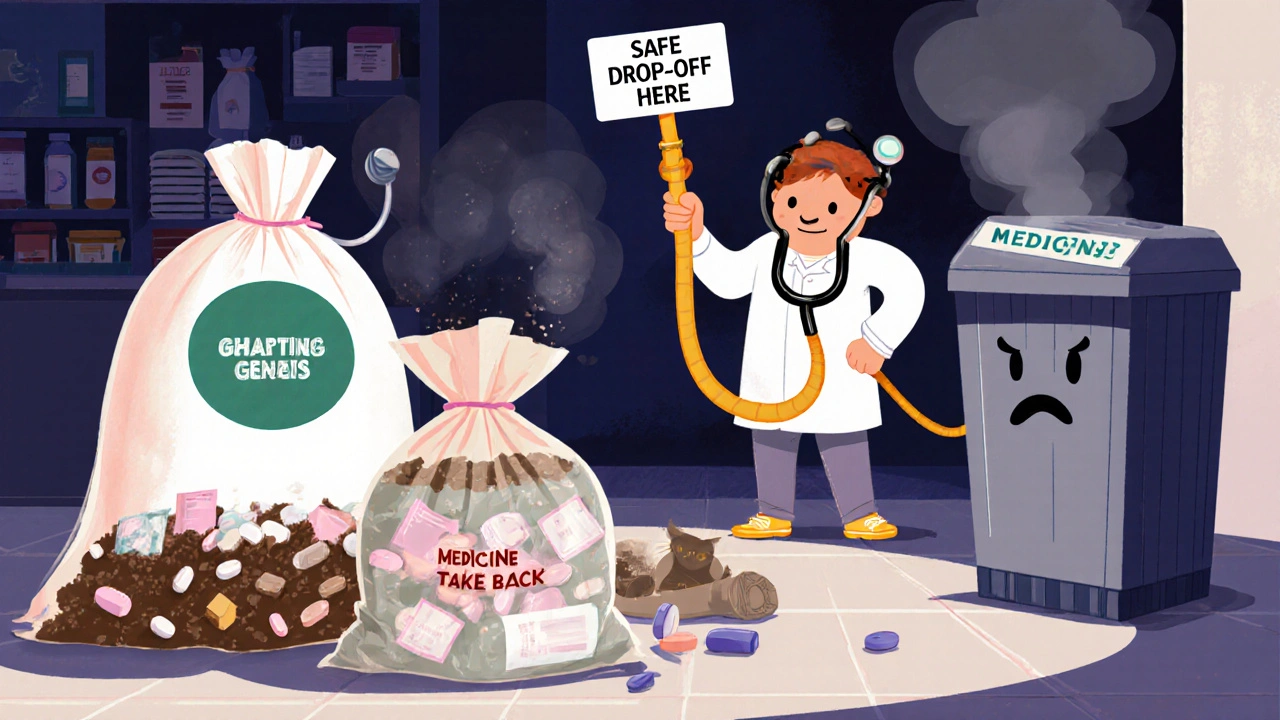
Discard anything that looks off: discolored pills, cloudy liquids, strange smells, or capsules that are cracked or sticky. Don’t flush them down the toilet or toss them in the trash without mixing them with coffee grounds or cat litter first. That’s the safest way to prevent accidental ingestion by kids or pets.
Use a Consistent Labeling System
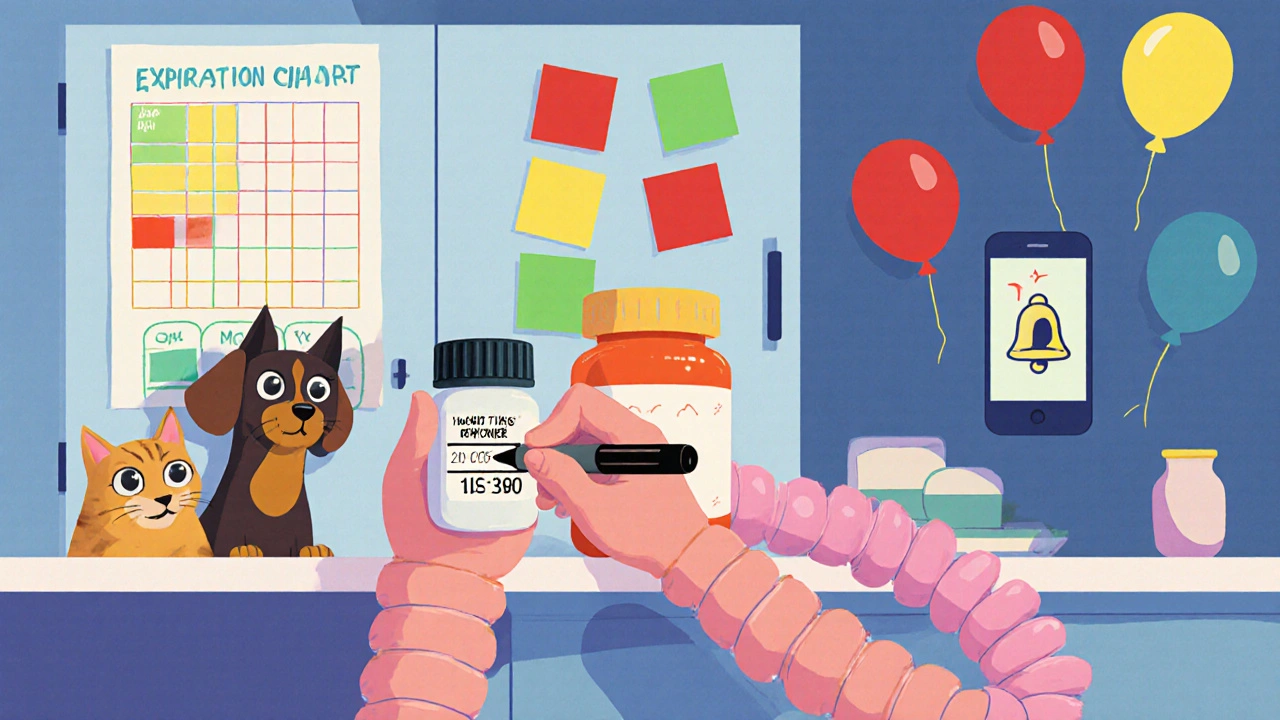
Don’t rely on memory. Every container - even the ones with clear expiration dates - needs a visible, easy-to-read label. Use a small piece of masking tape or a label maker. Write the expiration date in big, bold numbers: 10/2025 or Oct 2025.
Put the label on the front of the bottle, not the back. That way, when you open the cabinet, you see it immediately. Avoid using tiny stickers or fine-tip pens. If you can’t read it from a foot away, it’s useless.
For blister packs or boxes, write the date on the outside flap. If the original box is gone, transfer the label to a small envelope and tape it to the container. Consistency matters. If you do it differently for each item, you’ll get confused.
Group by Type and Use a Tracker
Sort your medicines into categories: prescriptions, OTC pain meds, allergy meds, vitamins, first-aid supplies. Keep similar items together. That way, when you need something, you don’t have to dig through everything.
Now, make a simple list. You don’t need an app - a notebook or a printed sheet works fine. On the left, write the medicine name. On the right, write the expiration date. Update it every time you open a new bottle. Keep this list taped to the inside of your cabinet door. Check it once a month, right before you pay your bills or do laundry. Make it part of a habit.
Pro tip: Use color coding. Red for anything expiring in the next 30 days. Yellow for 30-90 days. Green for anything beyond that. You’ll spot the red ones before they become a problem.
Store Properly to Extend Shelf Life
Expiration dates assume proper storage. Heat, moisture, and light break down medicine faster. Don’t keep pills in the bathroom - humidity from showers ruins them. Don’t leave them in a hot car or near the stove.
The best place is a cool, dry, dark spot. A bedroom drawer or a closet shelf works better than the bathroom or kitchen. If you live in a humid climate, consider a small airtight container with a silica gel packet inside. Those little packets that come with new shoes? Save them. They help keep medicine dry.
Some medicines need refrigeration - insulin, certain eye drops, liquid antibiotics. Check the label. If it says “refrigerate,” keep it in the fridge, but not in the door. The door gets too warm when you open it. Put it on a shelf, away from food, and label the container clearly so no one mistakes it for yogurt.
Set Monthly Reminders
Humans forget. That’s normal. But you can outsmart your memory. Set a recurring reminder on your phone for the first day of every month. Title it: “Check Medicine Cabinet.”
When the alert goes off, grab your list. Go through each item. Are any expiring soon? Are there any you haven’t used in six months? If you haven’t taken a pill in over a year, you probably won’t need it again. Dispose of it safely.
Some people set alerts for specific dates - like the day after a prescription runs out. That way, you know when to refill or when to toss the leftovers. For chronic conditions like high blood pressure or diabetes, this step is non-negotiable. Taking expired heart medication isn’t just risky - it’s dangerous.
What About Those ‘Use By’ Dates?
Some medicines, like insulin, epinephrine auto-injectors, or liquid antibiotics, have short shelf lives after opening - sometimes just 14 to 28 days. These aren’t expiration dates. They’re use-by dates. Once you open them, the clock starts ticking.
Write the opening date on the label too. For example: Opened: 3/15/2025. Then write the use-by date: Use by: 4/15/2025. Don’t guess. Follow what’s printed on the box or insert. If you’re unsure, call your pharmacist. They’ll tell you exactly how long it lasts after opening.
Epinephrine pens? If they’ve been exposed to heat or sunlight, even if the date is still good, throw them out. The medication can degrade and fail when you need it most.
When to Call a Pharmacist
You don’t have to figure this out alone. Pharmacists are trained to help with this exact problem. If you’re unsure about a medicine’s safety - if it’s been sitting for years, if the label is torn, if it looks strange - call your pharmacy. Most will take old meds back for safe disposal.
Many pharmacies now offer free disposal bins. Some even mail-back kits. Ask. It’s part of their job. Don’t feel awkward. You’re not throwing away medicine - you’re preventing harm.
Also, if you’re managing multiple prescriptions, ask for a medication review. Pharmacists can spot duplicates, interactions, or outdated meds you didn’t realize you still had. It’s a free service - and it saves lives.
Why This Matters More Than You Think
Expired antibiotics don’t just stop working - they can cause resistant infections. Expired nitroglycerin might not stop a heart attack. Expired epinephrine could mean the difference between life and death during an allergic reaction.
According to BD’s 2023 patient safety data, hospitals using automated tracking systems reduced expiration-related incidents by 37%. That’s not a statistic - it’s real people avoiding harm. You can’t buy a $40,000 cabinet, but you can buy a pack of labels and 10 minutes a month. That’s all it takes.
Think of your medicine cabinet like your car’s oil. You don’t wait until it’s gritty to change it. You check it regularly. Same here. A few minutes now prevents a crisis later.
Can I still take medicine after the expiration date?
The expiration date is the last day the manufacturer guarantees full potency and safety. Most solid medications (pills, capsules) remain stable for years after that date, but they slowly lose effectiveness. Liquid medications, insulin, and antibiotics are different - they can break down quickly and become unsafe. Never take expired insulin, epinephrine, or liquid antibiotics. For other pills, if they look normal and you’ve stored them properly, they’re likely still okay - but don’t rely on them for serious conditions. When in doubt, toss it.
How often should I check my medicine cabinet?
Once a month is ideal. Pick a day that’s easy to remember - like the first of the month or payday. This way, you catch expiring meds before they’re useless. If you’re managing chronic illness or take many medications, check every two weeks. The goal is to stay ahead, not scramble when something expires.
What’s the best way to dispose of expired medicine?
The safest way is to use a drug take-back program. Many pharmacies and police stations have drop-off bins. If that’s not available, mix pills with coffee grounds or cat litter in a sealed bag, then throw them in the trash. Never flush them unless the label says to - that pollutes water systems. For needles or sharps, use a puncture-proof container and take it to a pharmacy that accepts them.
Do vitamins expire?
Yes. Vitamins lose potency over time, especially if exposed to heat or light. You won’t get sick from taking expired vitamins, but you won’t get the full benefit either. If your gummies are sticky, your tablets are crumbling, or your powder is clumpy, toss them. Liquid vitamins like D3 or B12 degrade faster - check the date closely.
Should I use a pill organizer for tracking?
Pill organizers help with daily dosing, not expiration tracking. They’re great for remembering to take your meds, but they don’t tell you when the bottle runs out. Use them alongside your label-and-list system. Always refill the organizer from the original bottle - never the other way around. That way, you always know the expiration date.
What if I can’t read the expiration date?
Call your pharmacy. They can look up the original prescription and tell you the expiration date. If it’s an over-the-counter item, check the manufacturer’s website or call their customer service. If you can’t find it and the medicine is more than a year old, throw it out. It’s not worth the risk.
Next Steps
Today, grab a pen and a roll of masking tape. Open your cabinet. Write the expiration date on the first three bottles you see. Then, make a list - even if it’s just on your phone’s notes app. Set a calendar reminder for next month.
You don’t need a smart cabinet or an app. You just need to start. One label. One list. One reminder. That’s how you stop wasting medicine - and protect your health.
Olivia Currie
November 29, 2025 AT 21:39OMG I JUST DID THIS LAST WEEK AND MY CABINET LOOKS LIKE A PHARMACY NOW 😭 I used neon sticky notes and color-coded everything-red for ‘DROP IT LIKE IT’S HOT’, yellow for ‘soon’, green for ‘ chill, you’re good’-and I even made a little checklist taped to the door. I feel like a superhero. Also, I threw out 17 bottles I didn’t even remember owning. My cat is confused but I’m free.
Curtis Ryan
November 30, 2025 AT 19:35bro this is life changing i never thought about labeling my ibuprofen but now i have a whole system 😅 i used sharpies and my handwriting is trash but hey at least i know when it expires now. also i started putting the silica gel packets from new shoes in my cabinet-so random but it works. thanks for the tip!!
Rajiv Vyas
December 2, 2025 AT 14:13yeah right. expiration dates are a scam. big pharma wants you to buy new pills every year so they can make more money. i’ve been taking amoxicillin from 2018 and it’s still kicking. they don’t want you to know this. also, the FDA? Totally bought and paid for. I keep my meds in the bathroom because humidity ‘activates’ them. Trust me, I read it on a forum.
farhiya jama
December 3, 2025 AT 07:31i don’t even have a medicine cabinet. i just keep everything in my purse. if it’s expired, i guess my body just doesn’t need it anymore? why do we stress so much? it’s just pills. also, i hate cleaning.
Astro Service
December 3, 2025 AT 17:41you people are weak. in america we don’t need labels or lists. we just take what we need when we need it. if it’s expired, you’re not tough enough. i’ve taken aspirin from 2009 and i still run marathons. this is why the country’s falling apart-too many rules. just use your gut. #AmericaFirst
DENIS GOLD
December 4, 2025 AT 03:48Oh wow. You spent 10 minutes a month to not die. How noble. 🙄 I’m sure the world is holding its breath waiting for your next label. Meanwhile, I’m out here surviving on expired Benadryl and hope. Keep your tape and your lists. I’ve got a PhD in winging it.
Ifeoma Ezeokoli
December 5, 2025 AT 05:01Y’all are doing amazing. I just started this last month and honestly? I feel like I’m finally taking care of myself. I’m from Nigeria and we don’t always have access to pharmacies, so I’ve learned to be careful. But seeing you all doing this? It’s beautiful. You’re not just organizing pills-you’re honoring your body. Keep going. 🌍❤️
Daniel Rod
December 5, 2025 AT 23:55It’s wild how something so small-like writing a date on a bottle-can carry so much weight. We spend hours organizing our closets, our Spotify playlists, our TikTok feeds… but our health? We leave it to chance. This system isn’t about control. It’s about love. 🫂 Maybe if we treated ourselves with this kind of gentle attention more often, we’d be less anxious. Just a thought.
gina rodriguez
December 6, 2025 AT 07:35This is so helpful!! I’ve been meaning to do this for ages but never knew where to start. I’m using your color system and it’s already made me feel more in control. I even showed my mom and she’s doing it too now. Small steps, right? 😊
Sue Barnes
December 7, 2025 AT 18:49If you’re still using masking tape, you’re doing it wrong. You need a label maker. And if you’re not using a digital tracker with cloud sync, you’re just delaying the inevitable. Also, why are you keeping vitamins? They’re useless after 6 months. You’re wasting your money and your time. Fix this. Now.
jobin joshua
December 8, 2025 AT 22:23Bro I just used a sticker from my Amazon box and wrote the date with a crayon. It’s not fancy but it works. Also, I put my insulin in the fridge next to the milk. My wife said I’m a menace. She’s probably right. 🤷♂️
Sachin Agnihotri
December 10, 2025 AT 15:21...I’ve been doing this for years... and I use a spreadsheet... with conditional formatting... and I print it every quarter... and I laminated it... and I hang it on the wall... with a magnet... and I update it every time I open a bottle... and I cross-reference it with my pharmacy’s database... and I’ve never had an expired pill... and I’ve never missed a dose... and I’ve never had a reaction... and I’ve never forgotten... and I’m still alive... and I’m still sane... and I’m still here... and I’m still typing... because I care... and I’m not done... and you should be too...
Diana Askew
December 11, 2025 AT 23:23Of course you’re using tape. You’re clearly not rich enough to afford a smart cabinet. I use an app that scans the barcode and syncs with my doctor’s EHR. Also, I only take pharmaceutical-grade supplements from Switzerland. Your ‘color-coded list’ is adorable. But you’re still one expired pill away from a hospital stay. 🙃