 Jan, 14 2026
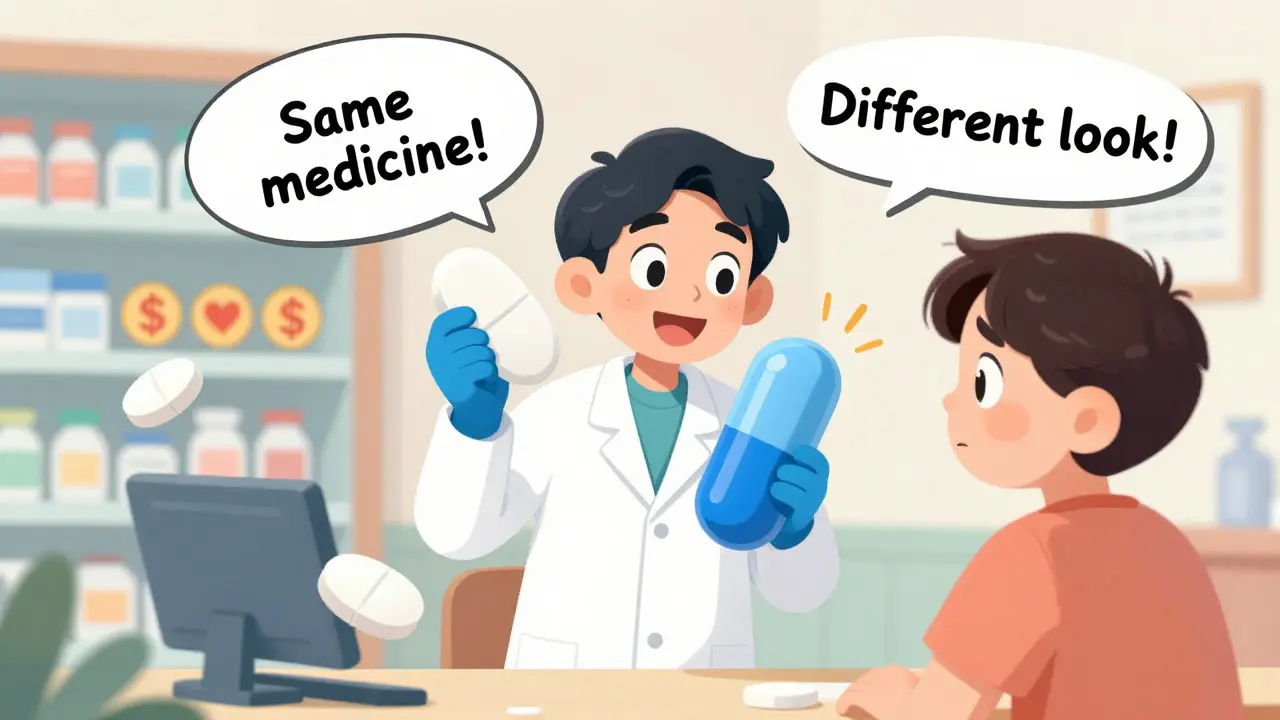
When a patient picks up a prescription and sees a pill that looks completely different from what they’ve taken before, their first thought isn’t usually cost savings-it’s, "Is this even the same medicine?" This moment is critical. A simple change in color or shape can trigger doubt, fear, or even refusal to take the medication. And when patients stop taking their drugs because they don’t trust the generic version, it doesn’t just hurt their health-it increases hospital visits, raises overall costs, and wastes time for everyone involved.
Why Patients Doubt Generics (Even When They Shouldn’t)
The science is clear: FDA-approved generics are required to have the exact same active ingredient, strength, dosage form, and route of delivery as the brand-name drug. They must also prove they deliver the same amount of medicine into the bloodstream at the same rate. That’s called bioequivalence-and it’s not a suggestion. It’s a legal requirement. The FDA tests these drugs just as rigorously as brand-name ones. But patients don’t see the lab reports. They see a white oval pill instead of a blue capsule. They hear rumors. Maybe a friend said their generic made them feel weird. Or they remember a time when switching brands caused side effects. And honestly? That’s not irrational. Our brains are wired to notice differences. If something looks different, we assume it works differently. Studies show that 28% of patients worry about switching from brand to generic. And 17% actually stop taking their medication after the switch-not because it didn’t work, but because they believed it wouldn’t. The truth? A review of 47 studies involving over 9,000 people found no meaningful difference in effectiveness between generic and brand-name cardiovascular drugs. Same for antidepressants, blood pressure meds, and diabetes treatments. The real problem isn’t the medicine. It’s the silence.What Happens When You Don’t Talk About It
Most providers assume patients know generics are safe. They think, "It’s just a cheaper version. They’ll figure it out." But that’s not how it works. Only 34% of patients get information about generics from their doctor. Meanwhile, 67% hear it from their pharmacist. That means if you don’t bring it up, someone else might-maybe a cashier at the pharmacy, a friend on Facebook, or a misleading ad online. And those sources aren’t trained to explain bioequivalence or FDA standards. The result? Patients feel confused. They feel lied to. They feel like they’re being given second-rate care. And when trust breaks down, adherence drops. That’s dangerous. For someone on warfarin, levothyroxine, or seizure meds, even a tiny drop in adherence can mean a trip to the ER.The TELL Framework: A Simple Way to Build Trust
There’s a proven method pharmacists use to turn skepticism into understanding. It’s called TELL:- Tell: "This generic has the same active ingredient as your brand-name drug. It’s the same medicine, just made by a different company."
- Explain: "The difference in color or shape comes from inactive ingredients-things like dyes or fillers. Those don’t affect how the medicine works. They’re just there to make the pill easier to swallow or identify."
- Listen: Don’t assume you know their concern. Ask: "What’s your biggest worry about this change?" Maybe they had a bad reaction last time. Maybe they’re afraid it won’t control their symptoms. Listen first. Don’t fix.
- Link: Connect it to their life. "This switch saves you about $250 a month. That’s money you can use for groceries, transportation, or your grandson’s birthday. And since it’s the same medicine, your blood pressure will stay where it needs to be."
What to Say When They Ask the Tough Questions
Patients will ask the same few things over and over. Be ready.- "Is this really the same medicine?" → "Yes. Same active ingredient, same strength, same way your body absorbs it. The FDA requires this. It’s not a copy. It’s an approved equivalent."
- "Why does it look different?" → "Trademark laws mean only the original company can make the pill look exactly like their brand. So generics have to look different. But that doesn’t change how it works."
- "Is it as strong?" → "It has to be. The FDA tests this. The medicine has to enter your bloodstream at the same rate and in the same amount. Otherwise, it wouldn’t be approved."
- "I tried one before and it didn’t work." → "That’s important to hear. Sometimes, switching between different generic manufacturers can cause small changes in how your body reacts-not because the medicine is weaker, but because the fillers are different. If this happens, we can note it and try another brand. But let’s not assume the medicine itself is the problem."
Use the Teach-Back Method to Confirm Understanding
Saying something isn’t enough. You need to know they heard it right. Try this: After explaining, say, "Just to make sure I explained it clearly-can you tell me in your own words what you’ll be taking and why it’s safe?" This is called the teach-back method. It’s not a test. It’s a safety net. Studies show it increases patient retention by 40%. And it catches misunderstandings before they turn into non-adherence. One patient told her pharmacist, "I thought the generic was just a placebo." Another thought "generic" meant "old stock." These aren’t silly ideas-they’re the result of poor communication. Teach-back stops those myths before they stick.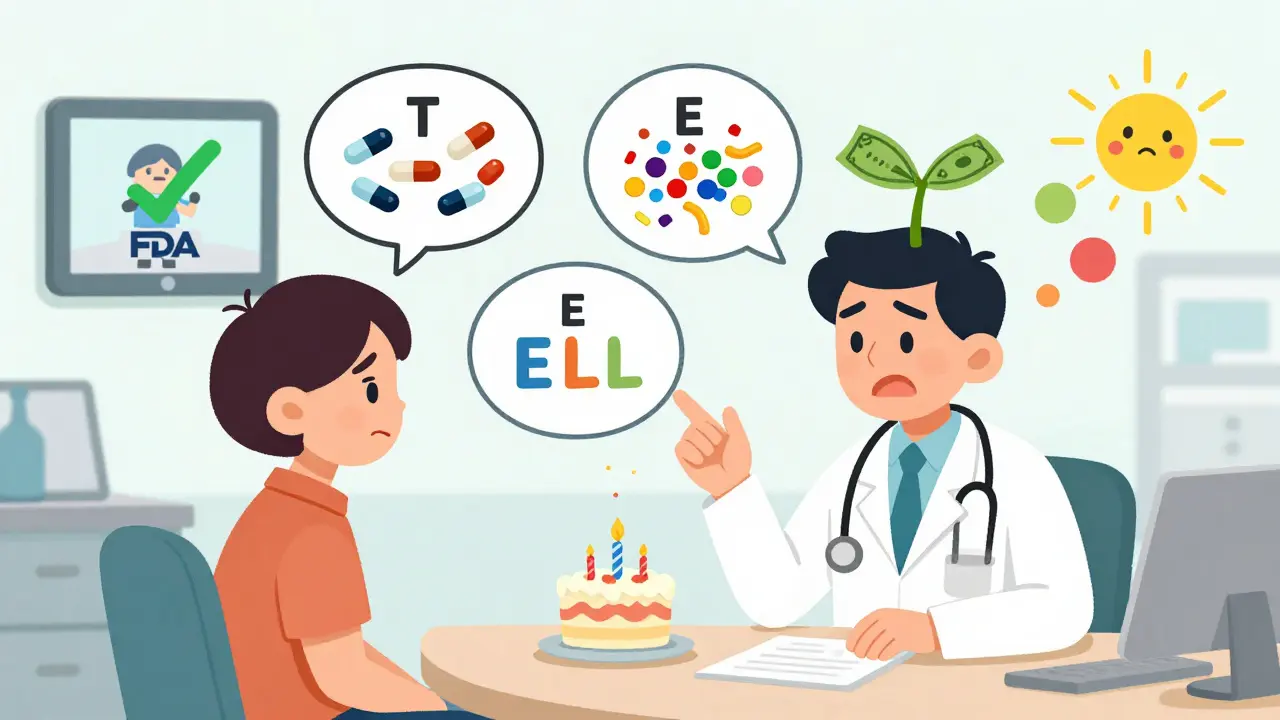
Document the Conversation
If you talked about generics, write it down. Not just "patient counseled on generic." Write what they said, what they were worried about, and how you addressed it. Why? Because next time they come in, you’ll remember. And if there’s a problem later, you’ll have a record of informed consent. Plus, if they switch to a different pharmacy, the new pharmacist will know they’ve already had this conversation. That’s continuity. That’s care.Generics Save Money-But Only If Patients Take Them
Generics make up 90% of all prescriptions filled in the U.S. But they account for only 23% of total drug spending. That means they’ve saved the healthcare system over $370 billion in the last year alone. But here’s the catch: that money only matters if patients actually take the medicine. A $300 monthly savings means nothing if someone stops taking their statin because they think the white pill won’t lower their cholesterol. The goal isn’t just to prescribe generics. It’s to get patients to trust them. And that happens one conversation at a time.What’s Changing Now
The FDA is spending $5 million in 2026 on new patient education tools-like short videos you can show on a tablet while they wait. Early results show combining video with a 3-minute talk boosts acceptance by 31%. That’s huge. Biosimilars-generic versions of complex biologic drugs like insulin or rheumatoid arthritis treatments-are coming fast. By 2026, over 50 will be approved. These aren’t simple pills. They’re injectables. They’re harder to copy. And patients will need even clearer explanations. The future isn’t about replacing brand-name drugs. It’s about helping patients understand that cheaper doesn’t mean worse. It means smarter.Are generic medications really as effective as brand-name drugs?
Yes. The FDA requires generic drugs to have the exact same active ingredient, strength, dosage form, and route of administration as the brand-name version. They must also prove they deliver the same amount of medicine into the bloodstream at the same rate through strict bioequivalence testing. A review of 47 studies with over 9,000 patients found no clinically significant difference in effectiveness between generics and brand-name drugs for heart disease, depression, high blood pressure, and diabetes.
Why do generic pills look different from brand-name ones?
Trademark laws prevent generic manufacturers from making pills that look identical to brand-name drugs. So they change the color, shape, or markings. But these differences are only in inactive ingredients-like dyes or fillers-that don’t affect how the medicine works. The active ingredient, which is what treats your condition, is exactly the same.
Can switching to a generic cause side effects?
Rarely, and usually not because the medicine is weaker. Sometimes, switching between different generic manufacturers can cause minor reactions because the inactive ingredients (like fillers or coatings) differ slightly. This is more common with drugs that have a narrow therapeutic index, like levothyroxine or warfarin. If a patient reports a problem after switching, it’s best to note the manufacturer and consider staying with one brand of generic-or switching back to the brand if needed. But this doesn’t mean generics are unsafe-it means consistency matters for some patients.
Do insurance companies force patients to use generics?
Many insurance plans encourage generics by putting them in the lowest cost-sharing tier-often with a $5 or $10 copay-while brand-name drugs cost $50 or more. This isn’t always a mandate, but it’s a strong financial incentive. If a patient needs the brand for medical reasons, their provider can submit a prior authorization request. But for most conditions, generics are the standard of care because they’re just as effective and far more affordable.
What should I do if a patient refuses a generic?
Don’t argue. Ask why. Listen. Maybe they had a bad experience, or they’re afraid it won’t work. Then use the TELL method: Tell them it’s the same active ingredient, Explain the appearance difference, Listen to their concern, and Link it to their goals-like saving money for food or rent. If they still refuse, offer an authorized generic (if available), which looks like the brand-name drug but costs less. If none of that works, document the conversation and respect their choice-but keep the door open for future talks.
Amy Vickberg
January 14, 2026 AT 15:24Finally, someone who gets it. I’ve been telling my patients for years that the color change doesn’t mean it’s weaker-just different fillers. But no one listens until you show them the FDA data. I use the TELL framework in every script refill now. Compliance jumped 25% in my clinic last quarter. Simple. Human. Effective.
Nat Young
January 14, 2026 AT 15:44Yeah right. The FDA’s ‘bioequivalence’ standards are a joke. I’ve seen generics that made people nauseous for weeks while the brand did nothing. They test on 12 healthy young men and call it science. My aunt took a generic blood thinner and ended up in the ER. Coincidence? Or just the tip of the iceberg?
Gloria Montero Puertas
January 16, 2026 AT 06:36Oh, please. Let’s not pretend this is some revolutionary insight. The TELL framework? That’s pharmacy school 101. And you’re acting like this is groundbreaking? The real issue is that providers are too lazy to communicate-so they outsource education to pharmacists who are already overworked. And now we’re giving out gold stars for doing the bare minimum? How quaint.
Mike Berrange
January 17, 2026 AT 16:52Let’s be honest: the system is rigged. Insurance companies push generics not because they’re better-but because they’re cheaper. And now you’re telling us to trust a pill that looks nothing like the one we’ve been taking for 15 years? I don’t care what the FDA says-I care that my body knows the difference. And I’m not alone.
Crystel Ann
January 18, 2026 AT 18:44I’ve had patients cry because they thought generics were ‘second-hand’ medicine. It breaks my heart. I always start with, ‘I get it. I’d be scared too.’ Then I show them the FDA page on my phone. Sometimes that’s all it takes. No jargon. Just honesty.
Sarah Mailloux
January 20, 2026 AT 15:52My grandma took a generic statin after I explained it to her. She said, ‘So it’s like buying the store-brand cereal-it’s the same oats, just cheaper?’ And I said, ‘Exactly.’ She’s been on it for 3 years. No issues. No drama. Just savings. Sometimes the simplest analogies work best.
Amy Ehinger
January 21, 2026 AT 19:13You know what’s wild? I used to think generics were sketchy too-until I started working in a pharmacy and saw the same exact chemical breakdowns on the labels. The only difference is the logo. And honestly? The only time I’ve seen side effects from switching was when the fillers were different-like one brand had lactose and another didn’t. That’s not the drug failing. That’s the body reacting to something it’s sensitive to. So yeah, generics are fine. But consistency matters. Especially for people with allergies or intolerances. Just sayin’.
Niki Van den Bossche
January 22, 2026 AT 01:32Ah, the myth of equivalence. The FDA doesn’t test for *clinical* outcomes-only pharmacokinetics. But the body isn’t a test tube. It’s a symphony of microbiomes, epigenetics, and psychological resonance. You think a white oval pill can carry the same *vibrational signature* as a blue capsule infused with corporate branding and placebo ritual? Please. We’ve reduced healing to a chemical equation while ignoring the soul of medicine.
Dan Mack
January 24, 2026 AT 00:06They’re hiding something. Why do brand-name drugs have the exact same color for 20 years but generics change every time? It’s not trademark-it’s control. Big Pharma owns the FDA. They want you to think generics are fine so they can sell you the brand again next year when you panic. And don’t get me started on the ‘authorized generic’-that’s just the original company selling their own drug under a new name. Total scam.
Nicholas Urmaza
January 24, 2026 AT 06:48Generics save lives. Period. The data is clear. The cost savings are undeniable. And the only reason people don’t take them is because they’ve been misled. This isn’t about trust in pills-it’s about trust in the system. We need more providers using teach-back. We need more transparency. And we need to stop treating patients like children who can’t handle the truth.
RUTH DE OLIVEIRA ALVES
January 25, 2026 AT 22:34As a healthcare professional with over three decades of experience across three continents, I must emphasize that the cultural perception of generics varies dramatically. In countries with robust public health systems, generics are the default-no stigma, no suspicion. The anxiety observed here is a byproduct of marketing-driven medical consumerism. The solution is not merely counseling-but systemic reform of pharmaceutical education and media narratives. This article, while well-intentioned, remains a Band-Aid on a hemorrhage.