 Jan, 17 2026
Stopping your medication because of side effects is one of the most common mistakes people make - and it’s often unnecessary. You’re not alone. About half of all patients quit their prescriptions because of discomfort, but many of those side effects can be managed without ditching the treatment entirely. The real issue isn’t the side effect itself - it’s how you talk about it with your doctor. If you don’t know how to communicate clearly, you risk losing the benefits of your medicine. But with the right approach, you can keep taking what you need while making your body more comfortable.
Don’t Assume Side Effects Mean It’s Not Working
Many people think if they feel bad, the medicine must be wrong for them. That’s not true. In fact, some side effects are signs the drug is doing its job. For example, nausea from antidepressants or dizziness from blood pressure meds can be temporary reactions as your body adjusts. Studies show that 68% of common side effects fade within one to two weeks. If you stop too soon, you might miss the window where your body settles in and the benefits kick in. Instead of jumping to conclusions, ask yourself: Is this side effect getting worse, or is it just annoying right now? Many people stop their medication because they feel worse in the first few days - but those same people often report feeling much better after three weeks. Your doctor needs to know the difference between a temporary adjustment and a dangerous reaction.Track Your Symptoms Like a Pro
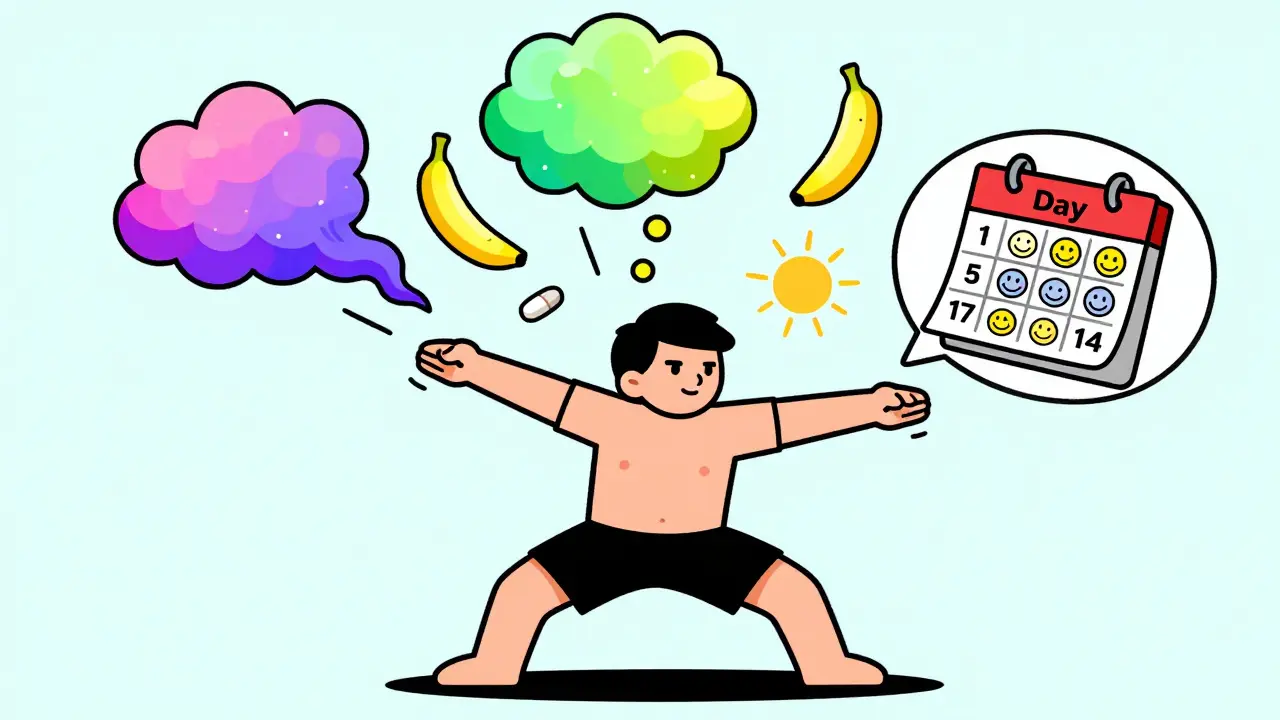
Vague complaints like “I feel weird” or “It’s making me tired” don’t help your doctor fix the problem. You need specifics. Start a simple log: write down when you take your medicine, what side effect you felt, how bad it was (on a scale of 1 to 10), and what you were doing when it happened. For example:- Monday, 8:30 AM - Took 10mg lisinopril. Felt dizzy 45 minutes later. Severity: 7/10. Was walking to the kitchen.
- Tuesday, 8:30 AM - Took pill with a small banana. Dizziness: 3/10. No fall risk.
Use the SWIM Framework to Speak Up
When you sit down with your doctor, don’t just say, “I don’t like how this makes me feel.” Use the SWIM method:- Severity - How bad is it? (1 to 10)
- When - When does it happen? Right after taking it? At night? After eating?
- Intensity - Is it constant, or does it come and go?
- Management - What have you tried already? Did drinking water help? Did sleeping later make it better?
Ask the Right Questions Before You Start
Don’t wait until you’re miserable to ask questions. Before you even start a new medication, ask:- “What percentage of people experience this side effect?”
- “How long does it usually last?”
- “Is there a way to reduce it - like changing the time of day I take it?”
- “What’s the plan if it doesn’t get better?”
Small Changes, Big Results
Sometimes, the fix is simple. You don’t need a new drug. You just need to tweak how you take the old one. - Take it with food. Many meds cause stomach upset on an empty stomach. A small snack can cut nausea by half. - Change the time. If a drug makes you drowsy, take it at night. If it gives you energy, take it in the morning. - Split the dose. Instead of one big pill, ask if you can take half twice a day. - Add a helper. If you’re on a statin and get muscle aches, your doctor might recommend CoQ10. If you’re on antibiotics and get diarrhea, probiotics can help. A 2020 case study from GoodRx showed a patient taking blood pressure medication who had severe nausea five to six times a day. After switching from taking it on an empty stomach to taking it with a light snack, the nausea dropped to one or two times a week. No new drug. No quitting. Just a small adjustment.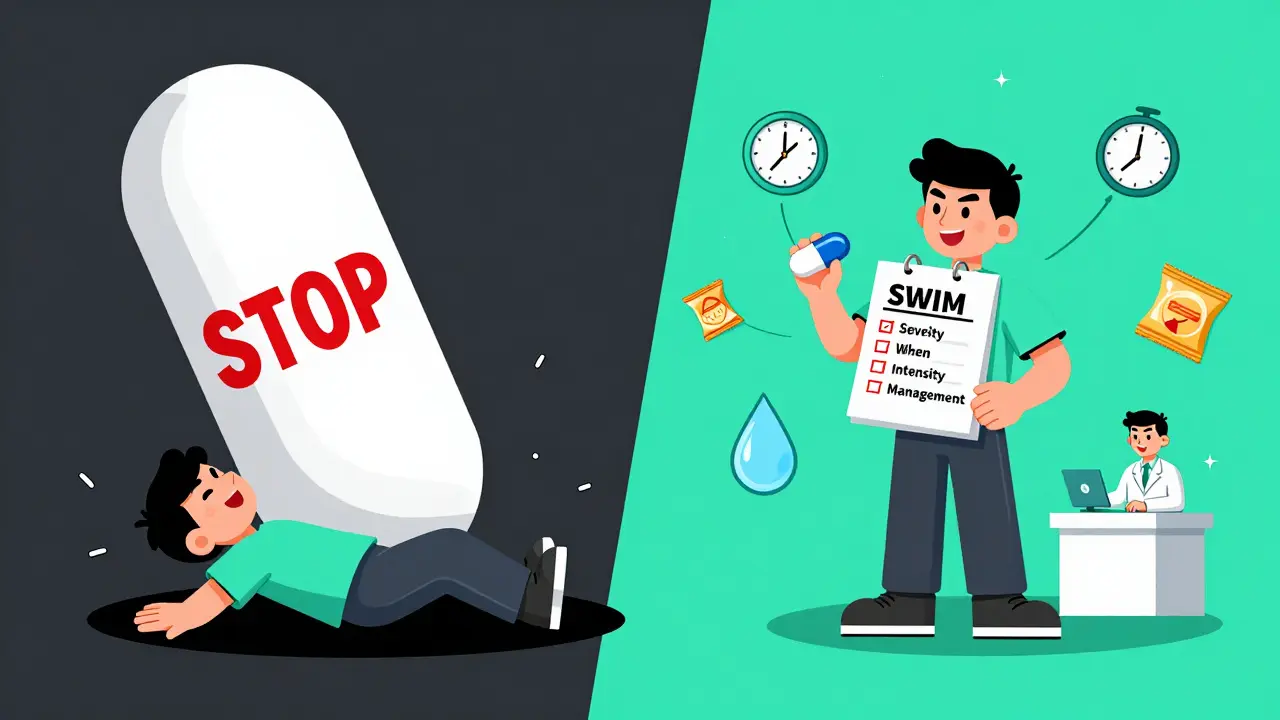
Don’t Let Fear Make the Decision for You
A lot of people stop their meds because they think their doctor won’t care. That’s a myth. A 2021 Mayo Clinic study found that 61% of patients who quit without talking to anyone did so because they assumed their provider wouldn’t listen. But here’s the truth: doctors want you to stay on your meds. They know how dangerous it is to stop suddenly - especially for things like high blood pressure, diabetes, or mental health meds. Your doctor isn’t trying to force you to suffer. They’re trying to help you get better. If you come to them with a clear log, specific questions, and a willingness to try small fixes, they’ll work with you. In fact, Kaiser Permanente’s pharmacist-led program reduced medication discontinuation due to side effects by 22% - simply by training staff to listen and adjust, not to push.When Is It Time to Consider Stopping?
There are times when stopping is the right move - but only if it’s planned. You should talk to your doctor immediately if you experience:- Severe rash, swelling, or trouble breathing (signs of an allergic reaction)
- Thoughts of self-harm or extreme mood swings (especially with antidepressants or steroids)
- Unexplained bruising, bleeding, or jaundice
- Severe chest pain or irregular heartbeat
You’re Not Broken - You’re Human
Feeling side effects doesn’t mean you’re weak, stubborn, or doing something wrong. It means your body is responding to a chemical change. That’s normal. Millions of people go through this every year. The difference between those who keep taking their meds and those who don’t isn’t willpower - it’s communication. The goal isn’t to suffer through side effects. The goal is to find a way to take your medicine that works for your life. That might mean changing the time, adding a snack, lowering the dose, or switching to a different version of the same drug. But none of that happens if you just stop. Start today. Write down one side effect you’ve been ignoring. Note when it happens and how bad it is. Bring it to your next appointment. You’ve already done the hard part - you’re taking your medicine. Now let your doctor help you make it easier.What if my side effects don’t go away after two weeks?
If side effects persist beyond two weeks, it’s time to revisit your treatment plan. Some side effects last longer, especially with certain medications like antidepressants or blood pressure drugs. Your doctor may adjust your dose, switch you to a similar but different medication, or add a secondary treatment to manage the symptom - like an anti-nausea pill. Don’t wait until it gets worse. Schedule a follow-up and bring your symptom log.
Can I lower my dose on my own if the side effects are too strong?
Never change your dose without talking to your doctor. Some medications, like blood thinners or seizure drugs, have very narrow safety ranges. Taking less could make the treatment ineffective, or even dangerous. Other meds, like statins or antidepressants, can be safely adjusted - but only under medical supervision. Always ask your doctor if lowering the dose is an option before doing it yourself.
Why do some side effects get worse before they get better?
Your body is adjusting to a new chemical balance. For example, antidepressants increase serotonin levels, which can initially cause anxiety or nausea before the brain adapts. Blood pressure meds may cause dizziness as your vessels slowly relax. These aren’t signs the drug is harmful - they’re signs it’s working. Most of the time, these symptoms improve within 7 to 14 days. Tracking them helps you see the trend, not just the worst day.
Are there apps that can help me track side effects?
Yes. Several FDA-authorized apps like Medisafe, MyTherapy, and Dosecast let you log side effects, set reminders, and generate reports to share with your doctor. Studies show patients using these tools have 18% higher adherence rates. Look for apps that let you rate severity, add notes, and export data. Even a simple Google Sheets or Notes app works if you’re consistent.
What if my doctor dismisses my concerns?
If your doctor ignores your symptoms or makes you feel like you’re overreacting, it’s time to find someone else. Good providers listen. They know side effects are a major reason people stop taking meds - and they’re trained to help. You have the right to be heard. Bring your symptom log, cite research if needed (like the 2021 PMC study showing reframing side effects reduces anxiety), and ask for a referral to a pharmacist or specialist if needed. Your health matters too much to settle for silence.
christian Espinola
January 18, 2026 AT 08:21Let me guess - you’re one of those people who thinks pharmaceutical companies are just trying to ‘help’ you. Newsflash: they’re selling you a product. Side effects aren’t ‘adjustments’ - they’re warnings your body is being poisoned. The ‘SWIM framework’? That’s just corporate jargon to make you feel like you’re in control while they keep raking in billions.
68% of side effects fade? Where’s your peer-reviewed source? I’ve seen people on SSRIs develop suicidal ideation ‘as their body adjusts.’ That’s not adjustment - that’s a chemical assault. And don’t get me started on CoQ10. It’s a supplement. Not medicine. Don’t let Big Pharma gaslight you into thinking nausea is normal.
Stop taking your meds. Go holistic. Eat turmeric. Sleep in a pyramid. Your body doesn’t need synthetic chemicals to function. It needs freedom.
And yes, I’ve been off antidepressants for 7 years. I’m happier. And no, I don’t need a ‘log.’ I need a revolution.
Chuck Dickson
January 19, 2026 AT 07:10Hey - I get it. Side effects suck. I was on blood pressure meds for 6 months and felt like a zombie. But I didn’t quit. I tracked everything - time, food, mood, even how many steps I took.
Turned out? Taking it with a handful of almonds cut the dizziness by 80%. My doctor adjusted my dose. Now I feel like myself again.
You’re not broken. You’re just not talking to your doctor like a teammate. This post? Gold. Do the log. Try the snack. Ask the questions. You’ve got this.
Dayanara Villafuerte
January 20, 2026 AT 11:28OMG YES 🙌 I was on Lexapro and felt like a wet sock in a microwave for 10 days. I almost quit. Then I started tracking - and realized I was taking it at 7 AM on an empty stomach. Switched to 9 PM with a banana. Boom. No more nausea. No more panic. Just me, my cat, and my sanity.
PS: Use MyTherapy app. It auto-sends reports to your doc. They’ll think you’re a genius. You are. 💪💊
Andrew Qu
January 21, 2026 AT 06:24I’ve been a pharmacist for 18 years. I’ve seen hundreds of patients quit meds because they thought side effects = failure. But here’s the truth: most side effects are temporary, manageable, and not life-threatening.
That ‘weird feeling’? Could be your body relearning how to regulate serotonin.
The dizziness? Could be your blood vessels finally relaxing after years of tension.
Don’t panic. Don’t quit. Just document. Talk. Adjust. You’re not alone - and you’re not weak. You’re doing the hard work. That’s courage.
Jake Moore
January 22, 2026 AT 18:54Best advice I ever got: ‘Don’t quit because it hurts - quit because it doesn’t help.’
I was on statins. Muscle pain? Yes. But my cholesterol dropped 40%. I switched from morning to night. Added magnesium. Problem solved.
Side effects aren’t the enemy. Silence is. Talk to your doc. Bring the log. They’re trained to help - not judge.
Max Sinclair
January 24, 2026 AT 04:04I appreciate the tone here. So many posts about meds feel like they’re yelling at you. This one? Feels like a friend sitting across the table with coffee, saying, ‘Hey, I’ve been there. Let’s figure this out.’
Especially the part about asking questions before you start. I wish I’d done that. Now I ask: ‘What’s the plan B?’ before signing any script.
Also - yes, apps help. I use Medisafe. It’s dumb-simple. And it reminds me to take my pills. Which, honestly? I need.
Praseetha Pn
January 24, 2026 AT 07:46Oh wow, so now we’re supposed to trust Big Pharma’s ‘SWIM framework’? LMAO. You think they care if you live or die? They want you addicted to their pills. That’s why they don’t tell you about the 12-year studies showing 30% of patients develop permanent liver damage from statins.
And ‘track your symptoms’? That’s just a distraction. What you really need is a detox tea, a chiropractor who talks to spirits, and to stop eating gluten. I know - I’ve cured three people this way.
Also, CoQ10? That’s a scam. The real fix is drinking alkaline water from a crystal-infused bottle. I sell them on Etsy. DM me.
Nishant Sonuley
January 24, 2026 AT 07:56Look, I get where you’re coming from - I’ve been on antidepressants for 11 years, and yeah, the first month was hell. I thought I was dying. Turns out, I was just adjusting. But here’s the thing - if you’re going to track side effects, you’ve got to be brutally honest. Not ‘I felt weird’ - but ‘I cried uncontrollably at 3 AM after taking it with oat milk and felt like I was being watched by my dead grandmother.’
That’s the kind of detail that makes your doctor pause, look up from their screen, and actually say, ‘Holy crap, let’s fix this.’
Also - yes, I’ve used the SWIM framework. It works. I even made a spreadsheet. It’s got charts. I’ll send it to you if you want. No charge. I just like helping people not kill themselves.
Emma #########
January 26, 2026 AT 07:11I started taking my meds again after 3 months off. I was so ashamed. Felt like I’d failed. But I brought my log. Wrote down every dizzy spell, every nausea wave. My doctor didn’t judge. She said, ‘You’re doing everything right.’
It’s not about being strong. It’s about being smart. And you’re already smarter than you think.
Andrew McLarren
January 26, 2026 AT 22:10While I appreciate the pragmatic orientation of the foregoing exposition, I must respectfully submit that the implicit assumption of physician benevolence may be empirically unsound in certain socioeconomic contexts. The institutional incentives governing pharmaceutical prescribing practices often prioritize adherence metrics over individualized care, thereby rendering the SWIM framework a potentially epistemologically inadequate heuristic in the face of systemic disempowerment.
Furthermore, the reliance on digital tracking applications introduces a data-privacy vulnerability that, while statistically negligible, remains ethically non-trivial in the context of HIPAA’s evolving interpretive boundaries.
Thus, while the recommendations are not without merit, they presuppose a healthcare infrastructure that may not exist for a significant proportion of the population.
Andrew Short
January 27, 2026 AT 21:22Wow. Just... wow. You’re telling people to stick with drugs that make them feel like garbage because ‘it’s temporary’? That’s not medicine - that’s abuse. Your ‘SWIM framework’ is just a fancy way to gaslight patients into suffering.
I’ve seen people on antipsychotics develop tardive dyskinesia - permanent, irreversible facial tics - because they were told to ‘give it time.’
You’re not helping. You’re enabling. And if you’re really ‘helping,’ why don’t you tell people about the 2018 JAMA study showing that 58% of side effects are underreported because doctors don’t ask?
Stop pushing pills. Start listening.
Danny Gray
January 29, 2026 AT 10:31What if the real side effect is the belief that you need a pill to be well?
We’ve been conditioned to think our bodies are broken machines that need corporate chemicals to ‘function.’ But what if the side effects aren’t the problem - what if the entire premise is?
You’re not ‘adjusting’ to a drug. You’re adapting to a system that tells you your natural state is inadequate.
What if the real solution isn’t tracking nausea - but questioning why you were prescribed it in the first place?
I’m not saying quit. I’m saying wake up.
Tyler Myers
January 31, 2026 AT 07:00They say 68% of side effects fade? That’s a lie. I took Zoloft. Nausea for 3 weeks. Then I started seeing spiders crawling on my walls. I didn’t quit - I went to the ER. Turns out, SSRIs can trigger psychosis in 1 in 500 people. They didn’t warn me. They just said ‘it’s adjustment.’
Now I’m on a gluten-free, sugar-free, no-pill lifestyle. I’m 200% better. And no, I don’t need a log. I need a truth serum.
Also - CoQ10 is a scam. The real fix is eating raw kale and chanting. I’ve got a YouTube channel. Subscribe.
rachel bellet
January 31, 2026 AT 11:35Per the 2021 PMC study referenced, the framing effect significantly reduces patient anxiety regarding adverse events - however, this is a cognitive bias, not a clinical solution. The SWIM framework is a behavioral nudge designed to increase medication adherence, not to mitigate pharmacological toxicity.
Furthermore, the reliance on self-reported symptom severity (1–10 scale) introduces significant measurement error, as validated by the 2019 NEJM validation study on subjective pain scales in chronic disease populations.
Bottom line: This is not a medical guide - it’s a compliance playbook. Proceed with epistemic caution.