 Feb, 1 2026
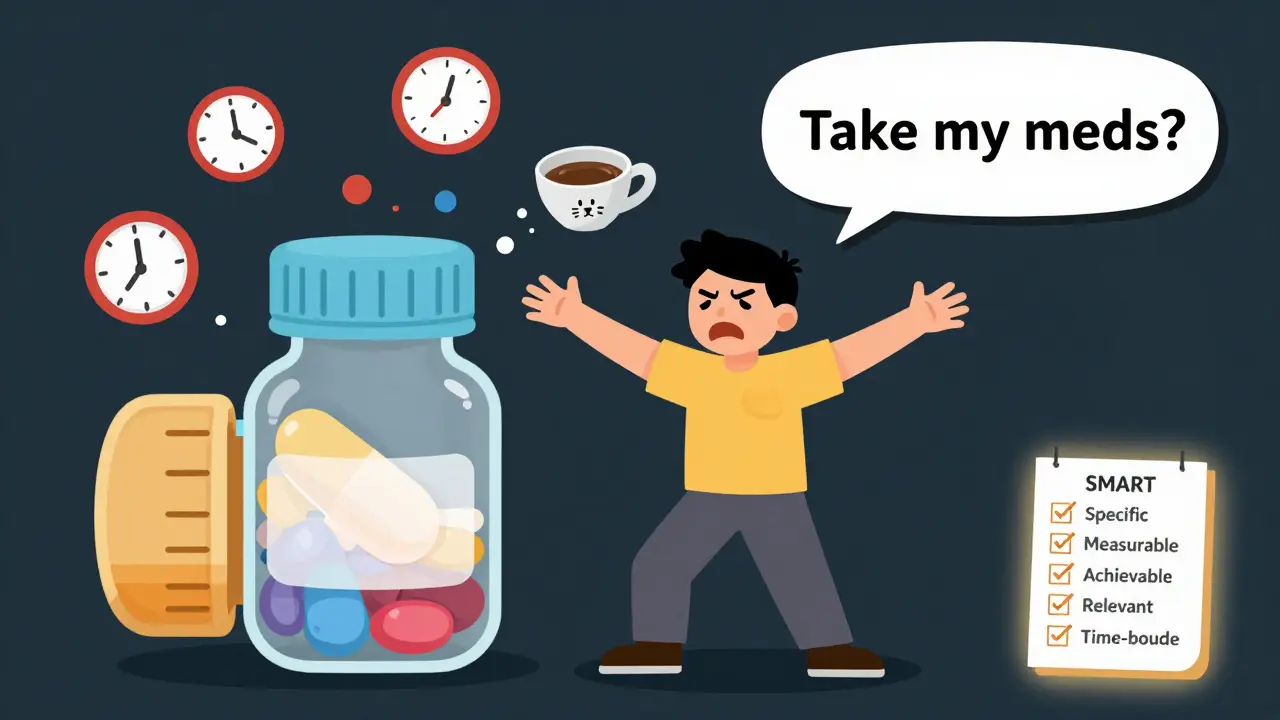
Why Most Medication Plans Fail - And How to Fix Them
You’ve been told to take your blood pressure pill every morning. Your diabetes script says two tablets at night. Your inhaler? Use it twice daily. But how many times have you missed a dose - not because you forgot, but because it felt impossible to keep up?
It’s not laziness. It’s not lack of willpower. It’s that most treatment plans are too vague to follow. "Take your meds" isn’t a plan. It’s a wish. And wishes don’t work when you’re juggling work, kids, transportation issues, or just plain exhaustion.
The good news? There’s a proven way to turn vague instructions into real, trackable progress - using goals that actually fit your life. This isn’t theory. It’s what works in clinics from Boston to Birmingham, backed by data from thousands of patients. And it’s simpler than you think.
What SMART Goals Really Mean for Medication Adherence
SMART isn’t just a buzzword. It’s a framework doctors and pharmacists use to turn vague advice into action. Here’s what each letter means - in plain language:
- Specific: Not "take my pills," but "take my metformin with breakfast every day at 8 a.m. in the kitchen."
- Measurable: Can you count it? Track it? If you can’t measure it, you can’t improve it. That means counting pills left, checking app logs, or using a smart bottle that beeps when opened.
- Achievable: If you work two shifts and don’t get home until 10 p.m., setting a goal to take your pill at 7 a.m. won’t stick. Adjust the time. Make it real.
- Relevant: Why does this matter to YOU? Not because your doctor said so. Because you want to feel less tired. Avoid the ER. Play with your grandkids without getting out of breath.
- Time-bound: Not "try to do better." But "I’ll take all my doses for the next 14 days without missing one. Then we’ll check in."
A 2023 study from Vozo Health found patients using SMART goals improved adherence by 35% compared to those just given written instructions. That’s not small. That’s life-changing.
Start by Asking: What’s Getting in the Way?
Before you even set a goal, stop and ask: What’s making this hard?
Is it cost? Maybe you skip doses because the co-pay is $40 and you’re choosing between meds and groceries. Is it confusion? You have five different pills with similar names and no clear schedule. Is it memory? You forget because you’re not home at the same time every day. Is it side effects? You stopped taking your statin because it gave you muscle pain - and no one asked you why you quit.
This is where the B-SMART model adds something critical: Barriers. Before you set a goal, name the obstacle. Write it down. Say it out loud.
Example: "I can’t take my insulin at night because I’m too tired after working late. I often forget until 1 a.m. - then I feel guilty and skip it."
Now you have a real problem to solve - not just a goal to chase.
How to Track Progress Without Feeling Watched
Tracking doesn’t mean wearing a badge that says "I’m being monitored." It means finding simple, quiet ways to see your progress - so you can feel proud, not pressured.
Here are three ways that actually work:
- Smart pill bottles: These aren’t sci-fi. Devices like AdhereTech or Hero send a gentle text if you haven’t opened your bottle by noon. They don’t shame you. They just remind you - and your provider gets a report if you’re struggling.
- Pharmacy refill records: Your pharmacy tracks when you refill your scripts. If you’re refilling your blood pressure med every 28 days instead of 30, you’re likely missing doses. That’s data - not judgment.
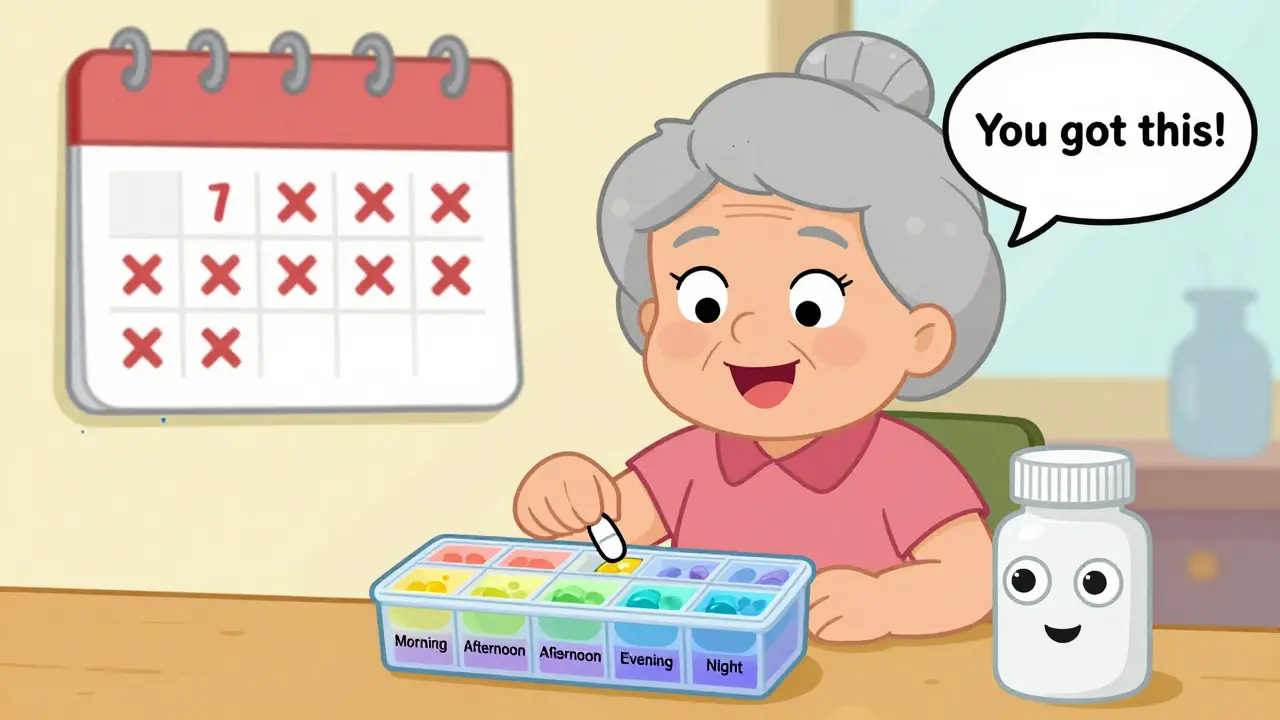
- Simple paper or app log: A calendar with X’s for taken doses works better than you think. Or use a free app like Medisafe. It sends alarms, tracks refills, and even lets you add notes: "Took pill, but felt dizzy - will tell doctor next visit."
Studies show digital tracking cuts overreporting of adherence from 40% down to under 12%. That means you’re not fooling anyone - least of all yourself.
Make It Stick: Small Wins, Not Perfect Days
Don’t aim for 100%. Aim for 70%. Then 80%. Then 90%.
One patient I know, a 68-year-old with heart failure, set a goal: "Take my diuretic every morning for 7 days." She missed two. Instead of quitting, she said: "Okay, I got five out of seven. That’s better than last month’s two out of seven." Her doctor didn’t scold her. They celebrated the five. Then they adjusted the goal: "What if you take it after your morning coffee?" That became the new anchor.
That’s the secret. Progress isn’t about perfection. It’s about momentum. Celebrate the streaks. Even a 3-day streak is a win.
One diabetes educator told me about a sticker chart - yes, a sticker chart - for a woman trying to lose 20 pounds. Every time she weighed in, she got a sticker. After five weigh-ins, she got a new pair of walking shoes. Her weekly weigh-ins jumped from twice to five times. Why? Because she felt seen. Not monitored. Seen.
What to Do When You Hit a Wall
It’s going to happen. You’ll miss a week. You’ll travel. You’ll get sick. You’ll forget.
Here’s how to handle it without guilt:
- Don’t restart from zero. Say: "I missed three days. What changed?" Was it stress? A new schedule? A side effect?
- Adjust the goal, don’t abandon it. Can you switch from morning to evening? Can you use a pill organizer with days of the week? Can you ask a family member to text you a reminder?
- Talk to your provider - but don’t wait for your next appointment. Call your pharmacist. Send a message through your portal. Say: "I’m trying to stick to my goal, but I need help. Can we tweak it?"
Providers who use SMART goals know setbacks are normal. They’re not there to punish you. They’re there to help you redesign the plan.
What Works Best - And What Doesn’t
Not every tool fits every person.
For younger patients with smartphones: Apps like Medisafe, MyTherapy, or ThoroughCare’s dashboard work great. They sync with wearables, send alerts, and show weekly progress charts.
For older adults or those uncomfortable with tech: A simple pill box with alarms, a printed calendar, or a weekly call from a community health worker beats any app.
For asthma or COPD: Smart inhalers like Propeller Health track every puff and send feedback to your phone. Studies show users take 27% more doses than those using regular inhalers.
For diabetes: Injections pens like NovoPen Echo record every dose. Your doctor can see if you’re skipping before your HbA1c climbs.
What doesn’t work? Asking you to remember. Relying on your word alone. Assuming you’ll read the leaflet. Telling you to "just be more disciplined." That’s not a plan. That’s a burden.

What’s Changing in 2026 - And What It Means for You
By 2026, every major electronic health record - Epic, Cerner, Allscripts - will be required to include standardized fields for adherence goals. That means your SMART goals won’t just be scribbled in a note. They’ll be part of your official record. Your provider will see your progress in real time.
And it’s not just tech. Insurance companies are now tied to your adherence. If you’re on Medicare Advantage and have diabetes, your plan gets paid more if you hit your HbA1c target - and that target depends on you taking your meds.
That’s not punishment. It’s alignment. The system is finally starting to reward consistency - not just crisis care.
AI is also stepping in. Tools now predict, 14 days in advance, if you’re likely to miss a dose - based on your past behavior, weather, even your refill patterns. That doesn’t mean someone’s spying. It means someone’s preparing to help you before you slip.
Your Next Step - Right Now
You don’t need a fancy app. You don’t need a perfect schedule. You just need one small, clear goal.
Take five minutes today. Grab a pen. Answer these:
- What’s one medication you’re struggling with?
- What’s one barrier keeping you from taking it? (Cost? Timing? Side effects?)
- What’s one tiny change that could make it easier? (Take it after brushing your teeth? Put it next to your keys? Ask your partner to remind you?)
- How will you track it? (Pill box? Calendar? App?)
- What’s your first checkpoint? (End of this week? In 10 days?)
Write it down. Keep it where you’ll see it. And when you hit that first checkpoint - no matter how small - celebrate it. You’re not just taking pills. You’re taking back control.
Frequently Asked Questions
What if I can’t afford my medication?
Cost is one of the biggest barriers to adherence. Talk to your pharmacist - they often know about patient assistance programs, coupons, or generic alternatives. Some drugmakers offer free or low-cost meds for people with low income. Don’t skip doses to save money - that can cost you more in hospital visits later. Your provider can also help you apply for programs like Medicare Part D Extra Help or state pharmaceutical assistance.
Can I use a pill organizer if I take different doses at different times?
Yes - but make sure it’s the right kind. A simple 7-day box won’t work if you take different pills at breakfast, lunch, and bedtime. Look for a multi-compartment organizer with time slots (morning, afternoon, evening, night). Some even have alarms. Pharmacies sell these, or you can get them free through some Medicare Advantage plans.
Why does my doctor care if I miss a dose?
Missing doses doesn’t just affect you - it affects your health outcomes. For example, skipping blood pressure meds can spike your risk of stroke. Skipping insulin can lead to diabetic emergencies. Providers track adherence because it’s linked to fewer hospital stays, lower costs, and longer life. It’s not about control - it’s about keeping you out of the ER.
I use an app, but I still forget. What else can I do?
Apps help, but they’re not magic. Pair them with real-world cues. Take your pill right after you brush your teeth. Put your pill bottle next to your coffee maker. Ask someone in your house to say, "Did you take your meds?" before you leave for work. Habits stick when they’re tied to routines you already do.
Is it okay to skip a dose if I feel fine?
No. Many chronic meds - like those for blood pressure, cholesterol, or thyroid - work behind the scenes. You won’t feel symptoms if you miss a dose, but damage is still happening. Skipping doses can cause your condition to worsen over time, even if you feel okay today. Always check with your provider before skipping - never assume you don’t need it.
How long does it take to build a habit of taking meds?
It varies, but research shows most people start to feel it’s automatic after 3 to 4 weeks of consistent use. That’s why SMART goals often use 14- to 21-day checkpoints. Don’t judge yourself on day 3. Judge yourself on day 21. If you’ve taken your pill 18 out of 21 days? That’s progress. That’s success.
What to Do Next
If you’re managing a chronic condition, start today. Pick one medication. Set one SMART goal. Track it for 14 days. Then talk to your provider - not to be judged, but to adjust, celebrate, or redesign. You’re not just following orders. You’re leading your own care. And that’s the most powerful medicine of all.
phara don
February 2, 2026 AT 00:29larry keenan
February 3, 2026 AT 17:06Brett MacDonald
February 4, 2026 AT 15:33clarissa sulio
February 5, 2026 AT 18:00Vatsal Srivastava
February 6, 2026 AT 07:19Ansley Mayson
February 7, 2026 AT 18:33Dan Pearson
February 8, 2026 AT 15:26Marc Durocher
February 10, 2026 AT 07:20Nick Flake
February 10, 2026 AT 22:33Akhona Myeki
February 11, 2026 AT 07:21Chinmoy Kumar
February 12, 2026 AT 21:07Bridget Molokomme
February 14, 2026 AT 10:13