 Jan, 11 2026
SGLT2 Infection Prevention Tracker
Track your daily habits to reduce your risk of genital infections while taking SGLT2 inhibitors. The more consistent you are with hygiene, hydration, and timing, the lower your risk. Studies show that consistent habits can reduce your risk by more than 40%.
Hygiene
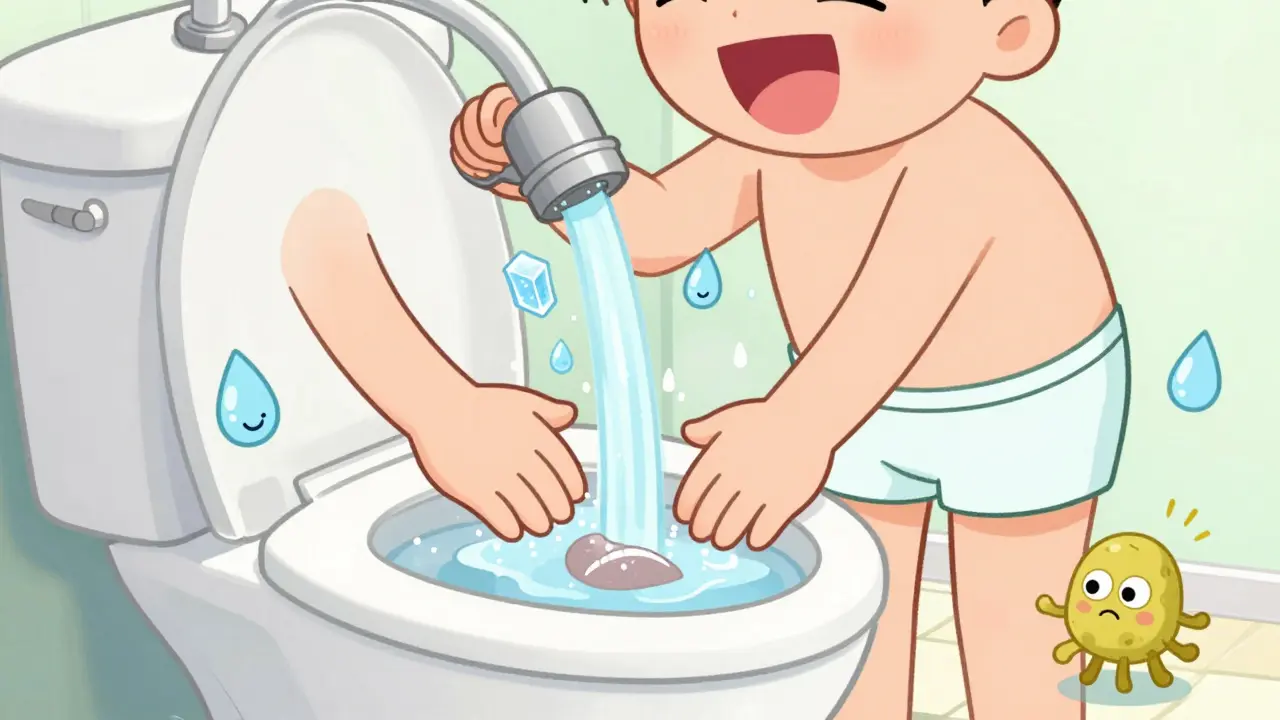
After every urine, rinse your genital area with clean water. For women: wipe front to back. For men: if uncircumcised, rinse carefully under the foreskin. Dry thoroughly.
Hydration
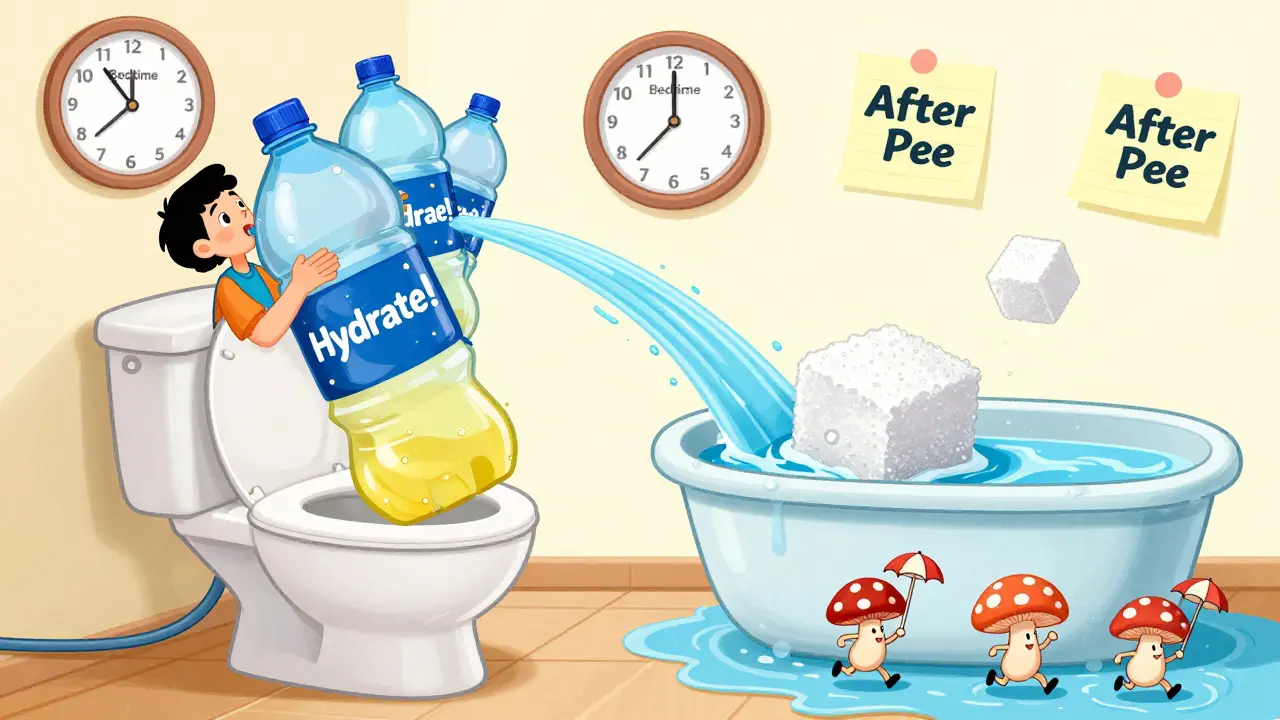
Drink 2-3 liters (8-12 cups) of water daily. Aim for pale straw-colored urine. Start your day with water, and keep a bottle at your desk.
Timing
Rinse immediately after peeing. Rinse before bed. Link this to existing habits like washing hands or brushing teeth.
When you start taking an SGLT2 inhibitor like Farxiga, Jardiance, or Invokana for type 2 diabetes, you’re getting a powerful tool. These drugs lower blood sugar by making your kidneys flush out extra glucose through urine. That’s great for your heart, kidneys, and weight. But there’s a downside: that same glucose in your urine feeds fungi, especially Candida, and increases your risk of genital infections. About 1 in 8 women and 1 in 20 men on these drugs get them. The good news? You can cut that risk by more than half - and it doesn’t require pills or fancy tools. Just three simple habits: hygiene, hydration, and timing.
Why SGLT2 Inhibitors Cause Genital Infections
SGLT2 inhibitors work by blocking glucose reabsorption in the kidneys. Instead of being pulled back into the bloodstream, sugar leaves your body through urine. That’s how they lower blood sugar. But that sugar doesn’t just vanish. It stays in your urine, creating a sweet, warm, moist environment right where your genitals are. Fungi like Candida thrive there. It’s not about being dirty - it’s about biology. Even people with perfect hygiene can get these infections because the sugar is coming from inside their own body.Studies show the risk is real. Women taking canagliflozin (Invokana) have up to a 12% chance of getting a genital yeast infection. For dapagliflozin (Farxiga) and empagliflozin (Jardiance), it’s around 8-10%. Men face lower but still significant risks - 2-5% compared to under 2% on other diabetes meds. These aren’t rare side effects. They’re common enough that the FDA issued warnings in 2018 and again in 2019 about a rare but deadly condition called Fournier’s gangrene, which started in the genital area and spread fast in a dozen cases between 2013 and 2018.
But here’s what most patients don’t know: 90% of these infections are mild. They look like itching, redness, or a thick white discharge. They respond quickly to over-the-counter antifungal creams or a short course of oral fluconazole. Most clear up in 3-5 days. The problem isn’t the infection itself - it’s the cycle. If you don’t change your habits, it comes back. And when it does, some people stop taking their SGLT2 inhibitor. A 2021 study found 15% of patients quit because of recurring infections. That’s a huge loss. These drugs cut heart failure hospitalizations by nearly 40% and slow kidney disease by 30%. You don’t want to give that up.
Hygiene: The Most Effective Prevention Tool
The single most effective way to prevent these infections is simple: rinse your genital area with clean water after you pee and before you go to bed. No soap. No wipes. Just water.Why water? Soap can irritate the skin and strip away natural protective barriers. Alcohol-based cleaners? They make it worse. Water rinses away the sugar without disturbing your skin’s balance. A 2019 study in Diabetes Journals showed that patients who rinsed after every void and before bed cut their infection rate by 40% over six months. Those who stuck to it 100% had zero infections over 18 months.
For women: Always wipe front to back after using the toilet. Never go from back to front - that’s how bacteria from your rectum get to your urethra and vagina. After peeing, splash water over the area. Pat dry with a clean towel. Don’t rub. Moisture is the enemy.
For men, especially if uncircumcised: Gently pull back the foreskin before rinsing. Wash underneath with water. Don’t force it. Then rinse the outside too. Dry carefully. Fungi love hiding under skin folds.
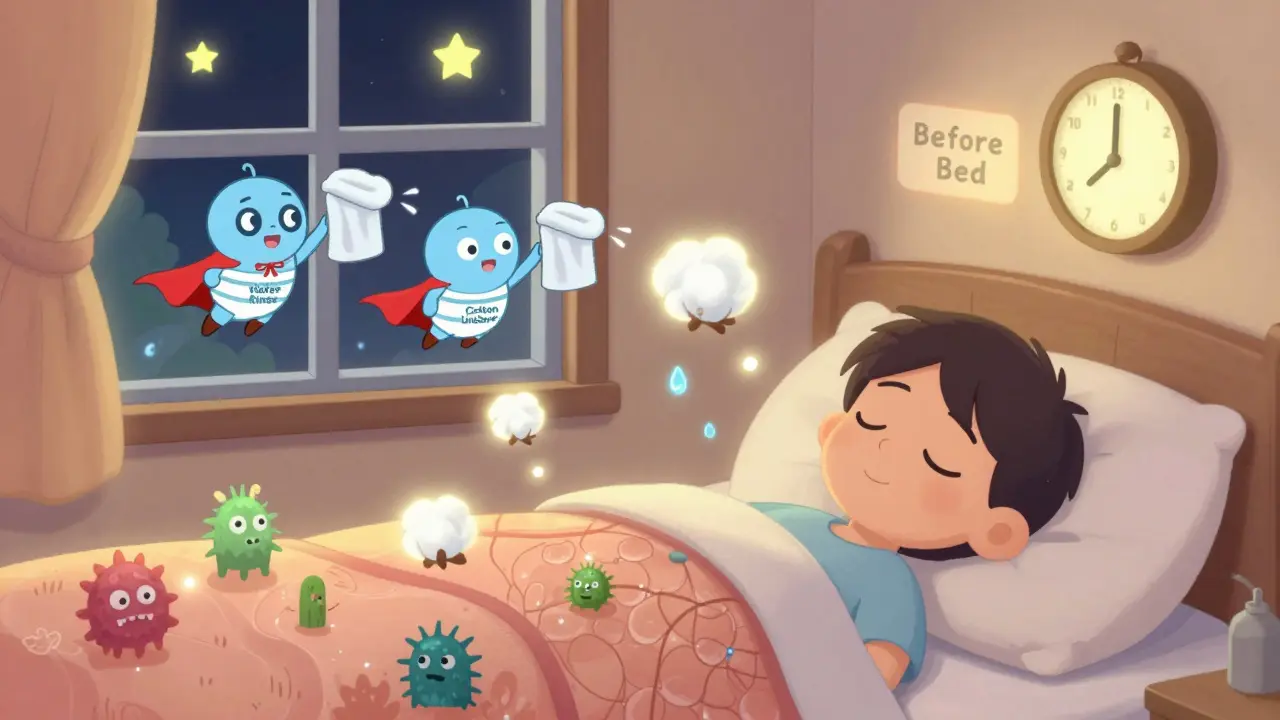
Wear cotton underwear. Not polyester. Not nylon. Cotton lets air move. It wicks moisture away. Tight jeans, leggings, or thongs? Avoid them. They trap heat and sweat. Even a change of underwear midday can help if you’ve been active or sweating.
Hydration: Dilute the Sugar, Reduce the Risk
Drinking enough water isn’t just good for your kidneys - it’s your secret weapon against fungal growth.The more water you drink, the more your urine gets diluted. That means less sugar per drop. Less sugar means less food for Candida. It’s not rocket science. Aim for 2 to 3 liters a day. That’s about 8-12 cups. Don’t wait until you’re thirsty. Thirst means you’re already slightly dehydrated.
Start your day with a glass of water. Keep a bottle at your desk. Drink one before each meal. If you’re active, in hot weather, or sweating, drink more. If your pee is dark yellow, you’re not drinking enough. Pale straw color? You’re on track.
Some people worry that drinking more water means peeing more - and more peeing means more sugar exposure. But the math works in your favor. More urine volume = lower glucose concentration. You’re flushing out the same amount of sugar, but spread thinner. Think of it like pouring a spoonful of sugar into a teacup versus a bathtub. One is sticky. The other? Not so much.
Timing: When You Clean Matters More Than How Often
It’s not just about cleaning - it’s about when you clean.The biggest risk window is right after you urinate. That’s when the highest concentration of glucose hits your skin. Waiting even 30 minutes means the sugar has already started feeding fungi. That’s why rinsing immediately after peeing is so powerful.
Bedtime is the second most important time. Overnight, your body slows down. Sweat builds up. Moisture lingers. If you go to sleep with sugar on your skin, you’re giving fungi 8 hours to grow. A quick rinse before bed cuts that window in half.
Try linking hygiene to habits you already have. For example: after you wash your hands after using the bathroom, splash water on your genitals. Or do it right after brushing your teeth at night. If you’re using a phone reminder, set two: one for “After Pee” and one for “Before Bed.” A 2022 study in Diabetes Care found that patients who got written instructions and two follow-up reminders (at 2 and 4 weeks after starting the drug) were 45% more likely to stick with the routine.
For older adults or those with mobility issues, this can be harder. If you can’t reach or bend easily, ask a partner, caregiver, or occupational therapist for help. One study showed that with proper coaching, technique accuracy improved by 75% in seniors. Don’t skip this step because it feels awkward. The risk of a recurring infection is far worse than a little discomfort.
What Doesn’t Work - And What to Avoid
Don’t use douches, feminine sprays, scented wipes, or antibacterial soaps. They disrupt your natural flora and can make infections worse. You don’t need to sterilize - you need to rinse.Don’t assume you’re safe just because you haven’t had an infection yet. Risk builds over time. The longer you’re on the drug, the more chances you have to develop one. That’s why prevention isn’t a one-time talk - it’s a daily habit.
Also, don’t stop your medication because you’re scared. The benefits - lower heart failure risk, slower kidney damage, weight loss - are too important. In real-world use, 87% of patients stay on SGLT2 inhibitors after one year, even with infection risks, because they’re managed properly.
When to Call Your Doctor
Most infections are mild. But watch for signs that it’s getting serious:- Severe pain or swelling in the genital area
- Fever or chills
- Red streaks spreading from the area
- Dark, foul-smelling discharge
- Difficulty urinating or feeling like something’s tearing
If you see any of these, go to urgent care or the ER immediately. Fournier’s gangrene is rare - only about 2 in 10,000 people on these drugs get it - but it kills fast. Early treatment saves lives.
For regular infections, your doctor can prescribe fluconazole or recommend an antifungal cream. Don’t wait to treat it. The sooner you start, the faster it clears - usually in 3 days.
The Bigger Picture: Why This Matters
SGLT2 inhibitors are changing how we treat type 2 diabetes. They’re no longer just a backup option. The American Diabetes Association now recommends them as first-line therapy for people with heart disease, kidney disease, or heart failure. That’s because they do more than lower sugar - they protect organs.Over 15 million Americans are on these drugs. Global sales hit $11.2 billion in 2022. They’re here to stay. But their success depends on you - not just taking the pill, but protecting yourself from the side effects.
Hygiene, hydration, timing - these aren’t optional extras. They’re part of your treatment plan. Just like checking your blood sugar or taking your meds, this is how you stay healthy. You don’t need to be perfect. You just need to be consistent.
One rinse after you pee. One rinse before bed. One glass of water every hour. That’s it. That’s how you keep your life on track - and your SGLT2 inhibitor working for you, not against you.
Ben Kono
January 12, 2026 AT 08:34just rinse after you pee and before bed really that's it i mean i was worried about all these fancy creams and shit but water works better than anything i've tried
Konika Choudhury
January 13, 2026 AT 14:14in india we've been doing this for centuries with water after bathroom no need for wipes or soap or whatever western junk they sell you
Darryl Perry
January 13, 2026 AT 21:17Hydration is critical. Drinking 2-3 liters daily is not optional if you're on an SGLT2 inhibitor. Dehydration increases concentration of glucose in urine. Basic physiology. If you can't manage this you shouldn't be on the drug.
Windie Wilson
January 14, 2026 AT 04:42So let me get this straight… I have to rinse my junk like it’s a salad bowl just so my diabetes meds don’t turn my crotch into a yeast spa? And I thought my morning coffee was a ritual.
Daniel Pate
January 15, 2026 AT 12:03It’s fascinating how such a simple biological mechanism-glucose excretion-creates such a specific vulnerability. The body’s trade-offs are elegant but brutal. We optimize for metabolic control and inadvertently create a perfect fungal incubator. It’s not negligence. It’s evolutionary mismatch. We didn’t evolve to excrete 100g of sugar daily through our urethra.
Amanda Eichstaedt
January 15, 2026 AT 18:24I’ve been on Farxiga for a year and this is the first time I’ve heard someone actually explain why water works better than anything else. I used to think I was just being lazy by not using wipes. Turns out I was doing it right all along-just not consistently. Now I have a water bottle next to the toilet. No more infections. Thank you.
Jose Mecanico
January 17, 2026 AT 11:45I’ve been following this advice since my doctor told me. Just water. No soap. Cotton underwear. It’s worked. No drama. Just quiet consistency.
Alex Fortwengler
January 18, 2026 AT 17:50Big Pharma doesn’t want you to know this because water doesn’t come in a bottle with a patent. They’d rather sell you antifungal creams and expensive tests. This is why you’re sick-because they profit off your suffering. Water is free. That’s why they won’t tell you.
jordan shiyangeni
January 20, 2026 AT 07:31Let me be perfectly clear: if you’re not rinsing with purified, lukewarm water immediately after every urination and before bed, you are not practicing medical hygiene-you’re gambling with your health. And don’t even get me started on the fact that 15% of patients quit their life-saving medication because they’re too lazy to rinse their genitals. This isn’t about comfort. This is about biological responsibility. You have a duty to your own body, and if you’re not doing this, you’re not just neglecting yourself-you’re endangering your family, your healthcare system, and the integrity of modern endocrinology.
Abner San Diego
January 22, 2026 AT 01:23Yeah right. Water. Like that’s gonna stop the corporate greed behind these drugs. I’ve been on Invokana for 2 years. Got two infections. Went to the ER. They gave me a script and told me to drink water. Meanwhile, the company made $3 billion last quarter. Who’s really getting screwed here? And don’t tell me it’s ‘just hygiene.’ I work two jobs. I don’t have time to rinse my dick like I’m in a spa. This system is rigged.