 Jan, 3 2026
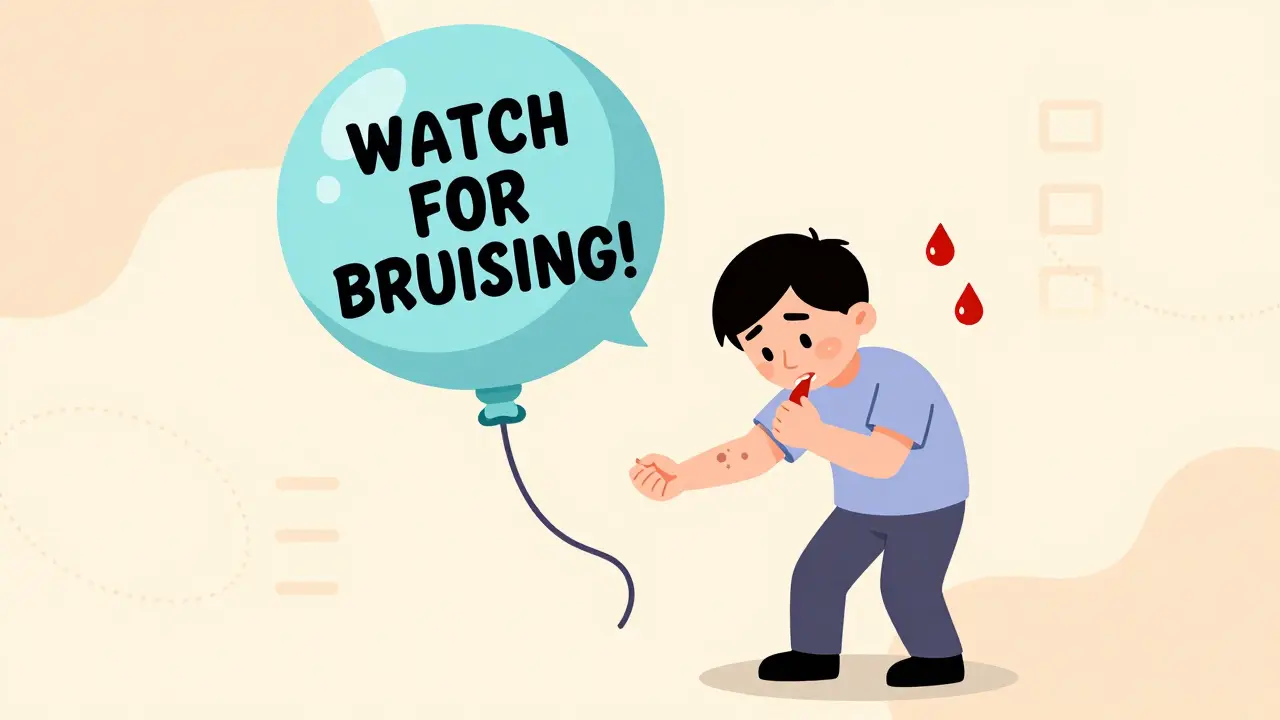
When you get a safety communication about a medication, medical device, or public health risk, it’s not enough to just read it and forget it. You need to act. Monitoring your symptoms isn’t optional-it’s how you protect yourself and others. Whether it’s a new side effect warning from the FDA, a recall notice for a faulty insulin pump, or an alert about contamination in a batch of antibiotics, your body is the first detector. Ignoring it could mean missing early signs of something serious.
Understand What the Safety Communication Means
Not all safety alerts are the same. The FDA, WHO, or your doctor might send out a notice because a drug has been linked to rare liver damage, a pacemaker battery could fail prematurely, or a batch of vaccines was stored at the wrong temperature. These aren’t scare tactics-they’re early warnings. The key is knowing what you’re being asked to watch for.Look for the specific symptoms listed. For example, if a drug warning says “watch for unexplained bruising or bleeding,” don’t just think, ‘I haven’t seen that.’ Check your skin daily. Notice if your gums bleed when you brush. Track whether you feel unusually tired. These aren’t vague suggestions-they’re clinical indicators tied to real data from thousands of patient reports.
Don’t rely on memory. Write it down. Keep a printed copy of the alert or save it in a note on your phone. Highlight the exact symptoms you need to track. If the communication mentions a timeframe-like “symptoms may appear within 72 hours”-mark your calendar. This isn’t overkill. It’s what hospitals do when they track exposure.
Choose the Right Monitoring Method
There are two main ways to monitor symptoms: active and passive. Active means someone checks in with you-like a nurse calling daily. Passive means you check yourself and report only if something changes.For high-risk situations-like after taking a newly flagged medication or being exposed to a known contaminant-active monitoring is best. But most people won’t get that level of support. So you’ll likely be on passive monitoring. That’s okay. You just need to be consistent.
Start with a simple daily checklist. Use a notebook, a notes app, or even a printed form. Each day, answer three questions:
- Did I feel any new pain, dizziness, rash, nausea, or unusual fatigue?
- Did my existing symptoms get worse?
- Did I notice anything odd-like changes in urine color, breathing, or heart rhythm?
Don’t wait for a crisis to start tracking. Begin the day after you get the alert. Even if you feel fine. Why? Because some reactions build slowly. A 2022 CDC study found that 61% of adverse drug reactions were missed because people waited until they felt “bad enough” to act.
Track Symptoms with Detail, Not Just Labels
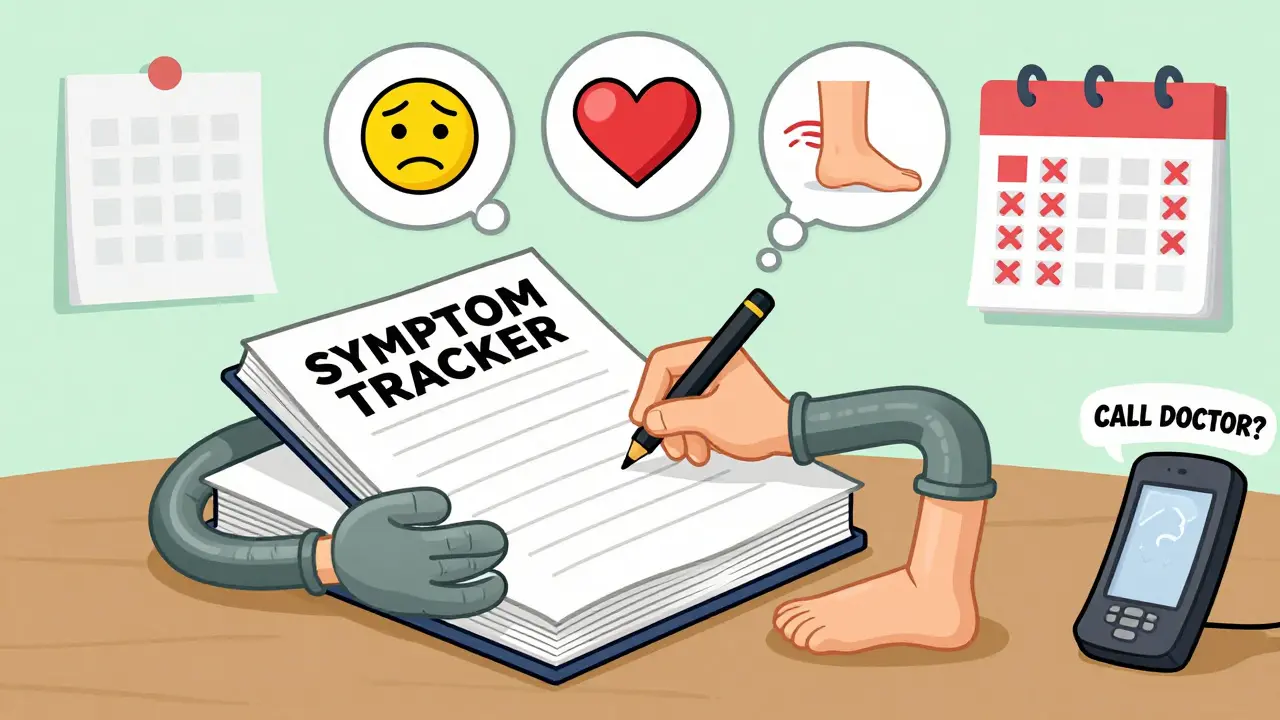
Writing “I felt tired” isn’t enough. You need to measure it. Use numbers. Rate your symptoms on a scale of 0 to 10.For example:
- Headache: 2/10 → 7/10
- Fatigue: 1/10 → 8/10
- Swelling in ankles: none → noticeable, shoes feel tight
This isn’t just for your records. If you need to see a doctor, this data tells them exactly how fast things are changing. A sudden jump from 3 to 8 in symptom severity over 48 hours is a red flag. A slow rise over two weeks? That’s different. Doctors rely on patterns-not vague descriptions.
Also note timing. Did the symptom start after you took your pill? After eating? After walking up stairs? Write it down. That’s how experts link symptoms to triggers. One patient in a 2023 FDA case report caught a dangerous interaction because she noticed her heart raced every time she took her blood pressure med with grapefruit juice. She’d never made the connection until she started tracking.
Know When and How to Report
Tracking is useless if you don’t report. The goal isn’t to panic-it’s to get help before things get worse.Set clear thresholds. For example:
- If a symptom hits 7/10 or higher for two days straight → call your doctor.
- If you develop trouble breathing, chest pain, or confusion → go to the ER immediately.
- If you notice a rash that spreads or blisters → take a photo and send it to your provider.
Don’t wait for “confirmation.” If something feels wrong, speak up. A 2021 study in JAMA Internal Medicine showed that patients who reported early symptoms had a 31% lower chance of hospitalization.
How to report? Use the method the alert recommends. If it’s a drug, report to the FDA’s MedWatch system. If it’s a medical device, contact the manufacturer. If you’re unsure, call your pharmacy or GP. They can help you file the right report. You’re not just protecting yourself-you’re helping others. Every report adds to the data that keeps future patients safe.
Use Tools Wisely-But Don’t Rely on Them Alone
There are apps for this. Symptom trackers, health journals, even AI tools that ask you daily questions. Some are good. Many aren’t.The CDC’s v-safe system, used during the pandemic, was praised for its daily text reminders and simple symptom ratings. But 38% of users said it didn’t connect to their medical records. That’s a problem. If your doctor can’t see your logs, it’s like writing a letter and never mailing it.
Best practice? Use a simple digital tool for daily tracking, but transfer key updates to your doctor’s portal or paper chart. Don’t let an app replace human judgment. One user on Reddit shared how her app marked her fatigue as “normal,” but she knew it was different. She went to the ER. Turns out she had a dangerous electrolyte imbalance. The app missed it. Her instincts didn’t.
Also, watch out for privacy. Many apps sell data. If you’re using a free tool, check its privacy policy. If it doesn’t mention HIPAA compliance or encrypted storage, don’t trust it with your health info.
Don’t Ignore the Mental Load
Monitoring symptoms isn’t just physical-it’s emotional. It’s stressful. You might start noticing every little twinge. That’s normal. But it can turn into anxiety.Set boundaries. Track for 7-14 days after the alert. Then, unless your doctor says otherwise, go back to normal. Don’t keep checking for months unless you have a reason. Over-monitoring leads to burnout. One 2022 survey found that 83% of healthcare workers preferred passive monitoring for low-risk alerts-not because they didn’t care, but because too many check-ins caused alert fatigue.
Use your support system. Tell a family member or friend what you’re watching for. Ask them to check in with you. Sometimes, someone else notices changes before you do.
What to Do If You Miss a Day
Life happens. You forget. You’re sick. You travel. Don’t panic. Just restart. Don’t try to “catch up” with fake entries. That defeats the purpose.Instead, write: “Missed day on Jan 2. No symptoms noted on Jan 1 or Jan 3.” That’s honest. That’s useful. Doctors appreciate honesty more than perfection.
If you’re unsure whether a symptom matters, call your pharmacist. They’re trained to spot drug-related issues. A 2023 study showed that patients who consulted their pharmacist after a safety alert were 40% more likely to catch a problem early than those who didn’t.
Keep Records for the Long Term
Save your symptom logs. Not just for now-for months or years. Some reactions show up months later. The FDA requires manufacturers to keep safety data for at least two years. You should too.Store your logs in a secure place. A locked folder. An encrypted cloud note. A printed copy in your medical file. If you ever need to prove you tracked symptoms-for insurance, legal reasons, or future care-you’ll be glad you did.
And if you’re on long-term medication, keep a running log. Even after the alert is over. You never know when a new warning will come.
Final Thought: You’re the Most Important Monitor
No app, no doctor, no system will catch everything. You live in your body. You know what’s normal for you. That’s why your role matters more than ever.Safety communications exist because someone else noticed a pattern. Now it’s your turn. Track. Report. Speak up. You’re not just following instructions-you’re helping shape the next generation of safer medicines and devices.
Start today. Write down one symptom to watch. Set a daily reminder. That’s all it takes.
Philip Leth
January 4, 2026 AT 18:41Man, I just read this and thought-why isn’t this stuff taught in high school? Like, we learn how to do long division but not how to not die from a bad pill? 🤦♂️
Michael Burgess
January 5, 2026 AT 11:17I’ve been tracking my meds since my last scare with that blood thinner recall. Started with a sticky note, now I use a Notion template with emoji ratings. 😅 One day I caught a weird heart flutter after coffee-I didn’t think much of it until I checked my log and saw it only happened after 2pm brews. Turned out my doc had to adjust my dose. This stuff works. Don’t sleep on it.
Angela Fisher
January 6, 2026 AT 06:12Okay but let’s be real-why do we trust the FDA at all? They’re just corporate puppets. I’ve got 3 friends who got ‘side effects’ from vaccines and were told it was ‘in their heads.’ Now they’re on disability and no one listens. This whole ‘track your symptoms’ thing is just a distraction so they can say ‘you were warned.’ They don’t want you to know the truth-there’s a whole hidden database of suppressed adverse events. I’ve seen screenshots. 🕵️♀️💊 #BigPharmaLies
Hank Pannell
January 6, 2026 AT 22:51From a systems pharmacology standpoint, the passive monitoring framework outlined here aligns with the WHO’s Adverse Drug Reaction (ADR) surveillance model, particularly in decentralized, community-based settings. However, the lack of standardized ontological tagging for symptom descriptors (e.g., ‘fatigue’ as a non-quantifiable subjective endpoint) introduces significant noise into longitudinal datasets. I’d propose integrating a modified MRC scale with biometric sync-wearables can detect HRV anomalies that correlate with subclinical inflammation. Also, the mention of ‘emotional load’ is underdeveloped-this is essentially a form of hypervigilance that can trigger somatization in predisposed individuals. A cognitive behavioral framework should be layered in.
JUNE OHM
January 7, 2026 AT 21:49Y’all are missing the point. The government doesn’t want you to track symptoms-they want you to think you’re safe so you keep taking the poison. They’re using this guide to make you feel like you’re in control. But guess what? They’re watching your app data. Your symptom logs? Sold to insurers. Your heart rate spikes? Flagged for ‘high risk.’ You think you’re protecting yourself? You’re feeding the algorithm. 📱👁️🗨️
Brittany Wallace
January 9, 2026 AT 01:55I love how this guide treats patients like adults. Most health advice feels like talking to a toddler: ‘Don’t touch the stove!’ But this? This is like being handed a map and saying, ‘Here’s what to watch for-your body knows.’ I’ve been sharing this with my book club. We’re all old enough to know we’re not kids anymore. We deserve to be trusted. 💛
veronica guillen giles
January 10, 2026 AT 21:56Oh wow. A whole 2000-word essay on how to… check if you’re feeling weird? I’m so impressed. Next they’ll release a manual on how to breathe without dying. 🙄 At least you didn’t forget to tell us to drink water. But seriously, if you need this many steps to not die from a pill, maybe the pill shouldn’t exist. Just a thought.
Haley Parizo
January 11, 2026 AT 13:11This isn’t just advice-it’s a civil right. People die because they’re told to ‘wait and see’ while their organs shut down. I lost my sister to a drug interaction they never warned about because no one tracked it. This guide is a weapon. Use it. Share it. Force your doctor to look at your log. Don’t let them dismiss you because you’re ‘just a patient.’ You’re the only one who lives in your body. Fight for that truth. 🖤
Ian Ring
January 13, 2026 AT 11:04Interesting. I’ve been using a paper journal since 2020-handwritten, dated, signed. I find it more grounding than apps. Also, I always include the weather. Turns out, my migraines spike when humidity crosses 70%. Who knew? 🌧️ Still, I appreciate the structure here. Very thorough. Though I wonder if the 0–10 scale is culturally universal? In Japan, people often rate things on a 5-point scale. Just a nuance.
erica yabut
January 14, 2026 AT 22:56Look, I’m not some low-effort health blogger who thinks scribbling ‘tired’ in a Notes app makes you a responsible adult. This guide is laughably basic. Real monitoring requires genomic sequencing, metabolomic profiling, and AI-driven predictive analytics. If you’re still using emoji ratings and sticky notes, you’re not ‘monitoring’-you’re performing wellness theater. 🤷♀️✨