 Dec, 16 2025
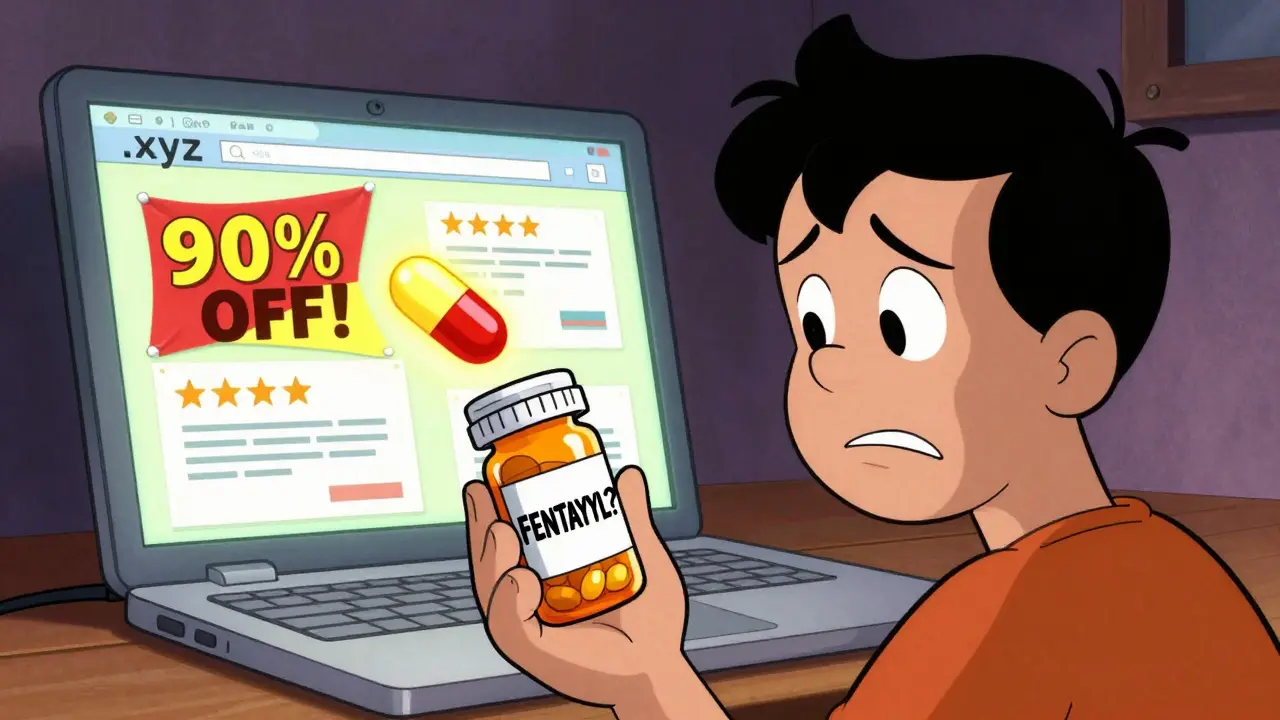
Buying medicine online sounds convenient-until you realize you might be swallowing something dangerous. Every year, millions of people unknowingly purchase counterfeit generics from fake websites, thinking they’re saving money. But what looks like a discount could be a life-threatening mistake. In 2023, the World Health Organization reported over 1,500 cases of falsified medicines across 141 countries. In North America alone, the DEA seized more than 134 million fake pills containing deadly fentanyl between January 2023 and October 2024. These aren’t just poor-quality copies-they’re often laced with toxic chemicals, missing active ingredients, or filled with crushed drywall. And the worst part? Many look identical to the real thing.
What Makes a Generic Medicine Counterfeit?
Generic drugs are supposed to be exact copies of brand-name medications-same active ingredient, same dose, same effect. But counterfeit generics are frauds. They might contain too little or none of the medicine you need. Or worse, they could have dangerous additives like fentanyl, rat poison, or industrial dyes. The fake pills you see online often mimic the shape, color, and imprint of real ones. Some even use the same packaging, logos, and holograms. That’s why it’s so hard to tell the difference without lab equipment.
Pharmaceutical companies like Pfizer and GlaxoSmithKline use layered security: color-shifting ink, UV-readable codes, RFID chips, and unique serial numbers on every bottle. Counterfeiters copy the visible parts-but they can’t replicate the hidden tech. That’s why a pill that looks perfect might still be fake.
Red Flags You Can Spot Before You Click ‘Buy’
You don’t need a lab to catch warning signs. Here’s what to look for:
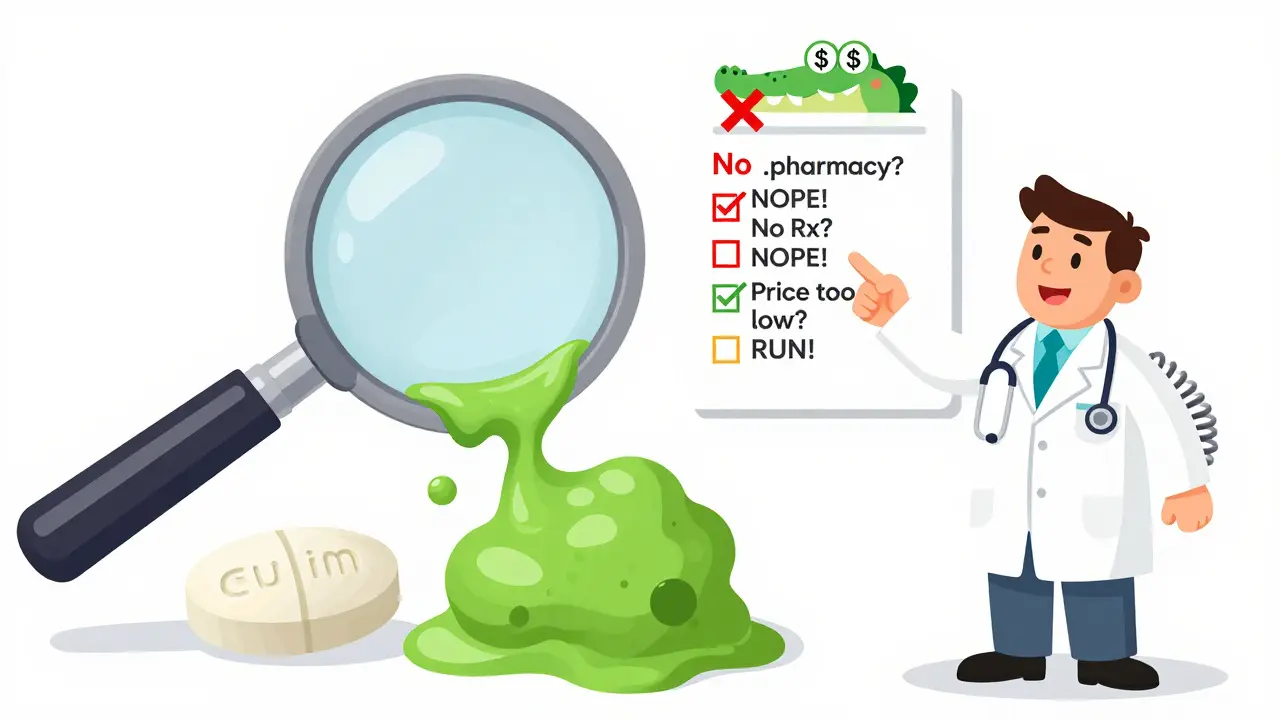
- No .pharmacy domain. Legitimate online pharmacies in the U.S., UK, and Canada use the .pharmacy web address. If the site ends in .com, .xyz, or .shop, walk away. The .pharmacy seal is verified by the National Association of Boards of Pharmacy (NABP) and requires proof of licensing, a physical address, and a licensed pharmacist on staff.
- No prescription required. Any site that lets you buy prescription drugs without a doctor’s order is illegal. In 2022, the NABP found that 96% of online pharmacies operate without proper licensing-and 88% don’t even ask for a prescription.
- Prices that seem too good to be true. If you see 90% off brand-name drugs, it’s a trap. Real pharmacies don’t sell insulin, blood pressure meds, or antibiotics for $10 a bottle. The WHO estimates counterfeit drugs cost 50-90% less than real ones-but the risk isn’t worth the savings.
- No contact info. Legit pharmacies list a physical address and a working phone number. Try calling them. If you get a voicemail, an answering service, or no answer at all, it’s a red flag.
- Too many reviews with the same wording. Fake sites use bot-generated reviews. Look for phrases like “Great service!” or “Fast delivery!” repeated across dozens of reviews. Real customers write about side effects, delivery delays, or packaging issues-not generic praise.
How to Spot a Fake Pill (Even If It Looks Real)
Once the pills arrive, check them against your last legitimate batch. Don’t just glance-compare closely.
- Size and shape. Even small differences matter. A fake pill might be slightly thicker, thinner, or have a different edge.
- Color and markings. Look at the imprint. Is the font slightly off? Are the letters blurry? Real pills have crisp, consistent lettering. Fake ones often have smudged or uneven text.
- Texture and smell. Hold it in your hand. Does it feel gritty or waxy? Real tablets are smooth. If it smells like plastic or chemicals, don’t take it.
- Dissolution test. Put a pill in a glass of water. Most real medications dissolve slowly over 15-30 minutes. Counterfeits often dissolve instantly or don’t dissolve at all. One Reddit user reported fake ED pills dissolving in under 30 seconds-real ones took over 20 minutes.
- Side effects. If you’ve taken this drug before and suddenly feel dizzy, nauseous, or have a burning sensation in your throat or eyes, stop taking it. The FDA documented cases where fake Muro 128 eye drops caused severe irritation not seen with the real version.
What to Do If You Suspect a Fake
If something feels off, don’t guess-act.
- Call the manufacturer. Pfizer, Novartis, and other big pharma companies track counterfeit reports. Call their customer service line and give them the lot number, expiration date, and a photo of the packaging. They can tell you if it’s real.
- Report it to the FDA or your national health agency. In the U.S., use the FDA’s MedWatch program. In the UK, report to the MHRA. These agencies use your reports to track outbreaks and shut down illegal sites.
- Don’t flush or throw it away. Keep the pills and packaging. Authorities may need them as evidence.
- Get medical help if you’ve taken it. Even one dose of a counterfeit drug can cause organ damage, allergic reactions, or overdose. Tell your doctor exactly what you took and where you got it.
How to Buy Generic Medicine Safely Online
You don’t have to avoid online pharmacies-just avoid the bad ones.
- Only buy from sites with the .pharmacy domain. Check the NABP’s list of verified pharmacies at nabp.pharmacy.
- Use your local pharmacy’s online portal. Many UK and U.S. pharmacies offer home delivery with the same pricing as in-store.
- Verify the pharmacy is licensed in your country. In the UK, check the GPhC register. In the U.S., check your state’s pharmacy board.
- Use a credit card-not PayPal or cryptocurrency. Chargebacks are your only protection if you get scammed.
- Never buy from social media ads, Instagram influencers, or Google search results that say “cheap meds.” These are almost always fake.
The Future of Fake Medicine Detection
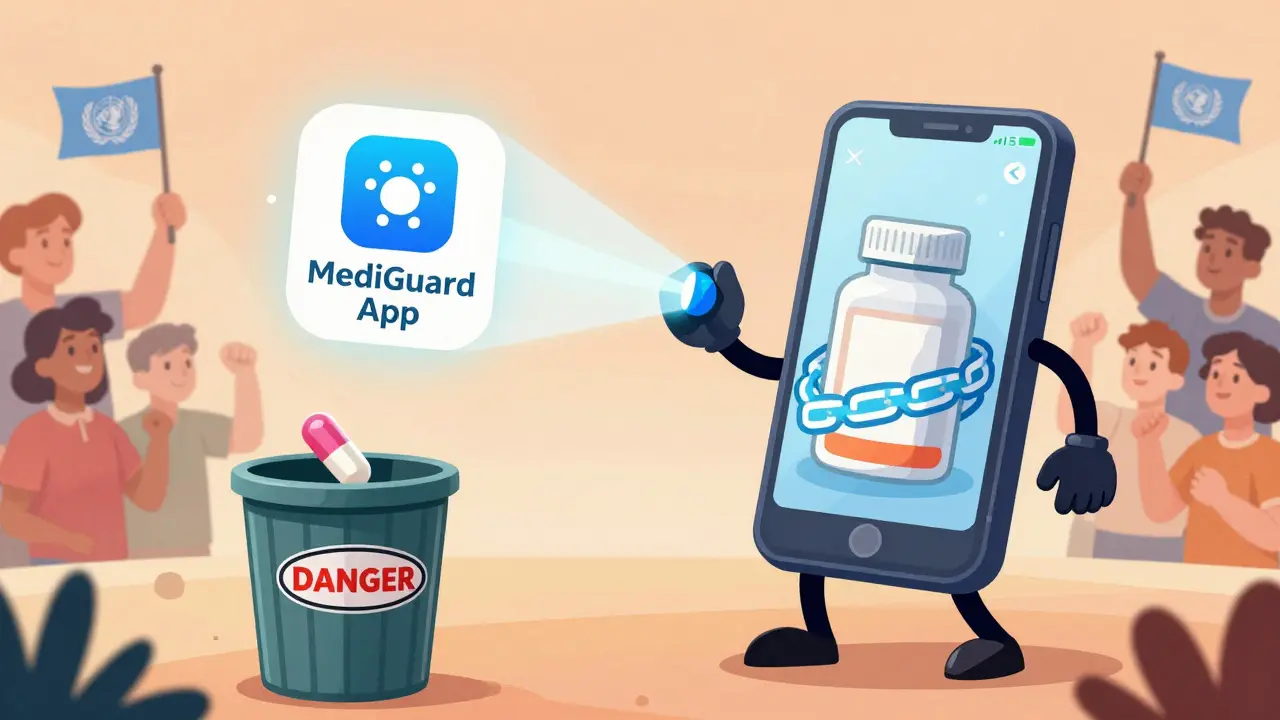
Technology is fighting back. New smartphone apps like MediGuard use AI to scan QR codes on packaging and verify authenticity in seconds. Pfizer’s blockchain pilot program tracks every pill from factory to pharmacy with 99.6% accuracy. The WHO’s Global Surveillance and Monitoring System (GSMS) now connects regulators across 141 countries to share real-time alerts.
But no tech replaces common sense. Even the best QR code can be copied. The most reliable tool you have is your own observation. If it looks strange, feels wrong, or costs too little-trust your gut.
Why This Matters More Than You Think
Counterfeit drugs aren’t just a financial scam-they’re a public health crisis. In Asia, over half of fake malaria pills contain zero active ingredient. In the U.S., 7 out of 10 seized fake pills contain a lethal dose of fentanyl. People die because they think they’re taking a harmless generic. They’re not.
And it’s getting worse. Online sales of fake medicines are growing at 22% per year. Criminal networks now use professional pill presses to replicate the exact imprint of real drugs. Even experienced pharmacists can’t tell the difference without lab tools.
That’s why your vigilance matters. Reporting a fake site helps shut it down. Asking your pharmacist about a suspicious package protects your community. Speaking up saves lives.
How can I tell if a generic drug is fake just by looking at it?
You can’t be 100% sure without lab testing, but you can spot clues. Compare the pill’s size, color, imprint, and texture to a previous legitimate batch. Fake pills often have blurry lettering, odd smells, or dissolve too quickly in water. Packaging may have misspellings, mismatched fonts, or missing batch numbers. If anything looks off, don’t take it.
Are all online pharmacies that sell generics scams?
No. Legitimate online pharmacies exist-they just require verification. Look for the .pharmacy domain, a physical address, a licensed pharmacist on staff, and a requirement for a valid prescription. Sites like those verified by the NABP are safe. But 96% of online pharmacies operate illegally, so assume any site you find through Google ads or social media is a scam until proven otherwise.
Can I trust generic drugs from other countries?
It depends. Countries like Canada, the UK, and Australia have strict drug safety rules, and their generics are often safe. But if you’re buying from a website based in India, Russia, or China without clear regulatory oversight, the risk is high. Even if the packaging looks official, it could be a counterfeit made to look like a legitimate foreign product. Always buy through licensed pharmacies, not direct imports.
What should I do if I already took a counterfeit pill?
Stop taking the medication immediately. Contact your doctor or go to urgent care-even if you feel fine. Some counterfeit drugs cause delayed damage. Save the packaging and pills for testing. Report the incident to your country’s health authority (FDA in the U.S., MHRA in the UK). Your report helps track the source and prevent others from being harmed.
Is it safer to buy generics from a local pharmacy?
Yes. Local pharmacies are regulated, licensed, and audited. They source drugs from approved distributors and keep records of every batch. If something goes wrong, they can trace it back. Online scams often come from untraceable sources overseas. Even if the price is higher, the safety and accountability are worth it.
Next Steps: Protect Yourself and Others
Start today. Go through your medicine cabinet. Check the packaging on your last prescription. Does it match what you’ve taken before? If you’ve bought drugs online in the past year, check the website’s domain. If it’s not .pharmacy, report it. Share this information with family members who take regular medications-especially older adults who may not know how common these scams are.
Counterfeit drugs are a global problem, but your actions make a difference. You don’t need to be an expert to spot a fake. You just need to be careful, curious, and willing to ask questions. The next pill you take could be the one that saves-or ends-your life.
Marie Mee
December 16, 2025 AT 14:18so i bought some viagra off instagram for 20 bucks and now my dick is numb and my cat is acting weird idk if it was the pills or the cat but i think its the pills
Josh Potter
December 16, 2025 AT 23:01bro this is why you dont trust anything online anymore. i got a fake blood pressure pill last year and ended up in the er. they said it had rat poison and chalk. chalk. like what the fuck. now i only get meds from walmart and i drive 40 mins for it. worth it.
Jane Wei
December 17, 2025 AT 23:02i just check the lot number on the bottle against the manufacturer’s site. if it matches, i take it. if not, i toss it. simple.
Brooks Beveridge
December 18, 2025 AT 21:00hey, if you’re reading this and you’ve ever bought meds online without a prescription - you’re not alone. but you’re also not invincible. i’ve seen people lose their kidneys over this. don’t be the next headline. take a breath. call your pharmacist. they’re not there to judge - they’re there to keep you alive. you got this.
Nishant Desae
December 20, 2025 AT 09:54in india we have a lot of generic medicine and most of them are safe because they are regulated by cdSCO and many of the companies are world class like sun pharma and divi’s labs but when you buy from random websites that claim to be indian but are hosted in russia or china then it is a different story entirely. always check the manufacturer name and the license number on the box and if you are unsure just go to the nearest pharmacy and ask them to verify it for you. your life is more valuable than the 30 dollars you saved.
Evelyn Vélez Mejía
December 20, 2025 AT 12:08the commodification of human health has reached its zenith: a pill, once a sacrament of biological repair, is now a commodity to be bartered on darknet forums and Instagram stories, its authenticity reduced to a QR code that even the most sophisticated AI cannot fully authenticate. the tragedy is not that the counterfeit exists - it is that we have normalized the risk. we have become so accustomed to the illusion of convenience that we have forgotten the sanctity of the body. the next time you click 'buy now,' ask yourself: are you purchasing medicine - or a gamble with your mortality?
Naomi Lopez
December 22, 2025 AT 10:50obviously the only real solution is to stop trusting 'generic' entirely. if you can't afford the brand name, you can't afford to be alive. i mean, look at the data - the FDA admits they can't even test 5% of imported pills. so why bother? just die quietly and save everyone the trouble.
Anna Giakoumakatou
December 23, 2025 AT 17:07so let me get this straight - you’re telling me the government lets fake pills with fentanyl flood the market… but we can’t legalize weed? the system is rigged. also, who even approved the .pharmacy domain? sounds like a corporate shill scheme to me.
Martin Spedding
December 24, 2025 AT 16:34fake pills? more like fake news. i’ve bought 12 packs online. never got sick. you’re all just scared of saving money.
Victoria Rogers
December 24, 2025 AT 23:11the real scam is that you think the us government cares if you live or die. they’re making money off the drug war. the feds seize fake pills? sure. then they sell the real ones to the same companies that make the fakes. it’s all one big circle. you think your pharmacist is your friend? lol
Raven C
December 25, 2025 AT 21:14While I appreciate the earnestness of this post, I must express my profound concern regarding the oversimplification of pharmaceutical regulation. The assumption that .pharmacy domains equate to safety is dangerously reductive. Regulatory frameworks vary across jurisdictions, and even NABP-certified pharmacies may source from unvetted wholesalers. Furthermore, the notion that 'common sense' is sufficient to detect counterfeit pharmaceuticals is not only naive - it is ethically irresponsible. The average consumer lacks the biochemical literacy to discern subtle variances in tablet composition, and to place such burden upon them is a failure of public policy, not personal vigilance.
Steven Lavoie
December 26, 2025 AT 16:55My grandfather took a fake blood thinner last year. He almost died. The packaging looked exactly like the real one - same logo, same color, same barcode. He didn’t know any better. We reported it. The FDA never responded. But I told every family member. Every. Single. One. If you’re reading this, and you’ve ever bought meds online - stop. Now. Call your doctor. Ask them to help you find a safe source. You’re not being paranoid. You’re being smart.
Jonathan Morris
December 27, 2025 AT 10:24the entire system is a psyop. the fake pills are made by the same companies that make the real ones - they just sell the bad ones overseas so they can keep the profits. the government knows. they just don’t care. you think your insulin is safe? think again. they’re already replacing it with cheaper, slower-acting crap. you’re not being scammed - you’re being phased out.