 Mar, 1 2026
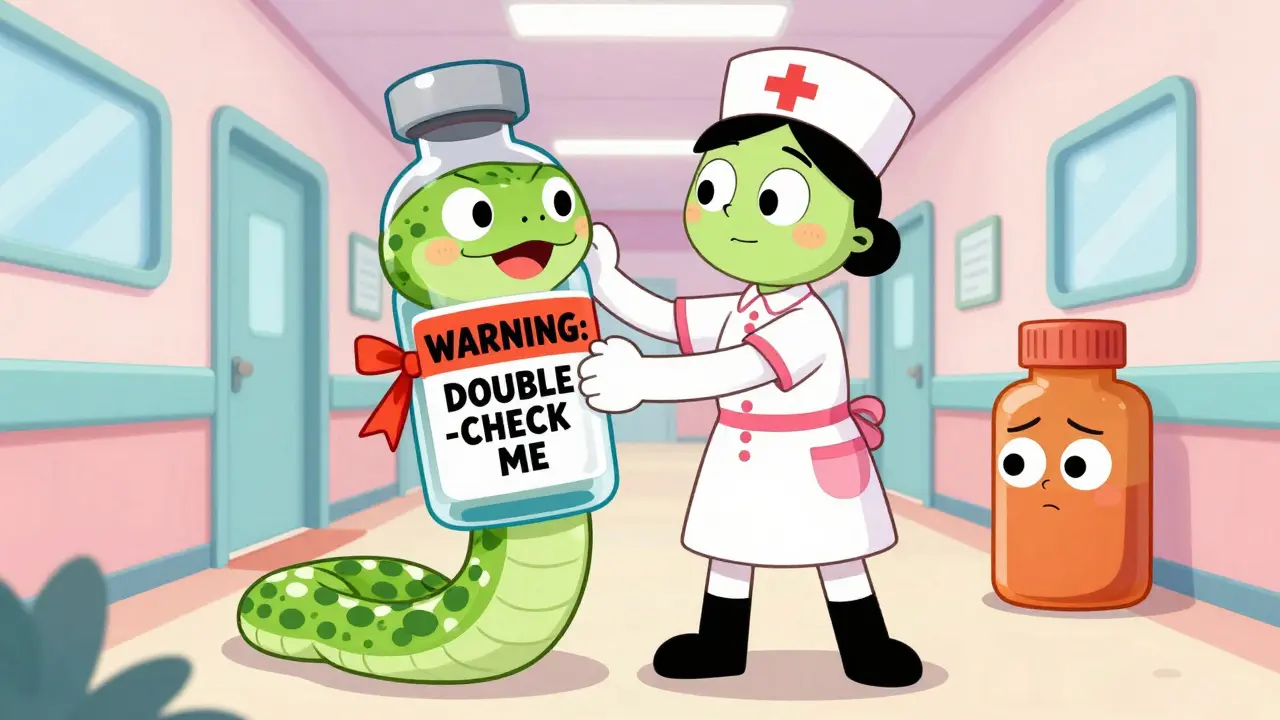
When a patient takes a medication, the risk isn’t just about whether it works - it’s about whether it’s documented correctly. A single missed alert can lead to a preventable error: a wrong dose of insulin, a deadly mix of blood thinners, or a neuromuscular blocker given without ventilation support. Documenting safety alerts on your medication list isn’t optional paperwork. It’s the difference between a patient walking out safe and a patient ending up in intensive care. And it’s not as complicated as you think - if you follow the right steps.
What Counts as a Safety Alert?
Not every warning on a pill bottle is a safety alert. A safety alert is a specific, high-risk condition tied to a medication that, if missed or misunderstood, can cause serious harm. The Institute for Safe Medication Practices (ISMP) defines these as high-alert medications - drugs with a higher chance of causing major harm if used incorrectly. This isn’t just a list of scary names. It’s a structured system with 19 categories, including:- Insulin (all types)
- Oral methotrexate (must be weekly, not daily)
- Anticoagulants like warfarin and heparin
- Neuromuscular blockers (e.g., succinylcholine)
- Opioids (especially IV forms)
- Concentrated electrolytes (potassium chloride, sodium chloride)
Each of these has documented protocols. For example, neuromuscular blockers must have a label on every container that says: “WARNING: CAUSES RESPIRATORY ARREST - PATIENT MUST BE VENTILATED.” That’s not a suggestion. That’s a requirement under the ISMP 2024-2025 guidelines. If you’re not seeing that label, you’re not following the standard.
Why Documentation Reduces Errors by Up to 50%
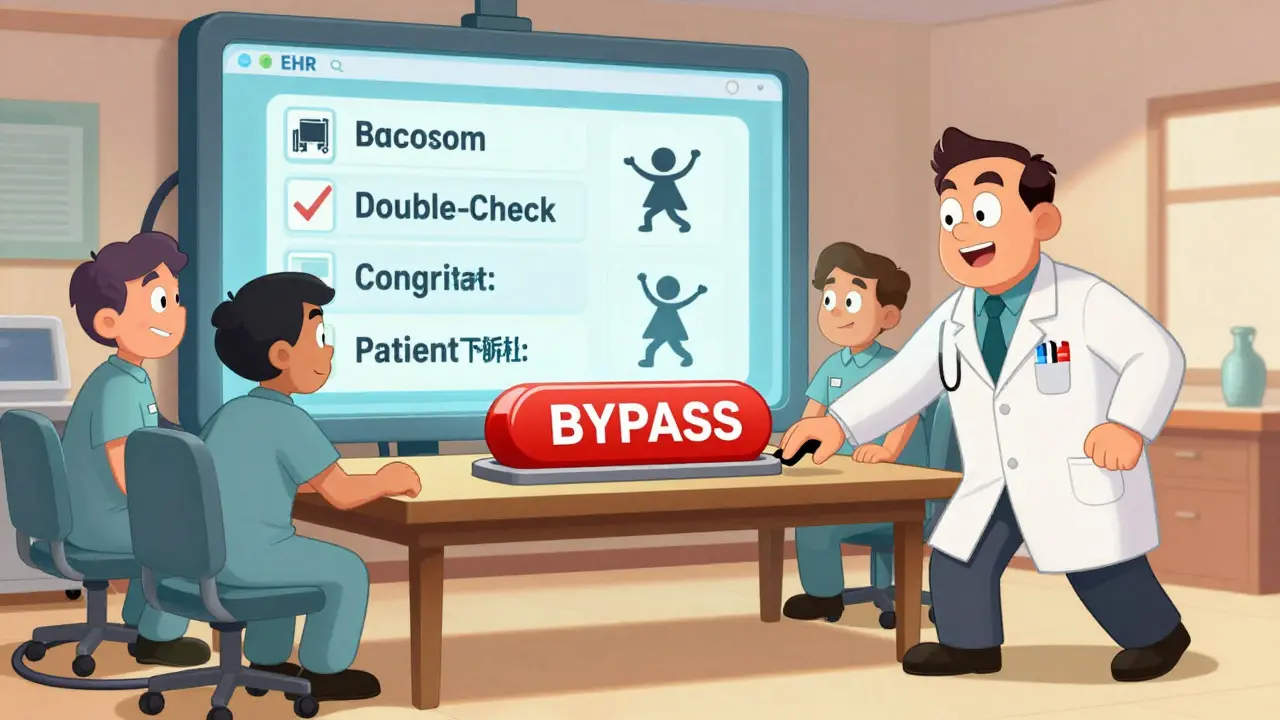
A 2016 WHO report found that hospitals using full safety alert documentation systems cut medication errors by nearly half. Why? Because documentation creates a loop. It’s not just writing something down - it’s tying each alert to an action, then tracking whether that action happened.Take insulin, for example. Just having an electronic alert pop up isn’t enough. Studies show that up to 49% of clinicians bypass these alerts if they’re not backed by real documentation. The ISMP solution? Document four things:
- Standardized concentration (e.g., 100 units/mL, not 10 units/mL)
- Barcode scanning at every administration step
- Independent double-check by a second clinician
- Confirmation that the patient or caregiver understands the dosing schedule
Each of these is recorded. Not in a notebook. Not as a mental note. In the system. This forces accountability. If the double-check wasn’t done, the system flags it. If the scan wasn’t completed, the medication won’t dispense. That’s how safety becomes automatic.
How to Build Your Facility’s Safety Alert System
You don’t need a billion-dollar IT department to start. The ISMP recommends a 9-month phased rollout. Here’s how to begin:- Identify your high-alert list - Start with the ISMP master list. Cross-reference it with your pharmacy’s most commonly dispensed drugs. If your hospital gives out 200 doses of methotrexate a month, it’s on your list.
- Update labels and EHR settings - For oral methotrexate, your electronic prescribing system must default to “weekly” dosing. If a prescriber tries to order it daily, the system should block it unless they document an oncology indication. No exceptions.
- Install auxiliary labels - All neuromuscular blockers, even those in IV bags, need the warning label. Print them. Laminate them. Put them on every vial, syringe, and pump.
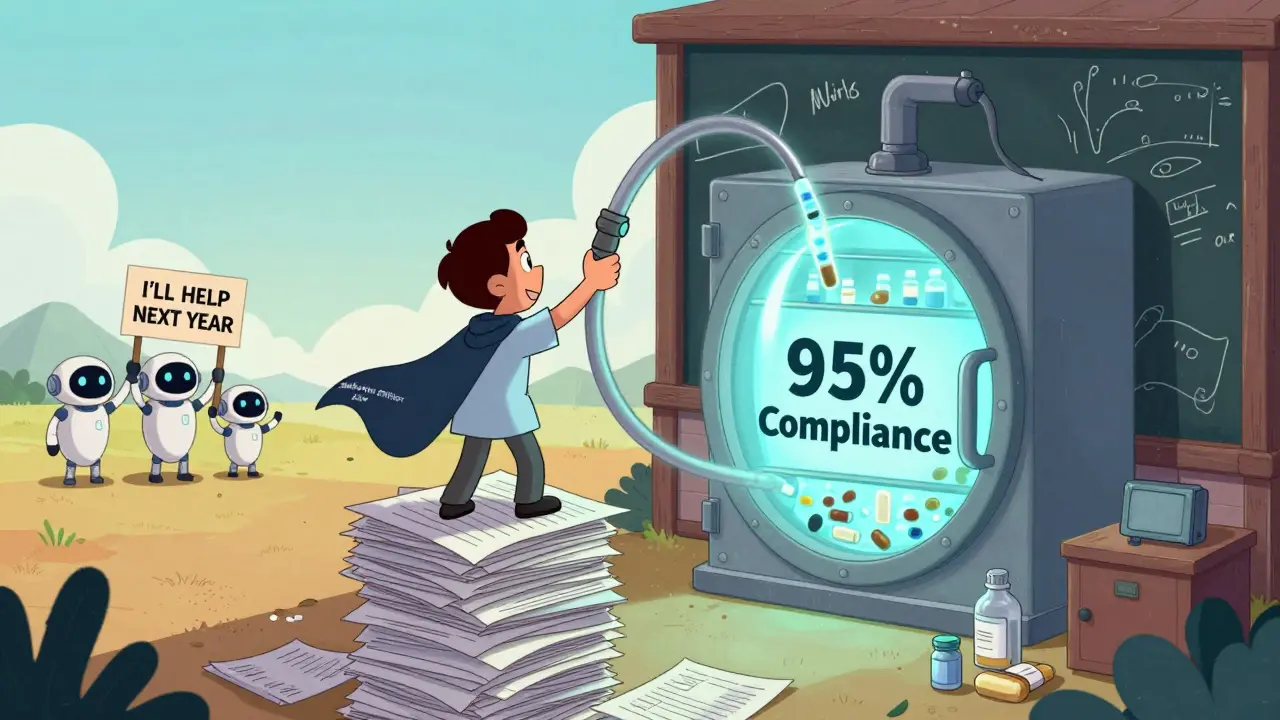
- Set up scanning compliance tracking - Your pharmacy system should track how often barcodes are scanned. Target 95% compliance. If you’re at 80%, investigate why. Is the scanner broken? Are staff skipping steps? Fix the root cause.
- Assign a medication safety officer - 87% of top-performing hospitals have one. This person doesn’t need to be a pharmacist. They just need to be responsible for reviewing alert logs, audit trails, and error reports every month.
Don’t try to do everything at once. Start with insulin and anticoagulants. Those are the top two causes of preventable harm. Once those are locked in, move to opioids and electrolytes.
What to Avoid: Alert Fatigue and Over-Documentation
Here’s the trap: too many alerts. A 2015 study by Dr. Robert Wachter found that when systems generate more than 15 safety alerts per medication order, clinician compliance drops to just 31%. That’s not safety - that’s noise.Don’t add alerts for low-risk medications just because “it’s better to be safe.” The goal isn’t to generate more alerts. It’s to prevent the right ones. A 2021 study of 47 hospitals showed that facilities with full compliance had 4.2 errors per 1,000 doses. Those with partial compliance had 12.7. The difference wasn’t the number of alerts. It was the precision of them.
Also, avoid manual documentation where possible. A 2021 study in the American Journal of Health-System Pharmacy found that electronic audit trails - which automatically log when an alert was viewed, bypassed, or acted on - reduced documentation time by 65%. That’s not a luxury. It’s the key to sustainability.
Real-World Challenges and How to Solve Them
You’ll hear things like: “We’re too short-staffed.” “We can’t afford the software.” “The alerts keep popping up during emergencies.”Here’s what works:
- Staffing shortage? A 2023 survey found that facilities with a dedicated 0.5 FTE (half-time) staff member managing safety documentation saw a 63% drop in errors. That’s less than one person working 20 hours a week. Can you reallocate a pharmacy tech’s time for 20 hours? If yes, do it.
- Cost? The average hospital spends $285,000 a year on these systems. But they save $1.2 million in avoided adverse events. The ROI isn’t just positive - it’s dramatic.
- Integration with FDA alerts? The FDA releases about 120 drug safety notices a year. Most hospitals struggle to update their systems manually. The new FDA Sentinel Initiative now sends automated feeds that plug directly into EHRs. If your system doesn’t support this, ask your vendor. It’s 2026. This isn’t optional anymore.
And if you’re in a small hospital? You’re not alone. Only 67% of critical access hospitals have full systems. But you can still start small. Document your top three high-alert drugs. Add the warning labels. Set up one automated alert. Track it for 90 days. That’s enough to prove the value.
The Future Is Automated - But You Still Need to Lead It
AI is coming. Epic Systems is launching an AI module in Q2 2025 that automatically prioritizes alerts based on your facility’s error history. Mayo Clinic’s early adopters say it cuts manual entry by 80%. That’s huge.But here’s the catch: AI can’t replace human oversight. A 2024 JAMA study found early AI systems missed 18% of critical alerts. That’s not a bug - it’s a risk. So your job isn’t to wait for automation. It’s to build a system so clean, so well-documented, that when AI arrives, it works perfectly.
The goal isn’t to have the fanciest system. It’s to have a system that works every time - even when someone’s tired, rushed, or distracted. That’s why documentation matters. Because people make mistakes. Systems, when built right, don’t.
What medications are considered high-alert by ISMP?
The ISMP 2024-2025 guidelines list 19 categories, including insulin, oral methotrexate, anticoagulants (like warfarin and heparin), neuromuscular blockers, concentrated electrolytes (e.g., potassium chloride), and opioids. These are drugs where even a small error - wrong dose, wrong route, wrong timing - can lead to death or permanent injury.
Do I need special software to document safety alerts?
Not necessarily. You can start with printed checklists and manual logs. But to scale, sustain, and meet compliance standards, you need an electronic health record (EHR) system that supports hard-stop alerts, barcode scanning, audit trails, and automated compliance tracking. Systems like Epic, Cerner, and Meditech now include these features. The key is configuring them correctly - not just installing them.
How often should safety alert documentation be reviewed?
At minimum, monthly. The ISMP and ASHP recommend that a multidisciplinary safety committee meets every month to review alert bypass rates, error reports, and compliance data. Any alert bypass over 5% requires root cause analysis. If a patient is harmed by a medication error, the review must happen immediately - not at the end of the quarter.
Can I just rely on electronic alerts without documentation?
No. Electronic alerts alone have bypass rates as high as 49%. Documentation turns alerts into actions. For example, an alert for methotrexate should trigger a mandatory field where the prescriber documents the indication (e.g., rheumatoid arthritis, not psoriasis). Without that documentation, the alert is just noise.
What’s the biggest mistake facilities make?
They treat documentation as a compliance checkbox instead of a safety tool. If you’re documenting just to satisfy an audit, you’re missing the point. The real goal is to create feedback loops: alert → action → data → improvement. If you’re not measuring, analyzing, and adjusting, you’re not preventing errors - you’re just writing them down.
Levi Viloria
March 2, 2026 AT 05:18Dean Jones
March 4, 2026 AT 04:59Betsy Silverman
March 5, 2026 AT 00:56Ivan Viktor
March 6, 2026 AT 15:36Zacharia Reda
March 6, 2026 AT 17:10Jeff Card
March 6, 2026 AT 17:11Matt Alexander
March 6, 2026 AT 18:01Gretchen Rivas
March 7, 2026 AT 02:55Mike Dubes
March 8, 2026 AT 15:52Helen Brown
March 9, 2026 AT 19:23John Cyrus
March 11, 2026 AT 19:10John Smith
March 12, 2026 AT 00:24Sharon Lammas
March 12, 2026 AT 09:52marjorie arsenault
March 14, 2026 AT 02:07Richard Elric5111
March 14, 2026 AT 23:48