 Dec, 11 2025
Why You Need a Food and Medication Interaction Checklist
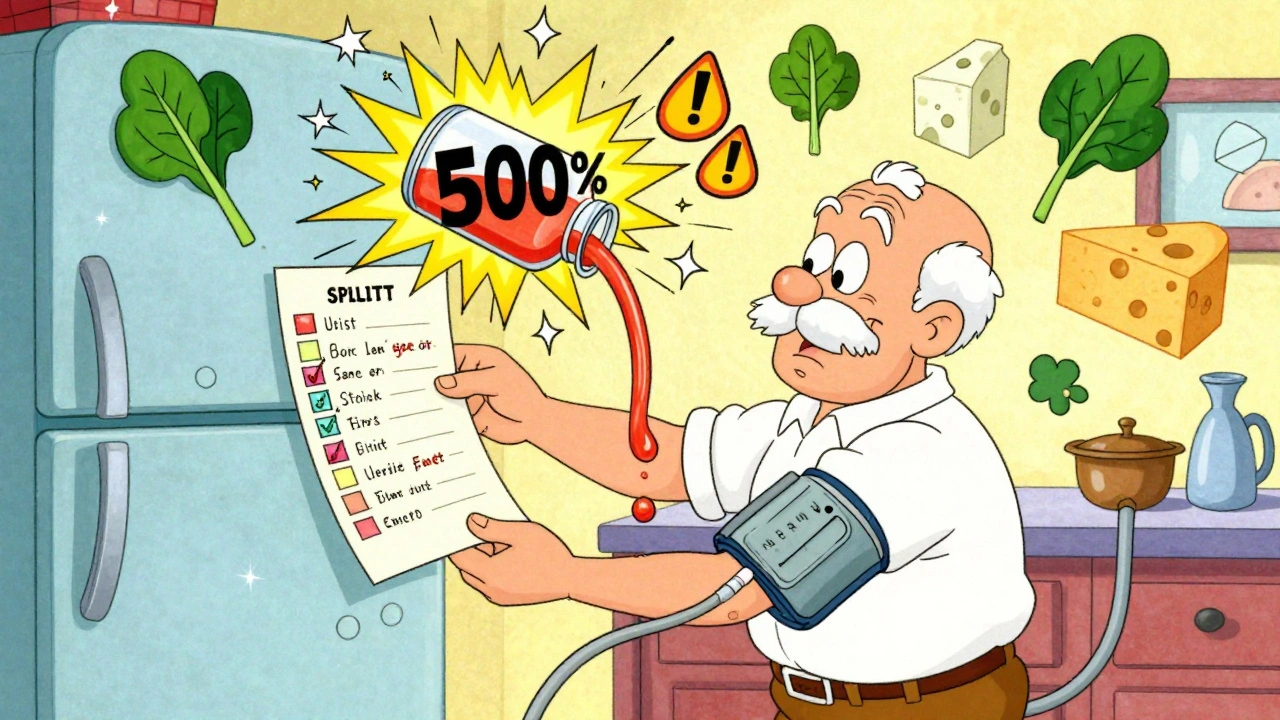
Imagine taking your blood pressure pill at breakfast, then drinking a glass of grapefruit juice right after. Sounds harmless, right? But if you’re on a statin like simvastatin, that juice could cause your drug levels to spike by up to 500%. That’s not a myth-it’s a real, documented risk backed by the FDA. And you’re not alone. About 1.3 million emergency room visits each year in the U.S. are tied to bad reactions between food and medication. Twelve percent of those involve food-drug interactions.
Most people know to read the label on their prescriptions. But labels don’t always say, “Don’t eat spinach with this pill,” or “Wait two hours after dairy before taking this antibiotic.” That’s where a personal checklist comes in. It’s not just a list of your meds-it’s a living safety net that tells you exactly what to avoid, when to avoid it, and what to do if you accidentally mix something dangerous.
People who keep a detailed food-medication checklist have 37% fewer bad reactions, according to the American Pharmacists Association. For seniors on three or more medications-a group that makes up nearly half of Americans over 40-this isn’t optional. It’s essential.
What Goes on the Checklist
A good checklist isn’t just a scribbled note on a napkin. It needs structure. Start with each medication you take, including prescriptions, over-the-counter drugs, vitamins, and supplements. For every one, write down:
- Drug name (both brand and generic, like “Lipitor” and “atorvastatin”)
- Dosage and schedule (“10 mg once daily at 8 a.m.”)
- Purpose (“lowers cholesterol”)
- Prescribing doctor and phone number
Now, the critical part: interactions. For each drug, list the foods, drinks, or supplements that can cause problems. Don’t guess. Use trusted sources like the New Zealand Formulary, the FDA’s Drug Safety Communications, or the SEFH Drug-Food/Herb Interaction Guide. Here’s what to include:
- High-risk interactions (dangerous even in small amounts): Grapefruit juice with statins, vitamin K-rich greens with warfarin, tyramine-heavy foods (aged cheese, cured meats) with MAO inhibitors.
- Moderate-risk interactions (can be managed with timing): Dairy products with ciprofloxacin (wait 2 hours), calcium supplements with thyroid meds (take 4 hours apart).
- Low-risk interactions (monitor, but no strict avoidance needed): Alcohol with acetaminophen (limit to 1 drink/day).
Don’t just say “avoid dairy.” Say: “Take ciprofloxacin at 8 a.m. Do not eat yogurt, milk, or cheese until 10 a.m. or later.” Specificity saves lives.
How to Research Interactions Accurately
You can’t trust random blogs or Reddit threads-even if they sound convincing. The FDA, CDC, and major pharmacy associations have clear, updated guidelines. Here’s where to look:
- Medication guides that come with your prescription (often found online too)
- New Zealand Formulary Interaction Checker (free, reliable, updated regularly)
- SEFH Drug-Food/Herb Interaction Guide (2024 edition, used by clinics)
- FDA Drug Safety Communications (search by drug name)
Always note the source and date on your checklist. Example: “Warfarin + kale: High risk. Per NZ Formulary, updated July 15, 2024.” This matters because interactions change. A drug’s warning label might be updated, or new research could show a previously safe food is now risky.
Also, don’t forget preparation methods. Raw spinach has more vitamin K than cooked. A cup of raw kale can be 10 times stronger than a half-cup of steamed. Write it down: “1 cup raw spinach = avoid. 1/2 cup cooked = okay if consistent.”
Choosing Your Format: Paper, App, or Hybrid
There’s no one-size-fits-all format. Your choice depends on your tech comfort, age, and lifestyle.
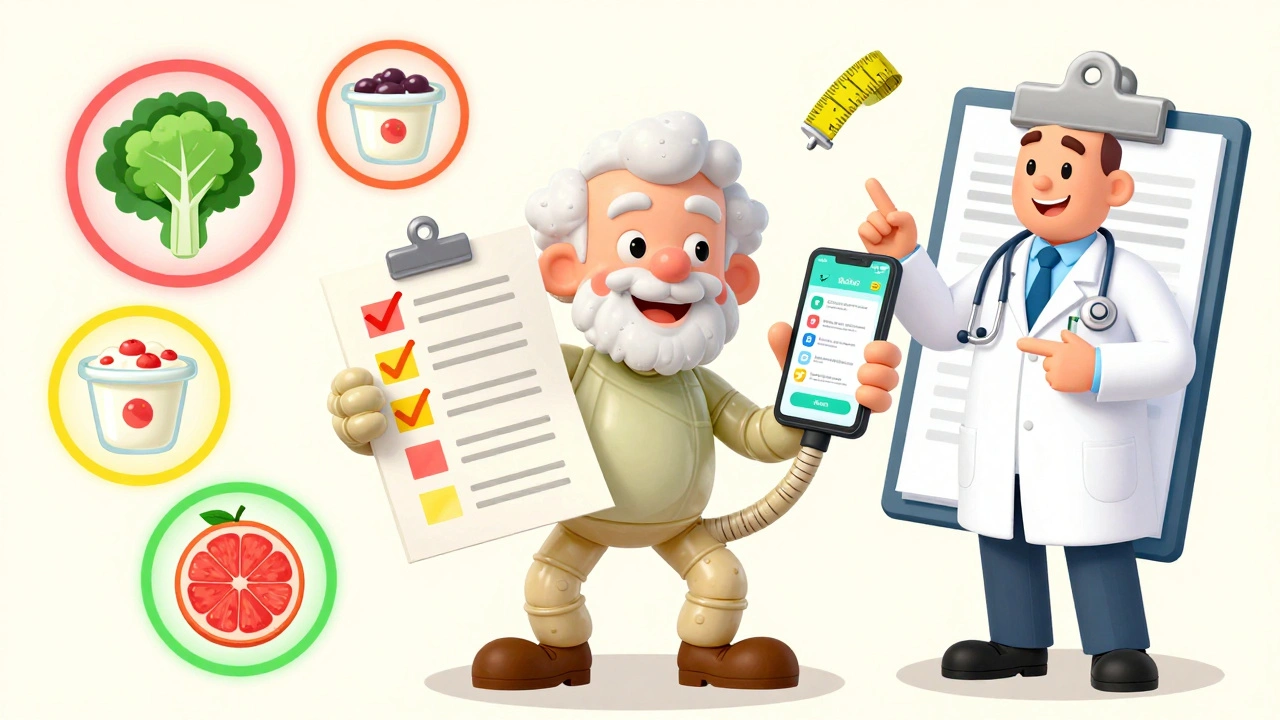
Paper checklist: Best for seniors, rural residents, or anyone who doesn’t use smartphones. The FDA’s free “My Medicines” PDF template (updated March 2024) is designed for printing on standard paper. Keep it taped to your fridge or stuck to your medicine cabinet. Paper wins in emergencies-when power’s out, your phone dies, or paramedics need info fast. A 2024 Pew Research study found 24% of Americans don’t own a smartphone. For them, paper isn’t outdated-it’s lifesaving.
Digital apps: Tools like Medisafe (v12.3.1) and MyTherapy (v5.8.2) auto-update interaction data and send reminders. A 2023 JAMA study showed digital checklists cut medication errors by 42% over a year. But they require iOS 14+ or Android 8.0+, and they can miss regional foods. One user complained their app flagged kale but didn’t recognize bok choy, which has similar vitamin K levels. If you use an app, double-check it against official sources.
Hybrid approach: Keep a printed checklist on the fridge and use an app as a backup. Use laminated SEFH cards as quick-reference stickers. This gives you the reliability of paper and the updates of digital.
How to Use It Every Day
A checklist only works if you use it. Here’s how to make it part of your routine:
- Put it where you eat. 82% of people who kept their checklist on the fridge followed it consistently, per University of Florida research.
- Color-code it. Red for high-risk, yellow for moderate, green for low. Instant visual cues save time and panic.
- Review it weekly. Spend 5-10 minutes every Sunday checking for changes. Did you start a new pill? Did your doctor adjust your dose? Update it immediately.
- Bring it to every appointment. Show it to your pharmacist, doctor, or ER staff. 78% of users say it improved communication with providers.
- Include emergency contacts. List two people who know your meds and can speak for you if you can’t. Include their phone numbers.
One Reddit user shared how their checklist saved them: they’d been taking tacrolimus after a kidney transplant and didn’t realize grapefruit juice could cause kidney failure. Their checklist had it flagged in red. They stopped drinking it-and avoided hospitalization.
Common Mistakes and How to Avoid Them
Even well-meaning people mess up. Here are the top errors-and how to fix them:
- Using vague terms: “Avoid citrus” isn’t enough. Say: “Avoid grapefruit, Seville oranges, pomelo. Lemon and lime are safe.”
- Not updating after changes: 28% of checklist errors come from outdated info. Update it every time your meds change-even if it’s just a dosage tweak.
- Ignoring supplements: St. John’s wort can cancel out antidepressants. Calcium supplements can block antibiotics. List every pill, even “natural” ones.
- Forgetting alcohol: Mixing alcohol with sedatives, painkillers, or blood pressure meds can cause dizziness, liver damage, or breathing problems.
- Not tracking quantities: “A little spinach” isn’t enough. Write: “1 cup raw spinach = avoid. 1/2 cup cooked = okay if eaten daily.”
Use the FDA’s plain language glossary if medical terms confuse you. And if you’re unsure, call your pharmacist. They’re trained for this. Most offer free consultations.
When to Get Professional Help
Creating a checklist is a great start-but it’s not a substitute for professional guidance. If you take five or more medications, have chronic conditions like diabetes or heart disease, or are over 65, schedule a Medication Therapy Management (MTM) session with your pharmacist. Medicare Advantage plans now cover this for free. During an MTM session, your pharmacist will:
- Review your full list of meds and supplements
- Check for hidden interactions you missed
- Clarify timing and food rules
- Update your checklist with official sources
Patients who do this see a 65% drop in medication errors, according to Medicare claims data. Don’t wait for a problem to happen. Prevention is cheaper, safer, and less stressful.
The Bigger Picture: Why This Matters
Food and medication interactions aren’t just a personal issue-they’re a national health crisis. The Agency for Healthcare Research and Quality estimates preventing these interactions saves $1,200 per patient each year. That’s over $1 billion saved nationwide.
By 2026, 90% of electronic health records will include patient-submitted food-medication data, according to CHIME’s 2023 survey. Hospitals and insurers are pushing for this because it works. And the FDA is updating labels to make warnings clearer by late 2025.
But until then, you’re your own best defense. A simple, accurate checklist doesn’t cost anything. It doesn’t need an app. It just needs you to take five minutes to write it down-and then protect it like your life depends on it. Because it does.
Hamza Laassili
December 11, 2025 AT 12:57Rawlson King
December 12, 2025 AT 06:28Constantine Vigderman
December 12, 2025 AT 19:23Cole Newman
December 13, 2025 AT 12:45Casey Mellish
December 14, 2025 AT 18:14Tyrone Marshall
December 15, 2025 AT 08:26Emily Haworth
December 15, 2025 AT 11:33Tom Zerkoff
December 15, 2025 AT 17:11Jamie Clark
December 15, 2025 AT 23:05Keasha Trawick
December 16, 2025 AT 03:13Webster Bull
December 16, 2025 AT 07:56