 Dec, 19 2025
When a brand-name drug loses its patent, something predictable happens: prices drop. Not a little. Not even a lot. Often, they crash-sometimes by 80% or more. Why? Because suddenly, there are five, ten, even twenty companies making the exact same pill. And they’re all fighting to sell it to you.
Why More Manufacturers Mean Lower Prices
It’s basic economics, but it’s powerful. When only one company makes a drug, they control the price. No competition means no pressure to lower costs. But as soon as a second company gets approval to make the same medicine, things change. The first generic maker might slash prices to grab market share. The third comes in even lower. By the time you hit four or five manufacturers, the price can be 70% below what the brand charged. A 2021 study in JAMA Network Open tracked 50 brand-name drugs after generics entered the market. The results were clear: the first generic cut prices by 17%. Two generics? Down 39.5%. Three? 52.5%. Four or more? A 70.2% drop. That’s not a guess. That’s real data from Medicare spending records between 2015 and 2019. The FDA confirms this pattern. In 2024, they found that 742 newly approved generic drugs saved the U.S. system an estimated $14.5 billion in one year alone. Most of those savings came from drugs with multiple makers. When there are eight manufacturers competing for your prescription-like with metformin, the common diabetes drug-you can often buy a 90-day supply for under $10.Where the System Breaks Down
But here’s the problem: competition isn’t always happening. In fact, it’s getting rarer. A 2017 study by researchers from MIT, the University of Chicago, and the University of Maryland found that more than half of all generic drugs had only one or two manufacturers. That’s not competition. That’s a duopoly-or worse, a monopoly in disguise. When only one company makes a drug, prices stay high. When two make it, the drop is barely noticeable-maybe 10% to 15%. That’s not enough to help patients. Take levetiracetam, a seizure medication. A few years ago, five companies made it. Prices were low. Then three of them quit the market. Suddenly, only two were left. Prices jumped 200% overnight. Patients couldn’t afford it. Some had to switch to riskier, more expensive alternatives. This isn’t rare. Reddit threads and patient forums are full of stories like this. One user posted about a generic antibiotic that went from $15 to $80 in six months because the only other manufacturer stopped producing it. No one else stepped in. No one could. The barriers to entering the generic market are high: regulatory hurdles, low profit margins, and complex supply chains.Why Do Some Generics Have More Competition Than Others?
Not all generics are created equal. The easiest drugs to copy are small-molecule pills you swallow-like statins, blood pressure meds, or antibiotics. These have simple chemical structures. Hundreds of companies can make them. That’s why you see 10+ makers for drugs like lisinopril or atorvastatin. But injectable drugs? Complex generics? Biosimilars? Those are harder to produce. They need specialized equipment, sterile environments, and more testing. Fewer companies can make them. So competition stays low. Prices stay high. Even worse: brand-name companies sometimes launch their own “authorized generics”-same drug, same factory, same packaging, but sold under a different name. These are cheaper than the brand, but they’re still controlled by the original company. They don’t bring real competition. They just block others from entering. The FTC found that when brands do this, their own prices stay 22% higher than they would otherwise.
What’s Really Driving the Consolidation?
The generic drug market used to be full of small companies. Now, it’s dominated by a handful of giants. Between 2014 and 2016, nearly 100 generic manufacturers merged or were bought out. Why? Because profits are thin. To survive, companies have to scale up. But when they do, they stop competing with each other. They stop lowering prices. They start focusing on the few drugs that still have enough demand to make money. The result? A market that looks like this: 90% of all prescriptions in the U.S. are for generics. But 40% of those generics come from just one manufacturer. That’s not a competitive market. That’s a fragile one. And when one company shuts down production-because of a quality issue, a supply chain problem, or just because it’s not profitable anymore-there’s no backup. Patients face shortages. Prices spike. Hospitals scramble. The system breaks.What You Can Do
You can’t control how many companies make your drug. But you can control what you pay for it. First, know your drug’s therapeutic equivalence. The FDA’s Orange Book lists which generics are interchangeable with the brand. Look for “AB” ratings. That means they’re medically identical. Second, use price tools like GoodRx. They compare prices across 70,000 pharmacies. Sometimes, the same generic drug costs $3 at one pharmacy and $28 at another. That’s not a difference in quality. It’s a difference in negotiation power. Third, ask your pharmacist if they can switch you to a different generic. Pharmacists can legally substitute one AB-rated generic for another. If your current version is expensive, there might be a cheaper one made by a different company. Fourth, talk to your doctor. If your drug has only one or two makers and the price is climbing, ask if there’s another drug in the same class that’s still competitive. Sometimes, switching to a different generic-like going from one blood pressure med to another-can save you hundreds a year.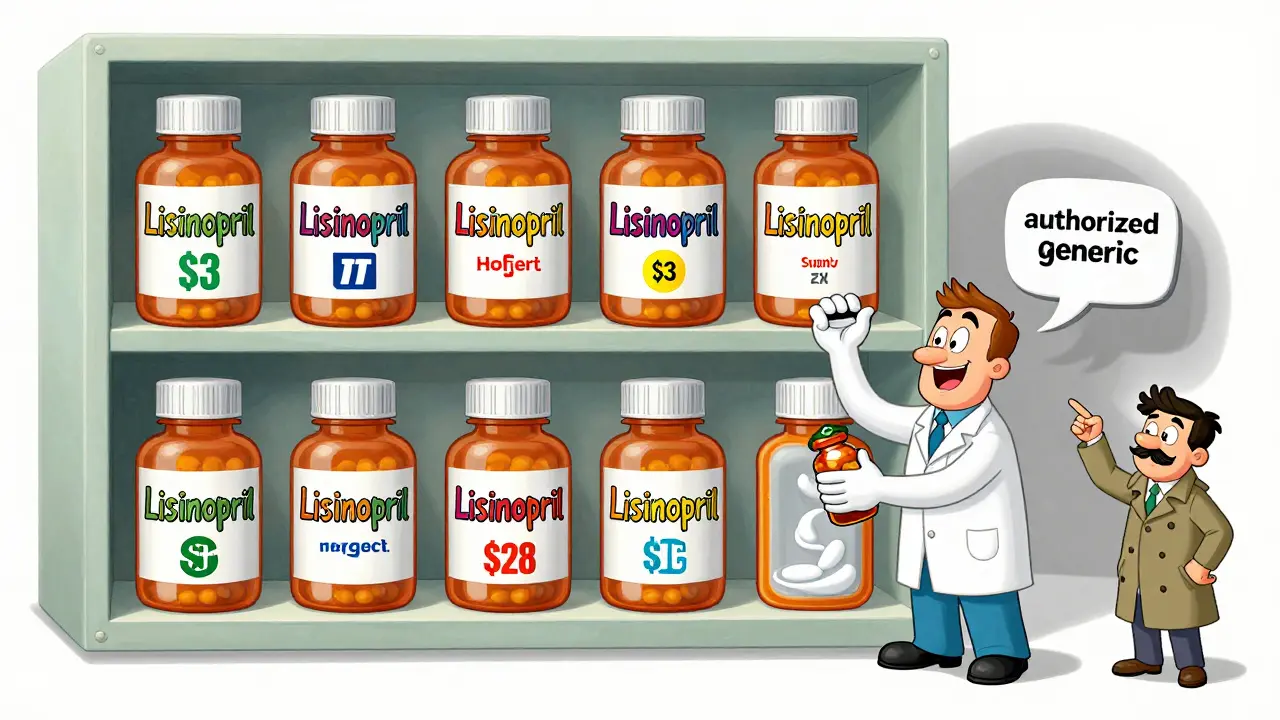
The Bigger Picture
The U.S. spends more on drugs than any other country. And yet, we have the most generic options. The problem isn’t lack of generics. It’s lack of competition among them. The FDA has tried to fix this. Their Drug Competition Action Plan, launched in 2017, pushes for faster approval of generics. The CREATES Act, passed in 2019, stops brand companies from blocking access to samples needed for generic testing. The FTC has started challenging mergers that would reduce competition. But real change needs more than regulation. It needs consumers who know how to shop. It needs pharmacists who know how to substitute. It needs doctors who understand the market. And it needs a system that rewards competition-not consolidation. Right now, we’re caught between two worlds: one where generic drugs save billions, and another where a single manufacturer can hold a life-saving pill hostage by raising the price. The solution isn’t to ban generics. It’s to make sure there are enough of them-and that they’re actually competing.What Happens When Competition Disappears
Imagine you need insulin. Or epilepsy medication. Or an antibiotic for a serious infection. Now imagine only one company makes it. And they decide to raise the price by 300%. That’s not science fiction. That’s happened. And it’s happening again. When competition vanishes, prices don’t just rise. Patients suffer. Some skip doses. Some switch to less effective drugs. Some go without. The system doesn’t collapse overnight. It frays slowly-until someone gets hurt. The good news? When competition returns, prices fall fast. The data proves it. The question is: who’s going to make sure it comes back?Why do generic drug prices drop so much when more companies make them?
When multiple companies make the same drug, they compete for customers. To win business, each lowers their price. The first generic might cut prices by 17%. With two, it’s 39.5%. With four or more, prices can drop over 70%. This isn’t guesswork-it’s backed by Medicare spending data from 2015 to 2019. More competitors = more pressure to lower costs.
Do all generic drugs have low prices?
No. Only generics with multiple manufacturers do. If only one or two companies make your drug, prices stay high. Injectable drugs, complex generics, and biosimilars often have few competitors, so they don’t see big price drops. For example, some life-saving injectables still cost hundreds of dollars even after patents expire because no other company can make them easily.
Why are there so few manufacturers for some generic drugs?
Making generics isn’t always profitable. Small companies struggle with regulatory costs, low margins, and supply chain risks. Many have been bought out by bigger firms. Others quit because they can’t compete. As a result, over half of all generic drugs now have only one or two makers. This consolidation reduces competition and keeps prices high.
Can I switch to a cheaper generic version of my drug?
Yes, if your drug is rated “AB” in the FDA’s Orange Book. That means it’s therapeutically equivalent to the brand. Your pharmacist can legally swap it for another AB-rated generic without asking your doctor. Use tools like GoodRx to compare prices. Sometimes, the same drug costs $5 at one pharmacy and $30 at another-just because of who makes it.
What’s the difference between a brand-name drug and a generic?
They contain the same active ingredient, work the same way, and meet the same safety standards. The only differences are the inactive ingredients (like fillers), packaging, and price. Generics cost less because they don’t pay for research, marketing, or patent protection. The FDA requires them to be just as effective and safe as the brand.
Are there risks when only one company makes a generic drug?
Yes. If that one company stops production-due to quality issues, supply problems, or profit concerns-you could face a shortage. Prices can spike 300% or more. Patients may have to switch medications, which can be dangerous for conditions like epilepsy or heart disease. Studies show that drugs with only one or two makers put patients at higher risk of cost-related non-adherence.
Nancy Kou
December 20, 2025 AT 17:08This is why I always check GoodRx before filling prescriptions. My mom’s blood pressure med went from $12 to $3 at CVS last month just because we switched generics. No difference in how it works, just a different label. People don’t realize how much they’re overpaying because they trust the pharmacy to pick the cheapest one.
Chris Davidson
December 21, 2025 AT 06:13The system is rigged and everyone knows it
Hussien SLeiman
December 23, 2025 AT 02:22You think this is bad wait till you see what happens when the FDA approves a new generic but the original manufacturer files a frivolous patent extension to delay it for 18 months. That’s not competition that’s legal extortion. The whole industry runs on loopholes and the people who pay are the ones who need these drugs the most. I’ve seen patients skip doses because they can’t afford the $80 version when the $10 one disappeared overnight. And no one in Congress cares because none of them are taking metformin or insulin. It’s not about healthcare it’s about profit margins and who gets to control the supply chain.
Erica Vest
December 24, 2025 AT 18:46For anyone wondering about therapeutic equivalence the FDA’s Orange Book is publicly accessible and searchable by drug name. Look for the "AB" rating which means bioequivalent and substitutable. Many pharmacists will automatically substitute unless the prescription says "dispense as written" but you can always ask. Also note that some insurers have preferred generics based on pricing agreements so your copay might vary even if the drug is identical.
Andrew Kelly
December 25, 2025 AT 02:53They’re not letting new manufacturers in because the big pharma lobbyists own the FDA. The same people who made billions off the brand name drugs now own the generic companies too. It’s all one big cartel. You think the price drop is real but it’s just a shell game. The same money flows through the same hands. The only difference is now they’re selling you the same pill in a different box with a cheaper label. And don’t get me started on the authorized generics those are just Trojan horses to kill competition before it even starts.
benchidelle rivera
December 26, 2025 AT 22:43For patients reading this if your drug has only one manufacturer and the price just jumped call your pharmacist and ask if there’s another AB-rated version available. If they say no ask them to check with other distributors. Sometimes the same generic is sitting in a warehouse 50 miles away but the pharmacy just ordered from the same supplier because it’s easier. You have more power than you think. And if you’re struggling to afford it ask about patient assistance programs. Many manufacturers offer them even for generics if you qualify. You’re not alone in this.
Adrienne Dagg
December 27, 2025 AT 08:39THIS IS WHY I CANNOT BELIEVE PEOPLE STILL TRUST PHARMACIES 😭 The same exact pill costs $3 at Walmart and $40 at Walgreens. It’s not even close. And no one talks about this. The system is designed to confuse you so you just pay what they ask. I had to switch my antidepressant because my pharmacy "didn’t have it in stock" and when I called 5 other places they had it for half the price. Why do they even let pharmacies do this? 🤦♀️
Glen Arreglo
December 27, 2025 AT 08:40As someone who grew up in a country where generics are regulated to maintain competition I can say this system is broken. Here in the U.S. we treat medicine like a commodity when it’s a human right. The fact that someone’s life depends on a pill that can suddenly cost 300% more because a company decided to quit the market is unacceptable. We need policy changes but we also need cultural change. Patients need to stop being passive and start demanding transparency. Ask your doctor why your drug has one maker. Ask your pharmacist why the price changed. Ask your insurer why they only cover one version. Question everything. That’s the only way we push back.