 May, 21 2026

The way doctors and nurses view their jobs is changing faster than ever. If you walk into a clinic today, the vibe isn't just about prescribing pills anymore. It’s about data, teamwork, and keeping staff from burning out. By 2025 and moving into 2026, the old model of "doctor knows best" is fading. Instead, we are seeing a shift toward partnerships where patients bring their own health data, and providers use artificial intelligence to make sense of it all.
This isn’t just a buzzword trend. It’s a survival strategy. With staffing shortages hitting hard and costs rising, healthcare providers have had to rethink everything from how they hire to how they talk to patients. Let’s look at what’s actually driving these changes and what they mean for the people working in hospitals and clinics right now.
From Skepticism to Strategy: The AI Shift
Remember when AI in healthcare felt like science fiction? That era is over. Today, Artificial Intelligence (AI) is the integration of machine learning and data analytics into clinical workflows to enhance decision-making and operational efficiency. For many providers, the attitude has shifted from cautious skepticism to strategic necessity. You can’t ignore it anymore because your competitors aren’t.
In 2024, major consulting firms like PwC noted that providers were starting to embrace value-based care arrangements. This means getting paid for outcomes, not just volume. To do that, you need efficiency. AI helps there. But it’s not just about speed; it’s about trust. Providers are realizing that if they don’t build strong governance frameworks around fairness and privacy, they risk losing patient trust entirely.
The real change in attitude? Providers are no longer asking "Should we use AI?" They’re asking "How do we train our staff to use it responsibly?" Forrester reported in early 2025 that organizations must train employees on responsible AI use rather than penalizing them for mistakes. This signals a cultural shift where technology is seen as a tool to support human judgment, not replace it. When a doctor uses an AI tool to flag a potential drug interaction, they aren’t abdicating responsibility-they’re double-checking their work with a powerful assistant.
Patient-Centered Care: The Data-Rich Patient
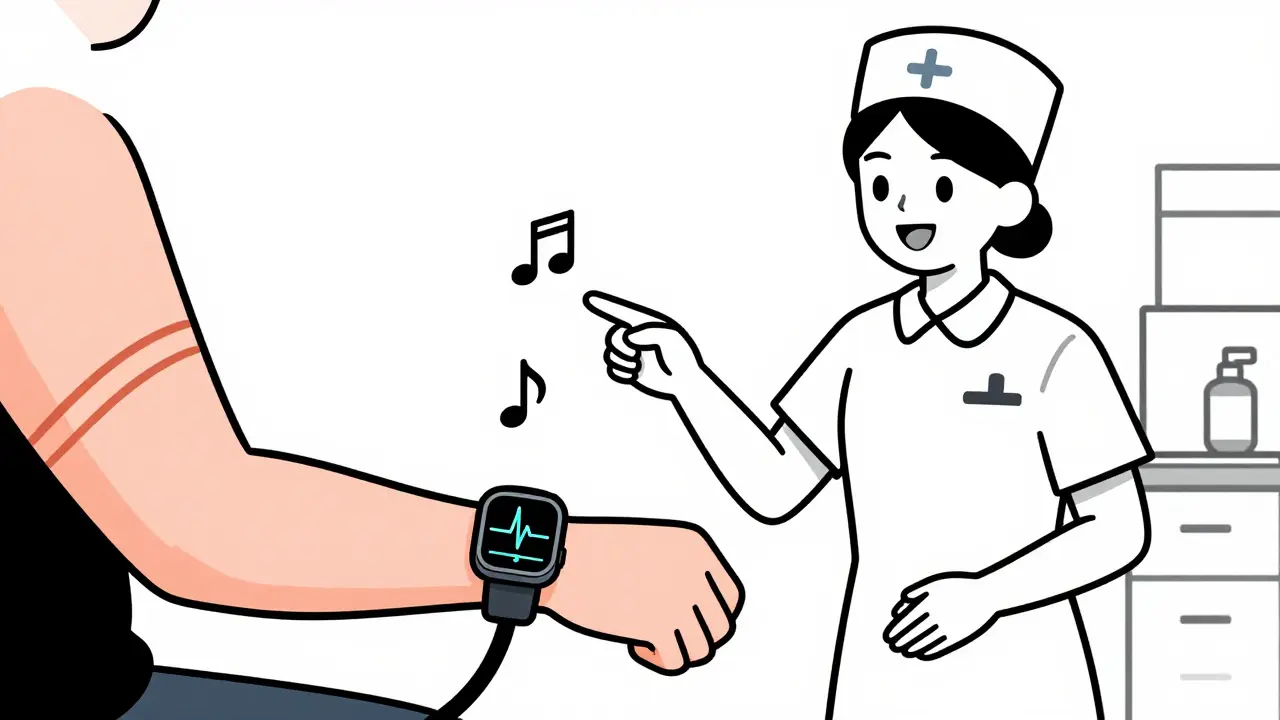
Patients aren’t coming in blank slates anymore. Thanks to wearables and health apps, they arrive with comprehensive biometric records. This fundamentally alters the dynamic between doctor and patient. The National Institutes of Health (NIH) highlighted in 2025 that physicians will engage with more informed consumers who bring discussion points backed by data, not just vague symptoms.
Patient-Generated Health Data (PGHD) is health information collected by patients outside of traditional clinical settings using devices like smartwatches, glucose monitors, and mobile health apps. A year ago, many doctors might have rolled their eyes at a patient showing heart rate data from a fitness tracker. Now, Nature Digital Medicine confirms that healthcare professionals recognize the significant potential of this data for personalized care. Why? Because it gives a continuous picture of health, not just a snapshot during a 15-minute visit.
This requires a new skill set for providers. They need to interpret digital data streams and communicate effectively about them. The attitude is shifting from "I am the sole authority" to "Let’s look at this data together." IPG Health noted that consumers are customizing their own treatment paradigms before even seeing a doctor. Providers who adapt to this partnership model find quicker resolution times and higher patient satisfaction. Those who resist struggle with engagement.
| Aspect | Traditional View (Pre-2023) | Evolving View (2025-2026) |
|---|---|---|
| Role of AI | Risk/Liability concern | Strategic necessity for efficiency |
| Patient Data | Clinical records only | Integration of wearable/app data |
| Communication | Doctor-led instruction | Collaborative partnership |
| Work Location | Fixed physical workspace | Hybrid/Virtual flexibility |
Workforce Transformation: Retention Over Recruitment
The biggest headache for healthcare leaders isn’t tech-it’s people. Staffing shortages are persistent. According to Forrester, 53% of healthcare employers cite employee retention as their biggest challenge over the next five years. This pressure is forcing a massive shift in how providers view their own teams and their careers.
Gone are the days of rigid shifts and strict hierarchies. Providers are increasingly open to multidisciplinary teams and flexible schedules. The NIH notes that clinicians are developing "anywhere, anytime" models of care. This doesn’t just mean telemedicine; it means recognizing that a nurse or technician can contribute valuable insights regardless of their physical location within the hospital system.
Certification is also playing a huge role here. The National Healthcare Association (NHA) found that 70% of employers require certifications for roles like Medical Assistants and Pharmacy Technicians. More importantly, 71% of employers increase pay for credentialed staff. Providers see this clearly: certification equals career stability. The attitude among allied health professionals is shifting toward upskilling as a primary method of job security. It’s not just about following orders; it’s about owning a specialized skill set that commands respect and better pay.
The Human Element in a Digital World
With all this tech, there’s a fear that healthcare is becoming cold. Interestingly, provider attitudes are swinging back toward emphasizing the human connection. IPG Health observed that transparency and authenticity are becoming competitive advantages. Patients are tired of fully AI-generated content and robotic interactions.
Providers are realizing that while AI can handle scheduling and data aggregation, it cannot empathize. The most successful practices in 2025 are those that use technology to free up time for genuine human interaction. A doctor spending less time typing into an Electronic Health Record (EHR) has more time to look the patient in the eye. This shift is crucial. The goal of digital transformation isn’t to remove humans; it’s to put them back in the center of care by removing administrative burdens.
However, this balance is tricky. McKinsey’s Future of Wellness survey identified distinct consumer segments, including "wellness shirkers" who are price-sensitive and less engaged. Providers must tailor their approach, breaking down services to create incentives for motivation. This requires emotional intelligence and adaptability-skills that cannot be automated.

Navigating Uncertainty and Risk
Change brings anxiety. Many healthcare provider organizations struggle to align their culture initiatives with actual operations. Forrester warns that without leaders modeling shared purpose, culture initiatives fail. The gap between leadership vision and frontline reality remains a critical friction point.
Successful organizations are those that lean into core values. They acknowledge the uncertainty but focus on resilience. PwC predicts continued consolidation and investment in employer-sponsored insurance programs. For individual providers, this means understanding the business side of healthcare is no longer optional. You need to know how value-based care affects your bonus, how population health metrics impact your department, and how your role fits into the broader ecosystem.
The financial landscape is shifting too. With a predicted $1 trillion shift away from traditional payers to new ecosystems involving tech hyperscalers, providers must reconsider their roles. Are you just a clinician, or are you part of a larger health network? Understanding this helps in making career decisions and advocating for resources that matter.
What Comes Next?
We are standing at a crossroads. The next few years will define the modern healthcare professional. Will you be the one resisting the wearable data, or the one integrating it to save lives? Will you view AI as a threat, or as the best assistant you’ve ever had?
The trends are clear: technology is accelerating, patients are empowered, and the workforce is demanding better conditions. Providers who adapt with curiosity and empathy will thrive. Those who cling to outdated models will find themselves left behind. The future of practice isn’t just about medicine; it’s about connection, data literacy, and sustainable work environments.
How is AI changing the daily routine of healthcare providers?
AI is moving from a background tool to a frontline partner. Providers are using it to automate administrative tasks like documentation and scheduling, which frees up time for patient interaction. Additionally, AI tools help analyze large datasets from wearables to identify health risks earlier. The key change is in mindset: providers are now trained to collaborate with AI for decision support rather than viewing it as a replacement for clinical judgment.
Why are patient-generated health data sources important to providers now?
In the past, providers relied solely on clinical visits for data. Now, with 85% of Americans owning wearable devices, patients bring continuous streams of biometric data. Providers recognize this data offers a more accurate, longitudinal view of health. Integrating this allows for personalized care plans and quicker interventions, shifting the relationship from transactional to collaborative.
What is the biggest challenge facing the healthcare workforce in 2026?
Employee retention is the top challenge, cited by 53% of employers. High burnout rates and staffing shortages are forcing providers to rethink work structures. Solutions include offering flexible schedules, supporting remote care options, and incentivizing professional certifications to improve job satisfaction and career advancement opportunities.
How does value-based care influence provider attitudes?
Value-based care rewards outcomes and efficiency rather than volume. This shifts provider attitudes toward preventing disease and managing chronic conditions proactively. Providers are encouraged to reduce wasteful spending and adopt technologies that streamline operations, as their financial success becomes tied to patient health improvements and cost containment.
Is certification still relevant for allied health professionals?
Yes, more than ever. With 70% of employers requiring certifications for roles like Medical Assistants, formal qualifications are essential. Furthermore, 71% of employers offer pay increases for certified staff. Certification is seen as a marker of quality, safety, and commitment, making it a critical factor for both employer retention strategies and employee career growth.