 Jul, 12 2026
HIV Medication & Birth Control Compatibility Checker
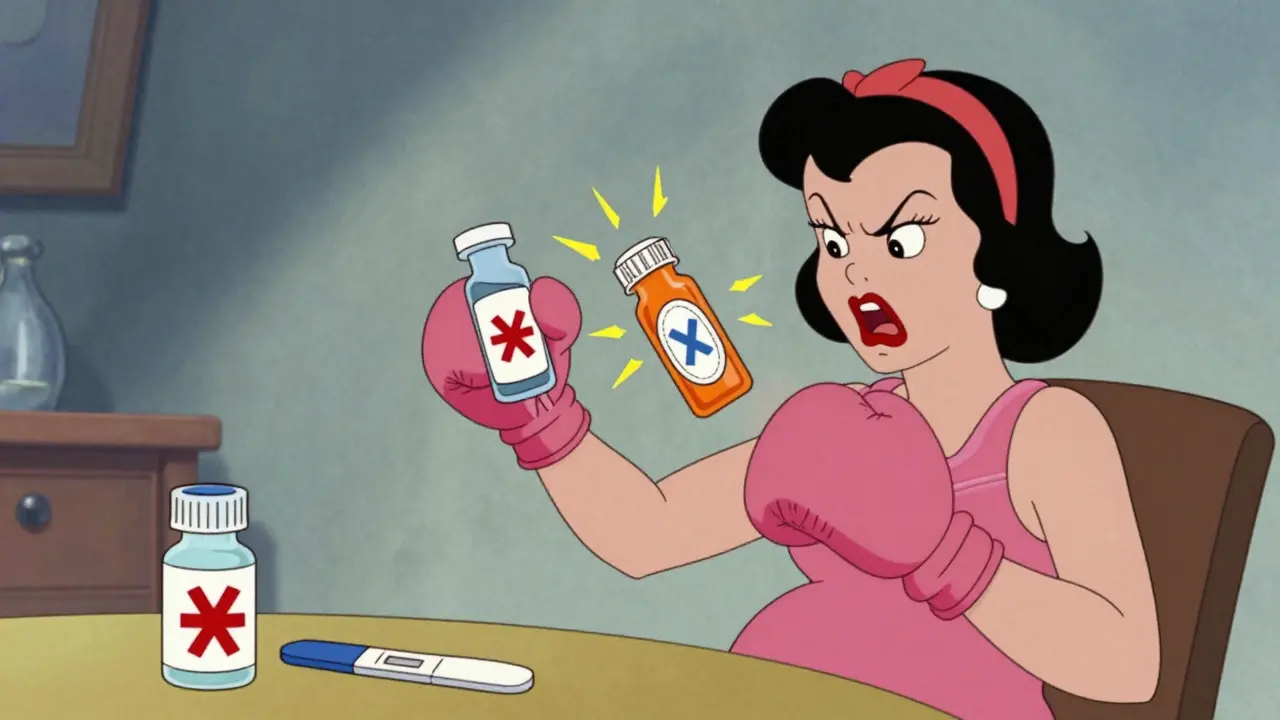
Imagine this: you take your HIV medication every single day. You also take your birth control pill at the same time, without missing a dose. You feel safe. You trust your routine. But then, two months later, a pregnancy test turns positive. It’s not because you were careless. It’s because the drugs in your body are fighting each other.
This isn’t a rare horror story. It is a well-documented pharmacological reality for many people living with HIV who use HIV protease inhibitors, a class of antiretroviral drugs that interact dangerously with hormonal contraceptives, potentially reducing their effectiveness by up to 70%. If you are on a regimen containing these powerful antivirals, your standard birth control method might be silently failing you.
The Mechanism: Why These Drugs Clash
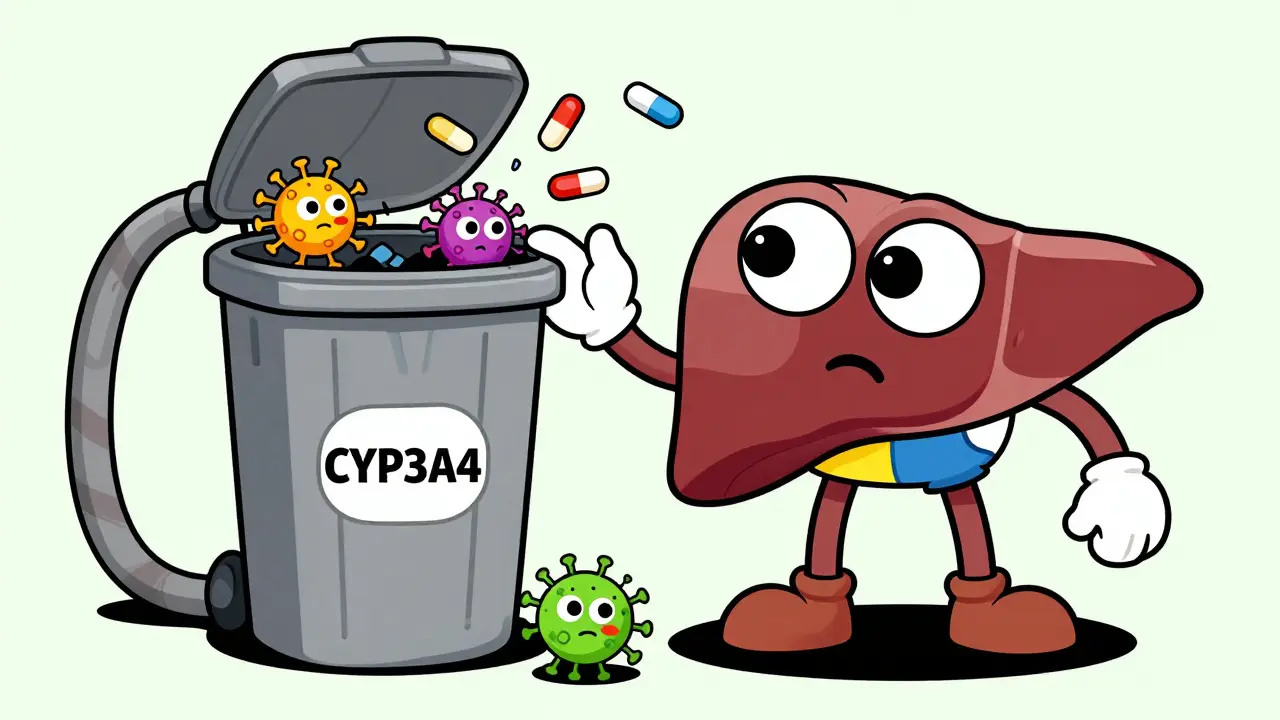
To understand why this happens, we need to look inside the liver. Your liver uses enzymes, specifically a group called cytochrome P450 (CYP3A4), to break down medications. Think of these enzymes as recycling bins that clear out used drugs so they don’t build up to toxic levels or disappear too quickly.
Protease inhibitors like ritonavir, lopinavir, and atazanavir are potent inhibitors of CYP3A4. They clog the recycling bin. When you add hormonal contraceptives-such as combined oral pills, patches, or rings-to the mix, things get messy.
In some cases, the inhibitor blocks the breakdown of the hormone, causing it to spike. In others, particularly with complex boosted regimens, the interaction alters the absorption or metabolism in ways that lead to sub-therapeutic levels. A study published in The Journal of Infectious Diseases showed that ritonavir reduced progesterone levels by 70% in lab models. That means your body isn’t getting enough hormone to prevent ovulation. The result? Unintended pregnancy.
Which Birth Control Methods Are Unsafe?
Not all contraceptives are created equal when you’re on HIV treatment. The World Health Organization (WHO) and the U.S. Centers for Disease Control and Prevention (CDC) classify drug interactions using a Medical Eligibility Criteria (MEC) system. Category 1 means "no restriction." Category 3 means "risks usually outweigh benefits"-essentially, do not use this combination unless there are no other options.
Here is how common methods stack up against Ritonavir-boosted protease inhibitors:
| Contraceptive Method | WHO MEC Category | Risk Level | Notes |
|---|---|---|---|
| Combined Oral Contraceptives (Pills) | Category 3 | High | Significant reduction in hormone levels; high failure rate. |
| Progestin-Only Pills (Mini-Pill) | Category 3 | High | Not recommended due to unpredictable metabolism. |
| Contraceptive Patch (Xulane/Twirla) | Category 3 | High | Study showed 45% decrease in ethinyl estradiol absorption. |
| Vaginal Ring (NuvaRing) | Category 3 | High | Etonogestrel levels can drop to sub-therapeutic ranges. |
| Depot Medroxyprogesterone Acetate (DMPA/Shot) | Category 1-2* | Low-Moderate | *Category 1 if non-ritonavir boosted; caution advised otherwise. |
| Copper IUD | Category 1 | None | No hormonal interaction; highly effective. |
| Hormonal IUD (Mirena/Kyleena) | Category 1 | None | Local hormone release avoids systemic liver interaction. |
The data is stark. In a 2019 study published in The Lancet, women using efavirenz (an NNRTI, often compared to PIs) saw etonogestrel levels from implants drop by 79%. While integrase inhibitors like dolutegravir have fewer interactions, protease inhibitors remain problematic for almost all hormonal methods delivered systemically.
The Safe Alternatives: What Actually Works
If you are on a protease inhibitor regimen, you are not out of options. In fact, some of the most effective birth control methods available today are completely unaffected by HIV medications.
Long-Acting Reversible Contraceptives (LARCs) such as intrauterine devices (IUDs) and implants are the gold standard for people on ART. Here is why:
- Copper IUD: This device contains no hormones. It works by creating an environment hostile to sperm and fertilized eggs. Since it doesn’t rely on your bloodstream, your liver enzymes-and your HIV meds-can’t interfere with it. It is 99% effective.
- Hormonal IUDs (Levonorgestrel-releasing): Devices like Mirena or Kyleena release hormones directly into the uterus. Very little enters the bloodstream. Because the hormone never has to pass through the liver’s CYP3A4 filter, protease inhibitors cannot reduce its efficacy. Studies show these maintain >99% effectiveness regardless of antiretroviral therapy.
Barrier methods, such as condoms, are also safe and provide the added benefit of preventing reinfection or other STIs. However, they require perfect use every time, which leads to higher typical-use failure rates compared to LARCs.
Real-World Stories: The Cost of Ignorance
Statistics tell one story, but patient experiences reveal the human cost. On HIV support forums, stories of unexpected pregnancies among adherent patients are distressingly common. One user, 'MariaJ', reported becoming pregnant while taking Tri-Sprintec with darunavir/cobicistat despite perfect adherence. Another, 'HIVandFamily', shared her experience of discovering a pregnancy at 18 weeks while using Depo-Provera with atazanavir/ritonavir.
A survey by the Positive Women's Network-USA found that 28% of HIV-positive women experienced contraceptive failure while using hormonal methods with antiretrovirals. Of those failures, 63% involved protease inhibitor regimens. Even more alarming, 41% of surveyed women said they received inadequate counseling about these interactions during their initial diagnosis.
This gap in care is dangerous. Some women, terrified of another unintended pregnancy, have discontinued their HIV medication to preserve contraceptive efficacy. This risks viral rebound, resistance, and transmission. The solution is not to stop HIV treatment; it is to switch birth control methods.

What To Ask Your Doctor Today
You do not have to navigate this alone. The next time you see your provider, bring up your birth control plan explicitly. Do not assume they know what you are using, or that they have checked for interactions.
- List all medications: Include over-the-counter supplements and any new prescriptions.
- Ask about your specific ART: Is it boosted with ritonavir or cobicistat? These boosters are the primary culprits for interactions.
- Demand a LARC evaluation: Ask, "Am I a candidate for a copper or hormonal IUD?" These are the safest bets.
- Verify emergency contraception: Standard levonorgestrel emergency pills may be less effective with certain PI regimens. Ulipristal acetate or a copper IUD inserted within five days of unprotected sex is more reliable.
Guidelines from the American College of Obstetricians and Gynecologists (ACOG) recommend that providers use a "teach-back" method to ensure you understand these risks. If your doctor dismisses your concerns, seek a second opinion. Your reproductive health is just as important as your viral load.
Frequently Asked Questions
Can I take the morning-after pill if I am on protease inhibitors?
Standard levonorgestrel emergency contraception (Plan B) may be less effective when taken with certain protease inhibitors like ritonavir or cobicistat because the drugs compete for metabolism. A copper IUD inserted within five days of unprotected sex is the most effective form of emergency contraception and is not affected by HIV medications. Ulipristal acetate (Ella) is another option, but its interaction profile should be checked with a pharmacist.
Are integrase inhibitors safer for birth control than protease inhibitors?
Yes. Integrase strand transfer inhibitors (INSTIs) like dolutegravir and raltegravir generally have minimal interaction with hormonal contraceptives. Recent WHO draft guidelines suggest reclassifying etonogestrel implants to Category 1 (no restrictions) for use with dolutegravir-based regimens, indicating a much safer profile compared to older protease inhibitor treatments.
Does the Depo-Provera shot work with HIV medication?
It depends on the HIV regimen. For non-ritonavir-boosted regimens, DMPA is generally considered safe (Category 1). However, with ritonavir-boosted protease inhibitors, there is uncertainty about hormone levels, leading to a Category 2 or 3 classification depending on the source. Many experts prefer IUDs over Depo for women on boosted PIs to eliminate risk entirely.
Why does the contraceptive patch fail with HIV drugs?
The patch delivers hormones through the skin into the bloodstream, where they must pass through the liver. A clinical trial (ACTG A5188) found that women using lopinavir/ritonavir had a 45% decrease in ethinyl estradiol absorption. This significant drop means the hormone level may fall below the threshold needed to suppress ovulation, leading to potential pregnancy.
Should I stop my HIV medication to use the pill?
Absolutely not. Stopping HIV medication can lead to viral rebound, drug resistance, and increased risk of transmitting HIV. The correct approach is to switch to a contraceptive method that does not interact with your ART, such as a copper IUD, hormonal IUD, or barrier methods. Never compromise your HIV treatment for birth control.