 Jan, 3 2026
Blood Thinner Period Treatment Calculator
70% of women on blood thinners experience heavy menstrual bleeding. This tool helps you compare safe, effective treatments that don't require stopping your anticoagulant.
Select your blood thinner, bleeding severity, and fertility needs to see which treatments are most appropriate for your situation.
Recommended Treatments
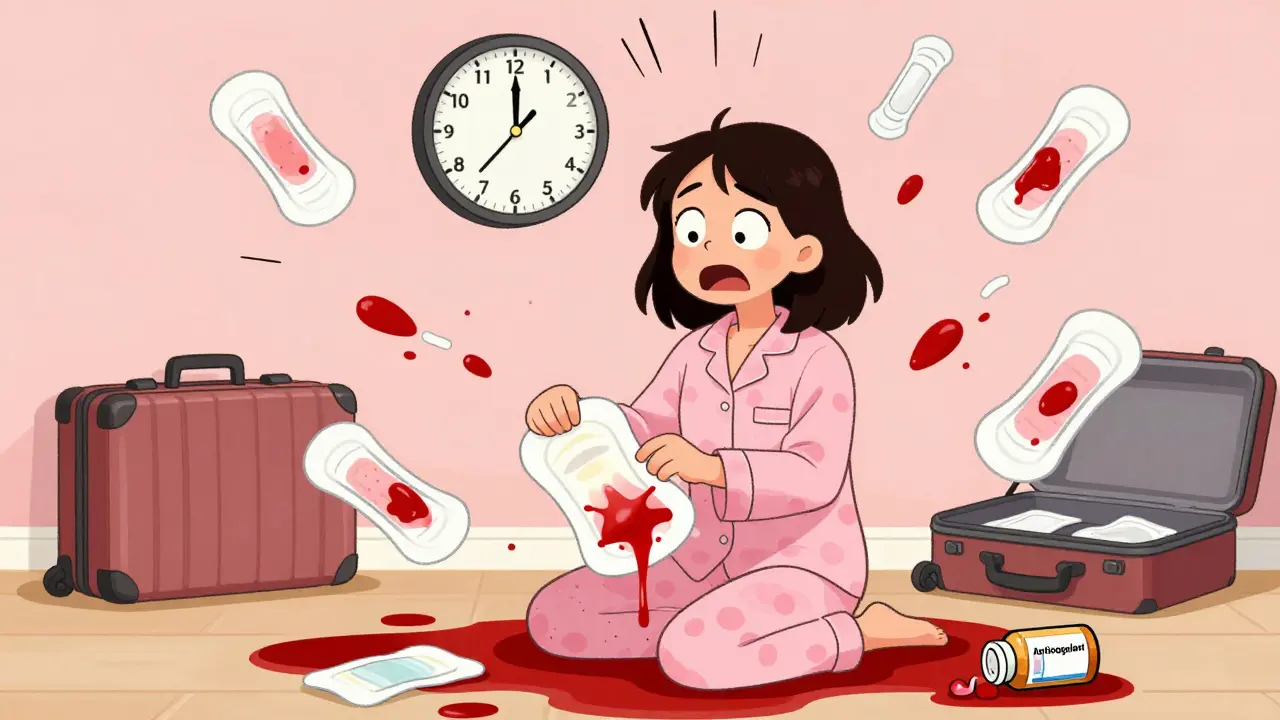
If you’re on a blood thinner and your periods have become unbearable-needing to change pads or tampons every half-hour, leaking through products, or feeling dizzy from blood loss-you’re not alone. And you’re not imagining it. About 70% of menstruating women on oral anticoagulants experience heavy menstrual bleeding (HMB) that impacts their daily life. Yet, most doctors never ask about it.
It’s not just inconvenient. It’s exhausting. Women report missing work, avoiding social events, and carrying emergency changes everywhere. One woman on Reddit said she stopped wearing white jeans after her third ER visit for blood loss. Another said she cried in the bathroom at work because she couldn’t get to a restroom in time. This isn’t normal. And it doesn’t have to be this way.
Why Blood Thinners Make Periods Heavier
Blood thinners-also called anticoagulants-work by stopping your blood from clotting too easily. That’s great for preventing strokes, heart attacks, or dangerous clots in your legs or lungs. But when you’re menstruating, your body needs to form temporary clots to slow down bleeding. Anticoagulants interfere with that process.
Normally, 10% to 30% of women have heavy periods. But once you start a blood thinner, that jumps to 66%-70%. The risk isn’t the same across all drugs. Research shows apixaban and dabigatran are linked to less heavy bleeding than rivaroxaban. Warfarin, the older blood thinner, also carries a high risk. The exact reason isn’t fully understood, but it’s likely tied to how each drug affects clotting factors in the uterine lining.
What does heavy bleeding look like? Signs include:
- Changing pads or tampons every 1-2 hours for several hours straight
- Passing clots larger than a quarter
- Periods lasting longer than 7 days
- Leaking through clothing or bedding
- Feeling tired, dizzy, or short of breath (signs of anemia)
Iron deficiency anemia is common. One study found nearly half of women on anticoagulants with HMB had low iron levels-even if they didn’t feel symptoms. Left untreated, it can lead to heart strain, brain fog, and chronic fatigue.
What You Can Do: Treatment Options That Work
The good news? There are effective, safe ways to reduce bleeding-without stopping your blood thinner. Skipping doses or quitting anticoagulants because of heavy periods is dangerous. Research shows doing so increases your risk of another clot by up to five times.
Here’s what actually works, backed by clinical guidelines and real patient outcomes:
1. Levonorgestrel IUD (Mirena, Kyleena, etc.)
This is the most effective option for most women. A small T-shaped device inserted into the uterus releases a low dose of progesterone directly into the uterine lining. It thins the lining, so there’s less tissue to shed.
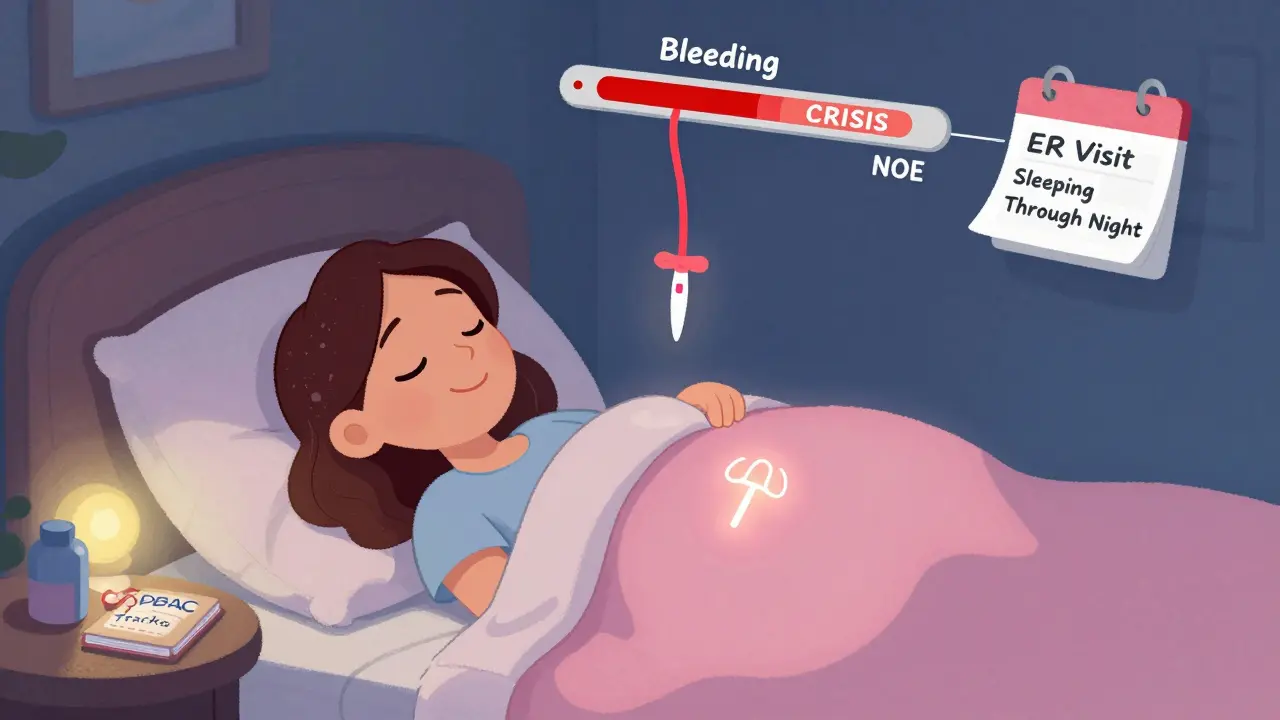
Studies show it reduces menstrual blood loss by 70%-90% within 3-6 months. Many women end up with light periods-or no periods at all. One user on r/anticoagulation said: “After getting Mirena on Eliquis, my periods went from ER visits to almost gone. I finally slept through the night.”
It lasts 3-5 years, is reversible, and doesn’t interfere with anticoagulants. It’s also a form of birth control, which is important because pregnancy while on blood thinners can be risky.
2. Progesterone Pills or Implants
If you don’t want an IUD, oral progesterone or a subdermal implant (like Nexplanon) can help. The American Society of Hematology recommends a high-dose regimen: norethisterone 5 mg three times daily for 21 days, starting a few days before your period. This isn’t a daily pill-it’s timed to your cycle.
Implants work similarly to the IUD but are placed under the skin of your arm. They’re effective for 3 years and reduce bleeding in most users. Side effects can include spotting at first, mood changes, or weight gain-but many women find these manageable.
3. Tranexamic Acid
This is a prescription medication that helps blood clot. You take it only during your period-usually 1-2 tablets every 8 hours for up to 5 days. It doesn’t change your hormone levels, so it’s safe with anticoagulants if taken correctly.
Clinical trials show it reduces bleeding by 30%-50%. It’s not as powerful as the IUD, but it’s a good option if you want to avoid hormones or are trying to get pregnant. It can cause mild nausea or headaches, but serious side effects are rare.
4. NSAIDs (Ibuprofen, Naproxen)
Over-the-counter painkillers like ibuprofen can reduce menstrual bleeding by 20%-40%. But here’s the catch: NSAIDs also affect platelet function. Taking them with blood thinners can increase bleeding risk, especially if you’re on warfarin or high-dose aspirin.
If you use them, stick to the lowest effective dose for the shortest time. Don’t combine with aspirin unless your doctor says it’s safe. Some women find it helpful for cramps and light bleeding-but don’t rely on it as your main solution.
What Doesn’t Work (and Why)
Many women try things that don’t help-or make things worse.
- Birth control pills (combined estrogen-progesterone): These can be risky with anticoagulants. Estrogen increases clotting risk, which defeats the purpose of your blood thinner. Avoid unless your hematologist and gynecologist agree it’s safe.
- Endometrial ablation: This procedure burns or removes the uterine lining. It works well for women not on blood thinners-but in anticoagulated patients, the risk of bleeding during or after surgery is too high. It’s only considered as a last resort, and even then, you’ll need careful bridging with heparin.
- Stopping or skipping your blood thinner: This is the most dangerous option. A 2022 study found that 30%-50% of young women stop their anticoagulant within a year because of heavy bleeding. That’s what leads to strokes, pulmonary embolisms, and even death.
How to Talk to Your Doctor
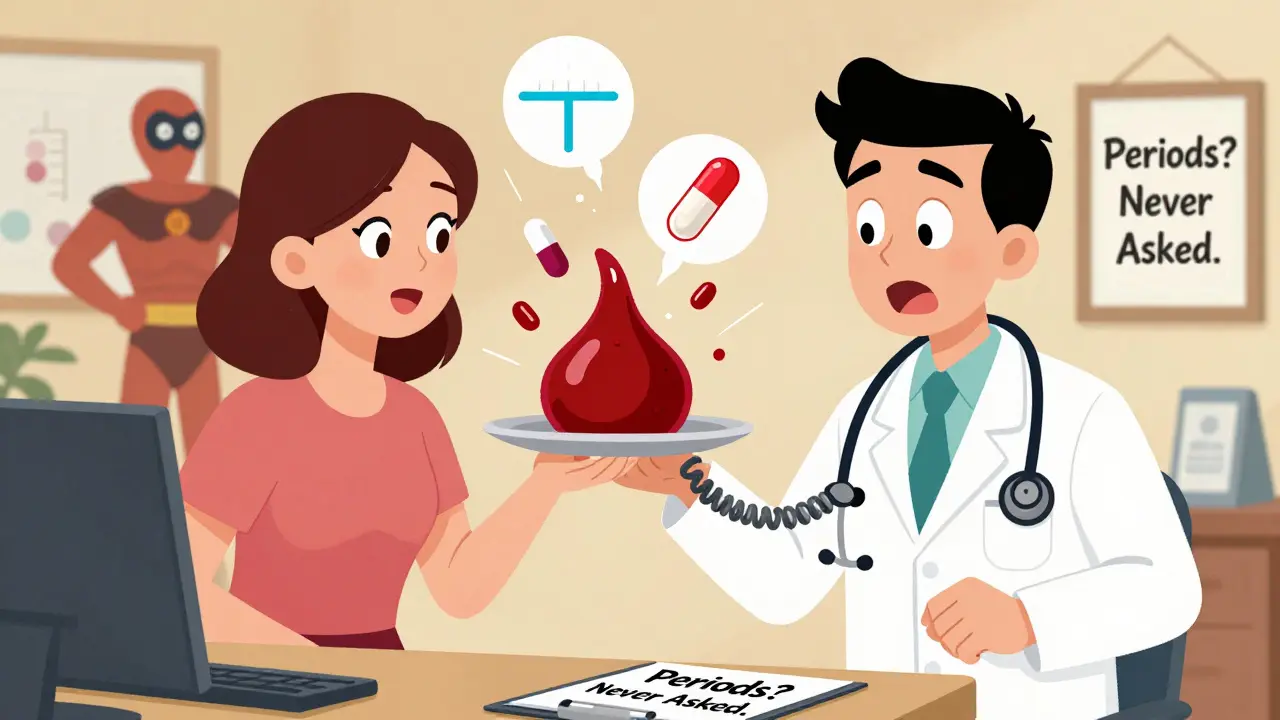
Here’s the hard truth: 68% of women say their hematologist never asked about their periods after starting anticoagulants. You have to bring it up.
Don’t wait until you’re in crisis. When you start a new blood thinner, ask:
- “Will this affect my periods?”
- “What signs of heavy bleeding should I watch for?”
- “What treatment options are safe to use with this medication?”
- “Can you refer me to a gynecologist who understands anticoagulant-related bleeding?”
Bring a symptom tracker. Write down:
- How many pads/tampons you use per day
- Size of clots
- Days your period lasts
- How much it affects your work, sleep, or mood
Some clinics now use the Pictorial Blood Loss Assessment Chart (PBAC)-a simple scoring system that helps quantify bleeding. Ask if they use it.
When to Get Tested for Anemia
Any woman on anticoagulants with heavy bleeding should get a blood test for iron and hemoglobin. You don’t need to wait until you feel weak.
Low iron can cause:
- Extreme tiredness
- Shortness of breath
- Heart palpitations
- Brittle nails
- Cold hands and feet
Treatment usually involves oral iron supplements. In severe cases, IV iron may be needed. Don’t ignore this-it’s fixable.
The Bigger Picture: Why This Is Being Ignored
There are 2-3 million Americans on blood thinners each year. About 25% are women of reproductive age. That’s 500,000-750,000 women at risk for HMB.
Yet, only 22% of hematology clinics screen for menstrual bleeding. Why? Because it’s not in the guidelines-yet. The American Society of Hematology and the American College of Obstetricians and Gynecologists are working on new joint guidelines expected in mid-2025. Until then, the burden falls on you to speak up.
The International Society on Thrombosis and Haemostasis added menstrual bleeding to its official bleeding assessment tools in 2021. That’s progress. But it hasn’t trickled down to most doctors’ offices.
This isn’t just about periods. It’s about dignity, independence, and survival. If you’re bleeding so heavily you can’t leave the house, you’re not being “dramatic.” You’re being ignored by a system that treats blood clots as emergencies but treats bleeding from your uterus as a nuisance.
What’s Next: Hope on the Horizon
A major clinical trial (NCT04987654) is now comparing HMB rates across all major DOACs-apixaban, rivaroxaban, dabigatran, and edoxaban. Results could help doctors pick the safest option for women based on their menstrual history.
Also, the National Blood Clot Alliance now recommends that all women be warned about potential heavy bleeding before starting anticoagulants. That’s a big step. If your doctor doesn’t mention it, ask why.
There’s no reason you should have to choose between staying alive and living normally. With the right treatment, you can do both.