 Mar, 17 2026
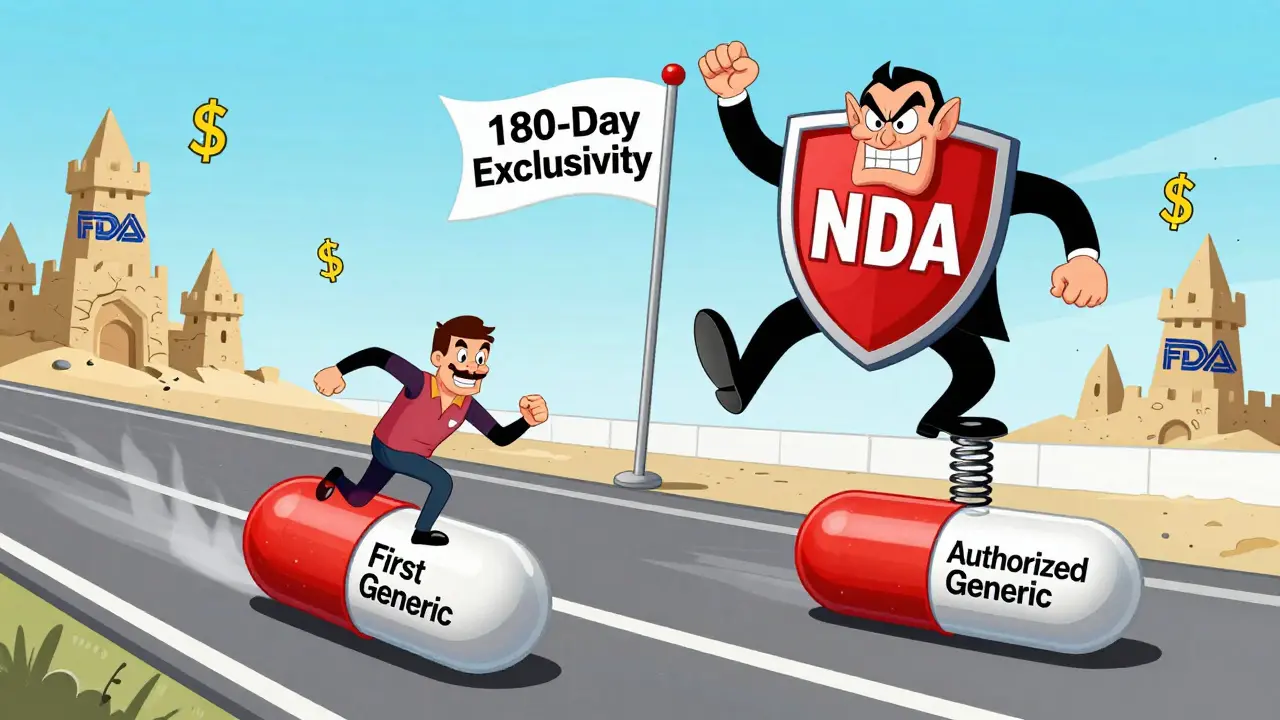
When a brand-name drug loses its patent, the race to sell the first generic version begins. But here’s the twist: the company that made the original drug might be the one who beats you to market - and they don’t even need to file a new application. This isn’t a loophole. It’s a strategy. And it’s reshaping how generics work in the U.S.
What’s the difference between first generic and authorized generic?
A first generic is the first company to successfully challenge a brand-name drug’s patent and get FDA approval to sell a generic version. They file an Abbreviated New Drug Application (ANDA), prove their version is bioequivalent to the original, and if they’re first, they get 180 days of exclusive rights to sell it. During that time, no other generic can enter - which means they usually capture 70-90% of the market. Revenue? Often $100 million to $500 million.
An authorized generic is a version of the brand-name drug made by the original manufacturer (or a licensed partner) and sold under a generic label without needing FDA approval through the ANDA process. It’s chemically identical - same factory, same ingredients, same packaging - but labeled as generic. No testing. No waiting. Just a switch on the label.
The big difference? Timing. First generics take years to prepare: patent lawsuits, clinical data, FDA reviews. Authorized generics? They can launch in days. And they often do - right when the first generic hits the market.
Why timing matters more than you think
The Hatch-Waxman Act of 1984 was meant to speed up generic access. It gave the first filer a reward: 180 days alone on the market. The idea? Encourage companies to take on the legal and financial risk of challenging patents. But brand-name drugmakers found a way around it.
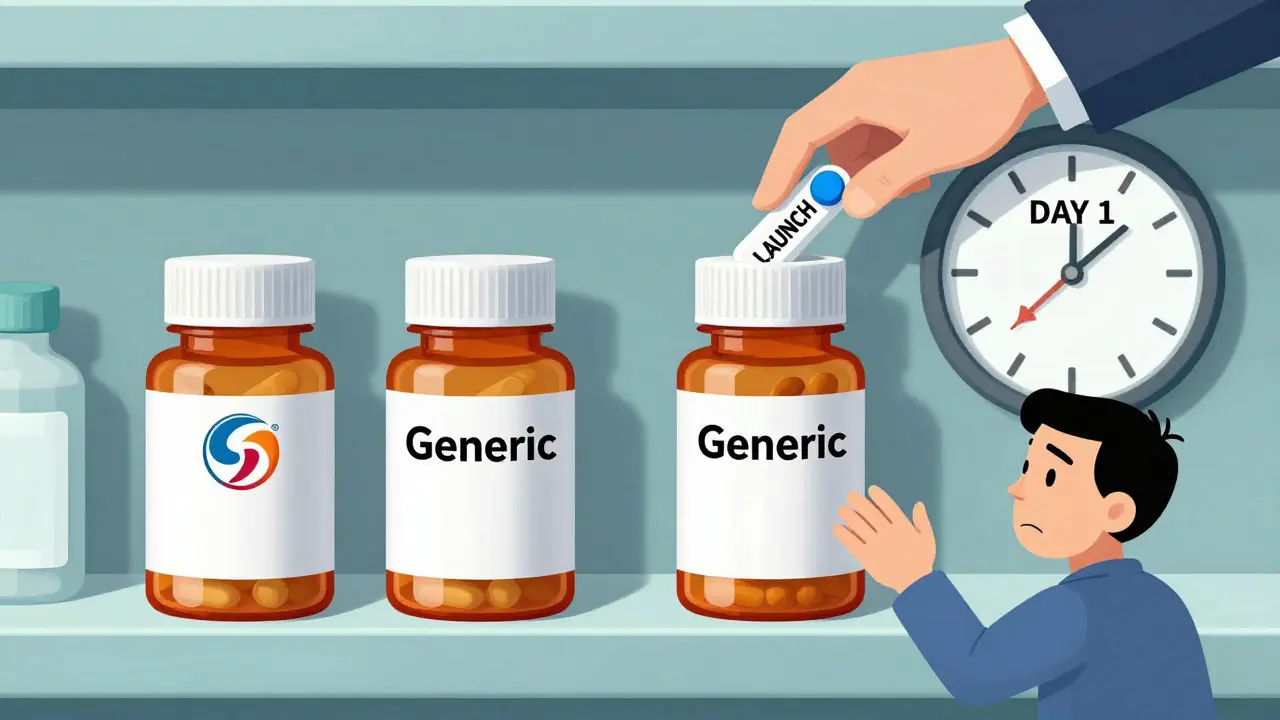
Between 2010 and 2019, 73% of authorized generics launched within 90 days of the first generic’s approval. Over 40% launched on the exact same day. That’s not coincidence. That’s strategy.
Take Lyrica (pregabalin). Pfizer’s brand-name drug was set to lose exclusivity in 2019. Teva, a major generic maker, was the first to file and got approval. They expected to dominate the market. Then, on the same day Teva launched, Pfizer released its own authorized generic through Greenstone LLC. Within weeks, Pfizer’s version took 30% of the market. Teva’s revenue dropped by nearly half. The 180-day exclusivity? Effectively broken.
This pattern repeats across top-selling drugs. In cardiovascular drugs, 32% of cases saw authorized generics enter during the first generic’s exclusivity window. For CNS drugs like gabapentin and pregabalin? 24%. The result? Prices don’t drop as hard. Instead of the usual 80-90% price cut after generic entry, when an authorized generic joins in, prices only fall 65-75%. That’s billions in lost savings for patients and insurers.
How authorized generics bypass the rules
First generics need to prove they’re the same as the brand drug. That means bioequivalence studies, manufacturing inspections, FDA reviews - which can take 10 months to over three years. Meanwhile, authorized generics use the brand’s existing New Drug Application (NDA). No new data. No new review. Just a label change.
The FDA approved 80 first generics in 2017 alone - but less than 10% of generic applications cleared the first review cycle. Meanwhile, authorized generics skip the line entirely. They’re not regulated as generics. They’re just the brand drug in disguise.
And here’s the kicker: the brand company doesn’t even need to be the manufacturer. They can license production to another company - but only if that company has their blessing. No competition. Just control.
The financial impact on generic manufacturers
First generics don’t just risk time - they risk millions. Companies spend $5 million to $10 million per drug on legal fees, clinical studies, and regulatory prep. They bet everything on being first. But if an authorized generic enters during their exclusivity window, their market share crashes from 80% to 45-60%.
Executives at mid-sized generic firms say the profitable window for first generics has shrunk to 45-60 days in many categories. Some now avoid patent challenges altogether. Others are building “dual-path” strategies: launching their own authorized generic version before the brand can, or diversifying into non-patent-protected drugs.
Clarivate’s data shows that when authorized generics enter early, first generic revenue drops by 30-50%. That’s not just a hit - it’s a business model killer.
Who wins? Who loses?
On the surface, authorized generics look good. They’re cheaper than the brand. They’re identical. They increase access. The Association for Accessible Medicines (AAM) says they help drive down prices faster - pointing to drugs like Lipitor and Prilosec.
But look deeper. The real competition isn’t between brand and generic. It’s between two versions of the same drug. The brand company controls both. They set the price. They decide when to launch. They capture the market share. Meanwhile, the independent generic manufacturer - the one who took the legal risk - gets squeezed out.
Patients don’t get the full price drop. Insurers pay more than they should. And the system designed to incentivize competition? It’s being used to suppress it.
The Inflation Reduction Act of 2022 tried to fix this. It explicitly said authorized generics aren’t considered true generic competitors when it comes to Medicare drug price negotiations. That’s a rare acknowledgment: these aren’t market-driven generics. They’re brand tools.
What’s next?
By 2027, authorized generics could make up 25-30% of all generic prescriptions - up from 18% in 2022. That means more drugs will see this dual-entry pattern.
Generic manufacturers are adapting. Some are partnering with brand companies to become the authorized generic supplier - turning the tables. Others are focusing on drugs with no patent challenges, or those with complex manufacturing that few can replicate. A few are even suing brand manufacturers for anti-competitive behavior.
But the system still favors the brand. The FDA’s backlog for ANDAs hasn’t fully cleared. The 180-day exclusivity rule still has loopholes. And the FTC’s ability to block these maneuvers remains limited.
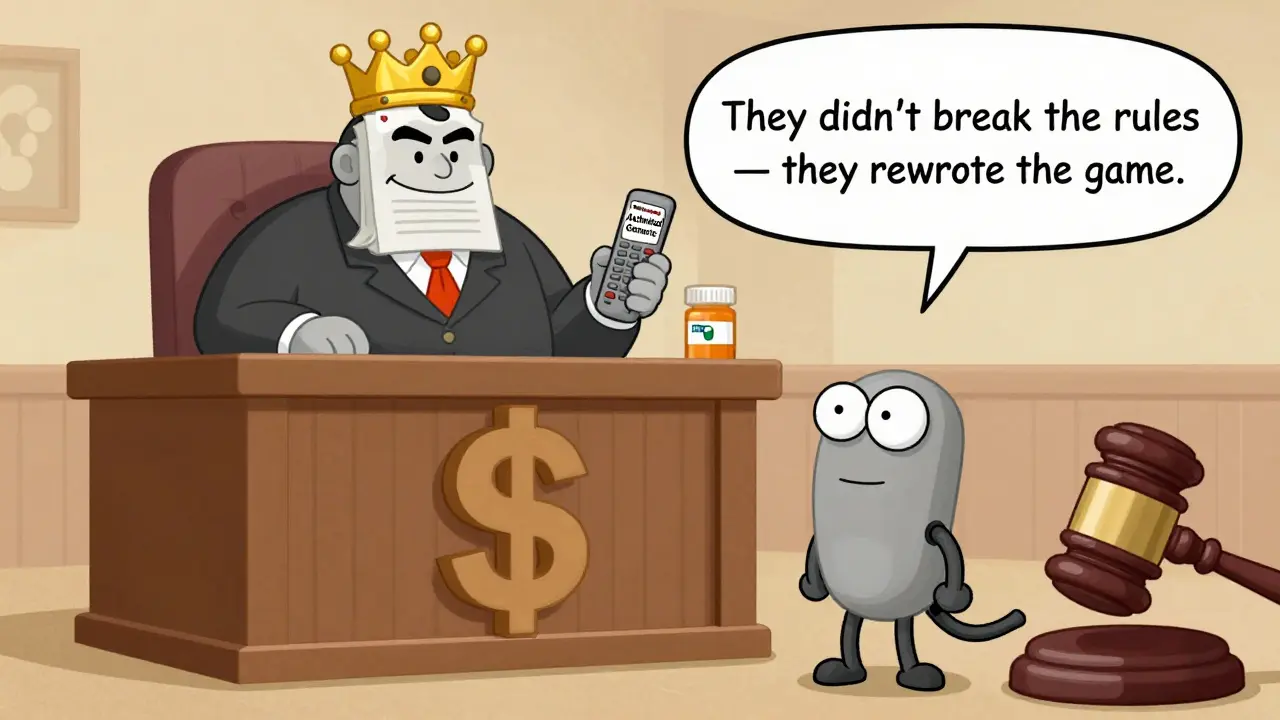
The truth? The race to be first isn’t about speed anymore. It’s about survival. And the rules were rewritten long ago - not by regulators, but by corporate strategy.
Key takeaways
- First generics get 180 days of exclusivity - but only if no authorized generic enters.
- Authorized generics are the brand drug in disguise - no FDA review needed.
- They’re often launched on the same day as the first generic - cutting revenue in half.
- Price drops are 15-20% less when authorized generics enter early.
- Cardiovascular, CNS, and metabolic drugs are the most affected.
- The Inflation Reduction Act now treats authorized generics differently for Medicare pricing.
Can a brand company legally launch an authorized generic before the first generic?
No. The brand company cannot launch an authorized generic before the first generic gets FDA approval. The 180-day exclusivity clock starts when the first generic is approved. But once that approval happens, the brand can launch their authorized version immediately - even on the same day. That’s legal, and it’s standard practice.
Why don’t first generics just make their own authorized version?
They can’t. Authorized generics require permission from the brand-name manufacturer. The brand controls the original NDA and manufacturing rights. Even if a generic company copies the drug exactly, they still need to file an ANDA. Only the brand (or their licensed partner) can bypass that step.
Do authorized generics always lower prices?
They lower prices compared to the brand - yes. But they don’t lower them as much as true generic competition. When an authorized generic enters during the first generic’s exclusivity, prices only drop 65-75%, not the 80-90% seen when multiple independent generics enter. The brand still controls pricing.
Are authorized generics considered real generics by the FDA?
The FDA treats them as equivalent in quality and safety - but not in regulatory status. They’re not approved through the ANDA process, so they’re not classified as generics under the law. They’re branded drugs sold under a generic label. That’s why the Inflation Reduction Act explicitly excludes them from Medicare price negotiation rules.
What drugs are most affected by this strategy?
The most common are blockbuster drugs with high sales volume and patent cliffs: Lyrica (pregabalin), Lipitor (atorvastatin), Neurontin (gabapentin), Eliquis (apixaban), and Jardiance (empagliflozin). Cardiovascular, central nervous system, and metabolic drugs make up over 70% of cases where authorized generics disrupt first-generic entry.
What should patients and insurers watch for?
If you’re on a generic drug and suddenly see a new version on your pharmacy shelf - same name, same pills, different label - it might be an authorized generic. Check the manufacturer. If it’s the same company that made the brand, that’s your clue.
Insurers should track whether price drops match historical patterns. If a generic enters but prices stay stubbornly high, an authorized generic is likely the reason.
For patients, the bottom line hasn’t changed: generics still save money. But the savings might be less than expected. And the system designed to protect competition? It’s been outmaneuvered.
MALYN RICABLANCA
March 18, 2026 AT 18:03Oh. My. GOD. This isn’t just a loophole-it’s a full-blown corporate heist wrapped in a FDA-approved bow. 🤯 The brand companies are basically playing chess while the generics are stuck playing checkers with one hand tied behind their back. I mean, you spend YEARS, millions, legal battles, sleepless nights… and then BAM! The original company just flips a switch and says, ‘Oops, guess I’m a generic now too.’
It’s like if you spent 5 years building a bakery, perfected the sourdough, got the permits, hired staff, trained the team… and then the guy who sold you the flour opens a competing bakery next door using YOUR recipe, YOUR oven, YOUR name-just labeled ‘artisan bread’ and slashes your prices by 30%. And you’re legally forbidden from calling him out because he never broke a single rule.
And don’t even get me started on the FDA. They’re sitting there like, ‘Well, it’s chemically identical, so… we’re cool?’ NO. It’s not about chemistry. It’s about COMPETITION. It’s about incentivizing innovation. It’s about making drugs affordable. But nope. The system’s rigged. The 180-day exclusivity? A joke. A marketing ploy. A Trojan horse.
And the worst part? Patients think they’re saving money. But they’re not. They’re getting a slightly cheaper version of the same product… from the same company that was charging $500 a pill last year. Meanwhile, the real generic makers? They’re going bankrupt. Or worse-they’re giving up. And now? We’re stuck with a market where ‘generic’ means ‘brand in disguise.’
I’m not even mad anymore. I’m just… disgusted. This is capitalism? Or is it just legalized theft with a white coat?
Sanjana Rajan
March 19, 2026 AT 09:35Melissa Starks
March 20, 2026 AT 21:18Okay I just read this whole thing and I’m literally shaking. Like I knew generics were cheaper but I had NO IDEA this was happening. This is insane. The brand companies are literally using the system they helped create to destroy the very people who were supposed to make drugs affordable. It’s like they wrote the rulebook and then said ‘haha just kidding, we’re keeping the prize.’
And the worst part? You can’t even blame the FDA because they’re just doing what the law says. The law is broken. The whole structure is designed to look fair but it’s rigged from day one. I feel so manipulated. Like I trusted this system and it betrayed me.
My mom’s on Lyrica. She pays $120 for the brand. $45 for the generic. But now? She’s getting this ‘authorized’ version for $40. She thinks she’s winning. But she’s not. She’s being played. And I hate that. I hate that we’re all being sold this lie that ‘competition’ is happening when it’s really just a shell game.
I’m gonna start calling my reps. I’m gonna start writing letters. This isn’t just about drugs. It’s about trust. And we lost it.
Nicole Blain
March 21, 2026 AT 03:26Kathy Underhill
March 22, 2026 AT 18:35Kendrick Heyward
March 24, 2026 AT 07:44gemeika hernandez
March 25, 2026 AT 00:35Lauren Volpi
March 25, 2026 AT 13:33