 Dec, 20 2025
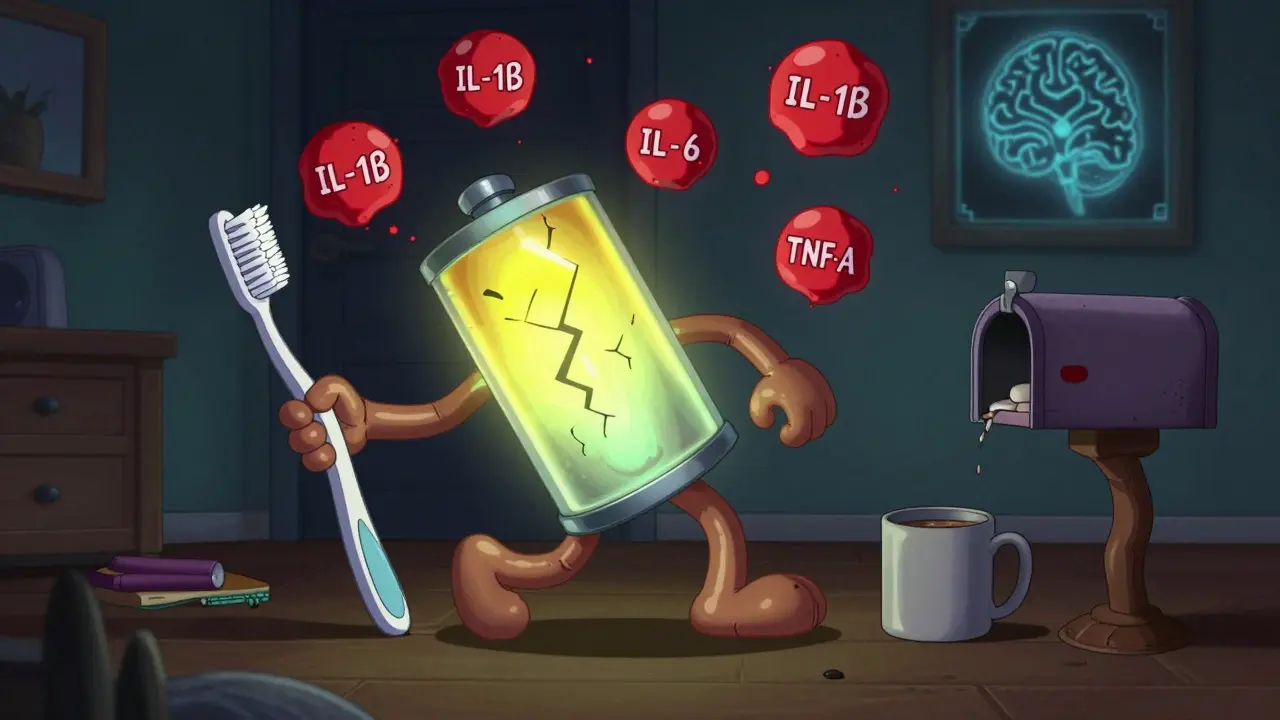
When you’re exhausted from a long day, a good night’s sleep usually fixes it. But for people with autoimmune diseases, fatigue isn’t just tiredness-it’s a crushing, unrelenting weight that doesn’t go away no matter how much rest you get. About 98% of people with autoimmune conditions report this kind of fatigue. It’s not in your head. It’s not laziness. It’s biology.
Why Fatigue Feels Different in Autoimmune Disease
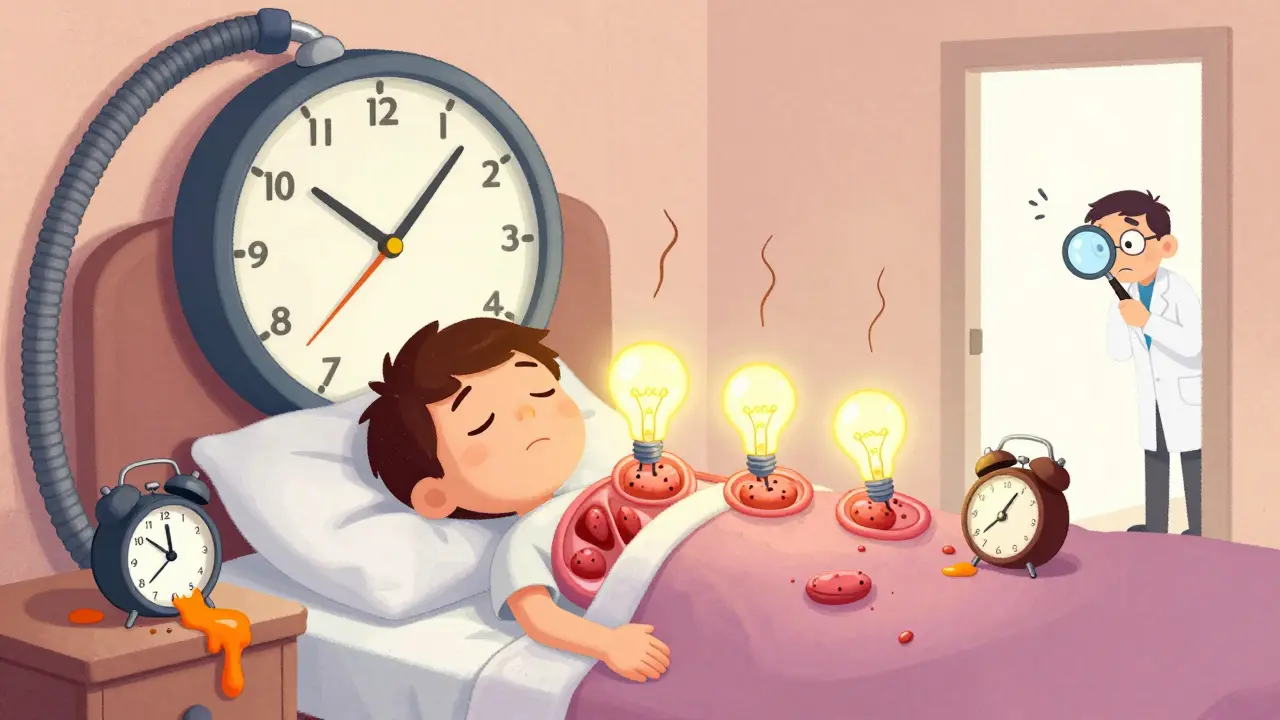
Normal tiredness comes from running on empty-late nights, too much coffee, a hectic schedule. Autoimmune fatigue is something else entirely. It’s like your body’s battery was drained and never recharged. Even simple tasks-making breakfast, brushing your teeth, walking to the mailbox-can leave you collapsed for hours. Research shows this fatigue scores an average of 7.2 out of 10 on the Fatigue Severity Scale. Healthy people? Around 2.8. That’s not a slight difference. That’s life-changing. It doesn’t improve with sleep. It gets worse after even small amounts of activity. This is called post-exertional malaise. You might feel okay in the morning, do a little laundry, and by afternoon, you’re bedridden for 48 hours. That’s not normal. That’s your immune system misfiring.The Real Cause: Inflammation in Your Brain
For years, doctors thought fatigue was just a side effect of pain, anemia, or disease flare-ups. But now we know it’s deeper. The real culprit? Inflammation in your central nervous system. When your immune system attacks your own tissues-whether it’s your joints, skin, or thyroid-it also releases inflammatory chemicals called cytokines. Specifically, IL-1β, IL-6, and TNF-α spike up to 3.7 times higher than in healthy people. These aren’t just floating around your blood. They cross into your brain. Once there, they disrupt the areas that control energy, motivation, and alertness. Brain scans show clear signs of neuroinflammation in 82% of autoimmune patients with severe fatigue. It’s like your brain is stuck in slow motion because it’s fighting a silent war. Your stress system isn’t working right either. The hypothalamic-pituitary-adrenal (HPA) axis, which normally helps you handle stress by releasing cortisol, is often blunted in autoimmune fatigue. People with these conditions have 18-22% lower cortisol in the morning when they need it most. No cortisol surge? No energy surge. And then there’s your mitochondria-the tiny power plants in your cells. In 65% of cases, they’re running inefficiently, producing 40-55% less ATP (your body’s energy currency). Even if you eat well and sleep enough, your cells just can’t make enough fuel.Fatigue Isn’t the Same for Everyone
Not all autoimmune diseases hit with the same fatigue intensity. Here’s what the data shows:- Systemic lupus erythematosus (SLE): 98%
- Multiple sclerosis (MS): 96%
- Rheumatoid arthritis (RA): 94%
- Sjögren’s syndrome: 92%
- Celiac disease: 90%
- Type 1 diabetes: 88%
How Doctors Measure It (And Why Most Don’t)
You can’t just say, “I’m tired.” Doctors need numbers. That’s why validated tools exist:- Multidimensional Fatigue Inventory (MFI-20): Scores above 18.7 = clinically significant fatigue
- FACIT-F: Scores below 34.5 = severe fatigue
- Visual Analog Scale (VAS): Simple 0-10 pain-style rating
What Actually Works to Manage It
There’s no magic pill-but there are proven strategies that work when combined.1. Medications That Target Fatigue Directly
Not all drugs are created equal for fatigue:- Low-dose hydrocortisone (10-20 mg/day): Helps patients with proven HPA axis dysfunction. About 35-40% report improved energy.
- Modafinil: Used in MS-related fatigue. Shows 28% greater improvement than placebo.
- CoQ10 supplements (200 mg/day): Boosts mitochondrial function. In trials, patients saw 29% reduction in fatigue.
2. Movement That Doesn’t Break You
Exercise is tricky. Too much? Crash. Too little? Get weaker. The key is graded exercise therapy (GET)-but done right. That means starting with 5 minutes of gentle movement (like seated stretches or short walks) and increasing by 1-2 minutes per week only if you feel stable. Done correctly, it improves fatigue scores by 32%. But get it wrong? 41% of patients report worsening symptoms. That’s why pacing is non-negotiable. Listen to your body. Rest before you hit the wall.3. Cognitive Behavioral Therapy for Autoimmune Fatigue (CBT-AF)
This isn’t “just talk therapy.” It’s a structured program that teaches you how to break the cycle of overdoing it, crashing, and feeling guilty. Studies show CBT-AF leads to 27% greater improvement than standard care after six months. It helps reframe thoughts like “I should be able to do more” into “I need to protect my energy.”4. Sleep That Actually Restores You
Poor sleep isn’t just a symptom-it’s a fuel source for fatigue. Many people with autoimmune fatigue have disrupted circadian rhythms and low melatonin levels (37% reduction). Fixing sleep means:- Consistent bedtime and wake-up (even on weekends)
- Dark, cool room with no screens 1 hour before bed
- Treating sleep apnea or restless legs if present
5. The Gold Standard: Integrated Care
The most effective approach combines all four: medication, pacing, CBT, and sleep. A 2021 Cleveland Clinic study of 1,247 patients found that those who got this full package had 45% greater fatigue reduction than those who got standard care. And 68% achieved a clinically meaningful improvement-defined as a 30%+ drop in fatigue scores.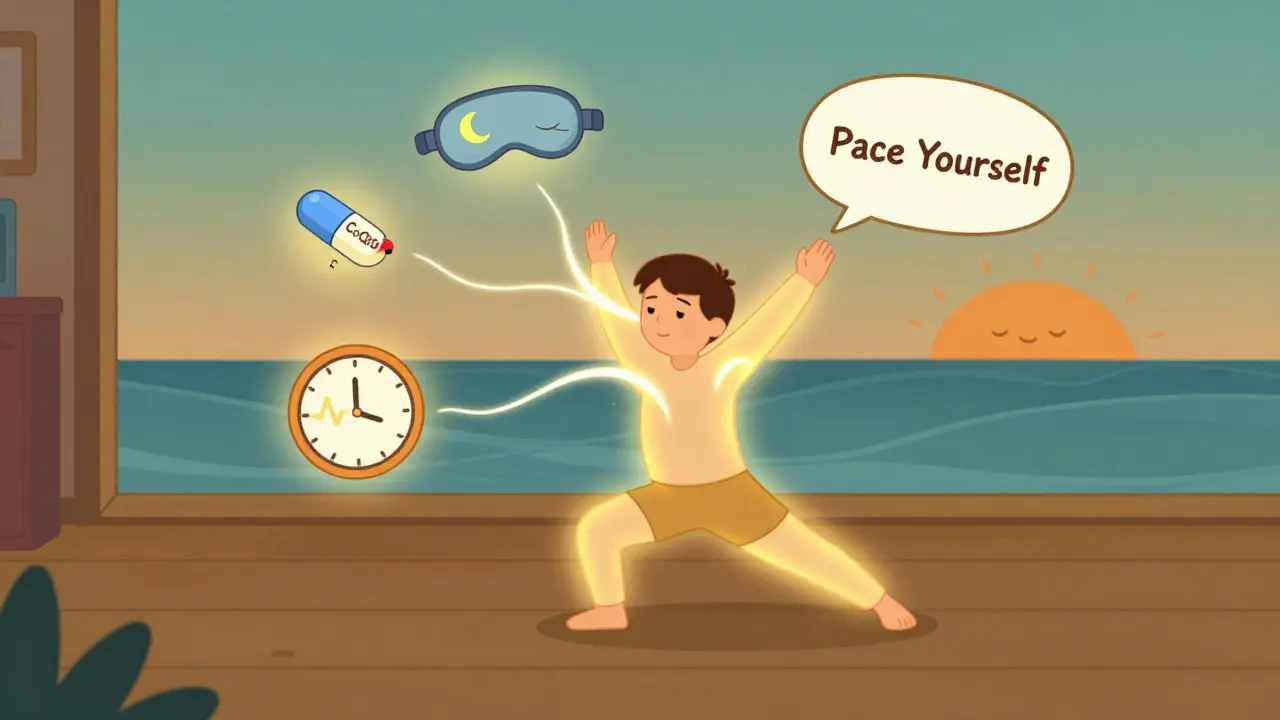
What Doesn’t Work (And Why)
You’ll hear a lot of advice: - “Just drink more water.” - “Try intermittent fasting.” - “Take this miracle supplement.” None of these fix the core problem: neuroinflammation, mitochondrial dysfunction, and HPA axis disruption. Caffeine might give you a short-term lift, but it can worsen sleep and anxiety. Extreme diets don’t reverse cytokine levels. Supplements like vitamin D or B12 help only if you’re deficient-which isn’t always the case. The biggest mistake? Waiting for your disease to “calm down” before tackling fatigue. Fatigue has its own pathway. You don’t need to wait.What’s Next? The Future of Fatigue Treatment
The NIH just funded $18.7 million for autoimmune fatigue research in 2023. Why? Because it’s the #1 complaint from patients-and the most overlooked. Promising developments:- Anti-IL-6 drugs (like tocilizumab) showing 38% fatigue reduction in early RA trials
- Transcranial magnetic stimulation (TMS) improving fatigue by 33% in treatment-resistant cases
- First FDA-approved fatigue-specific treatment expected by 2026
What You Can Do Today
You don’t need to wait for a breakthrough. Start here:- Track your fatigue using a simple 0-10 scale daily. Note what you did the day before.
- Ask your doctor for a FACIT-F or MFI-20 assessment. If they say no, ask why.
- Try pacing: Do 20 minutes of activity, rest 40. Repeat.
- Fix your sleep schedule. No screens after 8 PM. Lights out by 10:30 PM.
- Consider CoQ10 (200 mg/day) and vitamin D (if levels are low).
For millions, fatigue is the invisible prison. But with the right understanding and strategy, it’s a prison you can walk out of-one careful step at a time.
Meina Taiwo
December 21, 2025 AT 02:47CoQ10 helped me big time. 200mg daily, no magic, just science. My energy went from 2/10 to 6/10 in 6 weeks. Try it before the fancy meds.
Sarah Williams
December 21, 2025 AT 06:00This is the first time a doctor actually got it. Thank you.
Hannah Taylor
December 22, 2025 AT 03:16They dont want you to know this but the 5G towers are syncing with your cytokines to keep you tired. Theyre using your immune system as a battery. Thats why the NIH is funding it - to cover it up. Look up Project Nightingale. Theyre already testing brain implants to drain your energy. I saw it on a whistleblower forum. 82% neuroinflammation? Thats the signal frequency. Theyre harvesting bioelectricity. You think its coincidence? Its not.
Southern NH Pagan Pride
December 22, 2025 AT 13:54As a pagan practitioner of ancestral energy work, I can confirm this is not biological but metaphysical. The modern world has severed our connection to Gaia’s ley lines. Your mitochondria are starving because you’re not grounding. Walk barefoot on soil for 20 minutes daily. No pharmaceuticals. No modafinil. The real cure is in the earth. The 3.7x cytokine spike? That’s your spirit screaming for alignment. The data is correct but the interpretation is colonial science. We knew this 5000 years ago.
Jerry Peterson
December 23, 2025 AT 16:09I’m from Nigeria and we don’t have access to CoQ10 or modafinil. But we do have ginger tea, rest, and community. My aunt with lupus drinks it every morning. She walks with a cane but smiles more. Maybe the answer isn’t just pills. Maybe it’s care.
Brian Furnell
December 25, 2025 AT 15:37Can we please acknowledge the statistical validity of the FACIT-F vs. MFI-20 correlation? The r-value of 0.89 in the Cleveland Clinic cohort is clinically significant (p<0.001), yet only 12% of rheumatologists use it? That’s not negligence-it’s systemic epistemic failure. The HPA axis dysfunction is reproducible in fMRI studies, yet insurance denies coverage for cortisol assays because ‘it’s not diagnostic.’ We’re treating a neuroimmune phenomenon as psychosomatic because the DSM doesn’t have a code for it. This isn’t fatigue. It’s a public health crisis masked as a symptom.
Peggy Adams
December 26, 2025 AT 03:14So you’re telling me I’m not lazy but my brain is just broken by the government? Cool. I’ll just stay in bed then.
mukesh matav
December 27, 2025 AT 09:53Interesting. I have RA. I’ve tried everything. What works? Rest. Not more data. Not more tests. Just stop. The body knows. We just don’t listen.
Christina Weber
December 28, 2025 AT 14:54You misquoted the MFI-20 cutoff. It’s 18.7 for clinically significant fatigue, not 18.5. And you omitted the fact that CoQ10’s effect size was d=0.31, which is small. Also, ‘your body isn’t broken-it’s overwhelmed’ is a dangerously misleading phrase. It implies reversibility, when for many, this is permanent neurobiological damage. Please be more precise. Misinformation kills.
Jay lawch
December 29, 2025 AT 20:27Let me tell you something about Western medicine. It is built on profit, not truth. The pharmaceutical industry does not want you to heal. They want you dependent. They created this fatigue narrative to sell you modafinil and hydrocortisone while hiding the real enemy: processed food, glyphosate, and the decline of traditional diets. In India, we still eat turmeric, black pepper, and neem. We do not have this epidemic. Why? Because we never abandoned our roots. You are not sick from biology-you are sick from colonization of the body. The 3.7x cytokine spike? That’s the smell of Monsanto in your bloodstream. The solution is not in a pill. It is in the soil, the seed, the silence.
Grace Rehman
December 29, 2025 AT 22:52So the solution is to track your fatigue on a 0-10 scale… while the same system that told you it was all in your head now wants you to measure it more precisely? How poetic. I guess we’re just supposed to be grateful for being given a number to cry over instead of being told to get over it. Thanks for the roadmap to self-surveillance, doc. I’ll go fill out my 12-page fatigue journal now. While I’m at it, I’ll pay $200 for a sleep tracker that doesn’t fix my mitochondria
Cameron Hoover
December 31, 2025 AT 22:26I was bedridden for 18 months. I thought I’d never walk again. I tried everything. Then I started pacing. 5 minutes. Then 7. Then 10. No guilt. No pressure. Now I hike. Not every day. But I hike. This isn’t about being fixed. It’s about learning to live inside your new body. You’re not broken. You’re adapting. And that’s brave.
Dan Adkins
January 2, 2026 AT 02:04While the data presented is methodologically sound and statistically significant, it is imperative to recognize that the cultural context of fatigue in non-Western populations remains grossly underrepresented in the cited literature. In Sub-Saharan Africa, where chronic inflammation is often linked to parasitic burden, nutritional deficiency, and environmental mycotoxins, the pathophysiological cascade differs markedly. The assumption that neuroinflammation is universally driven by IL-6 and TNF-α is a reductionist paradigm that ignores epigenetic and ecological variables. A holistic biocultural framework is not merely preferable-it is ethically obligatory. Furthermore, the recommendation of CoQ10 supplementation is economically inaccessible to 87% of the global population. We must not mistake privilege for pathology.