 Aug, 27 2026
⚙ DOAC Interaction Risk Checker
3. Select Co-Medications & Supplements You Are Taking
Click to toggle selection. Check all that apply.
Risk Assessment Result
Current Standard Dosing Context
Based on typical indications (e.g., Atrial Fibrillation):
Why This Matters
Most people start taking Direct Oral Anticoagulants (DOACs) because they offer a simpler alternative to warfarin. You don't need weekly blood tests, and your diet doesn't dictate your dose. But here is the catch: while DOACs have fewer food restrictions than their predecessors, they still interact with other medications in ways that can be dangerous if ignored. Whether you are on apixaban, rivaroxaban, dabigatran, or edoxaban, understanding how these drugs process through your body is critical for staying safe.
The core issue isn't just about bleeding; it's about balance. If another medication boosts your DOAC levels too high, you risk severe hemorrhage. If it lowers them too much, your protection against clots vanishes, potentially leading to a stroke or pulmonary embolism. Since most patients on these blood thinners take multiple other prescriptions due to age-related comorbidities, this risk is higher than many realize. This guide breaks down exactly which pathways matter, which common drugs trigger problems, and how to manage them without overreacting.
Why DOAC Interactions Are Different from Warfarin
To understand the risks, you first need to know how DOACs work mechanically. Unlike warfarin, which affects vitamin K recycling, DOACs directly inhibit specific clotting factors. Apixaban and Rivaroxaban primarily target Factor Xa, while Dabigatran inhibits Thrombin (Factor IIa). This direct action makes their plasma concentrations more predictable, but also means that any change in how quickly your liver processes them or how well your kidneys clear them has an immediate impact on efficacy.
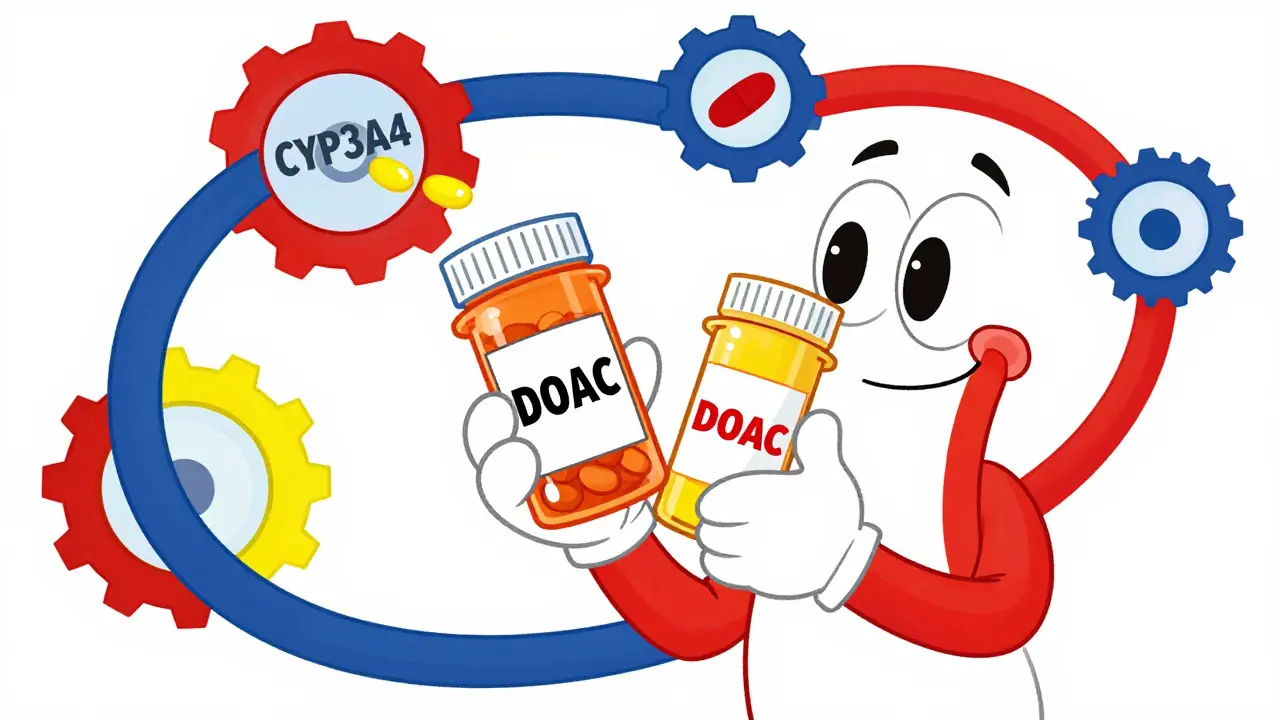
The two main drivers of drug-drug interactions (DDIs) for DOACs are the Cytochrome P450 enzyme system (specifically CYP3A4) and the P-glycoprotein (P-gp) transporter. These are biological mechanisms in your gut wall and liver cells that determine how much of the drug actually enters your bloodstream versus being pumped back out or broken down. For example, Rivaroxaban relies heavily on CYP3A4 for metabolism (about 50% of its clearance), whereas Dabigatran bypasses CYP3A4 almost entirely and depends mostly on P-gp. This distinction matters because it dictates which co-medications will cause trouble.
- CYP3A4 Inhibitors: Can increase DOAC levels, raising bleeding risk.
- CYP3A4 Inducers: Can decrease DOAC levels, raising clotting risk.
- P-gp Inhibitors: Can increase absorption of certain DOACs like Dabigatran.
- P-gp Inducers: Can reduce absorption, lowering therapeutic effect.
The Metabolic Pathways That Matter Most
Not all DOACs are metabolized the same way. Knowing your specific drug’s pathway helps you identify red flags faster. Here is a breakdown of how each major agent interacts with the body’s processing systems.
| DOAC Agent | Primary Metabolism | P-gp Substrate? | Key Interaction Risk |
|---|---|---|---|
| Apixaban | CYP3A4 (20-25%) | Yes | Moderate risk with strong dual inhibitors |
| Rivaroxaban | CYP3A4 (~50%) | Yes | High sensitivity to CYP3A4 changes |
| Dabigatran | Minimal CYP involvement | Yes (Major) | High sensitivity to P-gp inhibitors |
| Edoxaban | Minimal CYP involvement | Yes | Risk with renal impairment + P-gp issues |
This table highlights why a single "blood thinner" label isn't enough. A patient on Dabigatran needs to worry far less about grapefruit juice (a mild CYP3A4 inhibitor) than a patient on Rivaroxaban, but they must be very careful with verapamil (a P-gp inhibitor). Conversely, Rivaroxaban users should be vigilant about any new antibiotic or antifungal that touches the CYP3A4 pathway.
Common Medications That Trigger Problems
You likely won't encounter obscure experimental drugs, but you will definitely encounter common heart and infection treatments. Let’s look at the specific culprits that frequently appear in pharmacy consultations.
Amiodarone is a classic case study. It is widely used for atrial fibrillation, the same condition many DOAC patients have. Amiodarone moderately inhibits both CYP3A4 and P-gp. For most DOACs, this results in a modest increase in exposure. However, guidelines often suggest monitoring for signs of bleeding when starting amiodarone alongside a DOAC, particularly if the patient is elderly or has low body weight. It doesn't usually require a dose change, but it demands vigilance.
Dronedarone is trickier. It is a stronger inhibitor than amiodarone. Current guidance suggests avoiding concomitant use of dronedarone with Dabigatran and Rivaroxaban due to the significant potential for elevated drug levels. If a doctor insists on using dronedarone with Edoxaban, the dose typically needs to be reduced to 30 mg once daily. This specific adjustment is a clear example of how interaction management requires precise dosing knowledge rather than guesswork.
Then there are the calcium channel blockers. Verapamil and Diltiazem are common for blood pressure and heart rate control. Verapamil inhibits P-gp. For patients on Dabigatran, this can lead to significantly higher plasma levels. In some cases, especially for stroke prevention in atrial fibrillation, clinicians may reduce the Dabigatran dose from 150 mg twice daily to 110 mg twice daily when verapamil is added. For Apixaban and Rivaroxaban, this interaction is generally considered less clinically relevant, but it’s still worth noting in the chart.
Beyond Prescription Drugs: Supplements and OTC Risks
Prescriptions get checked by pharmacists, but over-the-counter (OTC) products and supplements often slip through the cracks. This is where many adverse events happen. The most famous offender is NSAIDs (non-steroidal anti-inflammatory drugs) like ibuprofen, naproxen, or aspirin (unless prescribed specifically for cardiovascular protection).
NSAIDs don't necessarily change the concentration of your DOAC in the blood. Instead, they create a pharmacodynamic interaction. They damage the stomach lining and inhibit platelet function. When you combine this with a drug that prevents clot formation, the result is additive bleeding risk. Gastrointestinal bleeding is one of the most common serious complications in DOAC patients, and frequent NSAID use is a major contributor. If you have joint pain, acetaminophen (paracetamol) is generally the safer choice for pain relief, provided you stay within recommended daily limits.
Herbal supplements are another gray area. Saint John’s Wort is a potent inducer of CYP3A4 and P-gp. Taking this for depression can lower your DOAC levels, potentially leaving you unprotected against clots. Similarly, Ginkgo Biloba and Fish Oil in high doses have antiplatelet effects. While not as dramatic as NSAIDs, they add to the overall bleeding burden. Always tell your pharmacist about every supplement you take, even if it says "natural." Natural does not mean inert.
Renal Function: The Hidden Variable
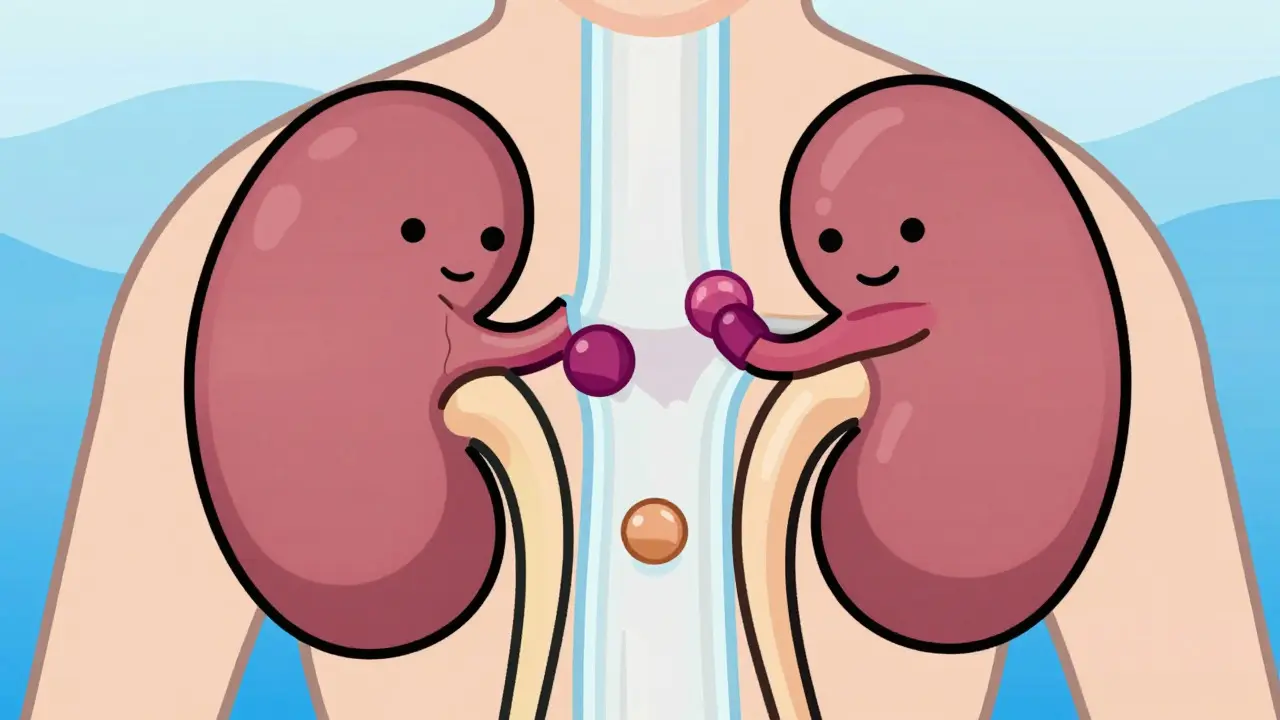
Interactions aren't just about drug-drug combinations; they are deeply tied to drug-disease states. Your kidney function acts as a filter for many DOACs. Dabigatran is roughly 80% renally cleared, making it highly sensitive to changes in kidney health. Apixaban is only about 27% renally cleared, making it the safest option for patients with compromised kidneys.
Here is the critical link: if you take a P-gp inhibitor (like verapamil) AND you have moderate renal impairment, the combined effect can skyrocket your DOAC exposure. The kidneys can't clear the drug fast enough, and the gut absorbs more of it than usual. This double hit is why guidelines emphasize checking creatinine clearance regularly, not just at baseline. A patient whose kidney function declines from stage 2 to stage 3 CKD might need a dose reduction of their DOAC, independent of any new medications. But if they *also* start a new interacting drug, the risk multiplies.
Practical Steps for Safe Management
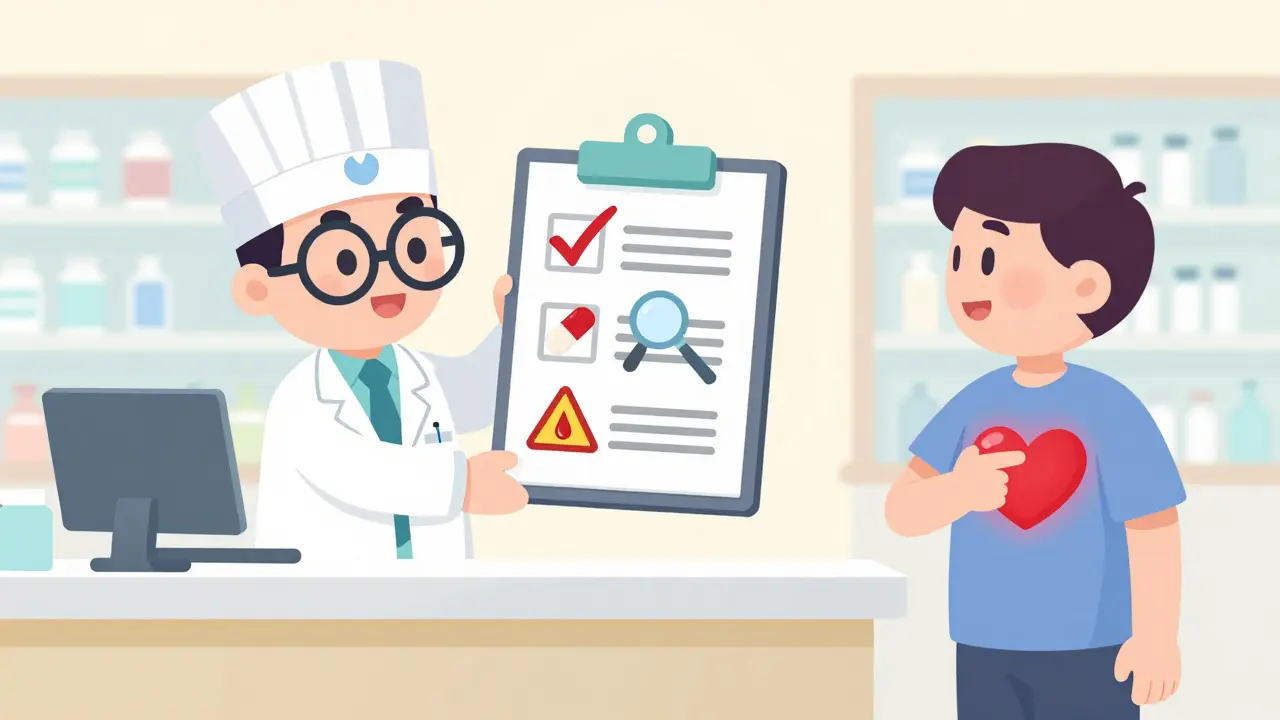
You don’t need to become a pharmacologist to manage these risks, but you do need a systematic approach. Here is a practical checklist to keep your therapy safe.
- Keep a Master List: Maintain a current list of all prescriptions, OTC meds, and supplements. Update it every time you see a doctor or pharmacist. Don't assume they know what you bought at the pharmacy last month.
- Ask About New Meds: Before picking up any new prescription, ask the pharmacist: "Does this affect my [Name of DOAC]?" Pharmacists have access to interaction databases that doctors sometimes skip in busy clinics.
- Monitor for Signs: Know the warning signs of bleeding (unusual bruising, pink/red urine, black tarry stools) and clotting (leg swelling, shortness of breath, sudden weakness). Report these immediately.
- Regular Kidney Checks: Ensure your healthcare provider orders periodic blood tests to monitor your creatinine clearance, especially if you are over 65 or have diabetes/hypertension.
- Don't Stop Abruptly: Never stop your DOAC or an interacting medication without medical advice. Stopping a blood thinner suddenly can trigger a rebound clotting event.
Finally, remember that "fewer interactions than warfarin" does not mean "no interactions." It means the interactions are more predictable and often manageable with simple dose adjustments or monitoring. The goal is informed caution, not fear. By understanding the specific pathways of your assigned DOAC, you empower yourself to ask the right questions and catch potential issues before they become emergencies.
Frequently Asked Questions
Can I take ibuprofen with my DOAC?
Generally, no. Ibuprofen is an NSAID that increases bleeding risk when combined with anticoagulants. It damages the stomach lining and inhibits platelets. Acetaminophen (paracetamol) is usually the preferred pain reliever for DOAC patients, unless otherwise directed by your doctor.
Do I need blood tests to check for DOAC interactions?
Routine INR testing (used for warfarin) is not needed for DOACs. However, you should have regular blood tests to check your kidney function (creatinine clearance) and possibly hemoglobin levels to detect hidden bleeding. Specific drug level monitoring is rarely done in standard practice but may be considered in complex cases.
Which DOAC has the fewest drug interactions?
Apixaban is often cited as having a favorable interaction profile because it relies less on CYP3A4 metabolism compared to Rivaroxaban and is less dependent on renal clearance compared to Dabigatran. However, "fewest" is relative; all DOACs interact with strong P-gp or CYP3A4 modulators.
What should I do if I miss a dose during an interaction review?
If you are reviewing interactions and find a potential conflict, do not simply skip your next DOAC dose. Contact your pharmacist or prescriber. They may advise you to continue as normal, adjust the dose, or switch medications. Skipping doses without guidance can increase clot risk.
Does alcohol affect DOAC effectiveness?
Moderate alcohol consumption does not significantly alter DOAC plasma levels. However, chronic heavy drinking can impair liver function and increase the risk of gastrointestinal bleeding. Limiting intake to moderate levels is advisable for anyone on anticoagulation therapy.