 May, 17 2026
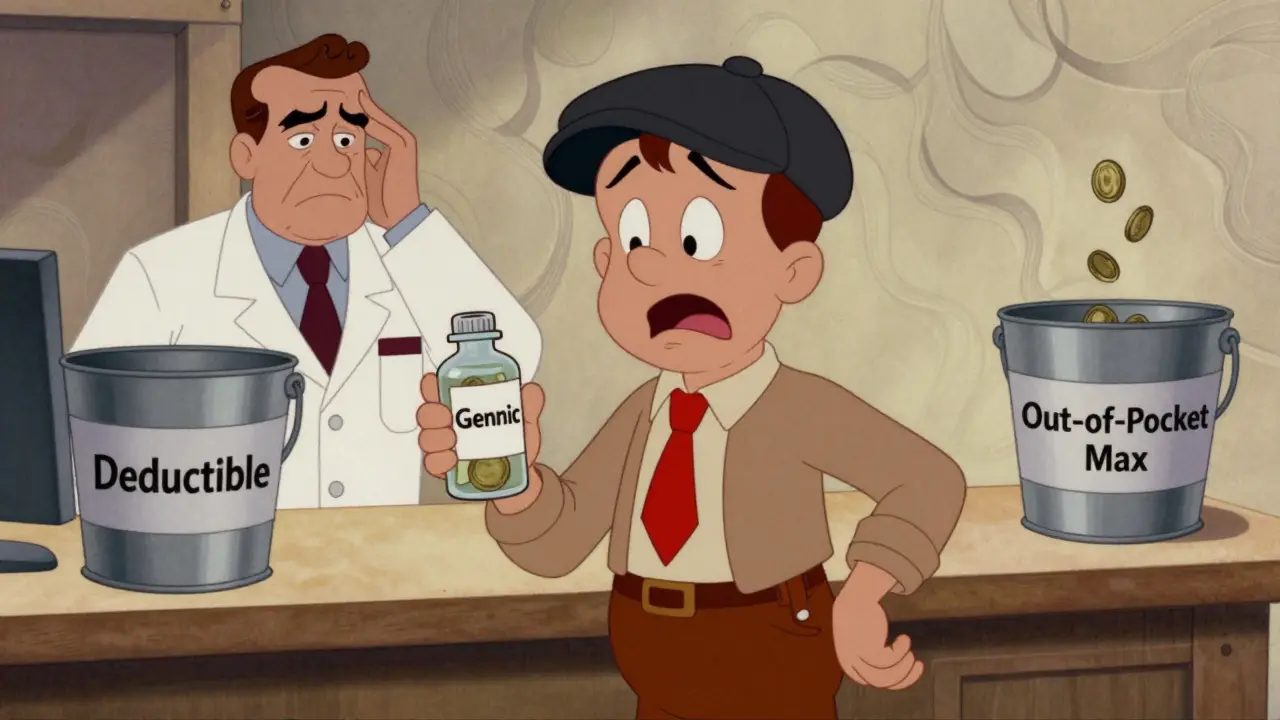
Imagine this: you’ve been paying $10 every month for your generic blood pressure medication. You’ve racked up hundreds of dollars in these small payments. Then, you need an MRI or a specialist visit, and the insurance company tells you that you haven’t met your deductible yet. You’re shocked. You thought those copayments were helping you reach the point where insurance covers more. But they weren’t.
This confusion is incredibly common. In fact, a 2023 survey by America's Health Insurance Plans found that 68% of consumers incorrectly believe prescription copays count toward their deductible. Only 22% understand the real deal: those copays usually don’t help you meet the deductible, but they do count toward your out-of-pocket maximum.
If you’re trying to manage healthcare costs in 2026, understanding this distinction isn’t just about saving money-it’s about avoiding financial shock when unexpected medical needs arise. Let’s break down how generic copays actually work within your health plan, why the rules changed, and what it means for your wallet.
The Two Buckets: Deductible vs. Out-of-Pocket Maximum
To understand where your generic copay goes, you first need to see your health insurance plan as having two separate buckets. Most people focus on the first one, but the second one is often more important for long-term protection.
The Deductible is the amount you pay for covered healthcare services before your insurance plan starts to pay. For example, if you have a $2,000 deductible, you pay the first $2,000 of covered services yourself. After that, your insurance typically kicks in with coinsurance (like paying 20% while they pay 80%).
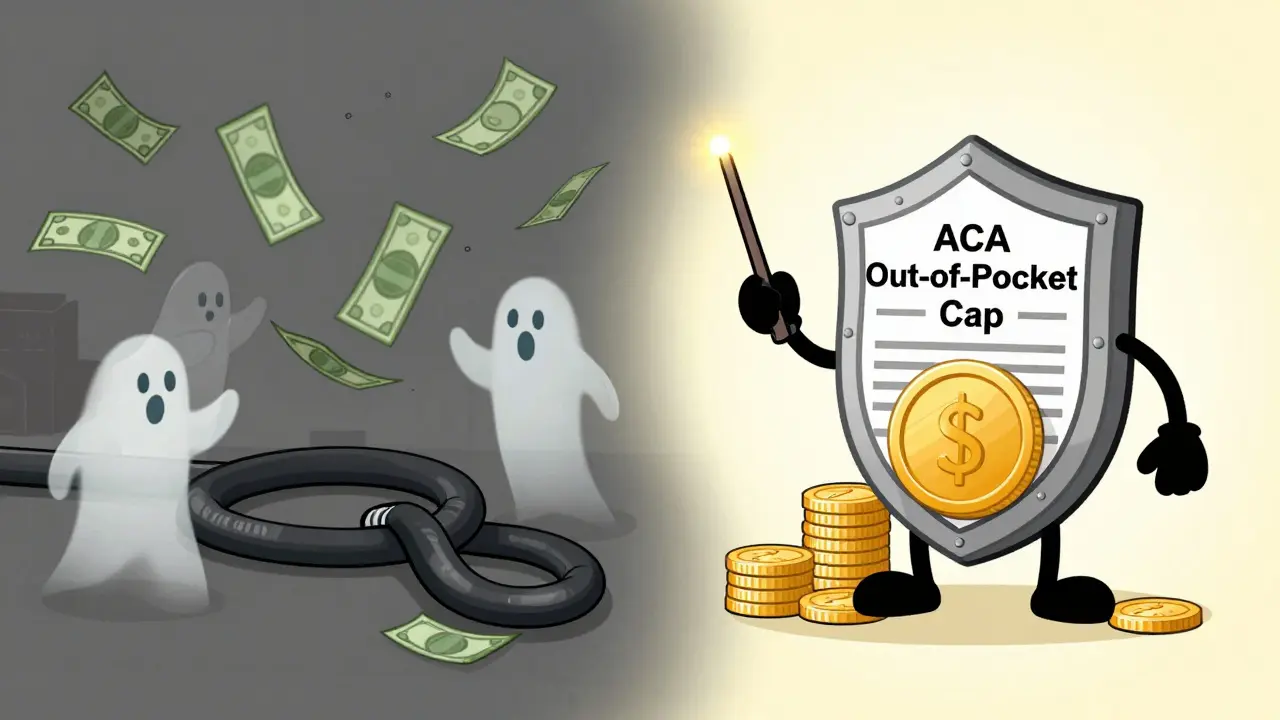
The Out-of-Pocket Maximum is the absolute limit on what you will pay for covered services in a plan year. Once you hit this number, your insurance pays 100% of all covered in-network care for the rest of the year. This includes deductibles, copays, and coinsurance.
Here is the critical part: Generic prescription copays usually do NOT count toward the deductible, but they DO count toward the out-of-pocket maximum.
This means you can pay $1,500 in generic drug copays throughout the year, and still owe the full cost of a hospital stay because you haven’t met your $2,000 medical deductible. However, that $1,500 gets you closer to hitting your out-of-pocket cap, which protects you from catastrophic bills later.
Why Did the Rules Change?
It wasn’t always this way. Before the Affordable Care Act (ACA) was fully implemented in 2014, many health plans allowed copays for doctor visits and prescriptions to exist in a vacuum. They didn’t count toward your deductible, and crucially, they didn’t always count toward an out-of-pocket maximum either.
This created a nightmare for people with chronic conditions. Imagine paying $15 a month for insulin for ten years, never getting any credit toward your annual limits. The ACA fixed this by requiring that all in-network cost-sharing-including copays-must apply toward the policyholder’s out-of-pocket maximum.
However, the law did not require copays to count toward the deductible. Insurers kept the deductible separate to encourage patients to use preventive care and avoid unnecessary expensive procedures, while still allowing low-cost access to essential medications like generics. This separation is the root cause of most consumer confusion today.
How Much Can You Actually Pay in 2026?
Your out-of-pocket maximum acts as a safety net, but its height changes every year. The Department of Health and Human Services sets these limits annually for Marketplace plans.
| Plan Year | Individual Limit | Family Limit |
|---|---|---|
| 2025 | $9,200 | $18,400 |
| 2026 | $10,600 | $21,200 |
Note that these are the maximums allowed by law. Many individual plans set their caps lower than these figures. Employer-sponsored plans may also vary, though they must comply with similar federal guidelines. Premiums-the monthly bill you pay to keep the insurance active-never count toward these limits. Neither do costs for non-covered services or out-of-network care.
Three Common Plan Structures You Need to Know
Not all plans handle prescriptions the same way. When you look at your Summary of Benefits and Coverage (SBC), you’ll likely find one of three structures. Knowing which one you have determines whether your generic copay helps you meet the deductible.
- Single Combined Deductible: Medical and prescription costs share one deductible. In this case, there are rarely flat copays for generics. Instead, you pay the full price until you meet the deductible, then you pay coinsurance. Here, every dollar you spend on meds counts toward the deductible.
- Separate Medical and Prescription Deductibles: This is complex. You might have a $1,500 medical deductible and a $300 prescription deductible. You pay full price for drugs until you hit $300. After that, you pay a copay. These copays count toward your out-of-pocket max, but not toward your $1,500 medical deductible.
- Copay-Only Structure (No Rx Deductible): You pay a flat fee (e.g., $10) for generics from day one. These payments never count toward the medical deductible. They only count toward the out-of-pocket maximum. This is the most common structure causing confusion.
A 2023 analysis by the Congressional Budget Office noted that plans with separate medical and prescription deductibles account for 37% of employer-sponsored plans. If you fall into category 2 or 3, your generic copays are essentially "invisible" to your medical deductible.
The Real-World Impact on Your Wallet
Let’s look at a concrete scenario. Meet Sarah, who has a plan with a $2,000 medical deductible, a $500 prescription deductible, and a $6,000 out-of-pocket maximum. She takes two generic medications costing $15 each per fill.
For the first few months, she pays the full price until she hits her $500 prescription deductible. After that, she pays a $10 copay per refill. Over six months, she pays $120 in copays ($10 x 12 refills).
Now, Sarah breaks her leg and needs surgery. Her medical deductible is $2,000. Does the $120 she paid in copays reduce this? No. She still owes the full $2,000 before insurance shares the cost of the surgery. However, that $120 does count toward her $6,000 out-of-pocket maximum. If her surgery costs result in high coinsurance, she will eventually hit that $6,000 cap faster than if she hadn’t taken the meds.
This distinction matters immensely for budgeting. If you rely on the idea that your cheap generic pills are "pre-paying" for your major medical events, you could be underestimating your potential liability by thousands of dollars.

How to Check Your Specific Plan
You don’t have to guess. The Affordable Care Act requires insurers to provide clear documentation. Here is how to verify how your copays count:
- Look for the SBC Column: Your Summary of Benefits and Coverage must have a column labeled "Does this payment count toward my deductible?" Look specifically at the row for "Prescription Drugs" or "Generic Formulary."
- Check the Explanation of Benefits (EOB): After you fill a prescription, you get an EOB. It will show how much was applied to your deductible versus your out-of-pocket maximum. If the deductible line says "$0.00" but the out-of-pocket line shows the copay amount, you know the rule applies.
- Contact Member Services: Ask directly: "Do my generic copays count toward my medical deductible?" Get the answer in writing or via email for your records.
eHealth’s 2024 consumer guide recommends spending at least 45 minutes reviewing these documents during open enrollment. It’s tedious, but it prevents costly surprises later.
Future Changes: Will Things Get Simpler?
The current system is confusing, and regulators know it. In April 2024, the Department of Health and Human Services announced new rules mandating clearer communication about how prescription costs count toward deductibles, effective for 2025 plan years. This aims to reduce the 41% of consumers who reported confusion in 2023.
Additionally, the Centers for Medicare & Medicaid Services (CMS) Innovation Center is testing "Integrated Deductible" models in five states. In these pilot programs, prescription costs-including copays-count toward a single deductible. Preliminary results show a 28% increase in medication adherence among chronic disease patients, suggesting that simpler structures lead to better health outcomes.
McKinsey & Company predicts that by 2027, 60% of major insurers will offer at least one plan design where generic copays count toward the deductible. However, the American Hospital Association warns that eliminating this distinction could increase premiums by 3-5%. So, while simplicity is coming, it may come with a higher monthly price tag.
Do generic copays count toward my deductible in 2026?
In most plans, no. Generic copays typically do not count toward your medical deductible. They count toward your out-of-pocket maximum instead. However, some newer "integrated deductible" plans may include them. Always check your specific plan's Summary of Benefits and Coverage.
What counts toward my out-of-pocket maximum?
Your out-of-pocket maximum includes deductibles, copays, and coinsurance for in-network covered services. It does not include monthly premiums, out-of-network care, or non-covered services.
Why don't copays count toward the deductible?
Insurers separate them to manage risk and encourage responsible usage. Copays ensure consistent access to essential medications without requiring patients to pay full price upfront, while the deductible remains a barrier for larger, discretionary medical expenses.
Is there an out-of-pocket maximum for prescriptions separately?
Generally, no. There is one combined out-of-pocket maximum for all covered services, including prescriptions and medical care. Once you hit this total limit, your insurance pays 100% of covered costs for both categories.
How can I tell if my plan has a separate prescription deductible?
Look at your Summary of Benefits and Coverage. If there are two distinct deductible amounts listed-one for medical services and one for prescriptions-you have a separate prescription deductible. If there is only one number, it likely applies to both, or prescriptions are handled via copays only.