 Feb, 12 2026
Cumulative Drug Toxicity Calculator
Calculate Your Cumulative Drug Exposure
This tool helps you understand how much of a medication you've accumulated in your body over time. Cumulative toxicity occurs when medications build up in your body beyond safe limits.
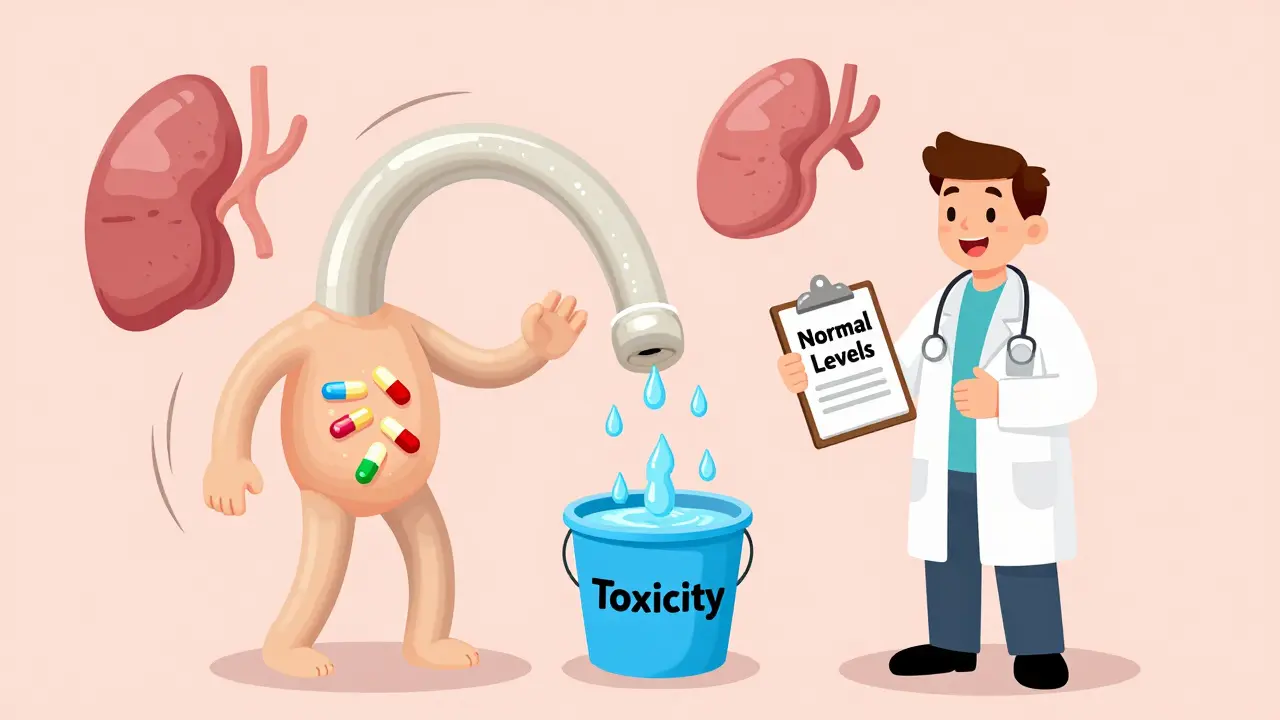
Most people assume that if a medication doesn’t cause problems right away, it’s safe to keep taking. But that’s not always true. Some drugs don’t hurt you on day one - they wait. They build up slowly, like water filling a bucket one drop at a time. By the time you notice something’s wrong, the damage might already be done. This is cumulative drug toxicity - and it’s behind many of the serious side effects doctors miss because they’re looking for immediate reactions.
How Your Body Stores Toxins Over Time
Not all drugs leave your body quickly. Some stick around. Fat-soluble compounds - like certain heart medications, antipsychotics, and even vitamins A, D, E, and K - get stored in your fat tissue. Heavy metals like lead or mercury? They settle into your bones. When you keep taking these drugs, your body doesn’t flush them out fast enough. Each dose adds to what’s already there. Over weeks, months, or even years, levels creep up until they cross a dangerous line.
Drugs with a half-life longer than 24 hours are especially risky. That means it takes more than a day for your body to get rid of half the dose. If you take it daily, you’re essentially stacking doses on top of each other. A 2019 study in the Journal of the National Cancer Institute showed that for patients on targeted cancer drugs, the chance of severe side effects jumped from 25% in the first cycle to over 50% by the sixth cycle - even though each dose stayed the same. The problem wasn’t the dose. It was the total amount that had built up.
Why Elderly Patients Are Most at Risk
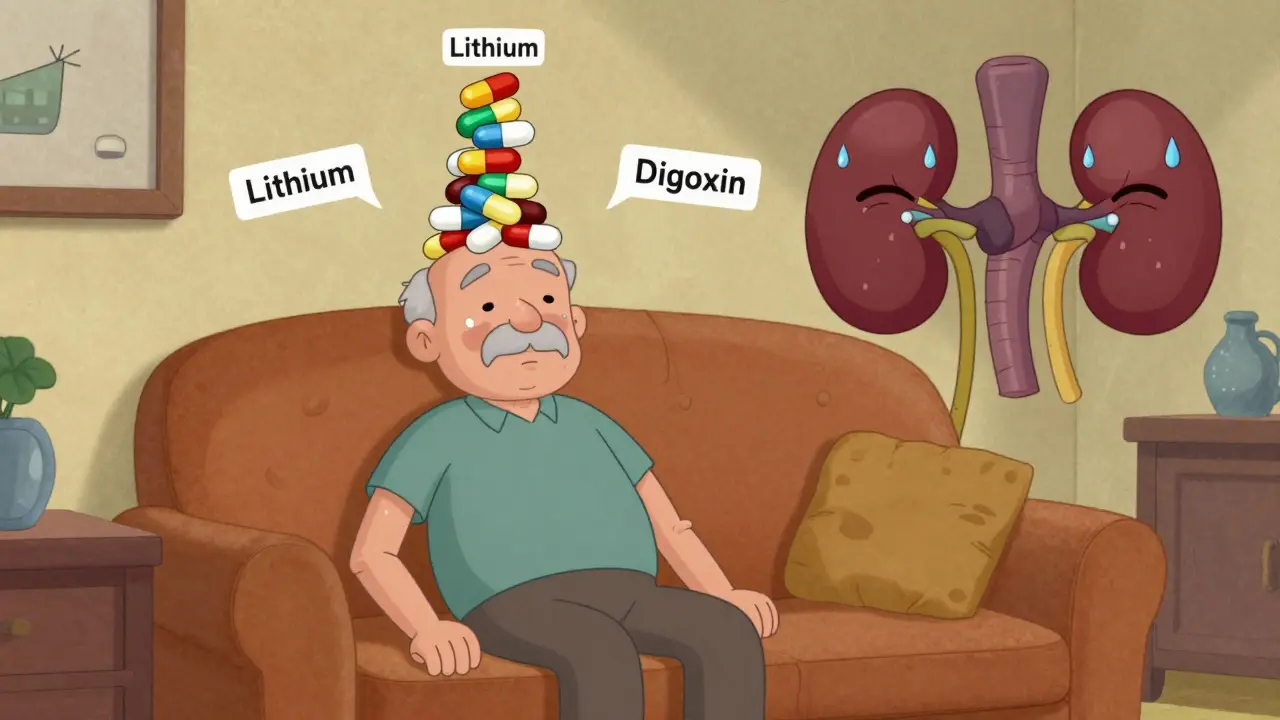
Your liver and kidneys are your body’s filters. They break down drugs and flush out the leftovers. But as you age, these organs slow down. By age 70, many people process medications 30% to 50% slower than when they were younger. That doesn’t mean they need less medicine - it means the same dose becomes too much.
The American Geriatrics Society’s Beers Criteria (2023 update) lists 34 medications that are especially dangerous for older adults because of this buildup. Digoxin, for example, is used to treat heart rhythm problems. At normal levels, it helps. At high levels, it can cause confusion, nausea, and even fatal heart arrhythmias. Lithium, used for bipolar disorder, is another. It has a very narrow window between helping and harming. Too little? No effect. Too much? Seizures, tremors, kidney damage.
And here’s the scary part: many patients don’t realize they’re at risk. They’ve been on the same pills for years. They feel fine. So they keep taking them. Until one day, they don’t.
Real Cases: When the Slow Burn Turns Deadly
A board-certified oncologist shared a case on Reddit in 2023: a patient on long-term amiodarone - a drug for irregular heartbeat - developed severe lung scarring after taking a total of 600 grams over seven years. Blood tests during checkups showed normal levels. The doctor didn’t suspect a problem. But the drug had been quietly accumulating in lung tissue. By the time symptoms appeared, the damage was irreversible.
The FDA’s Adverse Event Reporting System recorded over 12,000 cases of cumulative toxicity between 2018 and 2022. Nearly half involved blood thinners like warfarin or apixaban. Another 28% involved heart medications. These aren’t rare accidents. They’re predictable outcomes of long-term use without proper monitoring.
One nurse on AllNurses described how patients often ask, “Why am I feeling dizzy now? I’ve been on this pill for 10 years.” The answer: because your body can’t keep up anymore. Your kidneys aren’t clearing it like they used to. Your liver isn’t breaking it down like it did at 40. The drug didn’t change. You did.
What Makes Some Drugs More Dangerous Than Others
Not every medication builds up. Some are designed to pass through quickly. Others? They’re engineered to stay. Here’s what makes a drug risky:
- Long half-life: Over 24 hours - think amiodarone, lithium, digoxin.
- Fat solubility: Stored in fat tissue - like benzodiazepines or certain antidepressants.
- Narrow therapeutic index: The difference between a helpful dose and a toxic one is tiny - lithium and warfarin are classic examples.
- Slow elimination: If your body takes weeks to clear it, even small daily doses add up.
Some drugs, like methotrexate (used for rheumatoid arthritis and some cancers), are known for cumulative liver and lung damage. That’s why doctors track your total lifetime dose. The recommended limit? 1.5 to 2 grams total. Cross that, and your risk of scarring skyrockets.
Even radiation therapy isn’t immune. The total radiation dose you receive over multiple sessions is calculated precisely because tissue damage adds up. One session? Safe. Ten? Risky. You wouldn’t get 10 sunburns in a row and expect no harm - the same logic applies to drugs.
How Doctors Miss It - And How They Can Stop
Most clinics check drug levels once every few months. That’s not enough. Cumulative toxicity isn’t about what’s in your blood today - it’s about what’s been building for years.
A 2022 Medscape survey of 1,200 physicians found that 67% had seen at least one serious case of cumulative toxicity in the past year. And 82% blamed it on patients not sticking to monitoring schedules. But the problem isn’t just patient forgetfulness. It’s system failure.
Only 38% of electronic health record systems today can automatically track total cumulative doses. Most still rely on doctors manually adding up pills from pharmacy records - a task that’s easy to overlook, especially when juggling 30 patients a day.
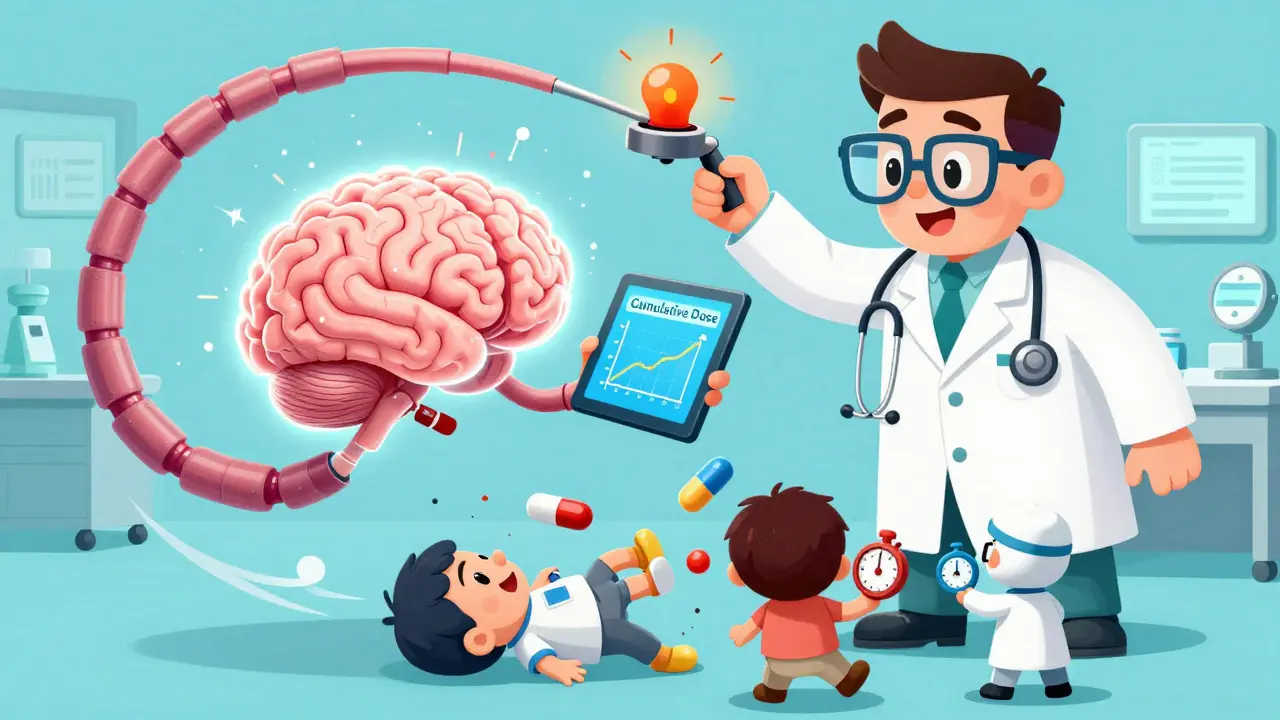
But there’s hope. Some hospitals now use automated trackers. One rheumatology practice in Ohio implemented a system that flagged patients approaching the methotrexate safety limit. Within a year, adverse events dropped by 37%. Pharmacists led the effort - reviewing every prescription, calculating lifetime exposure, and warning doctors before it was too late.
The American Pharmacists Association reports that pharmacist-led monitoring reduced hospital admissions for drug toxicity by 29% across 45 health systems. That’s not just better care - it’s life-saving.
What You Can Do: Protect Yourself
You can’t control how your body processes drugs. But you can control how you manage them. Here’s what to ask your doctor:
- “Is this drug known to build up over time?” If yes, ask for the safe lifetime limit.
- “How often should my blood be tested for this drug?” Don’t wait until you feel sick. Ask for regular checks.
- “What are the signs that it’s building up too much?” Fatigue? Nausea? Tingling? Memory issues? Write them down.
- “Can you track my total dose?” Many pharmacies can. Ask them to note your cumulative amount in your file.
Keep a simple log: date, drug name, dose. If you switch doctors or pharmacies, bring it with you. Your history matters.
And if you’re over 65, ask your doctor to review all your meds for the Beers Criteria list. Many of those drugs are unnecessary long-term - or dangerous when accumulated.
The Future: AI, Tracking, and Safer Medicines
The market for therapeutic drug monitoring is growing fast - projected to hit $4.7 billion by 2028. Why? Because we’re finally recognizing that “safe” doesn’t mean “no side effects today.” It means “no damage tomorrow.”
Pharmaceutical companies are now required to test for cumulative effects before approval. Since 2022, 78% of new cancer drugs include cumulative dose warnings on their labels. The European Medicines Agency made cumulative toxicity assessments mandatory for all chronic-use drugs in January 2024.
At Memorial Sloan Kettering, researchers are testing AI models that predict individual risk using 27 factors - liver function, age, genetics, kidney health, even diet. In early trials, the system predicted toxicity with 82% accuracy. That’s not science fiction. It’s the next step in personalized medicine.
But until those systems are everywhere, you’re your own best protector. Don’t assume silence means safety. A drug that never hurt you before can start hurting you now - because your body has changed. And the drug? It’s still doing what it’s always done. Waiting. Building. Waiting.
Can cumulative drug toxicity be reversed?
Sometimes, yes - but not always. If caught early, stopping the drug and supporting your body’s natural clearance (through hydration, liver support, or dialysis in severe cases) can help. But if damage has already occurred - like lung scarring from amiodarone or kidney injury from lithium - the changes may be permanent. The key is catching it before it becomes irreversible.
Do over-the-counter drugs cause cumulative toxicity?
Yes. Painkillers like acetaminophen (Tylenol) can cause liver damage if taken daily for months. NSAIDs like ibuprofen can harm kidneys over time. Even herbal supplements like kava or comfrey have been linked to long-term liver toxicity. Just because something’s available without a prescription doesn’t mean it’s safe for long-term use.
How do I know if my medication has a cumulative risk?
Check the drug’s prescribing information - look for terms like “cumulative dose,” “lifetime limit,” “toxicity with prolonged use,” or “monitor for organ damage.” If you’re unsure, ask your pharmacist. They’re trained to spot these risks. Drugs like amiodarone, digoxin, lithium, methotrexate, and certain antibiotics (like gentamicin) are well-known for this.
Is cumulative toxicity only a problem for older people?
No. While older adults are more vulnerable due to slower metabolism, younger people with liver or kidney disease, genetic variations in drug-processing enzymes, or those taking multiple medications are also at risk. Even athletes on long-term steroids or people on chronic antibiotics for acne or infections can develop cumulative effects.
Why don’t doctors always warn about this?
Many don’t realize how common it is. Medical training often focuses on acute reactions - not slow, silent buildup. Also, without automated tracking systems, it’s hard to keep tabs on cumulative doses across years. But awareness is growing. More clinics are starting to track these numbers. Your job is to ask the right questions - and keep a record.
If you’ve been on a medication for more than a year, especially if you’re over 60 or have liver or kidney issues - don’t wait for symptoms. Talk to your doctor. Ask about your cumulative dose. Request a blood test. It’s not paranoia. It’s prevention.
andres az
February 13, 2026 AT 05:16Look, I’ve been on amiodarone for 5 years and my doc says ‘no worries’ - but I did the math. 600 grams total? That’s like drinking a bottle of bleach every month and calling it ‘maintenance.’ They’re not monitoring accumulation - they’re monitoring paperwork. This isn’t medicine, it’s a corporate loophole wrapped in a white coat.
Pharma doesn’t want you to know drugs build up because then you’d ask, ‘Why am I paying for this poison long-term?’ The system profits from chronic use, not cure. I’m not paranoid - I’m reading the label.
They test blood once every 6 months? That’s like checking your car’s oil every 6 years. You don’t wait for the engine to seize before you look.
And don’t get me started on how the FDA lets this slide. If this were a food additive, we’d have riots. But pills? Oh, they’re ‘science.’ Bullshit.
Stephon Devereux
February 15, 2026 AT 04:45What this post nails is that toxicity isn’t about dosage - it’s about time. We treat medicine like it’s a one-time event, but the body remembers. Every pill is a brick in a wall you didn’t build.
Think of it like compound interest - but in reverse. Instead of money growing, your organs slowly suffocate under the weight of what was supposed to help you.
The real tragedy? We’re taught to trust the system. But the system wasn’t designed to handle long-term human biology. It was designed for short-term outcomes, billing codes, and quarterly reports.
Doctors aren’t villains - they’re trapped in a broken machine. But you? You can be the exception. Track your meds. Know your half-lives. Ask for cumulative logs. Your future self will thank you.
And yes - this applies to Tylenol too. One a day for 10 years? That’s 3,650 doses. Your liver doesn’t have a ‘pause’ button.
athmaja biju
February 16, 2026 AT 18:04USA medical system is a joke. All this talk about ‘cumulative toxicity’ - but no one in India or Africa even has access to these drugs! We die from infections because we can’t afford one pill, while you over here are worrying about how much poison you’ve accumulated over 7 years.
It’s rich. You have the resources to monitor, to test, to track - and still you cry? What about the 80% of the world that gets no care at all?
Stop making medicine a luxury problem. Build clinics first. Then worry about lithium buildup.
Also - digoxin? My cousin in Kerala took it for 20 years. No tests. No monitoring. Still alive. Maybe your body is tougher than your paperwork suggests.
Robert Petersen
February 17, 2026 AT 11:55I love how this post doesn’t just scare you - it gives you power. That’s rare.
You’re not helpless. You don’t need to wait for a crisis. You can start today. Grab a notebook. Write down every pill you’ve taken in the last year. Call your pharmacy - they can tell you your total cumulative dose for most meds.
Ask your pharmacist to print you a chart. Most will do it for free. They’re the unsung heroes of this whole system.
And if your doctor brushes you off? Find a new one. You deserve someone who sees you as a person, not a chart.
This isn’t about fear. It’s about ownership. You’re not a patient. You’re the CEO of your own body. And CEOs don’t ignore warning signs - they investigate.
Start small. One pill. One question. One conversation. That’s how change begins.
alex clo
February 19, 2026 AT 05:31From a clinical perspective, the Beers Criteria update is critical. The 34 medications flagged are not arbitrary - they’re evidence-based. Yet, 40% of elderly patients in primary care are still prescribed at least one. The disconnect between guidelines and practice is staggering.
Pharmacist-led interventions have the strongest evidence for reducing toxicity-related hospitalizations. Yet, only 12% of U.S. clinics have embedded pharmacists in primary care teams.
This isn’t a patient failure. It’s a structural one. We need policy changes - not just awareness. Automated EHR alerts, mandatory cumulative dose tracking, and pharmacist reimbursement for monitoring are not luxuries - they’re necessities.
The data is clear. The solutions exist. What’s missing is implementation. And funding. And political will.
Craig Staszak
February 20, 2026 AT 04:43Just read this whole thing and my jaw dropped
Never thought about how my blood thinner could be slowly wrecking my kidneys
I’ve been on apixaban for 3 years and felt fine
But now I’m wondering what else I’m taking that’s just… sitting there
Worst part? No one ever told me to track it
Guess I’m gonna start writing everything down
Thanks for the wake up call
Joanne Tan
February 20, 2026 AT 22:58OMG I just realized I’ve been taking ibuprofen daily since college for my back pain… like 15 years??
And my doc never said anything about liver damage??
I’m so mad at myself for not asking
But also… why don’t they just TELL us this stuff??
Going to the pharmacy tomorrow to ask for my cumulative dose on everything
Wish I’d known this sooner 😭
Jim Johnson
February 22, 2026 AT 00:14Joanne, you’re not alone. I’ve been on doxycycline for acne for 8 years. No one ever mentioned cumulative liver risk. I thought it was ‘safe’ because it’s cheap and common.
Turns out, long-term antibiotics can fry your liver and gut microbiome - and the damage is silent until it’s not.
I just scheduled a liver panel. Took me 30 seconds to ask my doc. She said, ‘Good catch.’
Point is - you don’t need to be a genius. You just need to ask. One question. One conversation. One ‘what if?’
And if your doctor doesn’t take you seriously? Find someone who does. Your health isn’t a backup plan.