 Aug, 13 2026
Excipient Sensitivity & Risk Checker
Select all options that apply to you to determine if you are at higher risk for issues with generic medications.
You take your morning pill, expecting the same relief you’ve had for years. Instead, you feel nauseous, dizzy, or just plain off. Did the medication stop working? Not necessarily. The active ingredient is likely identical to what you took before. The culprit might be the invisible stuff holding that pill together-the excipients.
We are told generic drugs are chemically equivalent to their brand-name counterparts. And for the vast majority of people, they are. But "equivalent" doesn't mean "identical." While the medicine inside does the heavy lifting, the inactive ingredients-the fillers, binders, and dyes-play a supporting role that can occasionally steal the show, especially if you have specific sensitivities.
What Are Excipients?
Think of a medication like a cake. The active pharmaceutical ingredient (API) is the flour and sugar-it’s what makes it a cake. The excipients are the inactive ingredients in a medication that serve functional roles like binding, filling, coloring, or preserving the drug without contributing to its therapeutic effect. These include fillers, binders, preservatives, flavorings, and colorings.
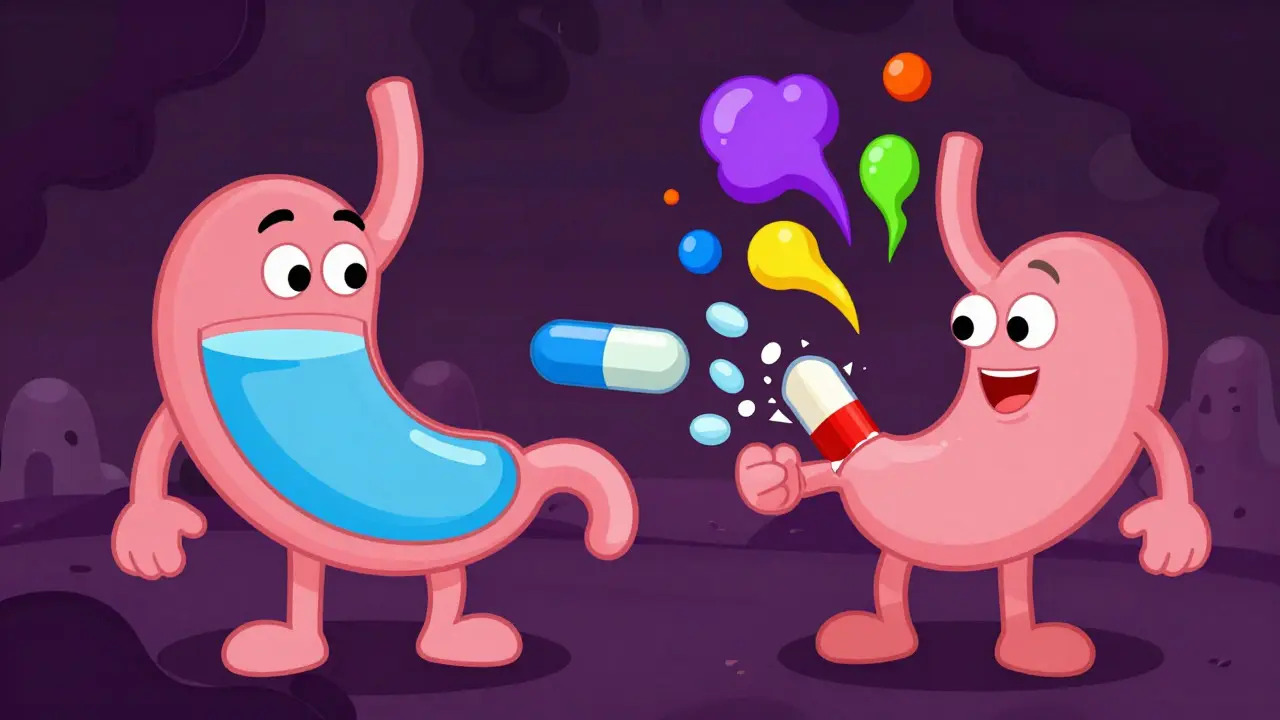
Without excipients, pills wouldn’t hold their shape. They might crumble in the bottle or dissolve too quickly in your stomach. Manufacturers use them to ensure the drug stays stable on the shelf and releases properly once you swallow it. Common examples include lactose (a milk sugar used as a filler), magnesium stearate (a lubricant to help pills slide out of manufacturing molds), and croscarmellose sodium (a disintegrant that helps the pill break apart in your gut).
The U.S. Food and Drug Administration (FDA) requires generic manufacturers to use the same active ingredient as the brand-name drug at the same strength. However, they are allowed-and often encouraged-to use different inactive ingredients. This flexibility keeps costs down but introduces variability that some patients notice immediately.
The Bioequivalence Rule
To get approved, a generic drug must prove it is "bioequivalent" to the brand-name version. This means it delivers the same amount of active ingredient into your bloodstream within the same timeframe. The FDA sets a strict window for this: the generic’s bioavailability must fall between 80% and 125% of the brand-name drug’s performance.
For most medications, this range is wide enough that your body won’t notice the difference. If a drug has a broad therapeutic index-meaning there’s a large safety margin between the dose that works and the dose that causes harm-an 80-125% variance is clinically insignificant.
However, for narrow therapeutic index (NTI) drugs are medications where small changes in blood concentration can lead to treatment failure or serious adverse effects, requiring stricter bioequivalence standards. Examples include warfarin (a blood thinner), levothyroxine (for thyroid conditions), and certain anti-seizure medications. For these drugs, the FDA tightens the bioequivalence window to 90-110%. Even here, excipient differences can alter how quickly the drug dissolves, potentially pushing levels outside that safe zone for sensitive individuals.
When Inactive Ingredients Become Active Problems
If you tolerate a brand-name drug perfectly but react poorly to its generic counterpart, an excipient intolerance is the most likely explanation. Here are common scenarios:
- Lactose Intolerance: Many tablets use lactose as a filler. If you are lactose intolerant, switching to a generic containing lactose can cause bloating, gas, and diarrhea. More importantly, gastrointestinal distress can alter how your gut absorbs the medication, leading to inconsistent drug levels in your blood.
- Allergic Reactions: Some patients develop allergies to specific binders or dyes. A documented case involved a patient who experienced hives after switching to a generic furosemide containing croscarmellose sodium, an ingredient not present in the brand version they previously tolerated.
- Dye Sensitivities: Brand-name drugs often have distinct colors. Generics may use different synthetic dyes to achieve a similar look. Patients with sensitivities to Red Dye No. 40 or Yellow Dye No. 6 may experience headaches, rashes, or behavioral changes after switching.
- Gut Motility Issues: Certain excipients can speed up or slow down gastric emptying. For drugs that rely on precise absorption timing, such as Parkinson’s medications, even minor shifts in digestion speed can result in "off" periods where symptoms return unexpectedly.
Who Is Most at Risk?
Not everyone needs to worry about excipients. According to surveys, about 78% of patients report no difference between brand and generic versions. However, certain groups face higher risks:
| Patient Group | Risk Factor | Potential Consequence |
|---|---|---|
| Patients with NTI Drugs | Narrow safety margin | Treatment failure or toxicity due to slight absorption changes |
| Lactose Intolerant Individuals | Lactose fillers in generics | Gastrointestinal distress affecting drug absorption |
| Parkinson’s Disease Patients | Sensitive absorption windows | Fluctuating symptom control (on/off periods) |
| Allergy Prone Patients | Dyes, binders, preservatives | Rashes, hives, or anaphylaxis |
| Immunosuppressed Patients | Critical drug levels needed | Organ rejection or infection risk if levels drop |
Research from the Michael J. Fox Foundation highlights this clearly. Among Parkinson’s patients, 18% reported worsened symptoms after switching from branded levodopa to generic versions. Many attributed this to differences in how quickly the tablet dissolved, a factor controlled by excipients.
How to Identify the Culprit
If you suspect an excipient is causing issues, you need data. Start by keeping a medication diary. Note when you switch brands, any new symptoms, and the timing of those symptoms relative to taking the pill.
Next, consult your pharmacist. They can access the package insert for both the brand and generic versions. Look for differences in the inactive ingredients list. Pay special attention to:
- Lactose or milk-derived products
- Soy, gluten, or other allergen-containing binders
- Specific dyes (e.g., FD&C Blue No. 1)
- Magnesium stearate or other lubricants if you have rare sensitivities
The FDA has launched initiatives to improve transparency, including a public database of excipient contents. As of 2024, this resource allows patients to compare formulations directly. If you find a mismatch, talk to your doctor about requesting a specific manufacturer’s generic or the brand-name version.
Practical Steps for Patients
Switching back to a brand-name drug isn’t always feasible due to cost. Generic drugs save the U.S. healthcare system approximately $373 billion annually. However, if a generic causes side effects, the cost savings disappear when you factor in doctor visits, alternative treatments, or reduced quality of life.
- Ask for "Dispense as Written": Your doctor can specify on the prescription that the pharmacy must dispense the brand-name drug. This overrides automatic substitution laws in most states.
- Stick to One Manufacturer: If you tolerate a specific generic well, ask your pharmacist to source it from the same manufacturer every time. Different factories may use different excipient blends even for the same generic drug.
- Check for Lactose-Free Options: Many major manufacturers now produce lactose-free versions of common generics. Ask your pharmacist if these are available.
- Monitor NTI Drugs Closely: If you take warfarin, levothyroxine, or anti-seizure meds, request regular blood tests after any switch to ensure levels remain stable.
The Future of Generic Transparency
The industry is responding to patient concerns. The Generic Pharmaceutical Association announced voluntary standardization efforts for narrow therapeutic index drugs in 2024. Meanwhile, regulatory bodies are tightening bioequivalence guidelines. By 2030, experts predict that "clean excipient profiles" will become a key selling point for generic manufacturers, much like organic labeling in food.
Until then, vigilance is your best tool. Don’t assume all generics are created equal. Know your sensitivities, read the labels, and communicate openly with your healthcare team. Your health depends on more than just the active ingredient.
Are generic drugs exactly the same as brand-name drugs?
No. While they contain the same active ingredient at the same strength, generic drugs can have different inactive ingredients (excipients). These differences usually don’t affect efficacy but can cause issues for patients with specific intolerances or allergies.
Can excipients really cause side effects?
Yes. Excipients like lactose, dyes, or binders can trigger allergic reactions, gastrointestinal distress, or altered drug absorption. This is particularly relevant for patients with known sensitivities or those taking narrow therapeutic index drugs.
What should I do if I feel worse after switching to a generic?
Keep a symptom diary and consult your pharmacist to compare the excipient lists of the brand and generic versions. If a specific inactive ingredient is suspected, ask your doctor for a "dispense as written" prescription for the brand or a different generic manufacturer.
Which medications are most sensitive to generic substitutions?
Narrow therapeutic index (NTI) drugs like warfarin, levothyroxine, and anti-seizure medications are most sensitive. Small changes in absorption due to excipient differences can lead to significant clinical outcomes for these drugs.
How can I find out what excipients are in my medication?
You can ask your pharmacist to provide the package insert, which lists all inactive ingredients. Additionally, the FDA is developing a public database of excipient contents to improve transparency for patients with specific intolerances.
Vivek sharma
August 13, 2026 AT 19:16It is fascinating how the invisible components of our daily routines can dictate such significant physiological outcomes. The analogy of the cake is quite apt because we often focus solely on the flavor while ignoring the structural integrity provided by the other ingredients. In many cultures, there is a deep-seated trust in traditional remedies where the entire plant is used, yet here we see that isolating the active ingredient introduces new variables through excipients. This highlights a broader philosophical point about reductionism in modern medicine versus holistic approaches. We must remain vigilant and informed citizens of our own health ecosystems. 🌿💊
Jw George John Warren
August 15, 2026 AT 04:29Oh please another article trying to scare you into buying overpriced brand names 😂 The FDA has strict rules for a reason and most people are just placebo victims who think their generic is bad because they want it to be. It's all in your head mostly unless you have a rare allergy which is like 1% of the population. Stop crying about fillers and save your money 💸🤡
Daniel Cook
August 17, 2026 AT 02:53I've been on levothyroxine for years and had to switch manufacturers twice before finding one that didn't make me feel foggy. It wasn't dramatic but noticeable enough to bother me. My doctor finally let me stick with one specific generic brand instead of letting the pharmacy rotate them. Just a personal experience sharing no medical advice here.
Ankit Sinha
August 18, 2026 AT 16:04You guys are missing the bigger picture here. The real issue isn't just excipients it's the lack of transparency from big pharma and generic manufacturers alike. They change formulas constantly without telling patients and then act surprised when compliance drops. It's negligence plain and simple. People need to demand better labeling and stricter regulations not just rely on anecdotes. Wake up sheeple.
Garry Hedges
August 19, 2026 AT 14:08nah man its just the lactose thing for most folks but yeah if u take narow therapeutic drugs u gotta be careful. i switched my warfarin once and my INR went crazy so now i just ask for the same bottle every time. dont let the doc tell u its all the same bc it isnt always. keep ur levels stable or u end up in the ER lol.
olatunde oluranti
August 21, 2026 AT 00:46Big Pharma wants you to believe generics are safe but look at the bioequivalence window 80-125%. That's a huge margin of error. Why do they get away with this? Because they own the regulators. I bet the excipients are full of microplastics and tracking devices. Follow the money. They don't care about your health they care about profit margins. Stay woke.
Rachel Robinson Interiors
August 22, 2026 AT 19:22This is such an important topic that deserves more attention. Many patients suffer in silence thinking they are developing new conditions when it is actually a reaction to a binder or dye. I appreciate the clear explanation of NTI drugs because that context helps readers understand why some medications require stricter standards. Thank you for shedding light on this often overlooked aspect of pharmacology.
Michael Smith
August 24, 2026 AT 05:04sure whatever suits you but honestly most of us just swallow the pill and move on. if it works it works. chasing down specific manufacturers feels like too much effort for the average joe. maybe for parkinsons patients sure but for ibuprofen? nah im good with whatever the pharmacist hands me. life is short.
Eunice Chen
August 24, 2026 AT 21:51i had a rash after switching my blood pressure meds and found out it was the dye. scary stuff. glad i read this now so i know what to ask my doc next time. thanks for the info!
Jamaal Johnson
August 26, 2026 AT 14:06The implications of these findings extend far beyond mere consumer preference; they touch upon the very foundation of pharmaceutical ethics and patient safety protocols. One cannot help but marvel at the complexity involved in ensuring that a simple tablet delivers its intended therapeutic effect without adverse reactions from inert substances. It serves as a poignant reminder that science is rarely black and white but rather exists in nuanced shades of gray requiring constant vigilance and adaptation.
Jesse Barlau
August 27, 2026 AT 07:27While the statistical likelihood of experiencing severe side effects from excipients is relatively low for the general population, the potential consequences for those with specific sensitivities or those taking narrow therapeutic index medications are indeed significant. It is crucial for healthcare providers to engage in open dialogues with their patients regarding these possibilities, ensuring that individuals feel empowered to report any changes in their condition promptly. A collaborative approach between patient and provider can mitigate risks effectively.
Paul Coar
August 27, 2026 AT 22:52hey everyone just wanted to say keep track of your meds if something feels off check the label. my cousin had issues with magnesium stearate and once he knew to look for it he felt way better. small changes make big differences so stay proactive and talk to yur pharmacist they r helpful usually. hope this helps someone out there feeling confused about their rxns.