 Jan, 29 2026
What Exactly Is an Authorized Generic?
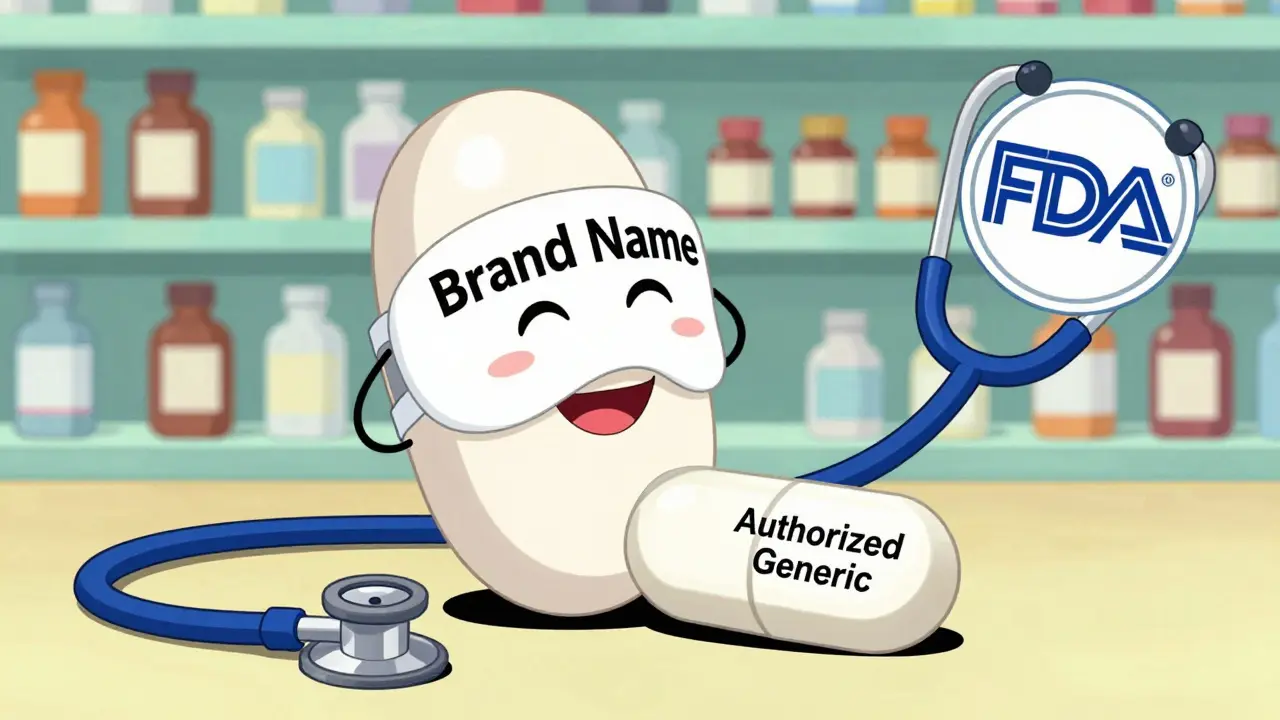
An authorized generic isn’t just another cheap version of a brand-name drug. It’s the exact same pill, capsule, or inhaler-same active ingredient, same inactive ingredients, same factory, same batch process-but sold without the brand name on the box. Think of it as the original product wearing a disguise. The U.S. Food and Drug Administration (FDA) defines it clearly: authorized generic is an approved brand-name drug that is marketed without the brand name on its label. Other than the fact that it does not have the brand name on its label, it is the exact same drug product as the branded product. There’s no separate approval process. No bioequivalence testing. No guesswork. It’s the same medicine your doctor prescribed, just cheaper.
Why Do Authorized Generics Exist?
When a brand-name drug’s patent runs out, generic manufacturers rush in to offer lower-cost versions. But here’s the twist: the original company often launches its own generic version too. Why? To stay in the game. By releasing an authorized generic, the brand manufacturer keeps a slice of the market without having to advertise under a new name. It’s a smart business move, but it also gives patients a reliable, familiar option when prices start dropping.
For patients, this matters most with drugs that have a narrow therapeutic index-medications where tiny changes in how the body absorbs the drug can lead to big differences in effect. Levothyroxine for thyroid conditions and warfarin for blood thinning are classic examples. If your body reacts poorly to a traditional generic because of a different filler or coating, switching to the authorized generic often fixes the problem. Clinical reports show patients on levothyroxine who switched from a traditional generic to the authorized version reported fewer symptoms like fatigue and brain fog.
How Is an Authorized Generic Different From a Regular Generic?
Regular generics must match the brand drug’s active ingredient and prove they work the same way in the body-usually through bioequivalence studies. But they can use different fillers, dyes, or binders. That’s fine for most people. But for others, those inactive ingredients cause side effects: stomach upset, rashes, or even changes in how well the drug works.
Authorized generics don’t have that problem. They use the exact same inactive ingredients as the brand. That’s why they’re not listed in the FDA’s Orange Book, where traditional generics appear. They’re produced under the original brand’s New Drug Application (NDA), not a separate Abbreviated New Drug Application (ANDA). In short: if you’ve ever had trouble with a generic version of your medication, the authorized version might be the answer.

Which Drugs Have Authorized Generics?
Not every brand-name drug has an authorized generic-only about 10% do. But many of the most commonly prescribed ones do. Here are some real examples currently available as of 2025:
- Colcrys (colchicine) → Authorized generic by Prasco Laboratories - Used for gout. Patients who couldn’t tolerate the fillers in traditional generics often report better tolerance with this version.
- Concerta (methylphenidate ER) → Authorized generic by Watson/Actavis - ADHD treatment. The extended-release mechanism is identical, so dosing stays consistent.
- Celebrex (celecoxib) → Authorized generic by Greenstone Pharmaceuticals - A COX-2 inhibitor for pain and inflammation. Many patients switched to avoid GI issues from other generics.
- Unithroid (levothyroxine) → Authorized generic by Jerome Stevens Pharmaceuticals - Thyroid replacement. This is one of the most frequently cited cases where authorized generics made a clinical difference.
- ProAir HFA (albuterol sulfate) → Authorized generic by Teva - Asthma inhaler. The aerosol delivery system is unchanged, which matters for lung delivery.
- Jardiance (empagliflozin) → Authorized generic launched in 2025 by Boehringer Ingelheim - A newer addition for type 2 diabetes, showing the trend is still growing.
The FDA updates its official Listing of Authorized Generic Drugs a publicly maintained, regularly updated database of all currently available authorized generics every few months. As of October 2025, there are over 200 active authorized generics on the list. New ones are added regularly, especially as major patents expire.
Why Aren’t There More Authorized Generics?
It’s not that companies don’t want to make them-it’s that they don’t always need to. Launching an authorized generic requires coordination between the brand manufacturer and a partner (often another company they own or contract with). It’s not automatic. Some companies choose to let traditional generics enter the market first, then wait to see if prices drop enough before stepping in. Others use the authorized generic as a strategic weapon: they release it right when a competitor’s 180-day exclusivity period kicks in, undercutting them before they can build momentum.
Studies show that in markets with authorized generics, drug prices drop 15% less in the first year after patent expiry than in markets without them. That’s because the brand company is still selling its own version-just under a different label. Critics say this slows down competition. Supporters say it gives patients a safe, predictable alternative.
How to Find and Get an Authorized Generic
Ask your pharmacist. They can check your prescription against the FDA’s list and see if an authorized version exists for your drug. You might be surprised-many people assume the cheapest generic is the only option, but sometimes the authorized version is priced similarly or even lower than the traditional generic.
Pharmacy systems label authorized generics with a special manufacturer code. If you see a generic version of, say, ProAir HFA from Teva, and it’s listed as “authorized,” that’s the one. Don’t be fooled by the pill color or shape. Authorized generics often look different from the brand. But that’s just packaging. The medicine inside? Identical.
Pharmacists are trained to explain this. The American Pharmacists Association recommends saying: “This pill looks different, but it’s the exact same medication your doctor prescribed. No changes in how it works-just a lower price.”
What to Watch Out For
Even though authorized generics are identical to the brand, they’re not always available everywhere. Some states have rules that automatically substitute generics unless the doctor says “dispense as written.” In those cases, you may need to ask your doctor to write “no substitution” on the prescription if you specifically want the authorized version.
Also, insurance plans don’t always distinguish between traditional and authorized generics. They might cover both at the same copay, or sometimes they don’t cover the authorized version at all if it’s listed under a different manufacturer code. Always check with your insurer before switching.
The Bigger Picture: Authorized Generics and Drug Pricing
Authorized generics are a double-edged sword. On one hand, they offer patients a reliable, high-quality alternative without the risk of formulation changes. On the other, they can delay the full impact of generic competition. The Congressional Budget Office found that drugs with authorized generics saw 12% smaller price drops in their first year after patent expiration compared to those without.
But here’s the thing: for patients who’ve struggled with traditional generics, this isn’t about market strategy-it’s about health. If your thyroid levels fluctuate every time you refill your prescription, or your asthma inhaler doesn’t feel right, an authorized generic might be the solution you’ve been waiting for.
As more brand-name drugs lose patent protection, the number of authorized generics will likely grow. The FDA’s latest update in October 2025 added 17 new products, including Jardiance. Analysts predict a 5-7% annual increase in new authorized generics through 2027. For now, the best move is to know your options-and ask.
Are authorized generics as safe as brand-name drugs?
Yes. Authorized generics are made using the exact same formula, ingredients, and manufacturing process as the brand-name drug. The only difference is the label. They’re not a copy-they’re the original product sold under a different name. The FDA requires manufacturers to notify them of authorized generic launches, but no additional testing is needed because the product is identical.
Can I switch from a brand-name drug to an authorized generic without my doctor’s approval?
In most cases, yes. Authorized generics are considered therapeutically equivalent to the brand. Pharmacists can substitute them unless your prescription says “dispense as written.” However, if you’ve had issues with traditional generics in the past, it’s wise to talk to your doctor first. They can help you decide if the authorized version is right for you.
Why does my authorized generic look different from the brand-name pill?
The color, shape, or markings on the pill are changed to distinguish it from the brand product, but the medicine inside is identical. This is required by law to avoid confusion. Don’t assume a different-looking pill means it’s different. Always check with your pharmacist if you’re unsure.
Are authorized generics cheaper than traditional generics?
Sometimes. Often, they’re priced similarly to traditional generics. In some cases, they’re even less expensive because the brand manufacturer is trying to compete directly with other generics. Always compare prices at your pharmacy-authorized generics aren’t always the cheapest, but they’re the most consistent in formulation.
How do I know if my drug has an authorized generic?
Ask your pharmacist or check the FDA’s official Listing of Authorized Generic Drugs, updated as recently as October 2025. You can also search by drug name on GoodRx or other pharmacy comparison sites-they often flag authorized generics with a special indicator. If your drug is listed there, it’s worth asking for.
Kimberly Reker
January 30, 2026 AT 23:42Eliana Botelho
January 31, 2026 AT 00:38Rob Webber
January 31, 2026 AT 08:53calanha nevin
February 2, 2026 AT 08:07Lisa McCluskey
February 2, 2026 AT 20:10owori patrick
February 3, 2026 AT 09:36Claire Wiltshire
February 4, 2026 AT 06:13Darren Gormley
February 5, 2026 AT 03:41Mike Rose
February 6, 2026 AT 19:01