 Mar, 3 2026
Anticholinergic Burden Calculator
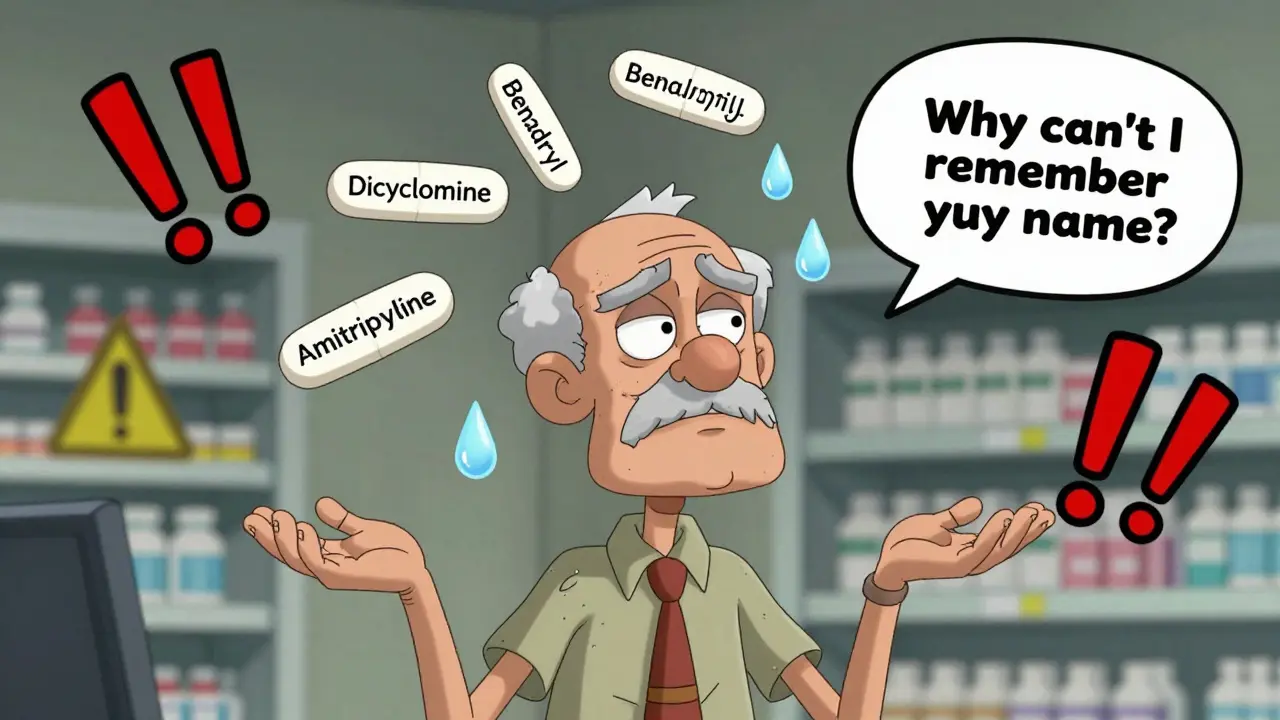
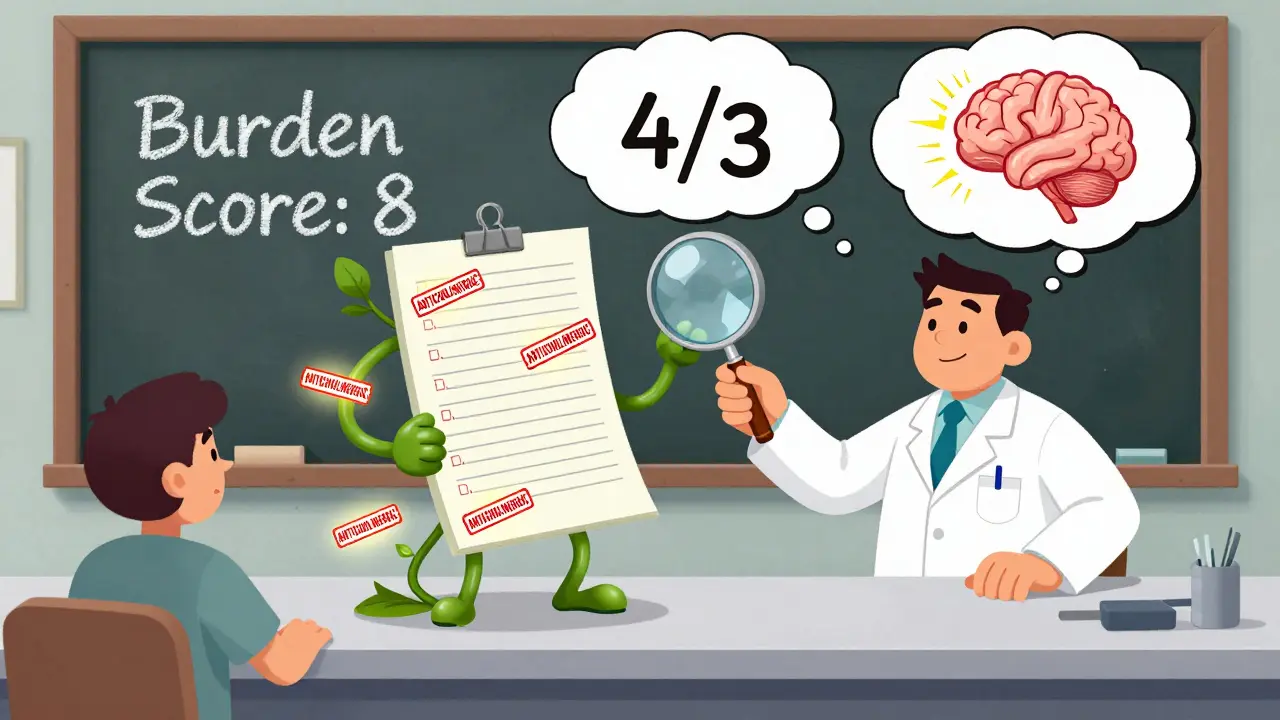
Anticholinergic burden refers to the cumulative effect of medications that block acetylcholine. The higher your burden score, the greater the risk of side effects like confusion, dry mouth, constipation, and urinary retention. This calculator helps you understand your risk level.
Add Your Medications
Your Burden Score
Why This Matters
A score of 2 or higher indicates significant anticholinergic burden. People with scores above 2 have higher risk of confusion, falls, and hospitalization, especially if over 65 or with pre-existing conditions like glaucoma or prostate issues.
Many people take antispasmodics to manage cramps, irritable bowel syndrome, or overactive bladder. But what they don’t always realize is that these medications can turn harmless combinations into dangerous ones. If you’re taking antispasmodics like dicyclomine or hyoscine, and also use an antihistamine for allergies, a sleep aid, or even an antidepressant, you could be putting yourself at risk for serious side effects - confusion, dry mouth, constipation, urinary retention, or even delirium.
How Antispasmodics Work - And Why That’s a Problem
Antispasmodics in the anticholinergic class work by blocking acetylcholine, a chemical your body uses to signal muscles to contract. In the gut, bladder, and airways, this helps calm spasms. But acetylcholine isn’t just in one place. It’s everywhere: in your brain, your salivary glands, your eyes, your heart. When you block it too broadly, you get side effects - and worse, when you combine these drugs with others that do the same thing, the effect multiplies.Take dicyclomine, for example. It’s commonly prescribed for IBS. At full doses, nearly 7 out of 10 people report side effects like dry mouth or blurred vision. Now imagine adding oxybutynin for bladder control, plus diphenhydramine (Benadryl) for allergies, and amitriptyline for nerve pain. Each of those drugs blocks acetylcholine too. Together, they don’t just add up - they compound. That’s what doctors call anticholinergic burden.
Common Medications That Clash with Antispasmodics
You might not think of these as risky, but many everyday drugs carry strong anticholinergic effects:- Antihistamines: Diphenhydramine (Benadryl), chlorpheniramine, hydroxyzine
- Antidepressants: Amitriptyline, nortriptyline, paroxetine, fluoxetine (in some cases)
- Antipsychotics: Quetiapine, olanzapine, clozapine
- Bladder medications: Oxybutynin, tolterodine, solifenacin
- Sleep aids: Doxylamine, phenylephrine combinations
- Anti-Parkinson’s drugs: Trihexyphenidyl, benztropine
A 2023 study in JAMA Internal Medicine found that over 40% of adults over 65 were taking at least two medications with anticholinergic effects - often without knowing. One patient told me (in a review on Drugs.com): “I started taking amitriptyline for nerve pain, and my dicyclomine stopped working. I got so constipated I ended up in the ER.” That’s not rare. It’s predictable.
Who’s at Highest Risk?
Older adults are the most vulnerable. As we age, our bodies process drugs differently. Liver and kidney function slow down. The blood-brain barrier becomes leakier. That means anticholinergic drugs enter the brain more easily and stick around longer. The American Geriatrics Society’s Beers Criteria® specifically lists dicyclomine, oxybutynin, and hyoscine as potentially inappropriate for people over 65 - not because they’re useless, but because the risks outweigh the benefits for most.But it’s not just age. People with glaucoma, prostate problems, constipation, or dementia are also at higher risk. If you already have trouble urinating or your bowels move slowly, adding an antispasmodic can push you into full-blown urinary retention or bowel obstruction. The FDA requires black-box warnings for these drugs in patients with those conditions.
The Hidden Danger: Polypharmacy
Many people see different doctors - a gastroenterologist for IBS, a urologist for bladder issues, a psychiatrist for depression, a primary care doctor for allergies. Each prescribes what they think is best. No one sees the full picture. That’s where the real danger lies.A pharmacist in Cambridge told me (in a Reddit thread): “I’ve had to step in three times this month alone. One patient was on four anticholinergic drugs. He was confused, couldn’t pee, and his heart was racing. He didn’t know any of them were doing the same thing.”
That’s why medication reviews aren’t optional anymore. Every time you get a new prescription, ask: “Is this going to make my other meds stronger - or more dangerous?” You don’t need to be a doctor to ask that.
What to Do: Practical Steps to Stay Safe
If you’re taking an antispasmodic, here’s what you can do right now:- List every medication - including over-the-counter pills, supplements, and herbal products. Don’t forget sleep aids or allergy meds.
- Check the anticholinergic burden using the Anticholinergic Burden Calculator (released in 2022). It rates over 117 drugs on a scale from 1 (mild) to 3 (high). If your total score is 2 or higher, talk to your doctor.
- Ask about alternatives. For IBS, there are now non-anticholinergic options like peppermint oil capsules, rifaximin, or low-dose antidepressants that don’t block acetylcholine. For overactive bladder, mirabegron works differently and doesn’t cause dry mouth or constipation.
- Never combine anticholinergics with alcohol. It’s a triple threat: depresses the nervous system, worsens drowsiness, and increases confusion risk.
- Watch for warning signs: confusion, trouble remembering things, dry mouth so bad you can’t swallow, inability to urinate, fast heartbeat, or blurred vision that doesn’t go away.

Why This Is Changing - And What’s Next
The tide is turning. In 2022, prescriptions for anticholinergic antispasmodics dropped 22% across the U.S. and U.K. Meanwhile, non-anticholinergic options like mirabegron and eluxadoline rose by 37%. The American Gastroenterological Association now recommends these newer drugs as first-line treatments.Electronic health records are catching up too. Systems like Epic and Cerner now auto-flag dangerous combinations. If your doctor tries to prescribe dicyclomine and Benadryl together, the system pops up a warning. That didn’t exist five years ago.
Researchers are also developing new antispasmodics that work only in the gut - not the brain. Two are in late-stage trials as of late 2023. These could offer relief without the brain fog or memory problems.
But until then, the message is clear: if you’re on an antispasmodic, don’t assume it’s safe just because your doctor prescribed it. Ask about interactions. Review your whole list. And if you’re over 65, or have any of the conditions listed above - reconsider whether you really need it.
When to See a Doctor
Call your doctor if you notice any of these after starting or changing a medication:- Confusion or memory lapses that are new
- Difficulty urinating or no urine for over 12 hours
- Severe constipation (no bowel movement for 4+ days)
- Fast heartbeat or dizziness when standing
- Blurred vision that doesn’t improve
These aren’t just side effects - they’re red flags. Left unchecked, they can lead to falls, hospitalization, or even permanent cognitive decline.
Can I take antispasmodics with over-the-counter cold medicine?
Many cold and flu remedies contain diphenhydramine or doxylamine - both strong anticholinergics. Combining them with dicyclomine or hyoscine can cause severe dry mouth, confusion, urinary retention, or even hallucinations. Always check the active ingredients. If it says "for nighttime relief" or "for allergies," it likely contains an anticholinergic. Skip it. Use plain acetaminophen or ibuprofen instead, and ask your pharmacist for a safe alternative.
Are there safer antispasmodics without anticholinergic effects?
Yes. For IBS, peppermint oil capsules (like enteric-coated Mintec) work well for many people without blocking acetylcholine. For overactive bladder, mirabegron (Myrbetriq) relaxes the bladder muscle using a completely different pathway - no dry mouth, no constipation. Rifaximin (Xifaxan) helps with IBS-D by targeting gut bacteria, not nerves. These are now first-choice options in guidelines from the American College of Gastroenterology. Ask your doctor if one might work for you.
I’ve been on dicyclomine for years. Should I stop?
Don’t stop suddenly. If you’ve been on it for a long time, your body may have adapted. Stopping abruptly could make your cramps worse. Instead, schedule a medication review. Bring your full list of drugs - including supplements and OTCs. Ask your doctor: "What’s my total anticholinergic burden?" and "Is there a safer option that works just as well?" Many people find they can reduce or eliminate antispasmodics with lifestyle changes, fiber, hydration, or newer medications.
Can anticholinergic interactions cause dementia?
Long-term use of multiple anticholinergic drugs has been linked to higher risk of dementia in several large studies, including one published in JAMA in 2019. The risk increases with higher cumulative exposure - meaning how much and how long you’ve taken them. It’s not a guarantee, but it’s a real concern. If you’re taking three or more anticholinergic drugs over several years, especially over age 65, the evidence suggests it’s worth discussing alternatives. The goal isn’t to scare you - it’s to help you make a smarter choice.
How do I check if a drug has anticholinergic effects?
Use the Anticholinergic Burden Calculator from the University of Washington (available online). It rates drugs from 0 (none) to 3 (high). You can also check the drug’s package insert - look for side effects like dry mouth, blurred vision, constipation, or urinary retention. If those are listed, it likely has anticholinergic activity. When in doubt, ask your pharmacist. They’re trained to spot these combinations.
Zacharia Reda
March 3, 2026 AT 17:38So let me get this straight - we’re telling people to stop taking Benadryl for allergies because it might make them forget their own name? I’ve been taking it for 20 years and I still remember where I put my keys… mostly. 😏
Jeff Card
March 4, 2026 AT 02:55I work in geriatrics and this is terrifyingly accurate. I had a 78-year-old patient on dicyclomine, amitriptyline, oxybutynin, and diphenhydramine. She stopped recognizing her grandkids. We pulled all four - within a week, she was back to telling stories about her childhood. No magic pill. Just stopping the poison.
Gretchen Rivas
March 5, 2026 AT 00:12Check your meds. Seriously. Even if you think it’s harmless. I didn’t know my sleep aid had anticholinergic effects until my pharmacist flagged it. Changed my life.
Mike Dubes
March 5, 2026 AT 05:50Man I was on like 3 of these things for years - IBS, insomnia, nerve pain. Thought I was fine til I started forgetting where I parked my car. Then I found out my 'natural' herbal tea had anticholinergic herbs in it. Who knew? 🤯
Helen Brown
March 5, 2026 AT 10:51This is all a Big Pharma scam. They want you to keep buying new drugs because they made the old ones too dangerous. They knew this would happen. They’re covering it up. The government is in on it. You think your doctor cares? They get paid to prescribe. Read the research. It’s all manipulated.
John Cyrus
March 6, 2026 AT 13:19If you’re over 65 and still taking antispasmodics you’re an idiot. End of story. No one else is responsible for your poor life choices. Stop blaming the drugs. Blame yourself for not reading the damn label
Justin Rodriguez
March 8, 2026 AT 06:41My mom was on oxybutynin and Benadryl for years. She didn’t even realize she was confused until her cat started looking like a stranger. We switched her to mirabegron. She’s back to gardening and calling me every Sunday. Sometimes the fix is simple. You just have to ask.
Raman Kapri
March 10, 2026 AT 00:44This article is overly alarmist. In my country, we use these medications without incident. The Western obsession with over-medicalization creates more problems than it solves. People should trust their bodies, not algorithms and calculators.
Richard Elric5111
March 10, 2026 AT 06:26One cannot help but contemplate the ontological implications of acetylcholine as a neurotransmitter - its role not merely as a biochemical messenger, but as a metaphysical linchpin between volition and corporeal function. The systemic suppression of its activity constitutes not merely a pharmacological phenomenon, but an existential erosion of the embodied self.
Dean Jones
March 11, 2026 AT 22:54Look, I get it. Drugs are scary. But here’s the thing - we’ve been overmedicating since the 80s. We treat every twinge like a crisis. I’ve been on dicyclomine since 2010. I’m 62. I still hike. I still remember my wife’s birthday. Maybe the real issue isn’t the drugs - it’s that we’ve forgotten how to live with discomfort. Maybe a little dry mouth is worth not being in pain. Or maybe we’re just too afraid of side effects because we’ve been sold fear as a product. Just saying.
Betsy Silverman
March 12, 2026 AT 06:02I’m a nurse and I see this all the time. Grandmas on 5 meds they don’t even know the names of. One woman told me she took her husband’s 'nerve pills' because hers were 'too slow.' We need better communication. Not more warnings. More conversations.
Ivan Viktor
March 13, 2026 AT 23:49So you’re saying I can’t take my nighttime cold med with my IBS pill? Bro. I’m already on 3 other things. This is why I hate healthcare. It’s just one more thing to worry about.
Milad Jawabra
March 14, 2026 AT 03:09Y’all are overreacting. I’ve been on dicyclomine + Benadryl for 15 years. I’m 71. I still drive. I still cook. I still laugh. You think I’m gonna stop because some guy wrote a long post? Nah. I’ll take my meds and live my life. You want to live in fear? Go ahead. I’m not signing up.
Also - my pharmacist? He’s the one who told me to keep taking it. So take your 'calculator' and shove it.
Stephen Vassilev
March 15, 2026 AT 01:08According to the FDA’s Adverse Event Reporting System, anticholinergic interactions have resulted in 12,000+ hospitalizations in the last 5 years - and that’s only the reported cases. The true number is likely 3x higher. The CDC has issued a public health advisory. The American College of Physicians has updated its guidelines. And yet, here we are - people dismissing this as 'overhyped.' This isn’t hype. This is a silent epidemic. You’re not being paranoid. You’re being informed.