 Dec, 30 2025
Anticoagulant Bleeding Risk Calculator
This calculator helps you understand your bleeding risk based on key factors discussed in the article. Enter your information below to see your risk level and learn prevention steps.
When you’re on a blood thinner, the goal isn’t just to prevent a stroke or clot-it’s to do it without bleeding out. Anticoagulants save lives, but they also carry a quiet, dangerous risk: uncontrolled bleeding. About 1 in 50 people on these drugs will have a major bleed each year. That’s not rare. It’s predictable. And it’s preventable-if you know how.
What Anticoagulants Actually Do
Anticoagulants don’t actually thin your blood. They slow down the clotting process by targeting specific proteins in your coagulation cascade. Warfarin, the oldest one still in use, blocks vitamin K, which your liver needs to make clotting factors. DOACs-like apixaban, rivaroxaban, and dabigatran-go after factor Xa or thrombin directly. Heparins work through antithrombin. Each has a different job, a different risk, and a different way to undo it if things go wrong.
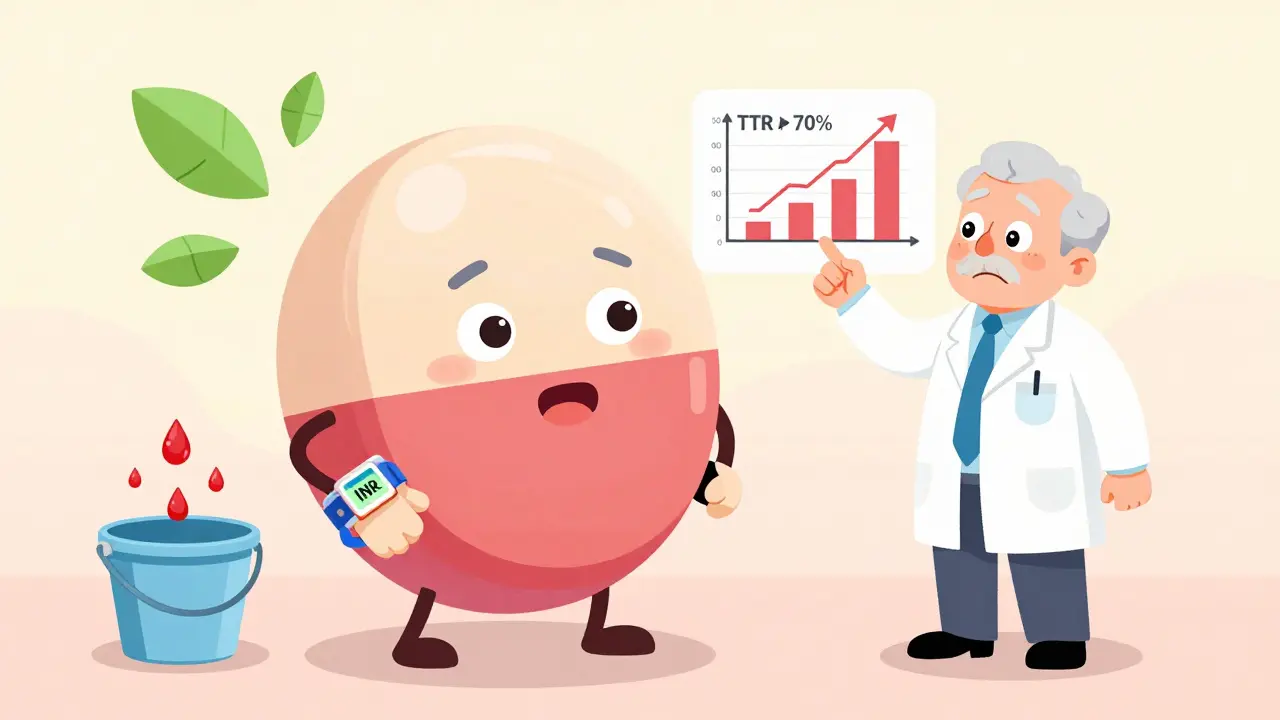
Warfarin has been around since the 1950s. It’s cheap-about $4 a month. But it’s finicky. Your INR must stay between 2.0 and 3.0 for most conditions. If it drops below 2, clots form. If it climbs above 3, you bleed. And that balance depends on your diet, other meds, even your liver function. Studies show that patients with time in therapeutic range (TTR) below 60% have nearly double the risk of major bleeding. That’s why so many end up in the ER after a fall or a nosebleed that won’t stop.
Why DOACs Are the New Standard-But Not the Perfect One
Since 2010, direct oral anticoagulants (DOACs) have taken over 75% of new prescriptions in the U.S. Why? No weekly blood tests. No dietary restrictions. Fixed doses. But they’re not magic. They’re just different.
DOACs reduce major bleeding by 19-20% compared to warfarin. Apixaban, in particular, cuts bleeding risk by 31% in atrial fibrillation patients. That’s why it’s often the first choice. But here’s the catch: DOACs don’t have a reliable lab test to measure their effect. You can’t check a number like INR to know if you’re safe. And until recently, there were no reversal agents.
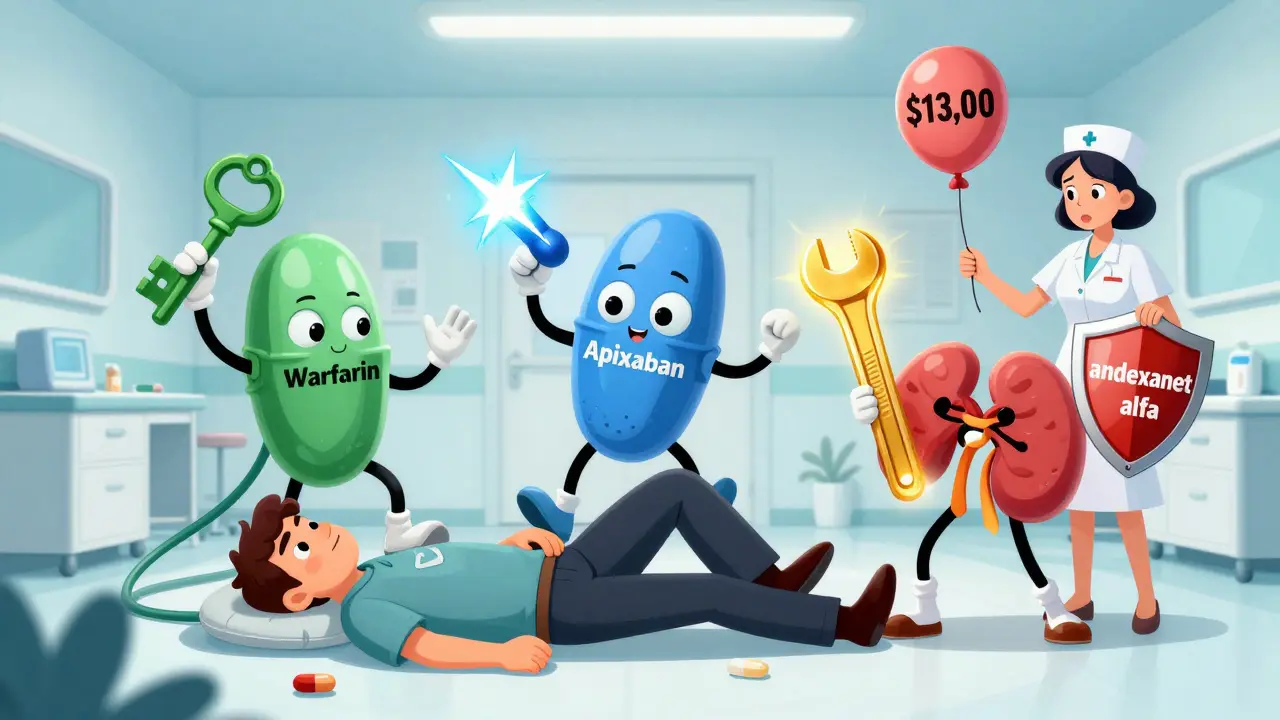
Now we have them. Idarucizumab reverses dabigatran. Andexanet alfa reverses apixaban and rivaroxaban. But andexanet alfa costs $13,000 per dose. Many hospitals don’t keep it on hand. And if you’re in a rural ER, you might not get it in time.
Who’s at Highest Risk for Bleeding?
Not everyone on anticoagulants bleeds. But some groups are far more vulnerable.
- People over 75: They bleed 2 to 3 times more often than younger patients.
- Those with kidney problems: If your creatinine clearance is below 50 mL/min, your bleeding risk doubles. For DOACs, that means dose adjustments-or switching to warfarin.
- Patients on dual therapy: Taking aspirin or clopidogrel with a blood thinner? Your bleeding risk jumps 50-70%.
- People with uncontrolled high blood pressure: A systolic pressure over 160 mmHg increases intracranial bleed risk by 40%.
One study found that 68% of major bleeds in anticoagulated patients happened in just three groups: elderly, renal-impaired, and those on multiple antiplatelet drugs. That’s not random. It’s preventable.
How to Prevent Bleeding Before It Starts
Prevention isn’t just about the drug. It’s about the whole picture.
- Check kidney function before and every 3-6 months. DOACs are cleared by the kidneys. If your CrCl drops below 30 mL/min, apixaban may still be safe with a reduced dose. Rivaroxaban? Not so much. Edoxaban? Avoid entirely.
- Review every medication. NSAIDs like ibuprofen? Stop them. They irritate your stomach lining and make bleeding more likely. Even OTC supplements like fish oil or ginkgo can add risk.
- Don’t skip the INR check if you’re on warfarin. If your TTR falls below 70%, your bleeding risk climbs 15% for every 10% drop. Set calendar reminders. Use a home monitor if you can.
- Know your reversal plan. If you’re on apixaban, ask your doctor: "What’s the plan if I fall and hit my head?" If they say "We’ll give vitamin K," they’re wrong. Vitamin K doesn’t reverse DOACs. You need andexanet alfa-or a blood transfusion.
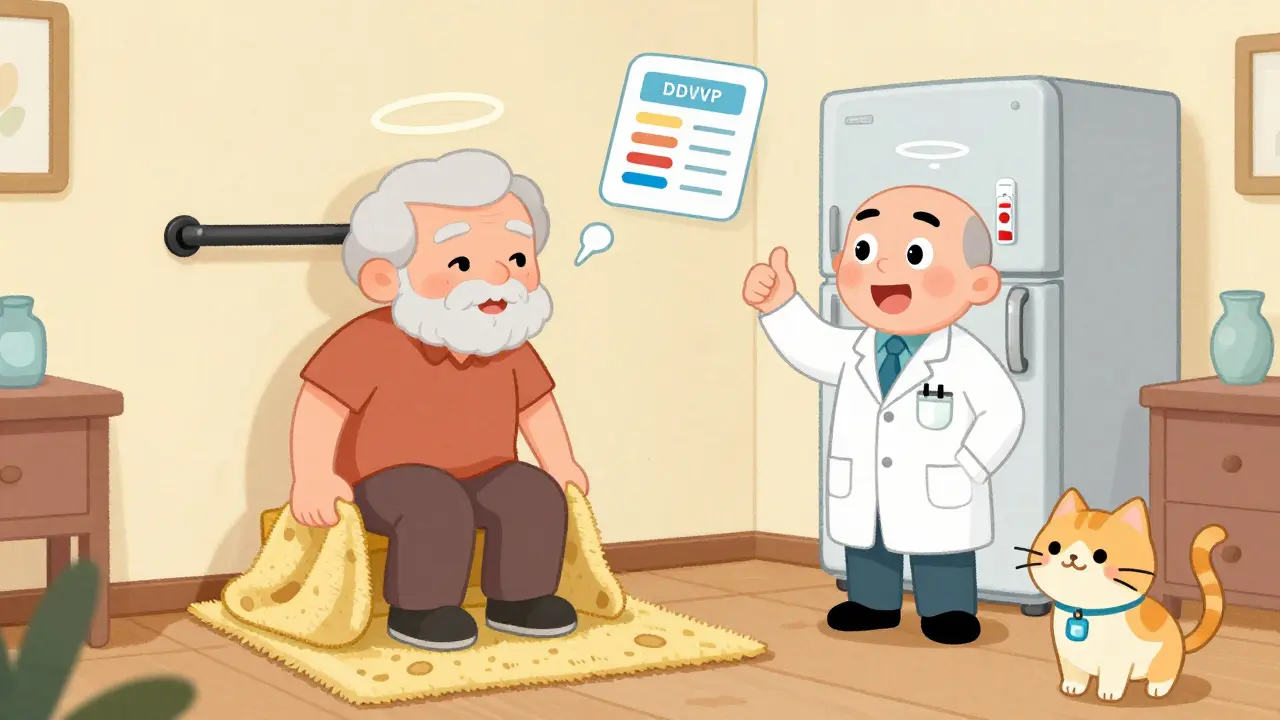
- Assess fall risk. If you’re unsteady, have vision problems, or take sedatives, your risk of intracranial bleed skyrockets. Consider physical therapy. Remove throw rugs. Install grab bars.
Desmopressin (DDAVP) is another tool. It’s not an anticoagulant reversal agent-but it helps patients with inherited bleeding disorders like von Willebrand disease. In one trial, women on anticoagulants who took DDAVP before a minor procedure had 30% less blood loss. It’s not for everyone. But for some, it’s a game-changer.
When to Restart After a Bleed
Stopping anticoagulants after a bleed feels natural. But stopping too long can kill you faster than the bleed itself.
The American College of Cardiology says: Restart as soon as it’s safe. For someone with atrial fibrillation and a CHA₂DS₂-VASc score of 5, waiting more than a week increases stroke risk by 7%. For someone with a provoked DVT that resolved months ago? Maybe you don’t restart at all.
Here’s the rule of thumb:
- Low thrombotic risk: (e.g., provoked DVT, low CHA₂DS₂-VASc) - consider stopping permanently.
- High thrombotic risk: (e.g., mechanical valve, unprovoked PE, atrial fibrillation with stroke history) - restart within 1-7 days, depending on bleed location.
Brain bleed? Wait 4-8 weeks. GI bleed? Restart in 1-2 weeks if the source is controlled. The key isn’t timing-it’s matching the risk. Don’t fear the clot more than the bleed. Fear the one you didn’t prevent.
What’s Next? The Future of Hemorrhage Prevention
Scientists are working on a universal reversal agent called ciraparantag. It could undo DOACs, heparins, even low-molecular-weight heparins with one shot. It’s still in trials, but early results show promise.
Point-of-care tests for DOAC levels are also coming. Imagine a finger-prick test that tells you your rivaroxaban level in 10 minutes-like a glucose meter for blood thinners. That could cut emergency bleeds by 15-20%.
For now, the best tools we have are simple: know your patient, know your drug, know your reversal plan. Don’t assume DOACs are safer just because they’re newer. Don’t assume warfarin is outdated. Each has its place. And the person who survives the bleed isn’t the one who got lucky. It’s the one whose doctor asked the right questions before the fall.
Can you reverse DOACs with vitamin K?
No. Vitamin K only works on warfarin and other vitamin K antagonists. It has no effect on DOACs like apixaban, rivaroxaban, or dabigatran. For dabigatran, use idarucizumab. For factor Xa inhibitors like apixaban, use andexanet alfa. If neither is available, activated charcoal (if taken recently) or prothrombin complex concentrate (PCC) may help, but they’re not as effective.
Which anticoagulant has the lowest bleeding risk?
Apixaban has the lowest major bleeding risk among DOACs and is better than warfarin. In the ARISTOTLE trial, apixaban reduced major bleeding by 31% compared to warfarin. It’s also less affected by kidney function and has fewer drug interactions. For most patients without mechanical valves, apixaban is the safest first choice.
Is warfarin still used today?
Yes, and it’s still first-line for certain conditions. Warfarin is the only anticoagulant proven safe and effective for mechanical heart valves-especially mitral valves-and for patients with antiphospholipid syndrome. DOACs have been shown to increase clot risk in these groups. So while DOACs are preferred for most people, warfarin remains essential for others.
Can you take NSAIDs while on blood thinners?
Avoid them. NSAIDs like ibuprofen, naproxen, and diclofenac increase stomach bleeding risk by 3-5 times when combined with anticoagulants. Even low-dose aspirin adds risk. Use acetaminophen (paracetamol) for pain instead. If you must take an NSAID, use the lowest dose for the shortest time and add a proton pump inhibitor like omeprazole.
How often should kidney function be checked on DOACs?
Check creatinine clearance (CrCl) at the start of treatment and every 3-6 months if stable. If you’re over 75, have kidney disease, or are taking other nephrotoxic drugs, check every 3 months. For patients with CrCl below 50 mL/min, DOAC dosing may need adjustment-or you may need to switch to warfarin. Never assume normal kidney function just because you feel fine.
What’s the biggest mistake doctors make with anticoagulants?
Assuming all anticoagulants are the same. Warfarin needs monitoring. DOACs don’t-but they’re not safe in kidney failure. Reversal agents are specific to each drug. Many clinicians still give vitamin K for a DOAC bleed or don’t know when to restart after a hemorrhage. The biggest risk isn’t the drug-it’s the lack of understanding.
What to Do If You’re on a Blood Thinner
Keep a card in your wallet that says:
- Your medication name and dose
- Your last INR or CrCl value
- Your doctor’s name and number
- Which reversal agent you’d need if you bleed
Wear a medical alert bracelet. Tell every ER doctor you see: "I’m on a blood thinner." Don’t wait for them to ask. Most major bleeds happen outside the clinic. Be the one who speaks up.
Anticoagulants are powerful. They’re not for everyone. But for those who need them, the right management doesn’t just prevent clots-it prevents death. And that starts with knowing the risks-and acting before the bleed happens.
Martin Viau
January 1, 2026 AT 04:25Let’s be real-DOACs are just fancy placebos for lazy docs who don’t want to deal with INRs. I’ve seen 78-year-olds on apixaban with CrCl of 22 and no dose adjustment. It’s not medicine, it’s corporate greed wrapped in a white coat. And don’t get me started on that $13K reversal agent. We’re literally pricing life out of the ER. Wake up, America.
Robb Rice
January 1, 2026 AT 07:45While I appreciate the comprehensive overview, I must respectfully note that the assertion regarding desmopressin’s utility in anticoagulated patients is not universally supported by current guidelines. The 2020 ACC Expert Consensus Document, for instance, classifies its use as 'consider'-not 'recommend'-for minor procedures only. Additionally, the term 'game-changer' may be hyperbolic in this context.
Bennett Ryynanen
January 2, 2026 AT 02:50Yo, if you’re on a blood thinner and you don’t have a medical alert bracelet, you’re playing Russian roulette with your brain. I’ve seen too many people die because they passed out on the floor and the EMTs didn’t know what they were on. Just wear the damn thing. It’s not that hard.
Chandreson Chandreas
January 3, 2026 AT 10:14Bro, this is deep 😌🫡 I used to think blood thinners were just pills you take and forget. Now I get it-this ain’t just medicine, it’s a lifestyle. My uncle was on warfarin and he’d check his INR like it was his daily yoga. Respect. 🙏
Darren Pearson
January 4, 2026 AT 20:14It is, of course, patently obvious that the proliferation of DOACs represents a paradigmatic shift in anticoagulant stewardship-however, the implicit dismissal of warfarin’s enduring clinical utility in specific contexts (e.g., mechanical valves) is both reductive and, frankly, academically irresponsible. The data are unequivocal: antiphospholipid syndrome remains a contraindication to DOACs, yet this is routinely ignored in community practice.
Retha Dungga
January 6, 2026 AT 04:25so like... if you bleed on a DOAC you just die right? no biggie? 🤷♀️
Jenny Salmingo
January 8, 2026 AT 00:26I love how this post just says ‘wear a medical alert bracelet’ like it’s the easiest thing in the world. But what if you’re homeless? Or don’t have $20 for a bracelet? Or your kid forgot to tell the ER doctor because they’re scared? This isn’t just about knowledge-it’s about justice.
Aaron Bales
January 8, 2026 AT 15:45Good breakdown. One thing missing: don’t forget to ask about over-the-counter meds. I had a patient on rivaroxaban who took turmeric capsules daily. Thought it was ‘natural.’ Ended up in the OR. Always ask. Always.
Lawver Stanton
January 9, 2026 AT 12:58Let me just say this-I’ve been in emergency medicine for 18 years, and I’ve seen more people die from anticoagulant mismanagement than from actual strokes. Doctors treat these drugs like they’re aspirin. They’re not. They’re landmines with instructions written in invisible ink. And now we’ve got patients on DOACs who think they’re ‘safe’ because they don’t need blood tests? HA. I had a 79-year-old woman come in with a subdural hemorrhage after a fall. She was on apixaban. Said her doctor told her ‘it’s fine.’ Her doctor didn’t even know what andexanet alfa was. That’s not negligence. That’s a crime. And no one’s getting fired. No one’s even apologizing. We’re just moving on to the next patient. That’s the system. That’s what we’ve become.
Sara Stinnett
January 11, 2026 AT 07:07Apixaban is the ‘safest’? How quaint. You’re praising a drug that’s been marketed as ‘revolutionary’ while ignoring that its bleeding profile is only marginally better-and its reversal is financially inaccessible to 90% of the population. This isn’t progress. It’s capitalism masquerading as science. And you’re all just cheering while the poor die in rural ERs with no access to reversal agents. Bravo.
linda permata sari
January 11, 2026 AT 17:58I’m from Indonesia and we don’t even have DOACs in most hospitals here. Warfarin is all we have. And people still live. And still bleed. And still survive. Maybe the problem isn’t the drug-it’s the fear. We don’t need fancy reversal agents. We need doctors who listen.
Brandon Boyd
January 12, 2026 AT 15:07Don’t let the stats scare you. You’re not a statistic-you’re a person. If you’re on a blood thinner, you’re already fighting. Keep going. Talk to your doctor. Ask questions. Wear the bracelet. Make a plan. You’ve got this. And if you fall? You get up. Again. And again. That’s strength.
Branden Temew
January 14, 2026 AT 06:34So we’ve got a drug that doesn’t need monitoring… but we can’t measure it… and we can’t reverse it… unless we pay $13K… and only if the hospital has it… and only if the patient isn’t in a rural town… and only if the ER doc doesn’t think vitamin K works… and we’re calling this ‘progress’? I’m starting to think the real anticoagulant here is irony.
Frank SSS
January 15, 2026 AT 06:56Okay, so you wrote a 2,000-word essay on anticoagulants and the only takeaway is ‘wear a bracelet’? That’s it? That’s the hero moment? I’ve got a friend who’s on warfarin and she’s got a laminated card in her wallet, a bracelet, a home INR machine, and a spreadsheet tracking her diet. She’s alive. But here’s the thing-she’s also terrified. Every time she bumps her knee, she calls her husband screaming. And you know what? That’s not management. That’s trauma. And you didn’t say one word about the mental cost. You just listed protocols. But what about the people? The ones who cry in the bathroom after their INR comes back too high? The ones who stop eating spinach because they’re scared? The ones who don’t go hiking anymore because ‘what if I fall’? You didn’t mention that. You just gave a checklist. And that’s why we’re still losing people. Because medicine forgot to be human.