 Jan, 30 2026
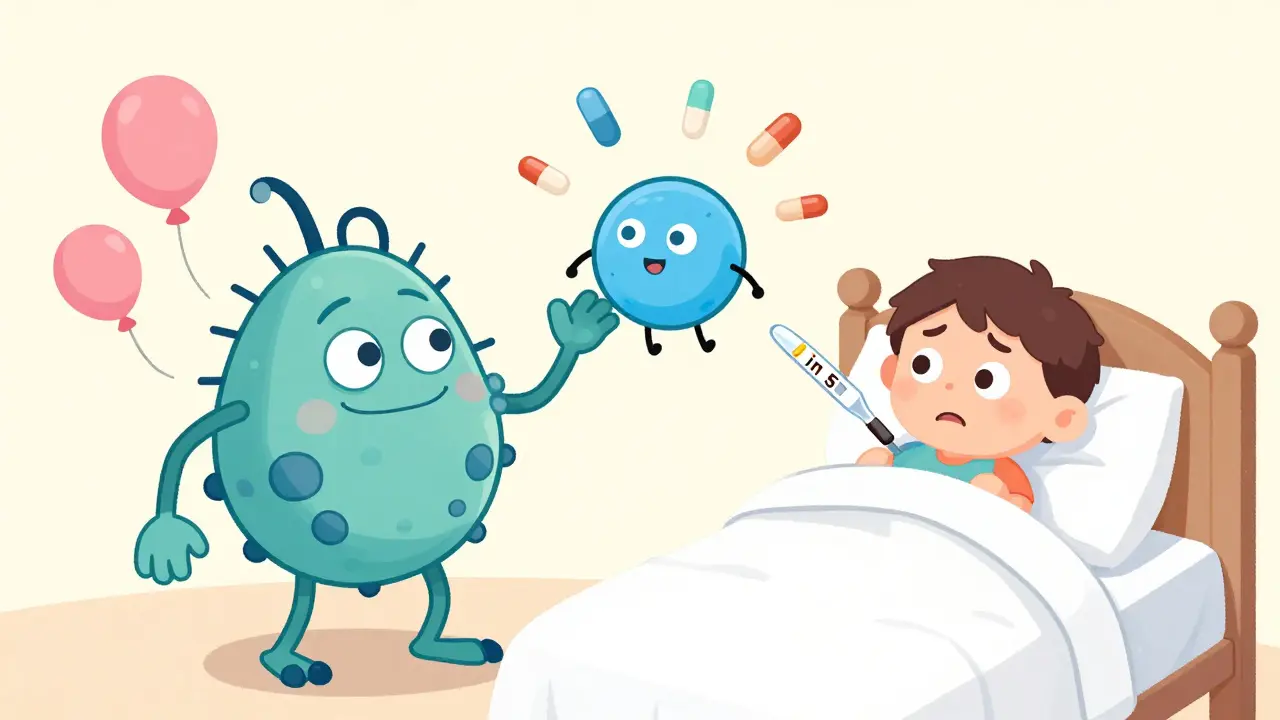
Antibiotics save lives. They turn deadly infections like pneumonia or sepsis into treatable conditions. But they’re not harmless. Every time you take one, your body reacts - sometimes in ways you didn’t expect. Around 1 in 5 people who take antibiotics get stomach issues. About 10% think they’re allergic to penicillin, but most of them aren’t. And every year, over a million people die because antibiotics stop working - not because the drugs are weak, but because we’ve overused them.
How Antibiotics Actually Work
Antibiotics don’t treat viruses. They only work on bacteria. That’s why they won’t help with colds or the flu. They either kill bacteria outright (bactericidal) or stop them from multiplying (bacteriostatic). The first one, penicillin, was found by accident in 1928 when Alexander Fleming noticed mold killing bacteria in a petri dish. Today, we have dozens of types, grouped by how they attack bacteria.
Some break down bacterial cell walls. Others block protein building or DNA copying. The way they work determines which infections they’re good for - and what side effects they cause.
The 7 Most Common Antibiotic Classes
Doctors pick antibiotics based on the infection, your history, and local resistance patterns. Here are the seven classes you’re most likely to be prescribed.
Penicillins: The Original
Penicillins are the oldest and still the most common. Amoxicillin alone makes up nearly one in five antibiotic prescriptions in the U.S. It’s used for ear infections, sinusitis, strep throat, and pneumonia. Other names include ampicillin, penicillin V, and dicloxacillin.
They work by breaking down the bacterial cell wall - like popping a balloon from the inside. Side effects? Nausea (15-20%), diarrhea (5-10%), and abdominal pain. About 10% of Americans say they’re allergic to penicillin. But a 2023 JAMA study found that 9 out of 10 of those people can take it safely after proper testing. Many think they’re allergic because they had a rash as a kid - but that’s often not a true allergy.
Cephalosporins: The Penicillin Alternative
If you’re told you can’t take penicillin, you’re often given a cephalosporin. Cephalexin is the most common - it’s used for skin infections, urinary tract infections, and even some bone infections. Others include ceftriaxone (given in hospitals) and cefuroxime.
They work similarly to penicillins but are less likely to cause cross-reactions. Only 1-3% of people allergic to penicillin react to cephalosporins. Side effects are mild: diarrhea, nausea, and occasional rash. Severe reactions like Stevens-Johnson syndrome are extremely rare - fewer than 1 in 10,000.
Tetracyclines: For Acne and Tick Bites
Doxycycline is the star here. It’s prescribed for acne, Lyme disease, and some types of pneumonia. It’s also used to prevent malaria in travelers. It works by blocking bacteria’s protein-making machines.
But it has quirks. It makes your skin super sensitive to sunlight - you can burn easily. Take it on an empty stomach - food and dairy reduce absorption. And it can permanently stain teeth in kids under 8. That’s why it’s never given to young children.
Side effects include upset stomach (15-25%), dizziness, and photosensitivity. One in five users gets sunburned faster than normal.
Macrolides: The One-Dose Wonder
Azithromycin - often called a “Z-Pack” - is the third most prescribed antibiotic in the U.S. It’s popular because you can take it for just 3-5 days. It treats strep throat, bronchitis, chlamydia, and walking pneumonia.
It binds to bacterial ribosomes and stops protein production. Side effects? Mostly stomach upset - 10-20% of users get nausea or diarrhea. But there’s a bigger risk: it can affect your heart rhythm. A 2022 NEJM study of a million patients found it increases the chance of dangerous heart arrhythmias by over 2 times. That’s why doctors avoid it if you have heart conditions or take other drugs that affect your heartbeat.
High doses can also cause temporary hearing loss. It’s rare, but it happens - especially with prolonged use.
Fluoroquinolones: Powerful, But Risky
Ciprofloxacin and levofloxacin are strong. They’re used for serious infections like kidney infections, pneumonia, and anthrax exposure. They work by cutting bacterial DNA so it can’t copy itself.
But the FDA put a black box warning on them in 2016. Why? They can cause permanent damage. Tendon rupture - especially in the Achilles - happens in 0.1-0.4% of users. Peripheral neuropathy (nerve pain, tingling, numbness) occurs in 0.2-0.5%. And a 2023 JAMA study found a 2.7-fold higher risk of aortic aneurysm - a tear in the main artery.
Because of this, doctors now reserve these for when nothing else works. They’re not for simple sinus infections or bronchitis.
Sulfonamides: For UTIs and Immune Patients
Trimethoprim-sulfamethoxazole (Bactrim or Septra) is common for urinary tract infections and lung infections in people with weakened immune systems, like those with HIV. It blocks bacteria’s ability to make folic acid - something humans get from food, but bacteria must make themselves.
Side effects include nausea, rash, and sun sensitivity. But the big risk? Severe skin reactions. Stevens-Johnson syndrome - a life-threatening blistering condition - occurs in 1-6 cases per million users. It’s rare, but deadly. If you get a fever, blisters, or peeling skin, stop the drug and get help immediately.
Glycopeptides: Last-Resort Weapons
Vancomycin is the antibiotic of last resort. It’s used for MRSA - a deadly bacteria resistant to almost everything else. It’s given intravenously in hospitals, often for serious blood or bone infections.
It works by blocking cell wall building. But it’s harsh. If given too fast, it causes “red man syndrome” - flushing, itching, and low blood pressure. About 5-15% of patients get this. Long-term use can damage kidneys (5-30% risk) and hearing (1-5%).
Because of these risks, vancomycin is kept in the WHO’s RESERVE category - only used when all else fails.

Antibiotic Resistance: Why This Matters
Antibiotics aren’t getting stronger - bacteria are getting smarter. The WHO calls antimicrobial resistance one of the top 10 global health threats. In 2022, it directly caused 1.27 million deaths worldwide.
MRSA, for example, was rare in 2010. Now, over 1% of strains resist vancomycin. That’s up from 0.3%. And we haven’t had a new class of antibiotics since 2000. The pipeline is dry.
The WHO’s AWaRe system helps fix this. It divides antibiotics into three groups:
- ACCESS: First-choice, low resistance risk - like amoxicillin.
- WATCH: Higher resistance risk - like ceftriaxone. Use carefully.
- RESERVE: Last resort - like vancomycin. Only if everything else fails.
Countries using this system have cut inappropriate antibiotic use by 27%. It’s not magic - just better rules.
Common Side Effects You Should Know
Most side effects are mild and go away after you stop the drug. But some are serious. Here’s what to watch for:
- Diarrhea: The #1 complaint. 68% of users report it. Sometimes it’s just upset stomach. Other times, it’s C. diff - a dangerous infection caused by antibiotics killing off good gut bacteria. If you have watery diarrhea, fever, or stomach cramps after starting antibiotics, call your doctor.
- Yeast infections: Especially in women. Antibiotics kill off bacteria that keep yeast in check. Vaginal itching or white discharge? Talk to your pharmacist about over-the-counter treatments.
- Allergic reactions: Rash, hives, swelling, trouble breathing. These can be life-threatening. If you’ve ever had a reaction, tell every doctor you see.
- Drug interactions: Some antibiotics interfere with birth control, blood thinners, or antidepressants. Always check with your pharmacist.
What You Can Do to Stay Safe
You don’t need to avoid antibiotics. But you do need to use them wisely.
- Don’t pressure your doctor for antibiotics. If they say it’s a virus, trust them.
- Take the full course - even if you feel better. Stopping early lets stronger bacteria survive.
- Never share antibiotics. What works for one person might harm another.
- Ask if a narrow-spectrum antibiotic (like amoxicillin) will work instead of a broad one (like ciprofloxacin).
- Report side effects. The more data we have, the safer future prescriptions become.
Antibiotics are powerful tools. But they’re not candy. Misuse doesn’t just hurt you - it hurts everyone. When bacteria become resistant, we all lose.
What’s Next for Antibiotics?
Scientists are racing to find new ones. The FDA approved cefiderocol in 2019 - a new class that works against some of the toughest superbugs. And organizations like CARB-X are investing over $1 billion to fund new antibiotic research.
But the real win? Better prescribing. In the U.S., 85% of hospitals now have antibiotic stewardship programs. These teams review prescriptions to make sure they’re necessary and correct. As a result, inappropriate use has dropped by 35% since 2017.
Still, 30% of outpatient prescriptions have dosing errors. And 45% of bronchitis prescriptions last too long. We’re still overprescribing.
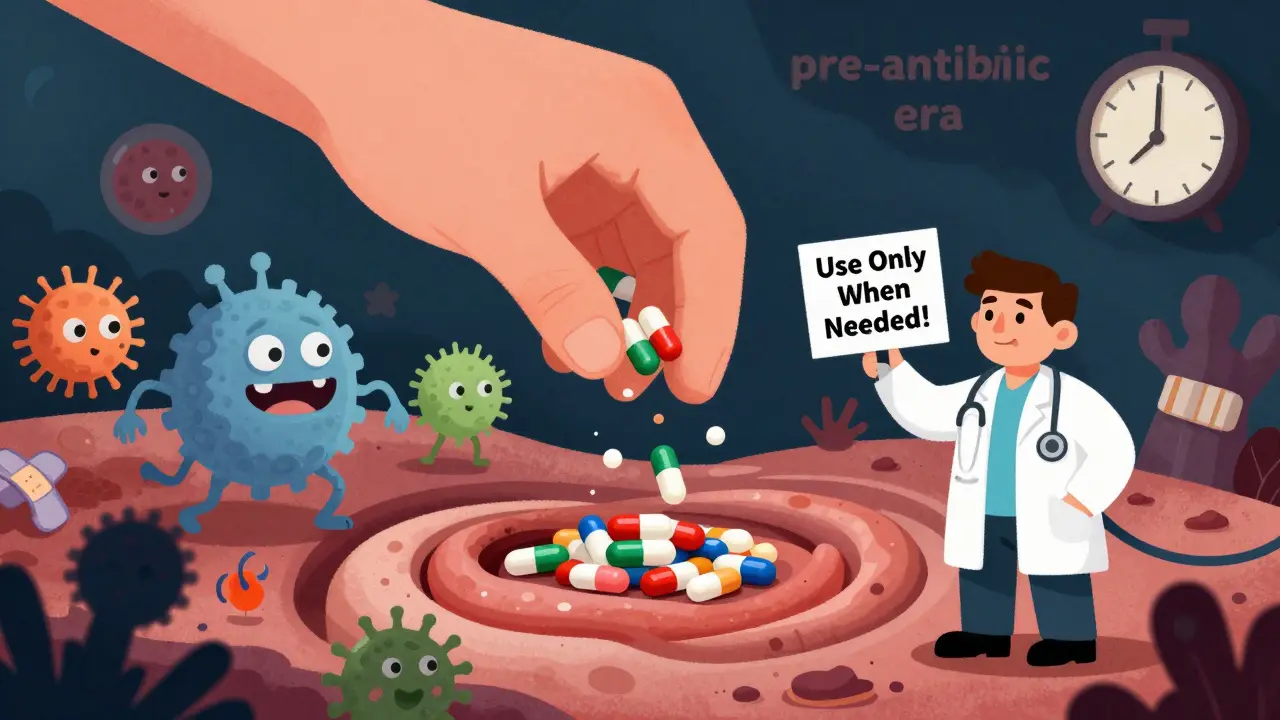
Dr. Helen Boucher, president of the Infectious Diseases Society of America, says we’re one step from returning to the pre-antibiotic era - where a cut on your hand could kill you. The tools exist. What’s missing is discipline.
Can I take antibiotics for a cold or the flu?
No. Colds and the flu are caused by viruses, and antibiotics only work on bacteria. Taking them for viral infections won’t help you feel better - it just increases your risk of side effects and contributes to antibiotic resistance.
I think I’m allergic to penicillin. Should I avoid all antibiotics?
Not necessarily. About 90% of people who believe they’re allergic to penicillin aren’t. Many confuse rashes from viral infections with true allergies. A simple skin test or oral challenge can confirm if you’re truly allergic. Avoiding all antibiotics unnecessarily limits your treatment options.
Why do antibiotics cause diarrhea?
Antibiotics kill both bad and good bacteria in your gut. When the good bacteria drop, harmful ones like C. diff can take over. This leads to diarrhea, cramping, and sometimes severe infection. Probiotics may help, but they’re not a guaranteed fix. If diarrhea is severe or lasts more than a few days, contact your doctor.
Is it safe to drink alcohol while taking antibiotics?
For most antibiotics, moderate alcohol is okay. But with metronidazole, tinidazole, or some cephalosporins, alcohol can cause severe reactions like vomiting, fast heartbeat, or flushing. Even if your antibiotic doesn’t have a direct warning, alcohol can worsen side effects like nausea or dizziness. When in doubt, skip it.
How long do antibiotic side effects last?
Most mild side effects - like nausea or diarrhea - go away within a few days after stopping the medication. But some, like nerve damage from fluoroquinolones or hearing loss from macrolides, can be permanent. If you have ongoing symptoms after finishing your course, see your doctor.
Are natural remedies a good alternative to antibiotics?
No. Honey, garlic, or essential oils might soothe symptoms, but they cannot reliably kill dangerous bacteria like those causing pneumonia, strep throat, or sepsis. Delaying antibiotics for a serious infection can lead to permanent damage or death. Natural remedies are not substitutes for proven medical treatment.
Sidhanth SY
January 31, 2026 AT 06:58Been on amoxicillin for a sinus infection last year and thought I was dying from the diarrhea. Turns out it was just my gut freaking out. Probiotics helped a ton, but I still avoid them unless absolutely necessary now. Antibiotics aren’t candy, but we treat them like it.
Adarsh Uttral
February 1, 2026 AT 00:03bro i took cipro for a UTI and my achilles started screaming at me like it owed me money. never again. also i thought i was allergic to penicillin till my doc did the test and i was fine. wild.
Sarah Blevins
February 1, 2026 AT 02:30The data presented here is statistically sound and aligns with CDC and WHO surveillance reports from 2021–2023. However, the omission of pharmacoeconomic analyses regarding antibiotic stewardship program ROI in low-resource settings remains a critical gap in the discussion.
Diana Dougan
February 2, 2026 AT 16:57soooo... you're telling me i've been taking zpacks like they're energy drinks and now my heart might give up? cool. guess i'll just start popping turmeric and calling it a day. 🙃
Holly Robin
February 3, 2026 AT 00:23They're hiding the truth. Fluoroquinolones were banned in Europe for a reason. Big Pharma knows they're destroying people's tendons and nerves but they're too busy buying congressmen to care. And don't get me started on the glyphosate-antibiotic link. They're poisoning us all. 🕵️♀️
Shubham Dixit
February 3, 2026 AT 20:17In India, we don't need fancy Western guidelines. My uncle took antibiotics for a cold in 1992 and lived to 89. If you don't take antibiotics when you feel sick, you're just asking for trouble. Who cares about resistance? We have 1.4 billion people. We can afford to lose a few. And yes, I know what I'm talking about because I'm from the village.
KATHRYN JOHNSON
February 4, 2026 AT 12:24Stop prescribing antibiotics for viral infections. Immediately. This is not a suggestion. It is a public health imperative. Your laziness is killing people.
Blair Kelly
February 5, 2026 AT 16:28I had red man syndrome from vancomycin. It felt like my skin was on fire while my blood pressure dropped into the gutter. I screamed. The nurse laughed. Then I had to stay in the hospital for three days. This isn't medicine. It's Russian roulette with a syringe.
Rohit Kumar
February 7, 2026 AT 06:31Antibiotics are a mirror of our relationship with nature. We demand control over bacteria as if we are gods, yet we fail to understand that resistance is evolution’s quiet rebellion. The real question isn’t how to kill bacteria-it’s how to coexist without destroying the balance. We treat microbes like enemies, not neighbors.
Gaurav Meena
February 8, 2026 AT 17:53Just wanted to say thank you for writing this. I’m a nurse in rural Ohio and I see people begging for antibiotics for colds every week. This post is exactly what we need to share with patients. Keep spreading the truth 💪
Carolyn Whitehead
February 9, 2026 AT 01:32i had a yeast infection after amoxicillin and just bought that cream at the pharmacy and it was fine lol
Katie and Nathan Milburn
February 9, 2026 AT 09:44It is imperative that the general public be made aware of the profound implications of antimicrobial resistance, as this represents one of the most significant threats to global health security in the 21st century.
Natasha Plebani
February 11, 2026 AT 00:47The AWaRe classification framework is a necessary but insufficient intervention. What’s missing is a neurocognitive behavioral model that accounts for prescriber bias, patient demand asymmetry, and the reinforcement loops created by direct-to-consumer advertising. Without addressing the cognitive architecture of antibiotic misuse, we’re merely rearranging deck chairs on the Titanic.
Kimberly Reker
February 12, 2026 AT 09:19My kid got ear infections twice last year. We did the watch-and-wait thing with the doc and avoided antibiotics both times. He’s fine. Seriously, trust your doctor. You don’t need a pill for every sniffle. 💙